Why is my cat constipated?
Most cat constipation traces back to dehydration and dry food. Here’s the home playbook plus when straining means a vet call.
Hairball or vomit? The shape, contents and behavior beforehand tell you which is which, and when it’s a vet call.
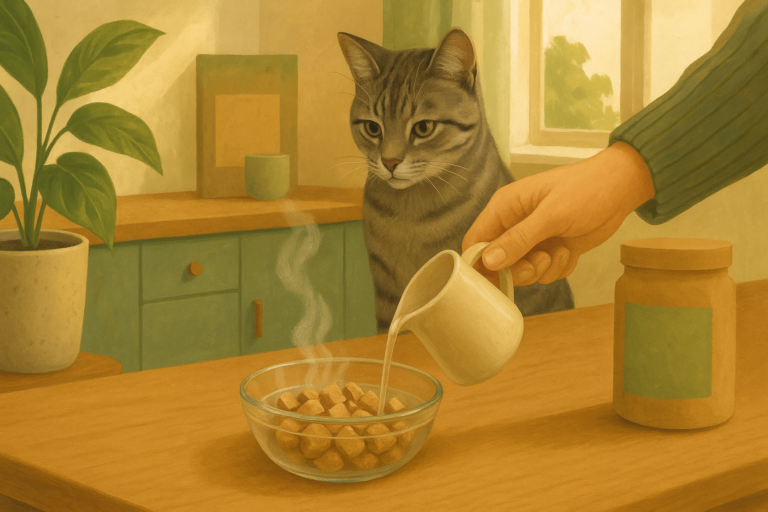
Yes, and adding warm water to kibble is a simple way to boost an indoor cat’s hydration without changing diet. How to do it.
Probably fine if she’s eating wet food; canned food is 75% water. When a refusing-to-drink cat needs a vet visit.
A cat that won’t drink is usually a setup problem, not a sick cat. The most common causes and quick fixes.
About 4 oz per 5 lb per day, but the bowl isn’t the only source. The water math for indoor cats and when a change in drinking is a vet call.
The early signs of dehydration in cats are quiet: tacky gums, low energy, a poor appetite. A quick at-home check, plus when it turns into a vet visit.
Plain low-sodium broth can nudge a cat to drink more, but most store-bought broth contains onion or garlic. The safe-broth checklist and when it’s a vet call.
What indoor cats actually need to stay hydrated: the water math, bowl placement, wet vs dry food and the small changes that move the needle the most.
Why does your cat drink from the faucet and ignore the bowl? The quick fixes, the reasons behind it, and when a change in drinking is a vet call.