Cat tree vs cat shelves vs window perch: which one fits your space?
A cat tree, wall shelves and a window perch each add height in a different way. Here is which one fits your floor space, your lease and your cat, with the research behind it.

Research-backed guides on cat behavior, training, multi-cat dynamics, anxiety, indoor enrichment, scratching, and litter box issues.

A cat tree, wall shelves and a window perch each add height in a different way. Here is which one fits your floor space, your lease and your cat, with the research behind it.
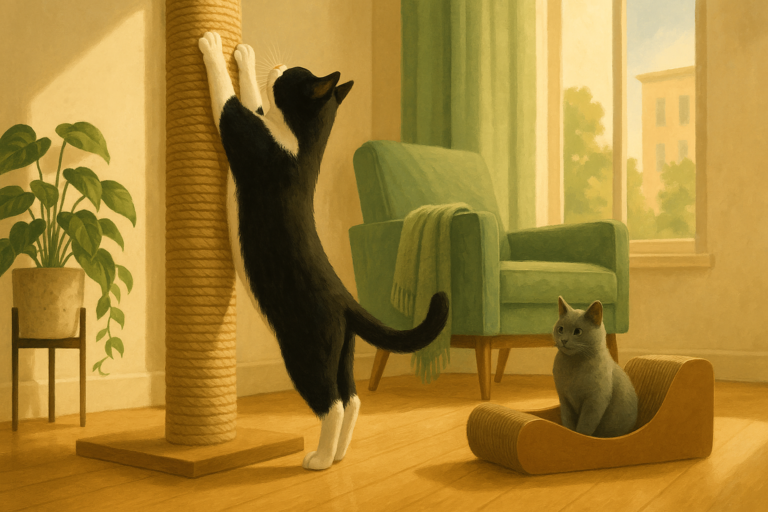
Vertical posts suit cats who stretch and rake down, horizontal scratchers suit cats who claw the floor. Here is how to read your cat’s habit and pick the right shape, with the research behind it.
Yes, according to a 2019 study published in Scientific Reports, which found that cats could distinguish their own name from other words, and even…
“No reason” almost always means a reason you didn’t register, not a true absence of one
A cat choosing your body as a sleeping spot is generally read as a sign of a secure, trusting bond, since sleep is the most vulnerable state an…
Most manufactured toys are static once the initial novelty wears off, while a bottle cap, hair tie or crumpled receipt moves unpredictably, rolls…
This is generally read as a version of the same instinct that drives a mother cat to bring prey back to a den, redirected toward you as part of…
This rapid jaw chattering, sometimes with a chirping sound, shows up almost exclusively when a cat is watching prey she can see but can’t reach,…
A peer-reviewed study on shelter cats found that cats given access to a hiding box showed lower stress scores and adapted to a new environment…
A slow flick of just the tail tip, while the rest of the body stays relaxed, is usually mild focus or interest, the kind of thing you see while a…