Why does my cat drink from the faucet but not her bowl?
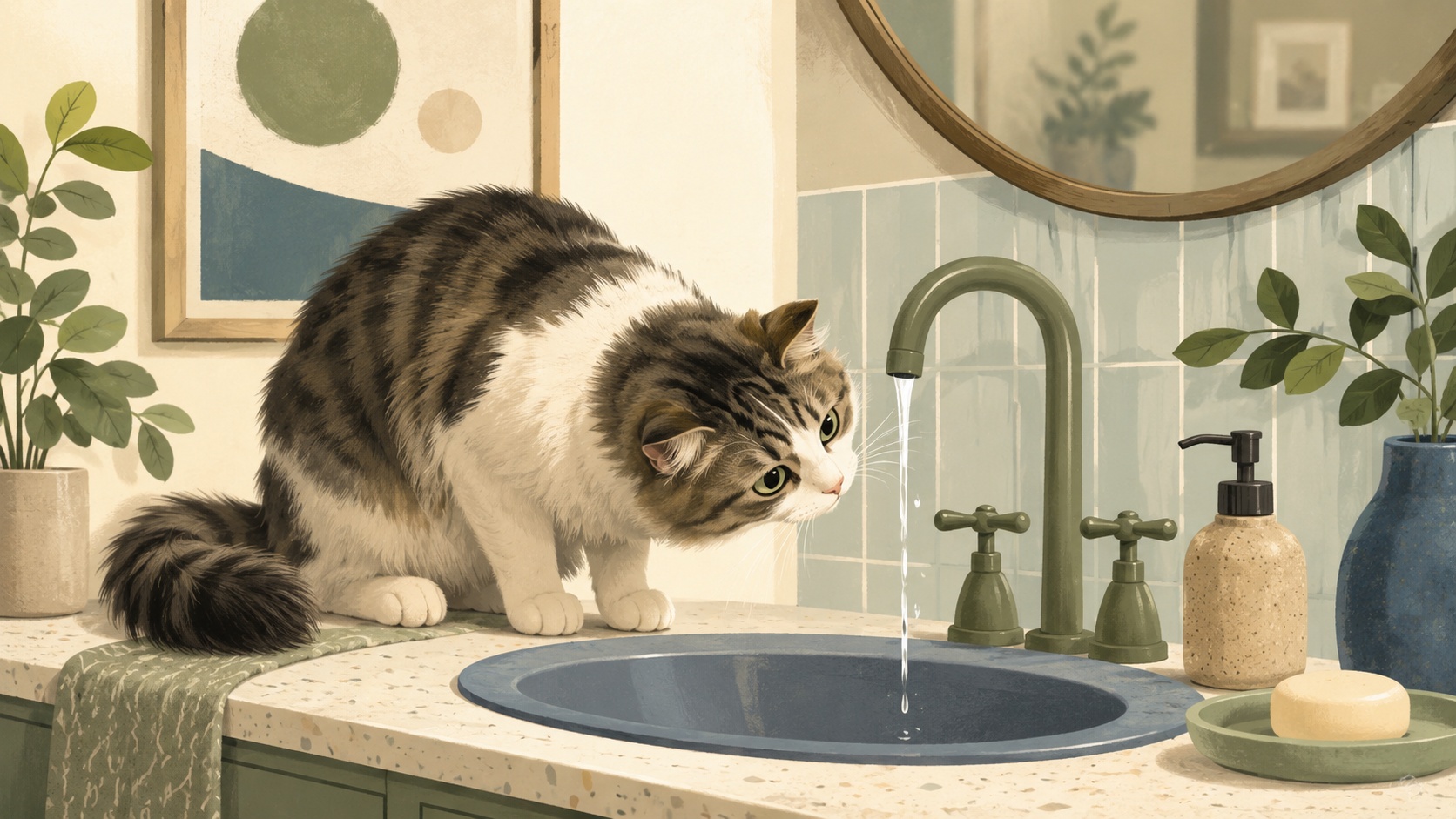
Your cat ignores a full, clean bowl of water, then sprints to the bathroom the second she hears the faucet. It’s a familiar standoff, and it usually isn’t stubbornness. The bowl itself is rarely the problem. Its location and freshness usually are.
The quick fixes:
- Move the bowl well away from food, the litter box and busy walkways
- Wash it and refill it with fresh water every day
- Add a second or third water station around the home
- In a multi-cat home, spread bowls out so no cat gets blocked from one
- If your cat loves moving water, try a fountain, knowing it helps some cats and not others
Veterinarian Dr. Yvette Huizar on getting cats to drink more (Kinship).
What I saw at the clinic
In five years on the intake desk at a vet clinic, this question came up almost weekly. The pattern barely changed. An owner was sure their cat “just doesn’t drink” but the cat drank fine. It used the tub, the sink or a houseplant saucer, never the bowl the owner had chosen. Once the bowl moved and got fresher, most came back to it.
Why the faucet wins
A faucet beats a bowl on three things cats care about. The water is fresher, it moves and the sink sits in a calm, open spot. Standing water goes flat and gathers dust within hours. Moving water draws a cat’s attention, though the preference for it varies from cat to cat.1 And a bowl parked by the food or the litter box gets quietly avoided. Cornell notes that heavy traffic, noise and nearby litter boxes deter a cat from its food, and the same instincts shape where it will drink.2
Making the bowl worth her while
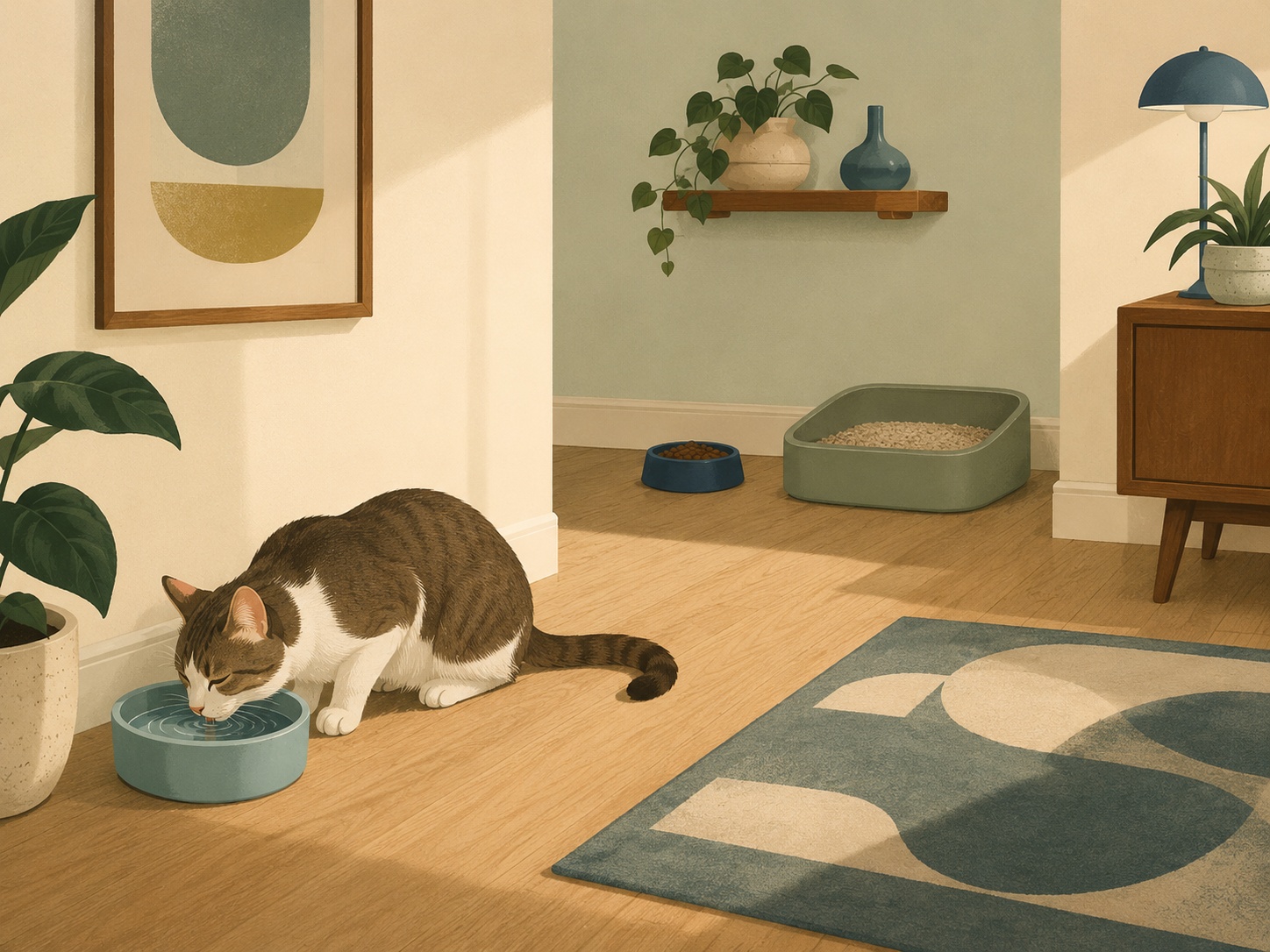
Start with where the bowl lives. A quiet corner with clear sightlines, well away from food and litter, does more than any gadget. Refresh the water daily so it tastes new. In a multi-cat home, add stations so a shy cat is never blocked from water by a bolder one.3 A fountain is worth trying if your cat is drawn to running water, but treat it as an experiment: in one controlled study of indoor cats, a fountain did not reliably increase how much they drank.1 For the broader picture beyond the faucet question, see the indoor cat hydration playbook.
When to talk to your vet
Faucet preference on its own is a quirk. A change in how much your cat drinks is the part worth a call. A sudden jump in drinking and urinating can be an early sign of kidney disease,4 and increased thirst also shows up with diabetes and an overactive thyroid.3 A cat that suddenly stops drinking, won’t eat or seems lethargic may be getting dehydrated and should see a vet promptly.3