Best Flea Treatments for Cats (No Prescription Required)
A cat came into the clinic years ago after her owner had rubbed a dog’s flea spot-on into her fur because it was “the same brand, just for the wrong animal.” She was drooling and twitching within an hour and spent the night on IV fluids. That case stuck with me, and it’s the first thing I think about every flea season. Fleas are a nuisance you can usually handle yourself, without a vet visit or a prescription, but only if you’re using something actually labeled for cats and using it right. This guide covers the treatments you can buy over the counter, no prescription needed. If you want something longer-lasting or prescription-strength, like a monthly chewable your vet dispenses, that’s a conversation to have at your cat’s next visit, not something I’ll rank here. For everyday flea control you can start today, here’s what I’d reach for, and one popular option that deserves an honest look at its safety record before it goes in your cart.
Never use a dog flea product on a cat. Many products made for dogs contain permethrin at concentrations of 45 to 60 percent, and cats can’t break it down the way dogs can. It’s one of the most common causes of fatal poisoning the ASPCA’s poison control center sees in cats. [1] Before you put anything on your cat, check that the label says “for cats” or “for cats and dogs,” not “for dogs” alone, and read the weight and age range before you use it.
The three, at a glance
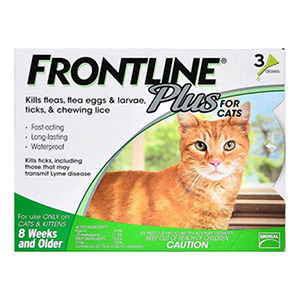
Topical monthly · fipronil and (S)-methoprene · 8 weeks and up
- ✓ Covers fleas, flea eggs, flea larvae and ticks in one product
- ✓ No minimum weight listed on the label
- ✓ Widely stocked, long track record
on Pet Care Supplies
Price as of Sep 21, 2026, 9:21 AM EDT. Product prices and availability are accurate as of the date/time indicated and are subject to change.
Use code PAWTRIO now: 30% off when you buy 3
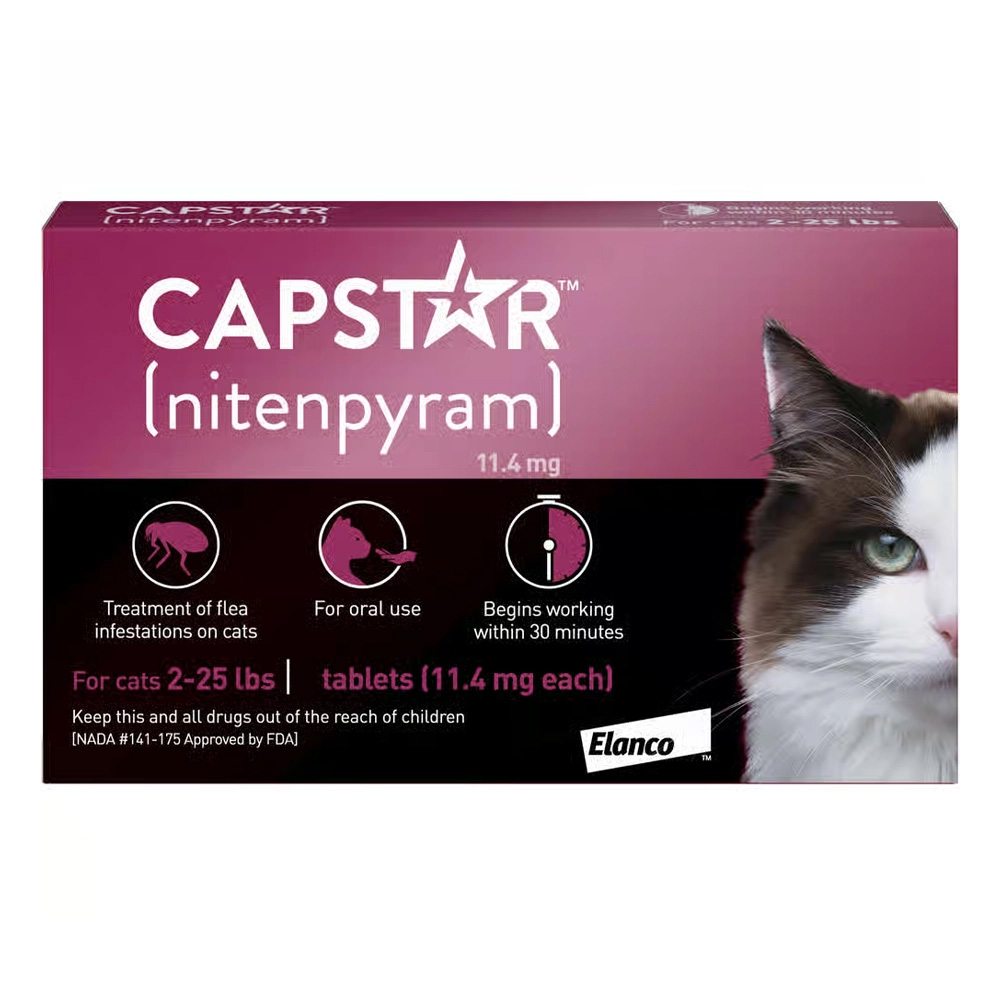
Oral, same-day · nitenpyram · 4 weeks and 2 lbs and up
- ✓ Starts working within 30 minutes, no waiting overnight
- ✓ No topical residue, good before a bath or a vet visit
- ✓ Doesn’t prevent reinfestation, pair it with a longer-acting option
on Best Vet Care
Price as of Sep 20, 2026, 11:47 AM EDT. Product prices and availability are accurate as of the date/time indicated and are subject to change.
Use code PAWTRIO now: 30% off when you buy 3

Wearable collar · imidacloprid and flumethrin · 10 weeks and up
- ✓ Up to 8 months of coverage from one collar
- ✓ No monthly reapplication to remember
- ! Under an ongoing EPA safety review, details below
on Pet Care Supplies
Price as of Sep 21, 2026, 9:21 AM EDT. Product prices and availability are accurate as of the date/time indicated and are subject to change.
Use code MEOW25 now for 25% off
| Frontline Plus | Capstar | Seresto | |
|---|---|---|---|
| Form | Topical liquid, once a month | Oral tablet, as needed | Worn collar, once every 8 months |
| What it covers | Fleas (all life stages) and ticks [2] | Adult fleas only [3] | Fleas and ticks [4] |
| Minimum age | 8 weeks [2] | 4 weeks, 2 lbs [3] | 10 weeks [4] |
| Price | $42.68 for 6 doses (list $53.35) | $21.30 for 6 tablets (list $26.62) | $37.50 per collar |
| Best fit | Ongoing monthly prevention | A flea outbreak you need handled today | A cat you don’t want to handle monthly, once you’ve read the safety note |
The short version
- Frontline Plus is the everyday default. One monthly application covers fleas at every life stage and ticks, and it’s approved for kittens from 8 weeks.
- Capstar is the emergency button. It kills adult fleas fast but wears off within a day, so it fixes today’s problem without preventing tomorrow’s.
- Seresto‘s convenience comes with an open question. The EPA has it under a five-year conditional review after incident reports, and it’s worth reading that section before you decide.
- None of these are the strongest option available. Prescription monthly chewables exist and tend to cover more parasites at once, but they need a vet visit.
- The label always wins the argument. Weight, age and species restrictions aren’t suggestions.
- Both retailers have a live cat-month discount right now. Use code MEOW25 at Pet Care Supplies for 25% off, or code PAWTRIO at Best Vet Care for up to 30% off. Prices below don’t reflect the discount. Apply the code at checkout to get it.
In this guide
Why the label matters more than the brand · Frontline Plus for Cats · Capstar for Cats · Seresto Collar for Cats and the EPA review · When a prescription option makes more sense · How I compared them · Common questions · When to talk to your vet
Why the label matters more than the brand
The cat I mentioned at the top didn’t get sick because her owner used a bad product. He used a good dog product on the wrong animal. Cats process permethrin far less efficiently than dogs do, so a concentration that’s routine for a dog can cause tremors, seizures or death in a cat. [1] This isn’t rare. It’s the most common cause of pesticide poisoning the ASPCA’s Animal Poison Control Center sees in cats, and most cases come from an owner applying a dog product directly, or a cat grooming a recently treated dog in the same house. [1] Before any product below goes anywhere near your cat, confirm three things on the label: it says cats, it lists your cat’s weight and it lists an age your kitten has already passed.
Frontline Plus for Cats
Frontline Plus has been around long enough that most vet clinics still keep a tube of it in a drawer for walk-ins. The active ingredients are fipronil, which settles into the oil glands of the skin and keeps releasing for weeks, and (S)-methoprene, an insect growth regulator that stops flea eggs and larvae from developing into new adults. [2] The label states it’s approved for cats and kittens 8 weeks and older, with no minimum weight listed. [2] According to the label, it kills adult fleas, flea eggs and flea larvae for up to six weeks per application and kills ticks for at least a month, though most owners apply it monthly rather than stretching that window. [2] It’s a topical, so it goes on the skin at the back of the neck, not in food or as a pill, and you’ll want to keep cats separated for a few hours after application so they don’t groom it off each other.
Capstar for Cats
Capstar solves a different problem. It’s a single oral tablet, nitenpyram, approved for cats at least 4 weeks old and 2 lbs and up. [3] The label and the manufacturer both describe it as fast, starting to kill fleas within 30 minutes of dosing and clearing an active infestation within a few hours. [3] What it doesn’t do is prevent reinfestation. Nitenpyram clears out of a cat’s system within a day, so Capstar is the product I’d reach for the afternoon you find fleas on your cat and want them gone before bedtime, paired with something longer-acting like Frontline Plus to keep new ones from taking hold. It’s also useful before a grooming appointment or a stay at a boarding facility that requires a flea-free cat on arrival, since it works fast and leaves no topical residue behind.
Seresto Collar for Cats and the EPA review
Seresto is genuinely popular, and it’s easy to see why. One collar covers up to 8 months using imidacloprid and flumethrin, a topical antiparasitic pairing that works through contact with the coat rather than a monthly reapplication. [4] It’s approved for cats and kittens 10 weeks and older. [4] For a multi-cat household or a cat who fights every application, the appeal of “put it on once and forget it for most of a year” is real.
Here’s what I think you’re owed before you buy one. The EPA has reviewed incident reports tied to Seresto collars and found that 1,400 pet deaths were reported to the agency between 2016 and 2020, representing about 2 percent of all Seresto-related incidents reported in that period. [5] When EPA examined the cause behind those deaths, it found that the ones it could confirm as “probably” or “definitely” related to the collar were tied to mechanical issues, meaning strangulation or physical trauma from the collar itself, not the pesticide. [5] For most of the other reported deaths, EPA didn’t find a probable or definite link to the collar, often because the pet had a pre-existing health condition. [5] The most commonly reported reactions overall are milder: itching in dogs and hair or skin changes at the application site in cats, with rarer, more serious reports of neurological symptoms like convulsions. [5]
EPA didn’t cancel the product’s registration. It issued a five-year conditional re-registration that requires the manufacturer to add stronger warning labels, improve how incidents get reported, evaluate the collar’s quick-release mechanism to reduce strangulation risk and report incident and sales data to EPA annually. [5] You can read the agency’s own review in full, which is more measured than a lot of the coverage this collar has gotten. [5] I’m not going to tell you what to decide here. I’m telling you what’s actually in the record so you can weigh it against your own cat, especially if you have a kitten, a senior cat or a cat with an existing health condition where I’d lean toward asking your vet first.
When a prescription option makes more sense
Everything above is available without a vet visit, which is exactly why I’m not naming or ranking prescription products here. Monthly prescription chewables and topicals exist that combine flea and tick coverage with heartworm or intestinal parasite prevention in one dose, and they’re worth asking about at your cat’s next checkup, especially for a cat with a heavier flea burden, outdoor access or a health condition that makes an over-the-counter option a worse fit. That’s a conversation between you and your vet about your specific cat, not something I can respectably decide for you in a roundup like this one.
How I compared them
This is a researched comparison, not a side-by-side trial in my own home, so I won’t claim I ran all three on the same cat. What I did was read each product’s label and active-ingredient breakdown, check the age and weight cutoffs against the manufacturer’s own documentation and pull the EPA’s incident review directly rather than relying on secondhand summaries of it. All three products do what they claim for routine flea control. Where I’ve made a judgment call, I’ve said so: Capstar’s speed comes at the cost of any lasting protection, Frontline Plus asks for a monthly routine some owners forget, and Seresto’s convenience is real even though its safety record deserves more scrutiny than the “just put it on and forget it” marketing suggests. None of the three is a clean win across every column, which is why the table above matters more than any single verdict.
Common questions
Can I use more than one of these at the same time?
Don’t combine a topical like Frontline Plus or a Seresto collar with another topical product without checking with your vet first. Layering active ingredients increases the risk of a reaction. Capstar is generally considered safe to pair with a longer-acting product since it works differently and clears the body within a day, but confirm with your vet if your cat is on any other medication.
My cat is indoor-only. Does she still need this?
Yes. Fleas ride in on shoes, other pets, visiting guests and even through window screens. Indoor-only cats in my own multi-cat household have picked up fleas from a dog-walking neighbor’s hallway carpet more than once. Indoor status lowers the risk, it doesn’t remove it.
How do I know if my cat actually has fleas?
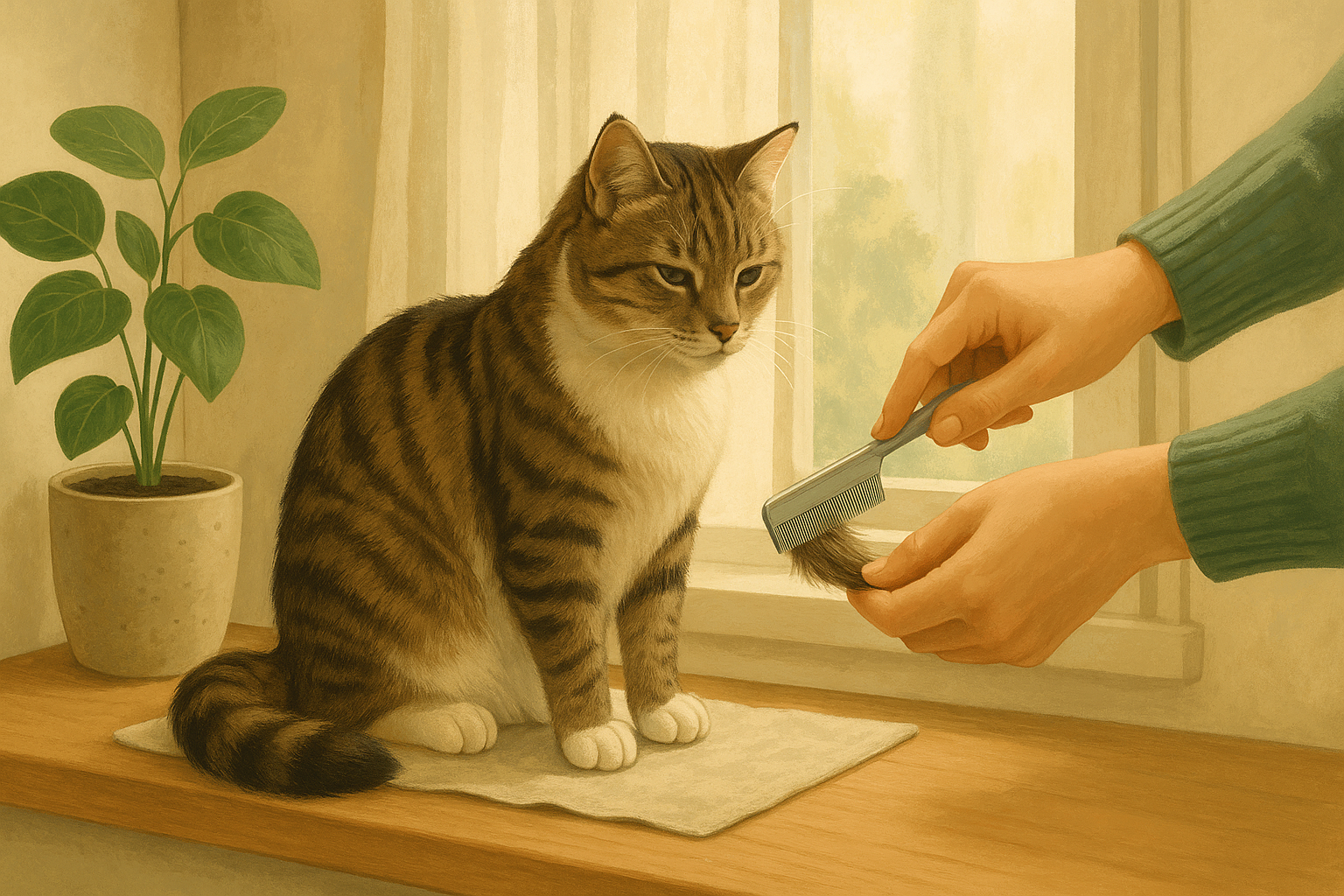
Comb through the fur near the base of the tail with a fine-toothed flea comb over a white paper towel. Dark specks that turn reddish-brown when dampened are flea dirt, digested blood, and confirm an infestation even if you never spot a live flea.

When to talk to your vet
Call your vet before using any flea product on a kitten under the youngest age listed on that product’s label, on a pregnant or nursing cat, or on a cat already taking other medication. Get your cat seen the same day if you notice drooling, tremors, wobbliness or vomiting after any flea product goes on, whether it’s one listed here or a dog product used by mistake. Those are signs of a reaction that needs treatment, not something to wait out overnight. [1]
The bottom line
- Choose Frontline Plus if you want a straightforward monthly routine that covers fleas at every life stage plus ticks, and you’re comfortable applying a topical.
- Choose Capstar if you’ve found fleas today and need them gone fast, understanding you’ll still need an ongoing preventive alongside it.
- Consider Seresto only after reading the EPA section above, especially if your cat is a kitten, a senior or managing another health condition.
None of these replace a conversation with your vet if your cat has a heavy infestation, an outdoor lifestyle or an existing health issue. For routine flea control in an otherwise healthy indoor cat, they’re a reasonable place to start.
Sources
- American Association of Feline Practitioners, “Permethrin Poisoning and Cats”
- Drugs.com, “FRONTLINE Plus for Cats & Kittens”
- GoodRx, “Capstar (Nitenpyram) for Cats”
- VCA Animal Hospitals, “Imidacloprid with Flumethrin (Seresto Collar)”
- U.S. Environmental Protection Agency, “Seresto Pet Collar Review”