The Best High-Protein Dry Cat Foods for Indoor Cats
Weigh-in day at the clinic desk had a pattern worth noticing: the indoor cats losing muscle weren’t always the ones losing weight on the scale. A cat can hold a steady number and still lose lean mass underneath it if the protein in the bowl barely clears the regulatory floor. That floor is lower than most owners assume, and an indoor cat, already moving less than an outdoor hunter would, needs the food doing more of that work, not less. Here are three dry foods that clear the floor by a wide margin, and what actually separates them.
As Amazon Associates we earn from qualifying purchases. Some links in this post are affiliate links; if you buy through them, we earn a small commission at no extra cost to you. We only recommend products we’ve used or researched thoroughly. See our full disclosure.
The picks at a glance
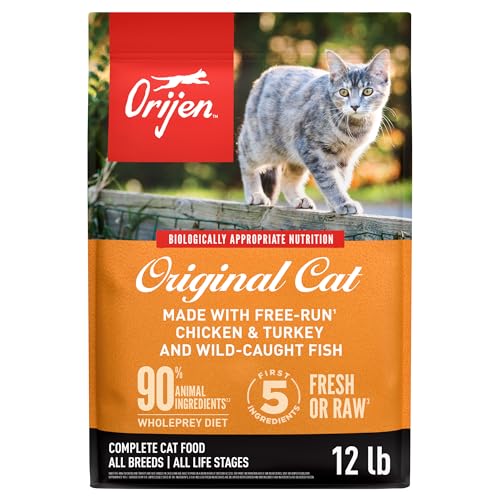
Orijen Original
40% min crude protein · fresh and raw animal ingredients first · grain-free
- ✓ The highest guaranteed protein minimum of the three
- ✓ Chicken, turkey, herring and salmon make up most of the formula
- ✓ Premium tier, priced accordingly
on Amazon
Price as of Sep 21, 2026, 9:21 AM EDT. Product prices and availability are accurate as of the date/time indicated and are subject to change.
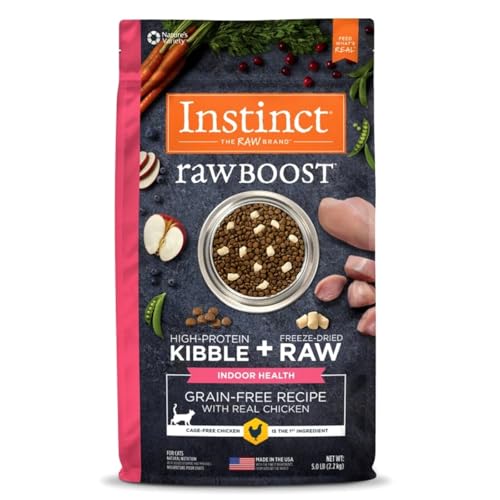
Instinct Raw Boost Indoor Health
41% min crude protein · kibble coated in freeze-dried raw · formulated for indoor cats
- ✓ Fewer calories per cup than a standard formula
- ✓ Added prebiotic fiber for a lower-activity gut
- ✓ Grain-free, chicken first, no by-product meal
on Amazon
Price as of Sep 21, 2026, 9:21 AM EDT. Product prices and availability are accurate as of the date/time indicated and are subject to change.

Blue Buffalo Wilderness Chicken
38% min crude protein · real chicken first · built for indoor adults
- ✓ Widely stocked, easier to find than the other two
- ✓ No corn, wheat, soy or artificial preservatives
- ✓ Mid-range tier between the other two picks
on Amazon
Price as of Sep 21, 2026, 9:21 AM EDT. Product prices and availability are accurate as of the date/time indicated and are subject to change.
Quick take:
- Cats are obligate carnivores built to run on protein as an energy source, not the moderate protein-and-carbohydrate mix that works for an omnivore.1
- AAFCO sets the regulatory floor for an adult cat’s food at 26% crude protein on a dry matter basis. All three picks here clear that by 12 to 15 points.2
- Higher-protein diets help cats hold onto lean muscle during weight loss, which matters most for a lower-activity indoor cat prone to slow weight gain.3
- “Grain-free” and “high protein” aren’t the same claim. Check the guaranteed analysis, not the front of the bag.
- None of these are a substitute for a vet-supervised plan if a cat is already overweight or losing muscle for an unclear reason.
Why the number on the bag matters more for indoor cats
An indoor cat spends most of its day on a windowsill or a couch, not stalking a yard. That lower activity level is exactly why the protein floor set by AAFCO reads as a minimum and not a target. Twenty-six percent crude protein on a dry matter basis keeps a healthy cat alive and functioning, but it wasn’t calculated for a cat working to hold onto muscle while burning fewer calories than its outdoor cousins.2 A 2015 study that calorically restricted overweight cats found the ones on the higher-protein diet kept more lean mass through weight loss than the group on a moderate-protein diet losing the same total weight.3 For an indoor cat already at risk of the slow, invisible kind of weight gain, that’s the difference that matters more than any ingredient on the label.
All three foods above clear that floor comfortably. Instinct Raw Boost Indoor Health lists a 41% crude protein minimum, Orijen Original lists 40%, and Blue Buffalo Wilderness Chicken lists 38%. That’s a narrow spread between the three, which means the real differences come down to formulation, not just the number on the bag.
What separates these three bags
Orijen leans furthest into a whole-prey style of formulation: fresh and raw chicken, turkey, herring and salmon make up most of the ingredient list, with a smaller share of legumes rounding it out. It’s the closest of the three to what a cat would eat if it were still hunting for a living, and it’s priced at the premium end to match. Instinct Raw Boost Indoor Health takes a different route to a similar protein number: a grain-free kibble base coated in freeze-dried raw chicken pieces, with fewer calories per cup and added prebiotic fiber built specifically for a lower-activity indoor gut. Blue Buffalo Wilderness Chicken sits in the middle on protein and on price, built around real chicken as the first ingredient with no corn, wheat or soy, and it’s the easiest of the three to find on a regular restock run.
Reading the bag without falling for the marketing
The guaranteed analysis on the back of the bag lists a minimum, not an average, so two foods both claiming “38% min” can land at meaningfully different actual protein levels. All three foods above are dry, so their moisture content sits close enough to each other, around 9 to 10%, that comparing the as-fed numbers directly is fair. That comparison stops working the moment wet food enters the picture, since a can’s higher moisture dilutes the as-fed percentage even when the dry matter protein is comparable. “Grain-free” is a separate claim from “high protein” too. A grain-free formula can still be built around plant proteins, so it’s worth checking the actual number rather than assuming the absence of grain means more meat.
When to talk to your vet
Switching to a higher-protein food is a reasonable default for most healthy indoor cats, but it isn’t the right first move for every cat. Cats with existing kidney disease often need a controlled, sometimes lower-protein diet, and that’s a change to make with a vet, not around one.1 A cat that’s already overweight, losing weight without a diet change, or showing muscle loss along the spine and hips despite a stable number on the scale needs a vet visit to rule out a medical cause before any food swap. Any diet change is worth introducing gradually over 7 to 10 days, mixing in a little more of the new food each day, since a fast switch is the most common reason a cat’s stomach reacts badly to a new bag.
The bottom line
For a healthy indoor cat, Orijen Original is the pick if the priority is the highest protein number and a whole-prey-style ingredient list. Instinct Raw Boost Indoor Health is the pick built specifically around indoor cats, lower calories and a raw-coated kibble. Blue Buffalo Wilderness Chicken is the easiest to find and the middle ground on both protein and cost. All three clear the regulatory floor by a wide margin. The floor was never the right bar to aim for in the first place.
Sources
More cat food guides
- The Best Kitten Foods: 3 Picks That Meet the Growth Standard
- Best dry foods for senior cats: the two real options
- Best indoor cat food: 5 formulas that account for a life spent mostly on the couch
- Royal Canin vs Hill’s Science Diet: which one fits your indoor cat?
- Instinct Raw Boost vs Blue Buffalo Wilderness: which grain-free kibble for your indoor cat?
- Stella & Chewy’s vs Primal freeze-dried: which raw food fits your indoor cat?
- Stella & Chewy’s Magical Dinner Dust Review: Does a Freeze-Dried Topper Fix a Picky Eater?
- The Quest cat food recall: what happened, and what I’d feed instead