The Best Kitten Foods: 3 Picks That Meet the Growth Standard
The most common food question at the intake desk from first-time kitten owners was never about brand. It was about the bag they’d already opened: a case of adult cat food left over from a previous cat, fed to a new kitten because it was what was in the cupboard. A kitten’s food isn’t just a smaller portion of an adult formula. It’s built to a different nutrient floor, and skipping that floor during the fastest growth window of a cat’s life is the kind of mistake that doesn’t show up on a scale for weeks. Here are three dry foods that clear that floor, and what actually separates them.
As Amazon Associates we earn from qualifying purchases. Some links in this post are affiliate links; if you buy through them, we earn a small commission at no extra cost to you. We only recommend products we’ve used or researched thoroughly. See our full disclosure.
The picks at a glance

Royal Canin Kitten
34% min crude protein · kibble sized for small kitten jaws · for kittens up to 12 months
- ✓ The formula most vet clinics stock and recommend by default
- ✓ Kibble shape and size built for a kitten’s smaller mouth and teeth
- ✓ A conservative, well-tested formula rather than a trendy one
on Amazon
Price as of Sep 21, 2026, 9:21 AM EDT. Product prices and availability are accurate as of the date/time indicated and are subject to change.
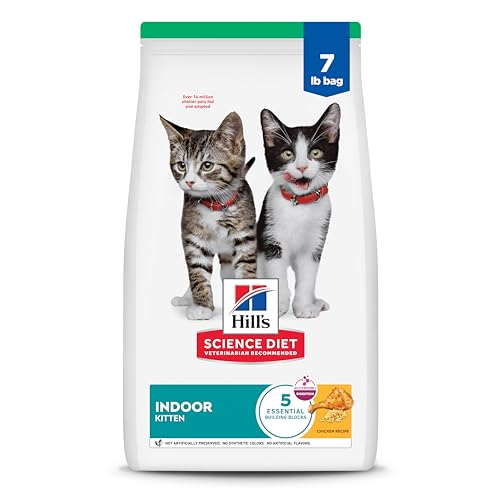
Hill’s Science Diet Kitten Indoor
33% min crude protein · lower fat than the standard kitten formula · chicken first
- ✓ Trimmed-down fat level for a kitten that won’t roam and burn it off
- ✓ Added DHA, the same nutrient in kitten formula milk replacers
- ✓ Widely stocked, easy to keep restocking as the kitten grows
on Amazon
Price as of Sep 21, 2026, 9:21 AM EDT. Product prices and availability are accurate as of the date/time indicated and are subject to change.
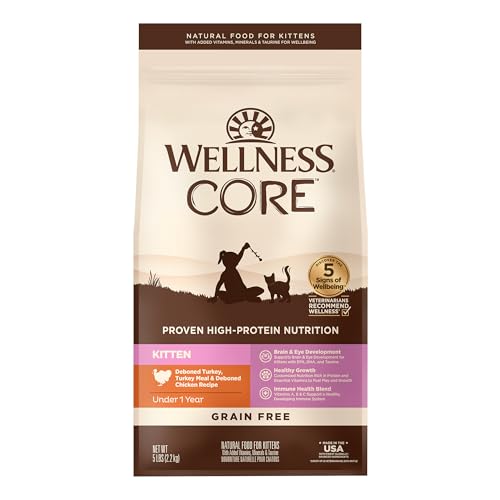
Wellness CORE Kitten
45% min crude protein · grain-free · turkey and chicken first
- ✓ The furthest above the AAFCO growth floor of the three
- ✓ No corn, wheat or soy in the formula
- ✓ Premium tier, priced accordingly
on Amazon
Price as of Sep 21, 2026, 9:21 AM EDT. Product prices and availability are accurate as of the date/time indicated and are subject to change.
Quick take:
- A kitten needs food labeled for “growth” or “all life stages,” not adult maintenance. The label statement is the part that actually matters, not the picture on the front.1
- AAFCO’s growth and reproduction nutrient profile sets a higher protein and fat floor than the adult maintenance profile, because a growing kitten’s body is building bone, muscle and organs on a compressed timeline.2
- Kittens eat more per pound of body weight than adult cats and often do better on three small meals a day instead of one or two.1
- Most vets recommend switching to adult food at 12 months, or later for a slower-maturing kitten, made gradually over one to two weeks.3
- All three foods here are dry. Wet kitten food exists and some kittens do better on it, but it’s worth its own comparison rather than a token card here.
Why kitten food isn’t just a smaller portion of adult food
Every bag of complete and balanced cat food carries an AAFCO nutritional adequacy statement naming the life stage it’s built for: growth, adult maintenance, or all life stages.1 That statement isn’t marketing copy. AAFCO’s growth and reproduction profile, the one that governs kitten food, sets a minimum crude protein level around 30% on a dry matter basis and a fat minimum near 9%, both higher than the adult maintenance floor, along with higher calcium and phosphorus minimums to support bone development.2 A kitten fed an adult formula isn’t getting a smaller version of what it needs. It’s getting a diet built for a body that’s done growing, during the one window of its life when growing is the entire job.
All three foods above are labeled for growth and clear that floor by a wide margin. Wellness CORE Kitten lists the highest number at 45% minimum crude protein, Royal Canin Kitten lists 34%, and Hill’s Science Diet Kitten Indoor lists 33%. The spread matters less than it looks, since all three are complete and balanced for growth. What actually separates them is formulation and fit.
What separates these three bags
Royal Canin Kitten is the formula most vet clinics keep on hand and hand out to new owners by default, less because it’s flashy and more because it’s a conservative, well-established formula with a kibble shape sized for a young kitten’s small jaw and developing teeth. Hill’s Science Diet Kitten Indoor takes the same growth-stage protein floor but trims the fat level compared to Hill’s standard kitten formula, built for a kitten that’s staying indoor-only and burning fewer calories chasing nothing in particular. It also lists added DHA, the fatty acid found in nursing queens’ milk and commonly added for brain and eye development in the first year. Wellness CORE Kitten sits furthest from the other two on paper: a grain-free formula built around turkey and chicken with the highest protein minimum of the three, aimed at owners who want a formula closer to what a cat would eat without domestication in the mix.
When to switch off kitten food
Veterinary nutritionists generally recommend switching from kitten to adult food at one year of age or when a kitten reaches maturity, whichever comes later. Most cats hit 80 to 90% of their adult size between nine and 12 months, though a large-breed kitten like a Maine Coon can take up to 18 months to get there.3 Staying on kitten food too long past that point isn’t harmless. The same higher fat and calorie density built for a growing body starts working against an adult cat that’s stopped growing, and it’s a common, quiet contributor to early weight gain. When it’s time to switch, do it gradually over seven to 14 days, mixing in a little more of the new food each day rather than swapping bags overnight.
When to talk to your vet
Any new kitten should see a vet for its first checkup and vaccine series regardless of what’s in the bowl, and that visit is the right time to confirm the food fits the individual kitten, not just the label. A kitten that’s not gaining weight on schedule, seems persistently hungry despite regular meals, or develops loose stool for more than a day or two after a food switch needs a vet look rather than another bag swap. Kittens with a known health issue, an orphaned or bottle-raised history, or a very small or very large breed background can have nutrition needs a general growth formula doesn’t fully cover, and that’s worth a direct conversation with a vet before settling on a food.
The bottom line
For most new kittens, Royal Canin Kitten is the safe, well-tested default, the one clinics reach for first. Hill’s Science Diet Kitten Indoor is the pick for a kitten that’s staying inside for life and doesn’t need the extra fat a more active kitten would burn through. Wellness CORE Kitten is the pick for owners who want the highest protein number and a grain-free formula and are willing to pay the premium-tier price for it. All three clear the growth floor by a wide margin. What matters most is picking one, sticking with it through the first year, and switching to an adult formula on schedule rather than staying on kitten food out of habit.
Sources
More cat food guides
- Best dry foods for senior cats: the two real options
- The Best High-Protein Dry Cat Foods for Indoor Cats
- Best indoor cat food: 5 formulas that account for a life spent mostly on the couch
- Royal Canin vs Hill’s Science Diet: which one fits your indoor cat?
- Instinct Raw Boost vs Blue Buffalo Wilderness: which grain-free kibble for your indoor cat?
- Stella & Chewy’s vs Primal freeze-dried: which raw food fits your indoor cat?
- Stella & Chewy’s Magical Dinner Dust Review: Does a Freeze-Dried Topper Fix a Picky Eater?
- The Quest cat food recall: what happened, and what I’d feed instead