Best Ceramic Water Bowls for Whisker-Sensitive Cats
I worked the intake desk long enough to notice a pattern with the flat-faced cats we boarded. Same food, same portion, same routine, and yet several of them ate less from the tall steel bowls in the ward than they did from the shallow dishes their owners packed. Staff chalked it up to stress from being boarded, and some of it probably was. But a few owners mentioned the same thing happened at home whenever they switched bowls, which is the kind of pattern that gets a cat owner shopping for a “whisker friendly” ceramic dish. Here’s what’s behind that shopping trip, and the one ceramic pair with a real, tracked link worth pointing you to.
As Amazon Associates we earn from qualifying purchases. Some links in this post are affiliate links; if you buy through them, we earn a small commission at no extra cost to you. We only recommend products we’ve used or researched thoroughly. See our full disclosure.
The picks at a glance
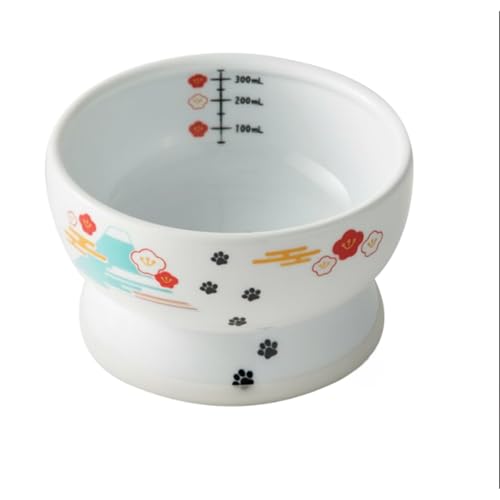
Necoichi Elevated Cat Water Bowl, Ceramic (Fuji)
Wide, shallow ceramic basin · raised base · dishwasher and microwave safe
- ✓ Wide enough that most cats’ whiskers clear the rim
- ✓ Non-porous glazed ceramic, easy to scrub clean daily
- ✓ Raised base lifts water off the floor without a full fountain setup
on Amazon
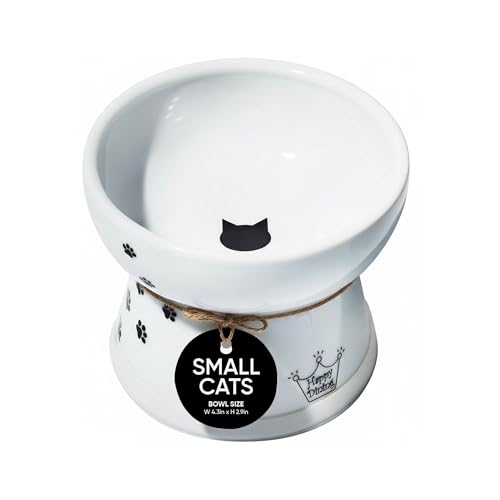
Necoichi Raised Cat Food Bowl, Ceramic (1-cup)
Same wide, shallow ceramic shape · 1-cup capacity · raised, angled base
- ✓ Matches the water bowl’s design so both sit together at the feeding station
- ✓ Shallow bowl means a cat’s face doesn’t have to dip below the rim to finish a meal
- ✓ Ceramic resists the scratches that let bacteria build up in plastic
on Amazon
Quick take:
- There’s really one ceramic water bowl worth pointing you to with a tracked link right now: the Necoichi Elevated Fuji. It’s a genuine wide, shallow design, not a repackaged deep dish with a new name.
- “Whisker fatigue” isn’t a recognized diagnosis, and the one controlled study on it found no difference in how much cats ate, how long they spent eating or how much food they dropped between a whisker-friendly bowl and a regular one.1
- The same study did find that most cats, given a choice side by side, leaned toward the wider bowl. That’s a real preference worth respecting even without a proven mechanism behind it.1
- Ceramic’s actual edge over plastic isn’t whiskers. It’s that a glazed, non-porous surface doesn’t hold the bacteria-trapping scratches plastic develops with use, which is one of the suspected drivers of feline chin acne.2
- Pair the water bowl with the matching Necoichi food bowl and you’ve covered both ends of mealtime in the same shallow, easy-to-clean shape.
What “whisker fatigue” actually is, and isn’t
Whisker fatigue is the theory that a bowl’s sides brushing repeatedly against a cat’s whiskers overstimulates the roughly 100 to 200 nerve endings packed around each one, building up into real discomfort. It’s a plausible-sounding story, and it’s the reason an entire category of “whisker friendly” bowls exists. What it isn’t is a diagnosed condition. No major veterinary body recognizes it, and the only controlled study to test the theory, published in the Journal of Feline Medicine and Surgery, found no measurable difference in eating time, food dropped or amount eaten between cats using their normal deep bowl and a wider whisker-friendly one.1 What the same study did find is worth keeping: when cats were offered both bowls side by side, 63% of them chose the wider one, versus 24% who picked their regular dish.1 So the behavioral proof for a stress mechanism is thin, but the preference is real enough that a wide, shallow bowl is still a reasonable buy. Just don’t shop for one expecting to fix a medical problem that hasn’t been established.
Why the material matters more than the whisker theory
The stronger case for ceramic has nothing to do with whiskers. Plastic dishes develop microscopic scratches with normal use, and those scratches give bacteria a place to collect that daily washing doesn’t fully clear. Veterinary guidance names this as one of the suspected contributors to feline chin acne and recommends switching to a non-porous surface like glass, stainless or sealed ceramic for cats already showing it.2 A glazed ceramic bowl like the Necoichi pair stays smooth through years of scrubbing in a way a scratched-up plastic dish can’t. That’s the honest reason to reach for ceramic. The whisker-fatigue marketing on the box is a bonus story, not the real selling point.
The Necoichi pair: one bowl for each end of a meal
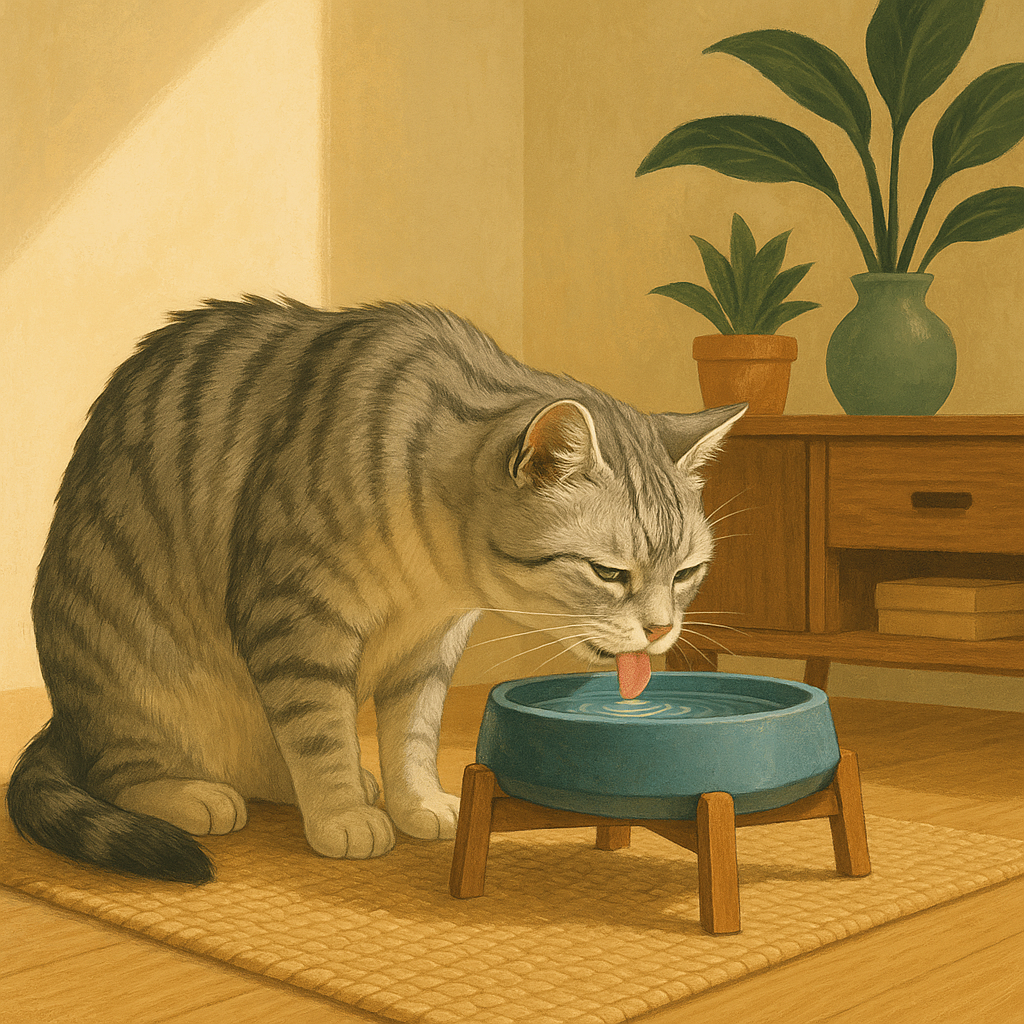
The Fuji water bowl and the 1-cup food bowl share the same shallow, wide-mouthed shape and a slightly raised, angled base, so a cat isn’t dropping her head far below the rim for either water or food. That elevation is a comfort feature, not a proven medical fix. Cats with arthritis or a stiff neck often seem to prefer it, but I wouldn’t buy either bowl expecting it to resolve a real mobility issue on its own. Both pieces are dishwasher and microwave safe, which matters more than it sounds like: a ceramic bowl only keeps its hygiene edge over plastic if it gets washed daily, and a bowl that’s a hassle to clean tends to get skipped.
If your cat is a flat-faced breed, has particularly long whiskers, or is simply a messy eater who drags food out onto the floor, the wider shape is worth trying regardless of what the underlying science says. If none of that describes your cat and she eats fine from a regular bowl, there’s no evidence you’re doing her any harm by leaving well enough alone. The bowl swap matters most for the cat who’s drinking too little to begin with. Most cats have a naturally low thirst drive and need roughly 4 ounces of water per 5 pounds of body weight a day from all sources combined, so anything that gets a reluctant drinker back to the bowl regularly is worth more than the material it’s made from.3
When to talk to your vet
A bowl swap is a reasonable, low-stakes thing to try. It’s not a substitute for a vet visit if what you’re seeing is a change in behavior, not a preference. Get your cat checked if she suddenly stops eating or eats noticeably less, if she paws at her mouth, drools or drops food while chewing, or if you notice new dark specks, swelling or scabbing along the chin that looks like it could be chin acne rather than ordinary dirt. Cats hide pain well, and hesitation at the bowl that shows up alongside any of those signs deserves an exam rather than another bowl purchase.
The bottom line
Skip the idea that you’re treating a diagnosed condition. The Necoichi Elevated Fuji is a genuinely wide, shallow, easy-to-clean water bowl, and the matching food bowl covers the other half of mealtime in the same shape. Ceramic’s real advantage is hygiene, not whiskers. If your cat turns out to prefer the wider bowl, as most cats in the one real study on this did, that’s reason enough to keep using it.