Can I give my cat broth, and does it help with hydration?
Broth comes up a lot as a hydration trick, and the instinct is reasonable: a cat that won’t touch plain water will sometimes lap up something with a little flavor. The catch is that most broth on a grocery shelf is built for people, and a few common ingredients are real problems for cats.
The safe-broth checklist:
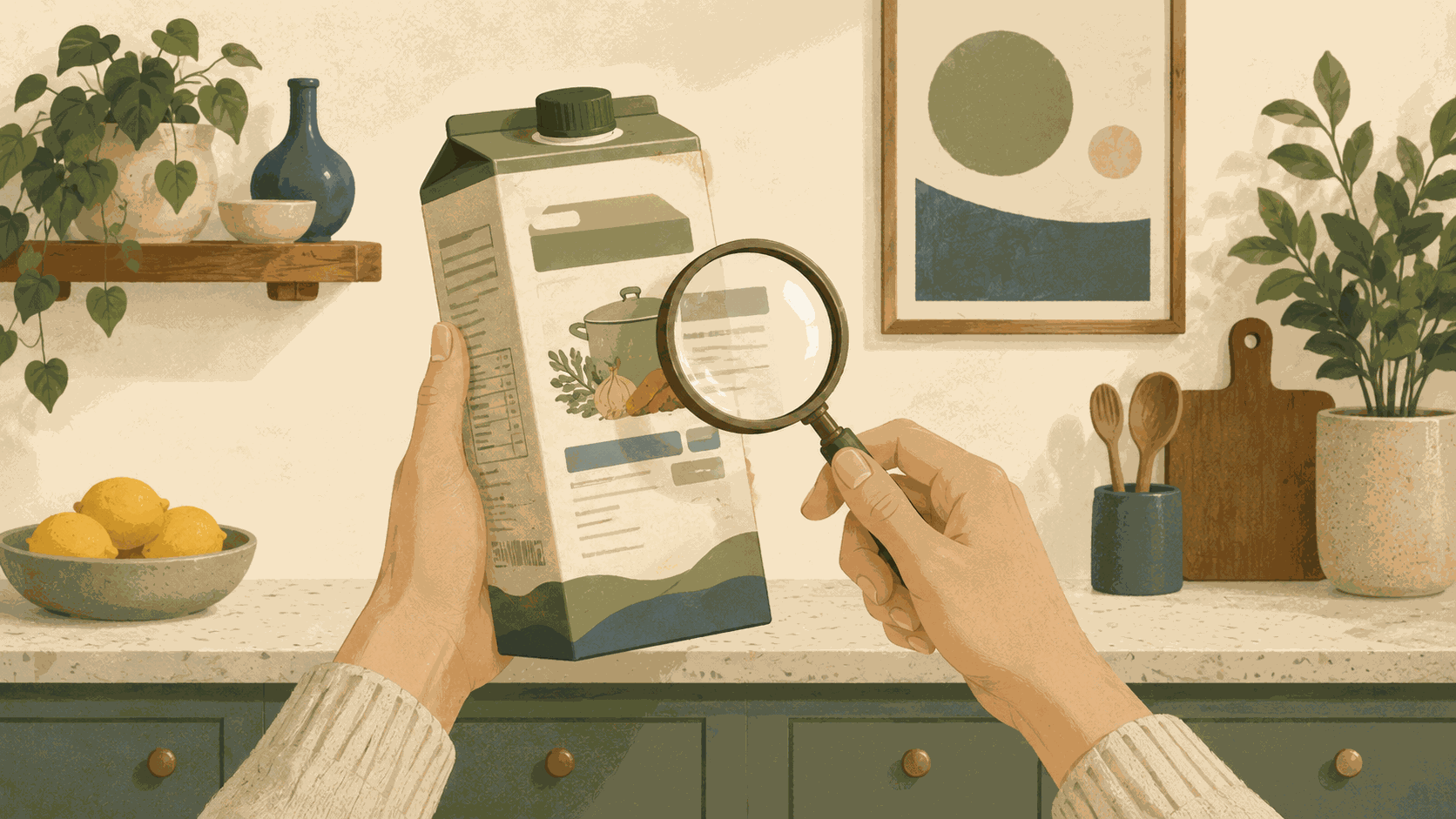
- No onion, garlic, chives or any other Allium relative in the ingredients
- No, or very low, added salt
- Plain, not “seasoned” or “with herbs”
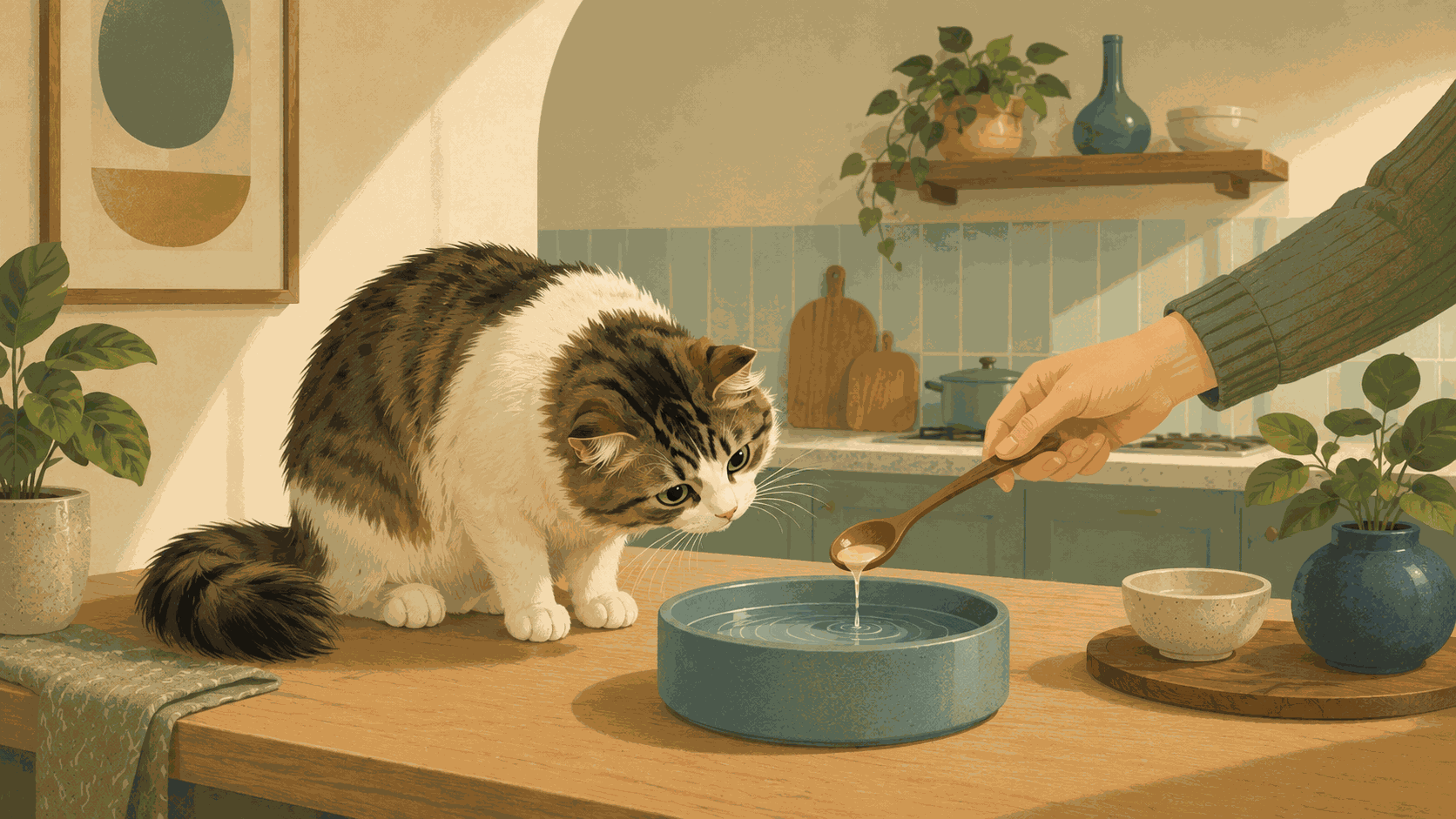
- Offer a tablespoon or two stirred into water or food, not a bowl of broth
- Plain tuna water (the liquid from a can of tuna in water, no oil) works the same way
A short take on broth for cats (Jodie Cat).
What makes store-bought broth a problem
Two problems, kept straight. The first is toxicity. Onion, garlic and chives are Allium-family vegetables, and the ASPCA notes they cause gastrointestinal irritation and red blood cell damage that leads to anemia, with cats more susceptible than dogs.2 They show up in most regular chicken and beef broths, often as “natural flavor” or onion powder, so the ingredient list matters more than the front of the box. The second is salt. Standard broths are high in sodium, and excess salt causes increased thirst and vomiting,2 the opposite of a hydration aid.
Bone broth follows the same rules: plain, no onion or garlic, no added salt. Never feed the cooked bones themselves, since bones can injure or obstruct a cat’s digestive tract.2
When broth actually helps
Cornell lists low-sodium chicken broth, or the liquid from a can of tuna in water, as a way to make the bowl more appealing to a stubborn drinker.1 Use a splash, not a soup. And remember: broth isn’t nutrition; a balanced commercial diet does that job,3 so extras should stay a small part of the day. If your goal is more water overall, broth is one minor tool. Wet food and better bowl placement do more. The full picture is in the hydration playbook.
When to talk to your vet
Call your vet if your cat ate broth or food containing onion or garlic, even if she seems fine. Allium poisoning can take days to show up, so don’t wait for symptoms. Signs to act on include weakness, pale gums, vomiting and dark urine.2 And if you’re reaching for broth because your cat suddenly won’t drink, that change is the thing to get checked.1