Best Freeze-Dried Cat Food Toppers: How to Use Them for Every Picky-Eater Profile
A topper is anything you add on top of a cat’s existing meal to make it more appealing, more nutritious or both. Freeze-dried toppers are one of the more effective categories because they deliver raw-food aroma in a format that works over any base, whether kibble, pâté, shredded wet food or something else. This guide explains why they work, how to use them and which product is right for each of the six picky-eater profiles we see most often in our quiz.
As Amazon Associates we earn from qualifying purchases. Some links in this post are affiliate links; if you buy through them, we earn a small commission at no extra cost to you. We only recommend products we’ve used or researched thoroughly. See our full disclosure.
The six picky-eater profiles referenced below are an in-house framework we use in our feeding quiz; they are not a clinical typology. For the broader medical-first picture on fussy eating, our picky-eater guide is the better starting point.
The picks at a glance:
- Best topper for Texture & Smell Critics and aversion cats: Stella & Chewy’s Magical Dinner Dust
- Best topper for Instinct-Driven Refusers and Discerning Gourmets: Stella & Chewy’s Freeze-Dried Raw Dinner Morsels
- Best topper for Serial Flavor Fatiguers and added hydration: Tiki Cat Born Carnivore Complements Variety Pack
Why freeze-dried toppers work when other strategies do not
Cats rely heavily on smell when deciding whether to engage with food, often more than on taste itself.1 A cat that walks to the bowl and sniffs is largely answering “is this safe, is this prey, do I want to engage” before any tasting happens. That decision is mostly made in the first second based on volatile aromatic compounds.
Freeze-drying preserves those compounds. Cooking destroys most of them. A freeze-dried topper applied to the surface of any base food shifts the bowl’s aromatic signal from “processed food” toward “raw prey.” For many cats, that single change is enough to convert a reluctant eater into an enthusiastic one, without changing the underlying food at all.
This is also why toppers often work better than switching foods for picky cats. Switching foods can itself trigger refusal because the familiar “safe” scent is gone. A topper adds the interesting new signal on top of the familiar base. The cat gets novelty without losing security.
A note on freeze-dried safety
Freeze-drying preserves raw-meat aroma because the process does not apply heat. It also does not heat-kill pathogens. Reputable brands rotate through secondary pathogen-reduction steps such as High-Pressure Processing (HPP), but not every freeze-dried topper does and the FDA has flagged raw and freeze-dried pet products as a Salmonella and Listeria source.2 Confirm a brand’s process if anyone in your household is immunocompromised, pregnant or very young and handle freeze-dried toppers with the same hygiene you would handle raw meat.
The three toppers worth knowing
Stella & Chewy’s Magical Dinner Dust
The Dinner Dust is powdered freeze-dried raw, ground fine enough to be effectively invisible when sprinkled. A cat cannot see or feel a change in their food. They only detect the smell change, which is dramatic. That makes it the most versatile topper we have used: it works over kibble, over pâté, over broth. There is nothing for a texture-sensitive cat to object to.
The Chicken & Salmon formula (ASIN: B0877CG66B) is the best-selling and broadest-appeal option. A 7-ounce bag provides roughly 60 to 80 meals at a standard ¼-teaspoon serving, which makes it one of the most cost-effective freeze-dried upgrades on a per-meal basis.
Stella & Chewy’s Freeze-Dried Raw Dinner Morsels
The Dinner Morsels are the same product in a different form: whole freeze-dried nuggets rather than dust. They are visually distinct, crumble easily and can be fed as a standalone food or crumbled over any base. For cats that respond to visual prey cues (the Instinct-Driven Refuser profile especially), a morsel crumbled over wet food creates something that looks, smells and feels more like raw prey than anything cooked can.
The practical difference versus the Dust: if your cat is texture-sensitive and objects to anything visible on their food, use the Dust. If your cat ignores food because it does not look interesting enough, use the Morsels.
Tiki Cat Born Carnivore Complements Wet Topper Variety Pack
The Tiki Cat Born Carnivore VP is a wet topper in pouch format. It is not freeze-dried, but it is high-protein and highly palatable. Four proteins (chicken, beef, salmon, tuna) in 2.1 oz pouches make it the right choice for Serial Flavor Fatiguers who need rotation built into the topper system itself. One pouch at a time, rotating through proteins, provides a new sensory experience with every serving without any individual flavor becoming familiar.
This is the only topper in this guide that provides meaningful hydration alongside appetite stimulation, which makes it useful for cats that also need more water intake.
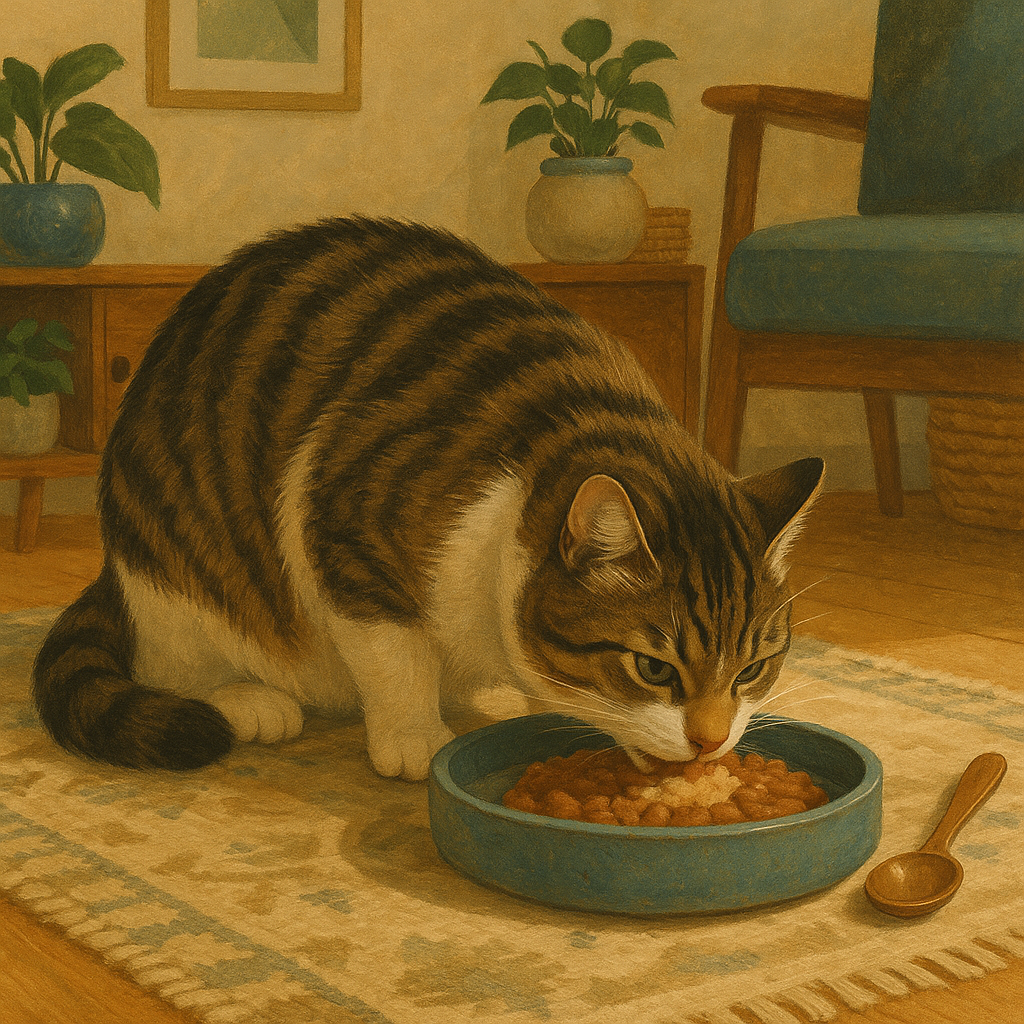
Which topper for which cat profile
Not sure which profile fits your cat? Take the free quiz to find out. The six profiles and their topper matches:
Profile 1, Texture & Smell Critic
This cat rejects food that looks, smells or feels different from what they accepted yesterday. The goal is aromatic improvement without any visible change. Use the Dinner Dust exclusively. Start with ¼ teaspoon on top of the existing food: the same food, the same bowl, the same location. Do not introduce the Morsels until the Dust has been accepted for at least a week. The Dust can be used indefinitely; there is no need to transition off it.
Profile 2, Serial Flavor Fatiguer
This cat eats enthusiastically for a few days then refuses the same food. The problem is not the food; it is that familiarity reduces interest. Use the Tiki Cat Born Carnivore Variety Pack on a rotation schedule. Assign each of the four proteins to a different day of the week and rotate. The base food stays the same; the topper changes constantly. This provides the novelty signal that prevents refusal without requiring you to buy a new bag of food every few days. The Dinner Dust is a good secondary tool here: rotate between Dust and Tiki Cat pouches to extend the rotation.
Profile 3, Instinct-Driven Refuser
This cat will not eat anything that does not trigger prey instincts. Processed food does not register as food to them. Use the Dinner Morsels, crumbled directly on top of whatever base food you are serving. The visual of morsel pieces on the surface of the food is often the trigger that converts this cat; they can see something that looks like real meat. Rehydrated morsels work even better, because the texture after rehydration closely resembles fresh raw meat and triggers the feeding response in most cats in this profile. Once acceptance is consistent, shift toward using the Morsels as a meal component rather than just a topper.
Profile 4, Learned-Aversion Cat
This cat has developed a negative association with food, with a texture, a smell, a specific bowl or a mealtime experience. Trust-rebuilding is the goal. Use the Dinner Dust, very lightly. Start with ⅛ teaspoon: less than you think you need. This is not about aroma transformation; it is about creating a small, positive, novel experience on top of the familiar base. A too-dramatic smell change can itself trigger refusal in aversion cats. Increase the amount very slowly over two to three weeks. The goal is building consistent positive food events, not switching foods. Do not introduce Morsels until the Dust has been fully accepted for at least two weeks. For sudden-onset aversion (a cat that was eating fine yesterday and is not eating today), rule out a medical cause first; our guide to a cat that has suddenly stopped eating covers that scenario.
Profile 5, Committed Kibble Loyalist
This cat has eaten dry food for years and resists any change to their food format. The goal here is not conversion; it is nutritional upgrade within the existing kibble habit. Use the Dinner Dust over kibble. This is the only product that integrates cleanly with dry food. The powder coats the kibble surface and delivers aromatic and nutritional value without any visible change to the bowl. The framing for this profile is simple: still feeding kibble? A 5-second sprinkle adds freeze-dried raw protein to every meal. It is also an effective gateway toward eventual acceptance of wet or raw food, because it begins rebuilding the cat’s aroma associations.
Profile 6, Discerning Gourmet
This cat holds out for better food and responds to visual and aromatic quality cues. Use the Dinner Morsels, placed on top of whatever base food you are serving. Placement matters for this profile: morsels on top, visible at the center of the bowl, communicate quality in a way that mixing them in does not. The Discerning Gourmet responds to presentation as much as to smell. Start with two or three morsels per meal: enough to be visible, not so many that they overwhelm the base food. Once acceptance is solid, this cat is usually the easiest to fully transition to freeze-dried as a primary food.
How much topper to use and when to increase
The default starting amounts for each topper type:
- Dinner Dust: ¼ teaspoon per meal (⅛ for aversion cats). Can increase to ½ teaspoon once accepted. No maximum; this is a complete food sprinkled as an add-on.
- Dinner Morsels (dry): 2 to 3 morsels crumbled over base food. Increase to 4 to 5 after 3 to 4 days of acceptance. Use as a full meal replacement over time if desired.
- Dinner Morsels (rehydrated): 1 to 2 morsels in 1 tablespoon of warm water for 2 minutes, then pour over food. The resulting liquid is highly palatable and most cats lap it eagerly.
- Tiki Cat Born Carnivore pouches: Half a pouch per meal, rotated daily between proteins. Full pouch if the cat accepts it cleanly.
Increase amounts when the cat is eating consistently and stools remain firm. Reduce or slow down if you see soft stools: the protein-density increase can temporarily affect GI consistency until the cat adapts.
Topper versus food switch: which to try first
If your cat is refusing food, reach for a topper before switching brands. Most food refusal is driven by aroma fatigue or sensory issues that a topper addresses directly. Switching foods removes the familiar base, which often makes refusal worse before it gets better. A topper over the existing food adds interest without removing security. Our blog on getting a picky cat to accept new food covers the slow-transition method when a switch is actually needed.
The exception is a cat that has eaten the same food for a very long time and is showing signs of genuine nutritional boredom: eating reluctantly but not refusing outright, low energy at mealtimes, disinterest in food smells they used to respond to. For those cats, a food switch combined with a topper on the new food is the more effective protocol.
For a full guide to freeze-dried food brands and how they compare, see our complete freeze-dried cat food review.
Three more toppers worth trying
Outside the three toppers mapped to picky-eater profiles above, we also rate these three single-ingredient or flavor-boosting options from Raw Paws Pet Food:
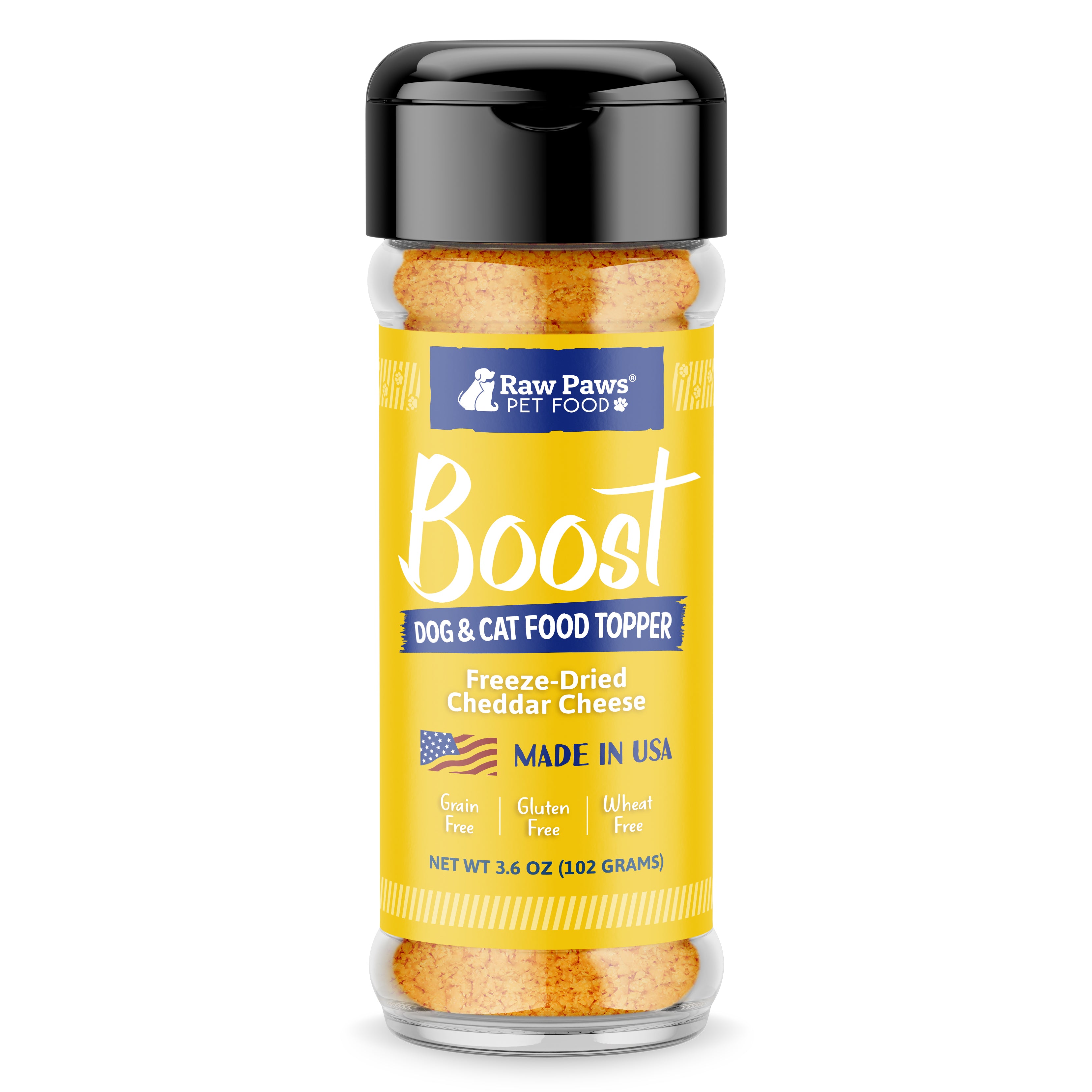
Boost Freeze Dried Wisconsin Cheddar Cheese Topper (Raw Paws)
3.2 oz shaker jar · cheddar cheese flavor · sprinkle or pour
- ✓ Shaker-jar format with both a sprinkle and pour opening
- ✓ A dairy flavor register, different from the fish/poultry toppers above — useful for a Serial Flavor Fatiguer or a cat that responds to cheese scent
- ✓ Works over kibble, wet food or a raw-style diet
- ✓ No grain, gluten or wheat
on Raw Paws Pet Food
Price as of Sep 21, 2026, 9:21 AM EDT. Product prices and availability are accurate as of the date/time indicated and are subject to change.
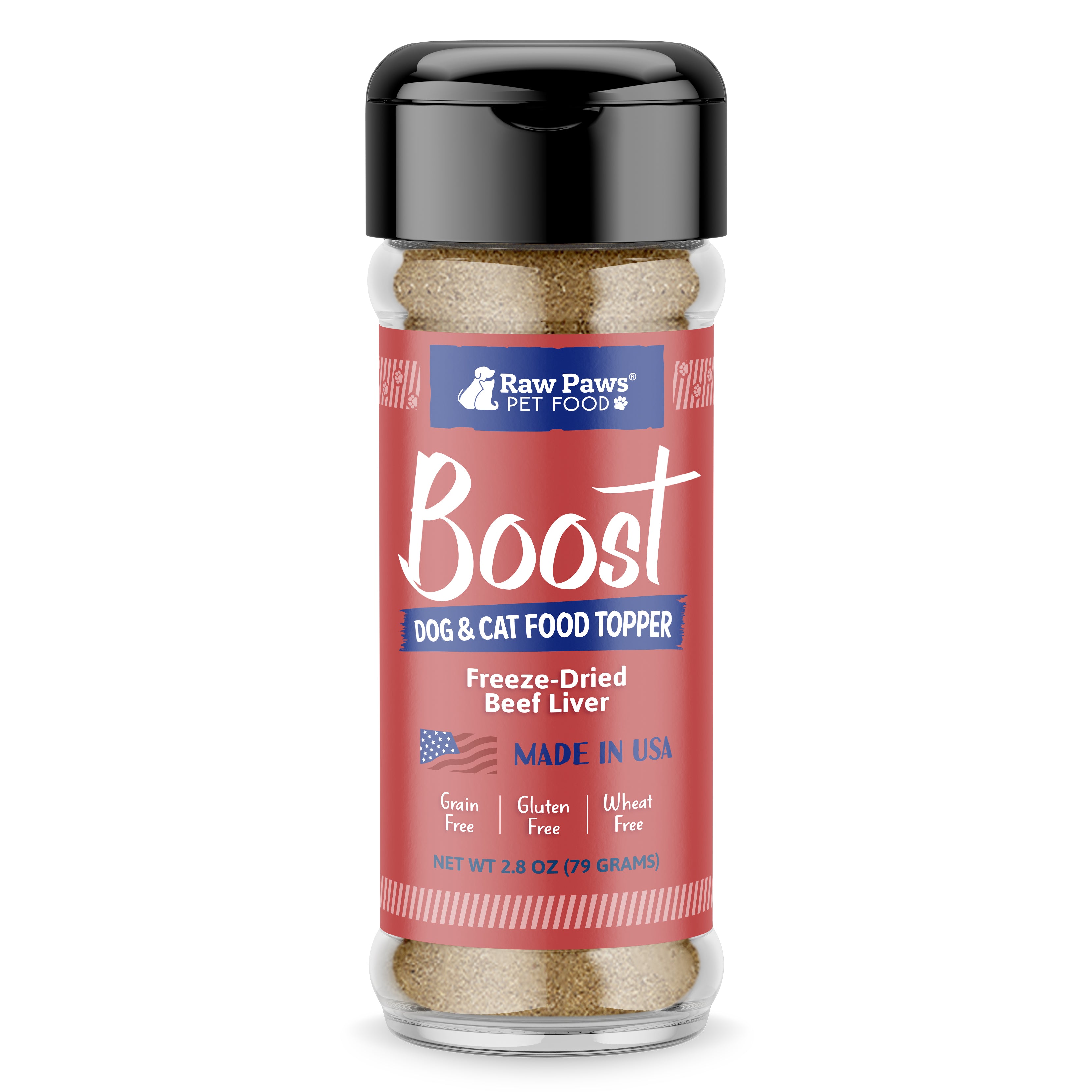
Boost Freeze Dried Beef Liver Topper (Raw Paws)
3.2 oz shaker jar · single-ingredient beef liver
- ✓ Single-ingredient: freeze-dried beef liver only
- ✓ Strong organ-meat aroma — worth trying for the Instinct-Driven Refuser profile above
- ✓ Shaker-jar format for easy sprinkling
- ✓ No preservatives, fillers, flavors or colors
on Raw Paws Pet Food
Price as of Sep 21, 2026, 9:21 AM EDT. Product prices and availability are accurate as of the date/time indicated and are subject to change.
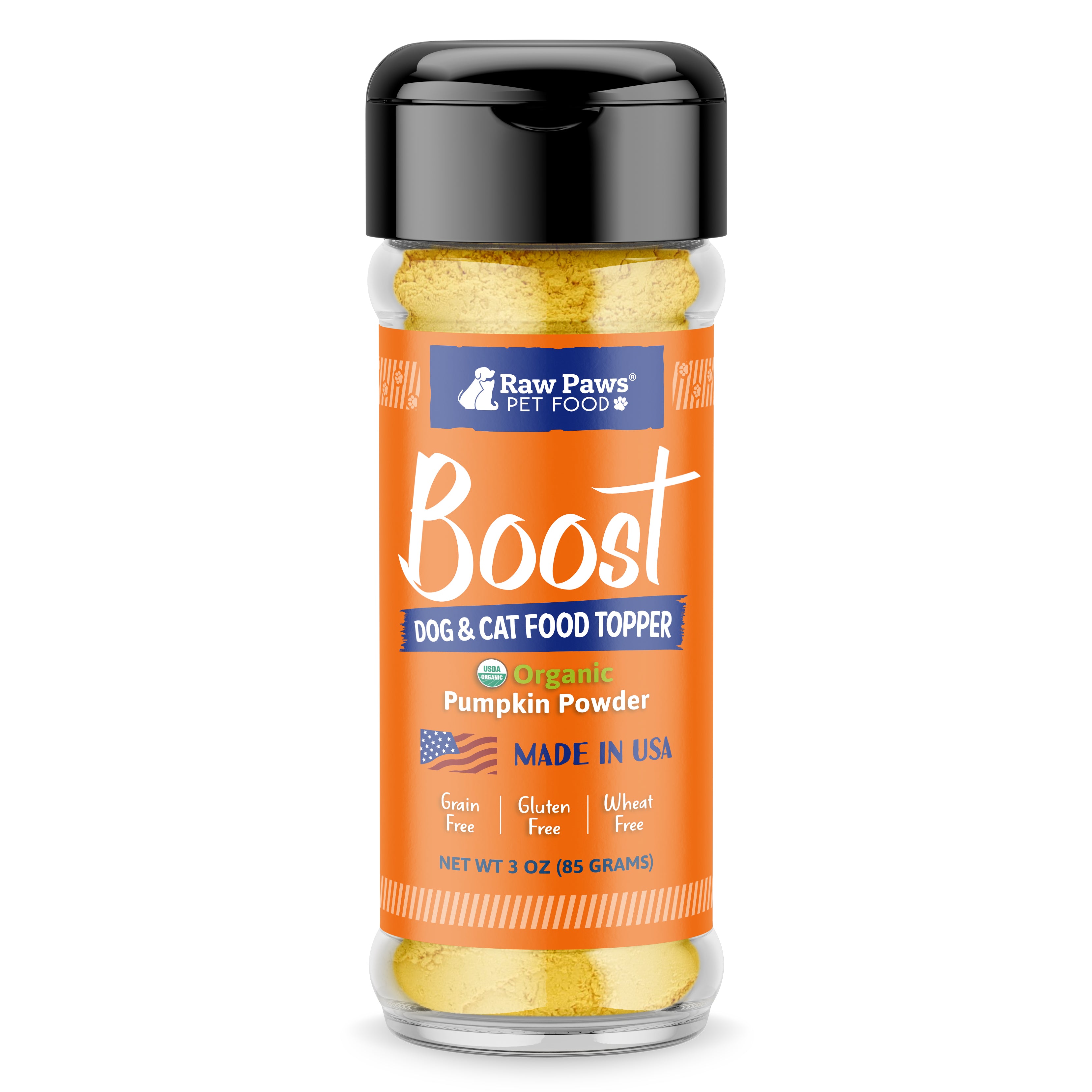
Boost Organic Pumpkin Powder Topper (Raw Paws)
3 oz shaker jar · organic pumpkin powder · non-meat flavor
- ✓ A non-meat flavor option alongside the cheddar and beef-liver toppers above
- ✓ Organic pumpkin, grain-free, gluten-free, wheat-free
- ✓ Shaker-jar format for sprinkling over kibble, wet food or a raw-style diet
- ✓ Useful for cats that respond better to a mild, earthy-sweet flavor than a strong protein scent
on Raw Paws Pet Food
Price as of Sep 21, 2026, 9:21 AM EDT. Product prices and availability are accurate as of the date/time indicated and are subject to change.
Sources
- Cornell Feline Health Center, “Feeding Your Cat”
- FDA Center for Veterinary Medicine, “Get the Facts! Raw Pet Food Diets Can Be Dangerous”
- Stella & Chewy’s and Tiki Cat product labelling, reviewed May 2026
- Manufacturer product pages and specifications, reviewed May 2026