My cat suddenly won’t eat: when picky becomes an emergency
A cat that suddenly stops eating is not being picky. Picky eating means a cat eats, but selectively. A cat that turns away from everything, including foods she has always loved, has a different problem and in cats it is one that gets dangerous quickly. If your cat has eaten little or nothing for a day, this is the post to act on.
Quick take:
- A cat that eats almost nothing for 24 to 48 hours needs to see a vet. This is not a wait-and-see situation.
- Total food refusal is a medical signal, not fussiness. Treat it differently from picky eating.
- Overweight cats are at the highest risk and can decline the fastest.
- Do not try to “wait it out” or let hunger force the issue. Withholding food makes things worse, not better.
- While you arrange a vet visit, offer a warmed, strong-smelling favorite in a calm spot and note whether she is drinking.
Why this is not picky eating
Picky eating and a sudden loss of appetite look similar for a moment at the bowl, but they are different problems. A picky cat is hungry and willing to eat; she is just selective. A cat who has suddenly stopped eating has lost the drive itself. She ignores the foods that always worked, eats a few bites at most or shows no interest at all. That shift, especially when it appears over a day or two, points to something medical: nausea, pain, dental disease, an infection or another underlying illness. The job now is not to find a flavor she likes. It is to find out why she stopped. If your cat is still eating but simply fussy about it, that is the far less urgent situation our picky-eater guide covers.
Why it escalates so fast in cats
Cats handle going off food worse than most animals, and the reason is a condition called hepatic lipidosis or fatty liver. When a cat stops eating, her body sends fat from storage toward the liver to use as fuel, but it arrives faster than the liver can process it. The fat builds up inside the liver and obstructs how it works, and without prompt treatment the condition can be fatal.1 Overweight cats carry more fat to mobilize, so they are at the highest risk and can decline the fastest. Cornell notes that hepatic lipidosis is, in more than 90 percent of cases, secondary to another underlying problem,1 which is the real point: a cat who stops eating almost always has something else going on, and the clock is running.
What to do in the first 24 hours
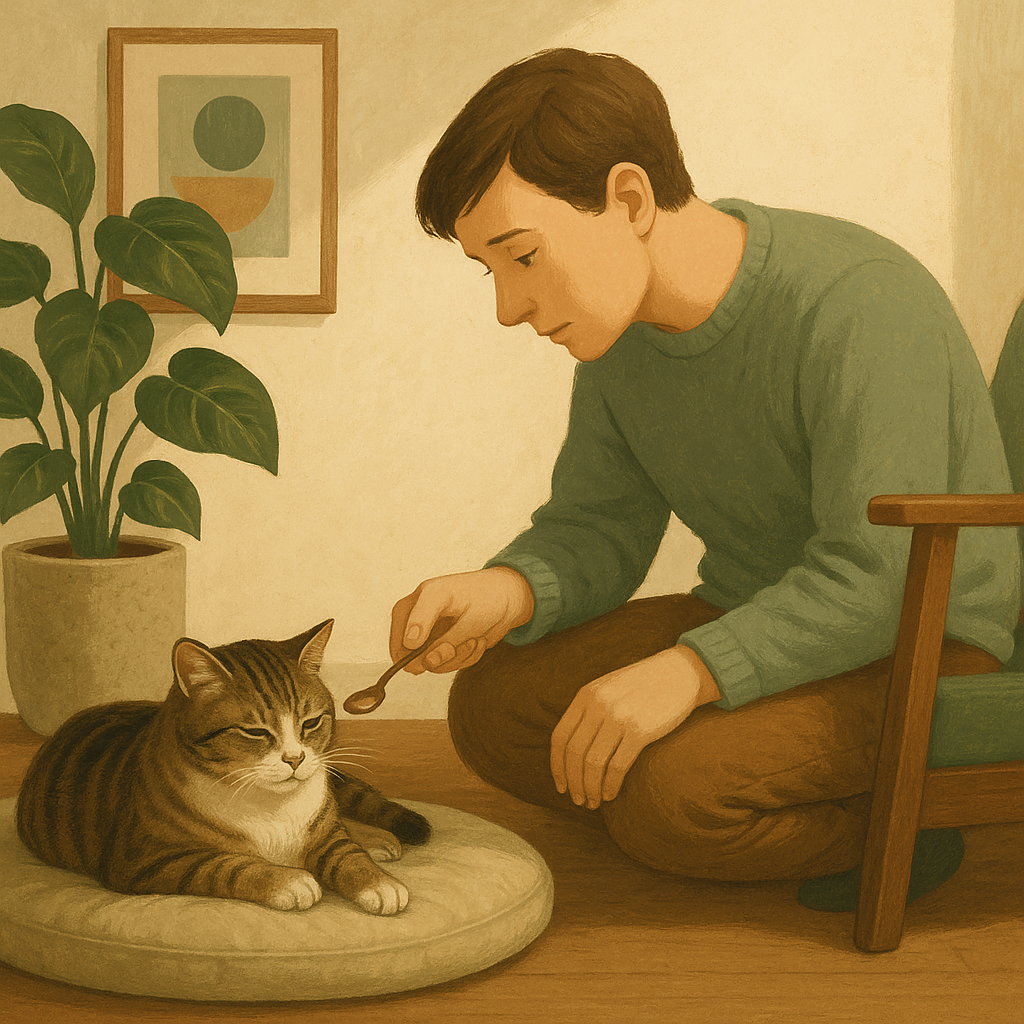
Calling your vet to arrange a visit is the main move. While you wait, you can gently encourage eating. Offer a small amount of a strong-smelling favorite, ideally wet food warmed to about body temperature, since warmth releases aroma. Put it down in a calm, quiet spot away from other pets and foot traffic. Note whether she is drinking water, and whether anything else has changed, such as vomiting, hiding or litter box habits, because your vet will ask. What you must not do is withhold food to make her hungry enough to eat. Hunger is not the problem here, and the delay only raises the fatty-liver risk.
When to call the vet
- Your cat has eaten little or nothing for 24 to 48 hours1
- She refuses foods she has always eaten happily
- Not eating comes with vomiting, lethargy, hiding or weight loss2
- Your cat is overweight and has missed more than a day of meals
- Anything about the change worries you; with appetite loss, earlier is always safer
Once your cat is eating normally again, our free picky-eater quiz returns a feeding plan tailored to her eating pattern.