The Best Cat Food for a Cat Who Gets Bored of Their Food
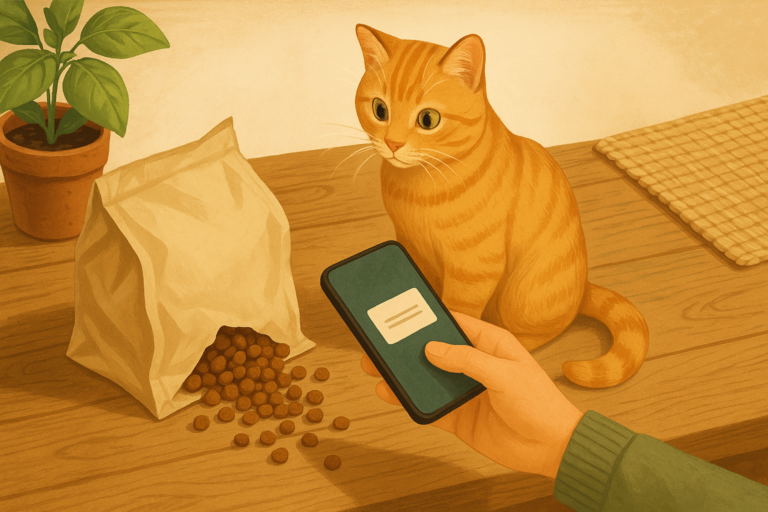
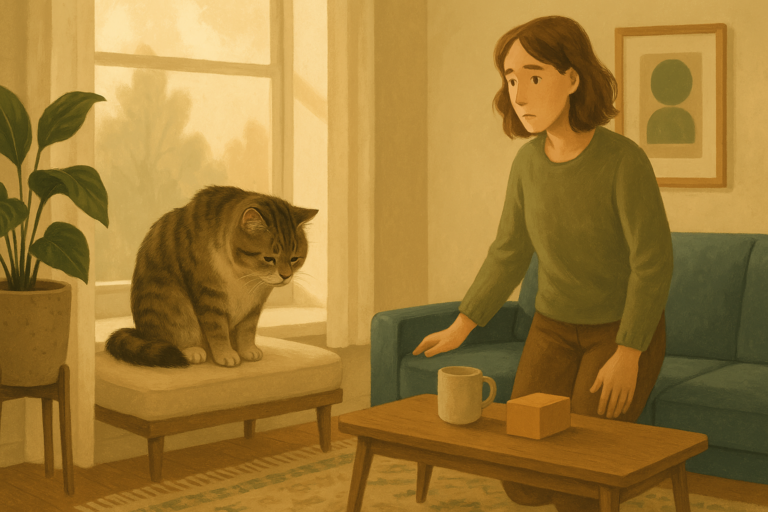
You find a food she loves. For a week she comes running, cleans the bowl and looks for more. Then one morning she sniffs the same can, gives you a flat look and walks off. So you buy something new, she adores it for a few days, and the cycle starts again. Your cupboard fills with half-used bags and cans she has decided are beneath her. If that is the cat you live with, the answer is not finding the one perfect food she will eat forever. There isn’t one. The answer is building variety into how you feed her on purpose, so boredom never gets a chance to set in.
As Amazon Associates we earn from qualifying purchases. Some links in this post are affiliate links; if you buy through them, we earn a small commission at no extra cost to you. We only recommend products we’ve used or researched thoroughly. See our full disclosure.
The variety packs to rotate, at a glance

Tiki Cat After Dark Variety Pack
Novel proteins · shredded texture · grain-free
- ✓ Shredded meat in broth, not uniform pâté
- ✓ Unusual proteins to relight a bored palate
- ✓ High-moisture, grain-free recipes
- ✓ Premium-tier, the exciting option in a rotation
on Amazon
Price as of Oct 26, 2026, 9:21 AM EDT. Product prices and availability are accurate as of the date/time indicated and are subject to change.

Fancy Feast Gravy Lovers Variety Pack
Gravy-forward · widely stocked · multi-flavor box
- ✓ Several poultry and beef flavors per box
- ✓ Saucy textures most cats default to
- ✓ Budget-friendly and easy to find
- ✓ Rotate proteins without buying single cans
on Amazon
Price as of Oct 26, 2026, 9:21 AM EDT. Product prices and availability are accurate as of the date/time indicated and are subject to change.

Sheba Perfect Portions Variety Pack
Single-serve trays · peel and serve · no half-cans
- ✓ Twin-tray single servings, nothing left to spoil
- ✓ Keeps aroma fresh for a fussy eater
- ✓ Easy to trial a new flavor in a small portion
- ✓ Several flavors in one pack
on Amazon
Price as of Oct 26, 2026, 9:21 AM EDT. Product prices and availability are accurate as of the date/time indicated and are subject to change.
Quick take:
- A cat who tires of foods she used to love isn’t broken or spoiled. Cats are wired to seek dietary change, and a food eaten daily slowly loses its appeal.1
- Stop hunting for one forever-food. Feed a rotation of two to four proteins and textures so nothing becomes the everyday default.
- Variety packs do the rotating for you. A multi-flavor box keeps the bowl changing without a cupboard of half-used cans.
- A freeze-dried topper or a warm-up revives interest in a food she has cooled on, often without switching it.2
- Boredom with one flavor is normal. Refusing all food for 24 to 48 hours is not, and it is a vet call.3
Why a food she loved goes boring
I spent several years at the intake desk of a small-animal clinic, and the “she loved it last week, now she won’t touch it” story came up constantly. It feels personal, like the cat is being difficult on purpose. She isn’t. There is a documented pattern behind it.
Cats show what researchers call a monotony effect. A food that has made up a large share of the diet recently becomes less appealing, and a food with contrasting taste, smell or texture becomes more appealing. A review of feline diet selection describes this as part of an inherent drive to seek variety, and one likely reason for it is nutritional: by rotating away from whatever they have eaten a lot of lately, cats avoid loading up on the same nutrients and quietly correct for any imbalance.1 In other words, the boredom is a feature, not a flaw. Her ancestors ate a changing menu of prey, and that wiring is still running in your kitchen.
This is a different problem from a cat who quits a meal halfway through, or one who is loyal to dry food. It is specifically the cat who burns through favorites. If that sounds like yours, the behavioral side of it is worth a read in our guide to why your cat won’t eat the same food twice. This post is the companion piece: what to actually put in the bowl.
The fix is variety, not a perfect food
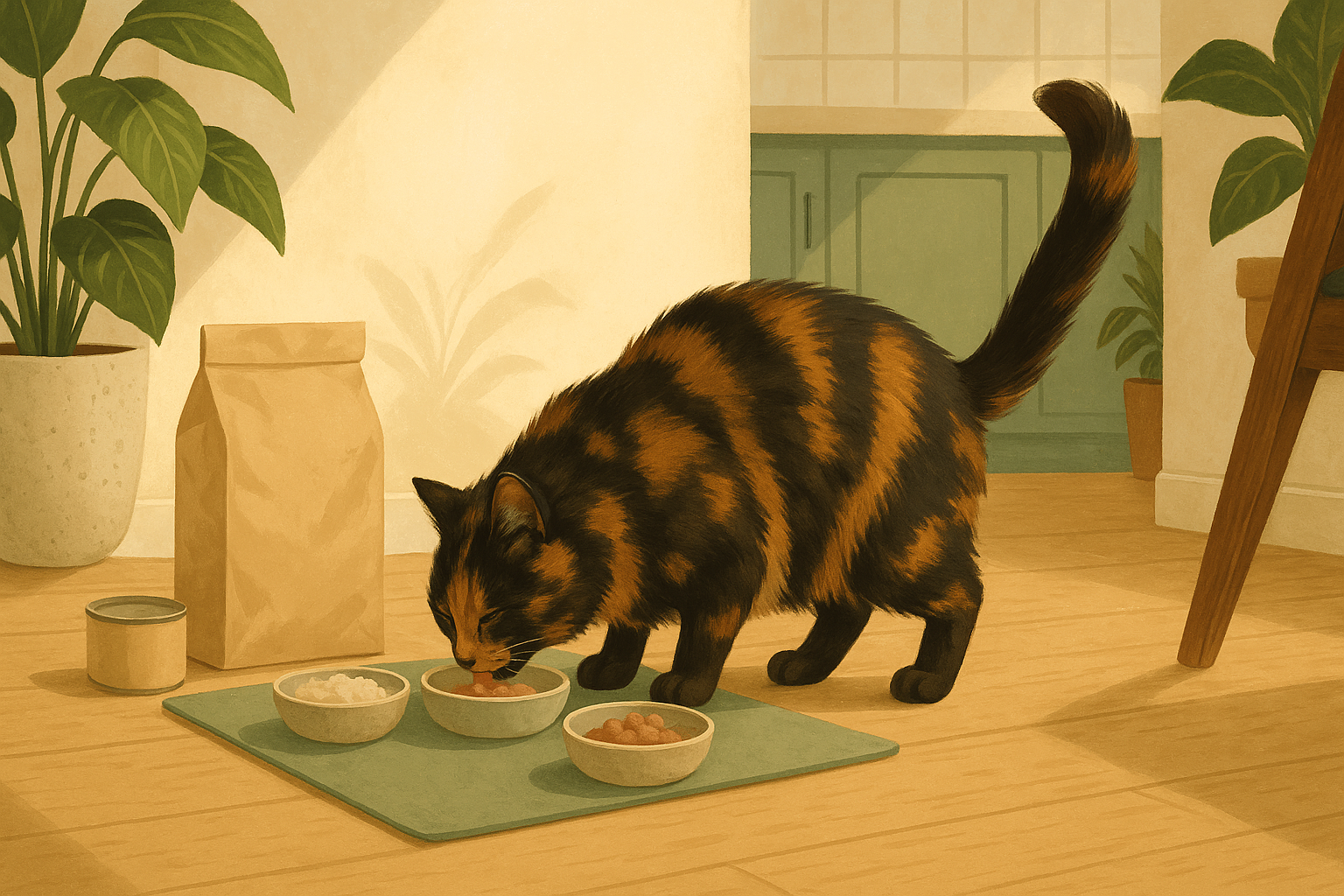
Once you accept that she is built to want change, the strategy gets simple. Instead of searching for the single food she will eat forever, you give her a small rotation and keep any one option from becoming the everyday default. Cycle two to four proteins and textures across the week. Hold a couple of foods in reserve so there is always something that feels new. The goal is to stay a step ahead of the boredom, not to chase it after she has already quit.
That is exactly what variety packs are for, which makes them the natural starting point for a cat like this. A multi-flavor box rotates the menu for you, gives you small single-serve portions so nothing sits around going stale, and lets you learn which proteins she leans toward without committing to a case of any one of them.
The variety packs I’d start with
Tiki Cat After Dark Variety Pack
The Tiki Cat After Dark Variety Pack leans into novel proteins and textures, with shredded meat in broth rather than a uniform pâté. For a cat who is tired of the same supermarket flavors, the unfamiliar smell and the shredded texture are often enough on their own to relight interest. It sits in the premium tier, so I treat it as the exciting option in a rotation rather than the everyday base.
Fancy Feast Gravy Lovers Variety Pack
The Fancy Feast Gravy Lovers Poultry & Beef Variety Pack is the workhorse here. It is widely stocked, budget-friendly and built around the saucy, gravy-forward textures a lot of cats default to. Several flavors in one box means you can change the protein from one meal to the next without buying four separate cans. For many flavor-fatigue cats this is the most cost-effective way to keep the bowl moving.
Sheba Perfect Portions Variety Pack
The Sheba Perfect Portions Variety Pack earns its place on format alone. Each tray is a single serving you peel and use, so there is no half-can drying out in the fridge and losing its smell, which is half the battle with a cat who is fussy about freshness. The twin-tray design also makes it easy to offer a small taste of a new flavor without committing a whole can to a maybe.
Toppers and treats to keep the menu moving
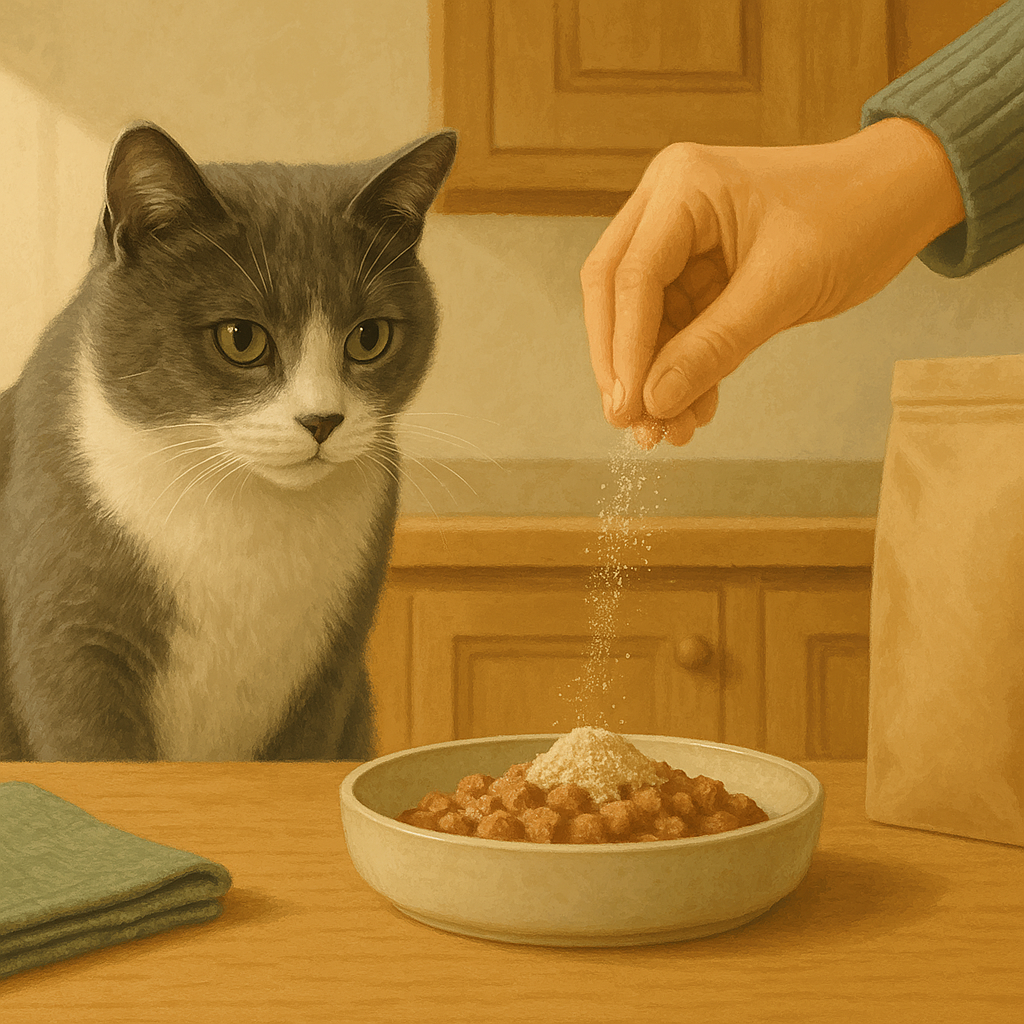
Sometimes you do not need a new food at all. You need to make the food you already have smell new again. Aroma is most of what makes a bowl appealing to a cat, and warmth is what carries it. A Waltham study found cats ate the most when wet food was warmed to about body temperature, because warming releases the meaty volatile compounds they hunt by.2 A topper does the same job from the other direction by adding a fresh hit of scent on top.
The Stella & Chewy’s Magical Dinner Dust is the cleanest tool for this. It is a fine freeze-dried raw powder you sprinkle over whatever is in the bowl, so a cat detects the smell change without seeing or feeling a change in the food underneath. The Tiki Cat Born Carnivore Broths Variety Pack works the same angle as a pour-over broth, with its own flavor rotation built in and some extra moisture. We go deeper on how and when to use these in our freeze-dried toppers guide.
Treats can rotate too. A box like Temptations Classic Favorites Variety Pack gives you several flavors to keep rewards interesting, and a stronger-smelling single-ingredient treat crumbled over a meal can pull a bored cat back to the dish. Our roundup of single-ingredient cat treats covers the ones that double well as toppers.
How to rotate without upsetting her stomach
Rotation only works if her gut keeps up with it. A few habits make the difference.
- Ease in genuinely new brands. Swapping between flavors of a food she already eats is usually fine to do meal to meal. Moving to a different brand or a much richer recipe is best done over several days, mixing a little of the new into the familiar so her digestion adjusts.
- Keep a small core, rotate around it. Two to four foods she does well on is plenty. An endless parade of new things is as likely to upset her stomach as it is to entertain her.
- Hold foods in reserve. Pull a flavor she is cooling on out of the rotation for a couple of weeks instead of forcing it. Brought back later, it often reads as new again.
- Feed kittens variety early. If you have a young cat, exposing her to several proteins, textures and shapes now tends to widen what she will accept for life.1
What not to do
- Don’t bulk-buy one flavor. The case of a single food that seemed like a bargain is exactly what triggers the boredom. Buy small until you know a flavor has staying power, and even then keep it in a rotation.
- Don’t upgrade to richer food on every refusal. If a snubbed bowl reliably produces something fancier, a quick learner starts holding out for it. Rotate among foods you already trust before you reach for an upgrade.
- Don’t read every refusal as a verdict. A flavor she passes on today is often back in favor next week. Park it, rotate on, and try it again later.
- Don’t switch everything at once. Throwing four new foods at her in a week tells you nothing about what she actually likes and can leave her unsettled. Change one variable at a time.
When it’s boredom and when it’s something else
Flavor boredom has a tell: she turns down one food but eats happily the moment you offer a different one. As long as she is eating something on most days, holding her weight and acting like herself, a rotation is all she needs. The picture changes when she stops eating across the board. A cat who refuses every food, who is hiding, drooling, losing weight or just seems off, is not bored. She may be unwell, and that is worth reading carefully in our guide to a cat who suddenly won’t eat.
There is a firm safety line here. Cats must not go without eating for long. Cornell’s Feline Health Center notes that loss of appetite can seriously affect a cat’s health within about 24 hours, and that going without food puts cats at risk of hepatic lipidosis, a dangerous fatty-liver condition that can become life-threatening.34 The rule of thumb: refusing one flavor while eating another is normal. Eating almost nothing for 24 to 48 hours is a vet call, not a food problem. Put down whatever she will reliably eat and phone your vet.
Not sure she’s a flavor fatiguer?
A cat who burns through favorites needs a different plan from one who quits mid-meal, stays loyal to kibble or gets anxious at the bowl, and each pattern points at a different feeding fix and a different shortlist of products. If you are not certain which one you have, our picky-eater quiz sorts your cat into a profile in a couple of minutes and matches her to the approach and the foods most likely to suit her. It is the fastest way to stop guessing and feed the cat in front of you.
Sources
- “Food Preferences in Cats: Effect of Dietary Composition and Intrinsic Variables on Diet Selection” (peer-reviewed review, PubMed Central)
- Waltham Petcare Science Institute, “Could science hold the answer to senior cats’ picky palate?”
- Cornell Feline Health Center, “Anorexia”
- Cornell Feline Health Center, “Hepatic Lipidosis”
TheCatWellness is reader-supported and we are not veterinarians. This article is general information, not medical advice for your individual cat. If your cat stops eating, loses weight or seems unwell, talk to your vet.