Why Your Cat Won’t Eat the Same Food Twice
You find a flavor she loves. For a week she trots over the moment the can opens and licks the dish clean. Then one morning she sniffs the exact same food, gives you a slow blink and walks off. Nothing about the food changed. She did. A cat who tires of a food she devoured a few days ago is one of the most common picky-eater patterns there is, and it has very little to do with the food being bad. It is about novelty, and once you understand that, you stop buying a case of one flavor and start feeding her in a way that works with her wiring instead of against it.
Quick take:
- Cats are wired for variety. Eating the same thing repeatedly dulls a cat’s interest in it, a pattern researchers call the novelty effect.1
- Stop stockpiling one flavor. Rotate 2 to 4 proteins or textures so no single food gets stale.
- Reset a flat bowl with aroma: warm the food to body temperature or sprinkle a freeze-dried topper on top.
- Don’t chase her with richer and richer foods. That teaches her that holding out gets an upgrade.
- Know the difference between boredom and illness. Refusing one flavor is normal. Refusing all food for 24 to 48 hours is a vet call.2
Why a food she loved suddenly bores her
This is not your cat being difficult for sport. Cats evolved as hunters who ate a range of small prey, and that history left them with a built-in pull toward variety. The strongest version shows up in cats fed a single food for a long stretch: offered their usual diet next to something new, they often pick the new one. Researchers reviewing feline taste and palatability call this the novelty effect, and they tie it to an evolutionary habit of eating more than one food source so the cat never runs short on any one nutrient.1 The same review describes the flip side, a kind of palate fatigue where steady exposure to one flavor lowers a cat’s interest in it over time.
So the cat who inhaled the salmon paté on Monday and snubs it on Friday is not broken. She has simply had enough of that exact taste and smell for now, and her instinct is telling her to go find something else. Swap in a different protein and she is interested again, which is the tell that you are dealing with boredom rather than a sick cat or a bad batch.
The serial flavor fatiguer
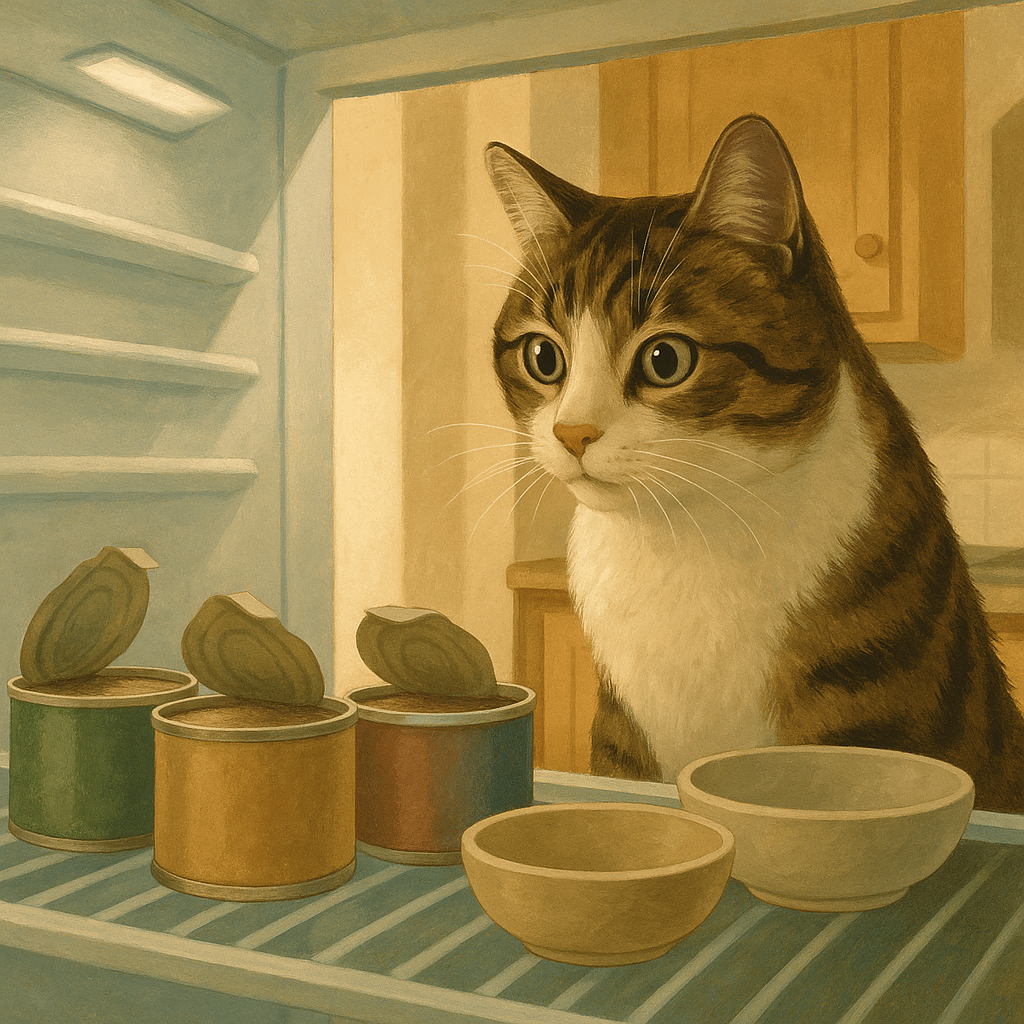
In our picky-eater framework this cat has a name: the serial flavor fatiguer. She is not scared of her bowl and she is not a dedicated kibble holdout. She genuinely likes food, sometimes a little too much, and her problem is repetition. The pattern is easy to spot once you know it. A flavor goes from favorite to refused within a week or two. She eats best right after you switch foods. She has a small graveyard of half-eaten cans in the fridge, each one a flavor she adored and then abandoned. If that is your cat, the fix is not finding the one perfect food. There isn’t one. The fix is managing variety on purpose.
Feed her on rotation
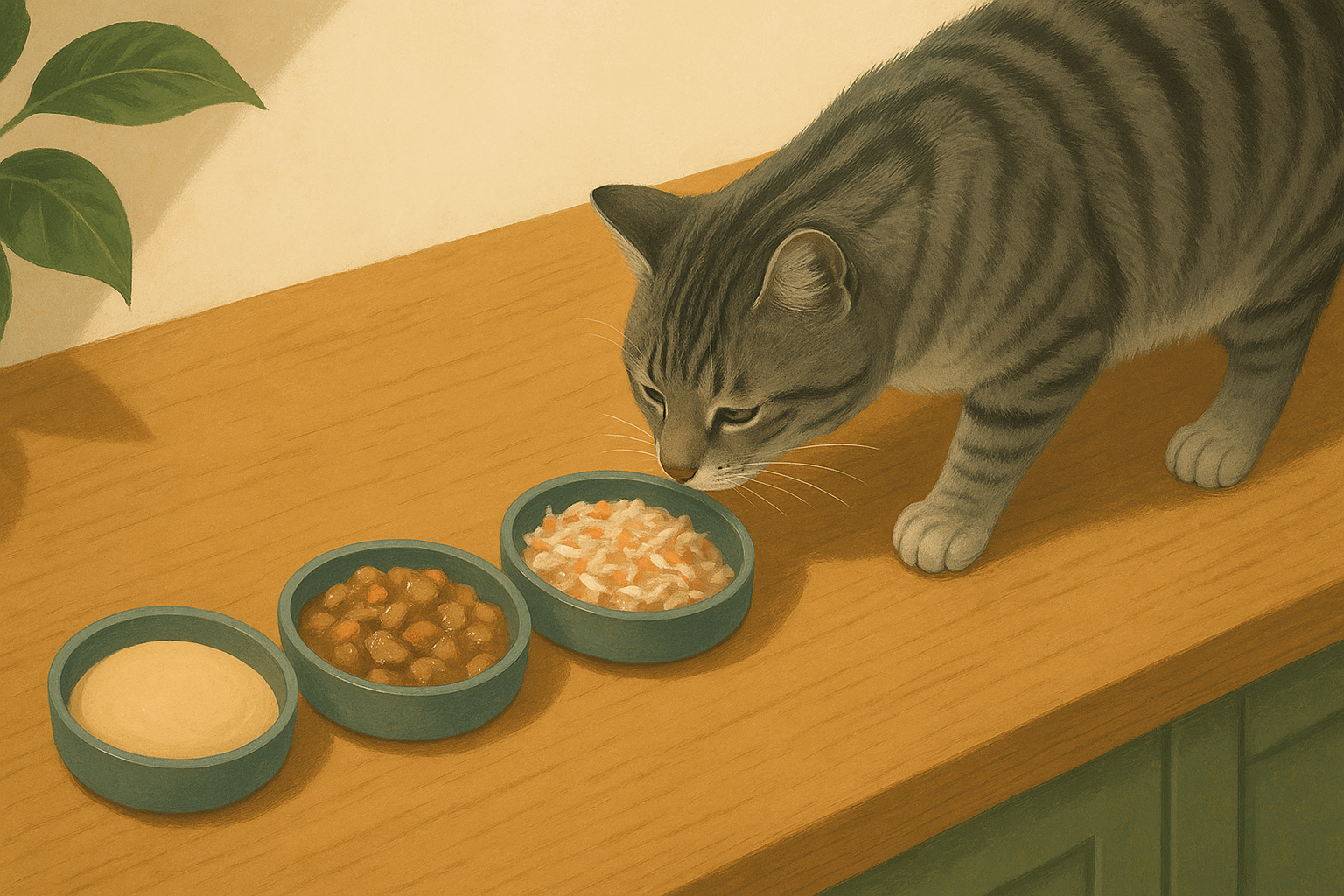
The single most useful change is to stop treating one food as the answer and build a small rotation instead. Pick three or four foods your cat reliably eats, ideally across different proteins (say chicken, a fish and a red meat like beef or rabbit) and different textures (a paté, a chunky food in gravy, a shredded one). Cycle through them so she rarely sees the same thing two or three meals running. Variety is the point, not any single winner.
A few practical rules make this work without upsetting her stomach:
- Don’t bulk-buy one flavor. The case of 24 cans of her current favorite is a trap. By can 10 she may be done with it, and you are stuck. Buy variety packs or small quantities until you know a food earns a place in the rotation.
- Introduce any brand-new food gradually. Rotating among foods her gut already knows is fine to do meal to meal. A food from a new brand or a new protein she has never had should be eased in over a few days to avoid digestive upset.
- Keep a couple of foods in reserve. Hold one or two flavors out of the regular rotation so you always have a fresh option to bring back when she stalls. A food she hasn’t seen in a month reads as new again.
There is a long game here too. Cats raised from kittenhood on a single food tend to be the most neophobic as adults, wary of anything unfamiliar, while cats given a range of foods early learn to treat variety as normal rather than alarming.1 You can’t redo kittenhood, but you can widen an adult cat’s comfort zone slowly by keeping the rotation going, so that “new” stops being a reason to refuse.
Reset a flat bowl with aroma and texture
When a food she usually accepts gets a lukewarm reception, you can often revive it before reaching for a different can. Aroma is most of what makes food appealing to a cat, and aroma comes from warmth. Food straight from the fridge is nearly scentless to her. Warm it to roughly body temperature, around 100 degrees Fahrenheit, with a few seconds in the microwave stirred well so there are no hot spots, and a tired bowl can become interesting again.
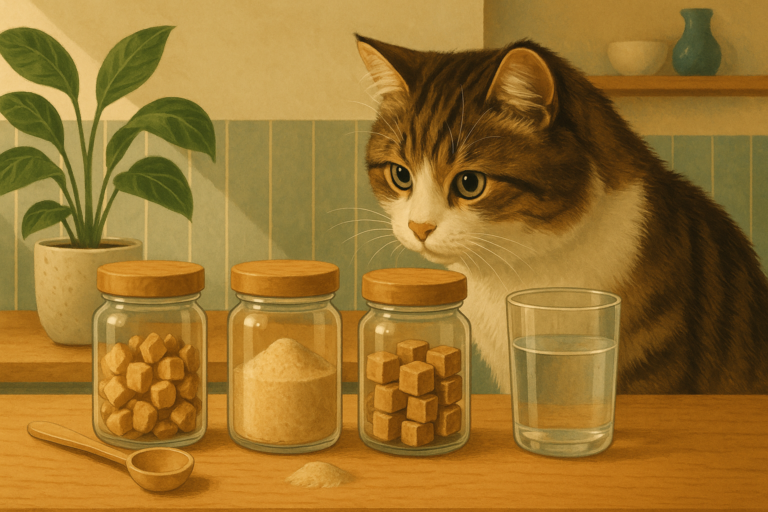
A freeze-dried topper is the other strong lever, and it suits a flavor fatiguer especially well. A sprinkle of crushed freeze-dried chicken or fish adds a hit of intense, novel aroma over a familiar base, which is often enough to flip a refusal into a clean plate. Rotating the topper itself, chicken one week, a single-ingredient fish or liver treat the next, gives you another axis of variety on top of the food underneath. If you want treat ideas that double as aroma resets, our roundup of single-ingredient cat treats covers the ones worth keeping on hand.
What not to do
- Don’t keep upgrading to richer food every time she balks. If a flat no reliably produces a fancier can or a pile of treats, a smart cat learns to refuse on purpose. Hold your line with foods you know she eats, and let novelty come from rotation, not from bribery.
- Don’t leave food out all day to graze. A bowl sitting out for hours goes stale and loses its smell, which makes a bored cat even less interested. Offer a fresh portion, give her 20 to 30 minutes, then take it up until the next meal.
- Don’t confuse rotation with chaos. Rotating among a handful of known foods is good. Switching to a different unfamiliar brand every single day invites loose stools and tells you nothing about what she actually likes.
- Don’t assume more flavors is always the cure. Some flavor fatiguers do best with a tight rotation of three or four foods they trust, brought back in turns. Endless new options can overwhelm rather than help.
When it isn’t boredom
Flavor fatigue has a signature: she refuses one food but eats happily when you offer a different one. The moment that signature breaks, treat it as something else. A cat who turns down every food you put in front of her, who is hiding, drooling, losing weight or acting unwell, is not bored. She may be unwell, and refusal that comes on suddenly across the board is worth a careful read in our guide to a cat who suddenly won’t eat.
There is a firm safety line under all of this. A cat must not go without eating for long. Cornell’s Feline Health Center notes that a loss of appetite can seriously affect a cat’s health within about 24 hours, and that going without food puts cats at risk of hepatic lipidosis, a dangerous fatty-liver condition that can become life-threatening.23 The practical rule: if your cat eats almost nothing for 24 to 48 hours, this is no longer a fussiness problem. Put down whatever she will reliably eat and call your vet. Getting calories into her safely always comes first.
Know what kind of eater you have
A flavor fatiguer who needs rotation is a different cat from one who is loyal to dry food, or one who gets anxious around the bowl itself, and each pattern responds to a different fix. If you are not sure which one you have, our picky-eater quiz sorts your cat into a profile in a couple of minutes and points you at the feeding approach and the products most likely to suit her. It is the fastest way to stop cycling through cans and start with a plan that fits the cat in front of you.
Sources
- Journal of Applied Animal Research, “Taste preferences and diet palatability in cats”
- Cornell Feline Health Center, “Anorexia”
- Cornell Feline Health Center, “Hepatic Lipidosis”
TheCatWellness is reader-supported and we are not veterinarians. This article is general information, not medical advice for your individual cat. If your cat stops eating, loses weight or seems unwell, talk to your vet.