Cat food allergies vs intolerances: how to tell the difference
Back when I was working the intake desk at a small-animal clinic, one conversation came around almost every week. An owner would set down a half-used bag of food and say some version of the same thing: “She’s allergic to grain, so we switched, and then she was still off, so we switched again.” By the third or fourth bag they were frustrated and a little broke, and their cat was no better. Almost every time, the real problem was that two very different things had been quietly folded into one word. The cat had either a food allergy or a food intolerance, and those are not the same problem, do not look the same and do not get fixed the same way.
Sorting the two apart is the single most useful thing an owner can do before spending money on another bag. So here is the honest, plain version of the difference, and what truly finds the culprit.
The short answer
- A food allergy is the immune system attacking a protein it has decided is an enemy. It usually shows up as itchy skin around the head and neck, builds slowly over months and needs a strict diet trial to pin down.
- A food intolerance is a digestive problem with no immune system involved. The classic case is the adult cat and a saucer of milk. Signs are stomach and gut, they come on fast after eating and the fix is simply not feeding that food.
- Grain is rarely the villain. The usual allergens are animal proteins your cat has eaten for a long time, not the wheat or corn on the label.
- No blood, saliva or hair test reliably diagnoses a food allergy. An elimination diet does, and it takes patience.
A reader who stops here already has the important part. The rest is how to tell which one you are looking at, and why the grain-free aisle keeps letting people down.
Allergy or intolerance: the difference that matters
The distinction comes down to whether the immune system is in the room. A true food allergy is an immune reaction. The body wrongly tags a normal food protein as a threat and mounts a defense against it, the same machinery that reacts to a real infection, just aimed at dinner.1 A food intolerance is different. There is no immune misfire, only a body that cannot properly handle or digest a particular ingredient.3 Think of an allergy as a case of mistaken identity by the immune system, and an intolerance as a plumbing problem in the gut.
That sounds academic until you notice it changes almost everything downstream: what signs you see, how fast they appear, how you diagnose it and how you fix it. Get the category right first and the next steps stop being guesswork.
What a food allergy actually looks like
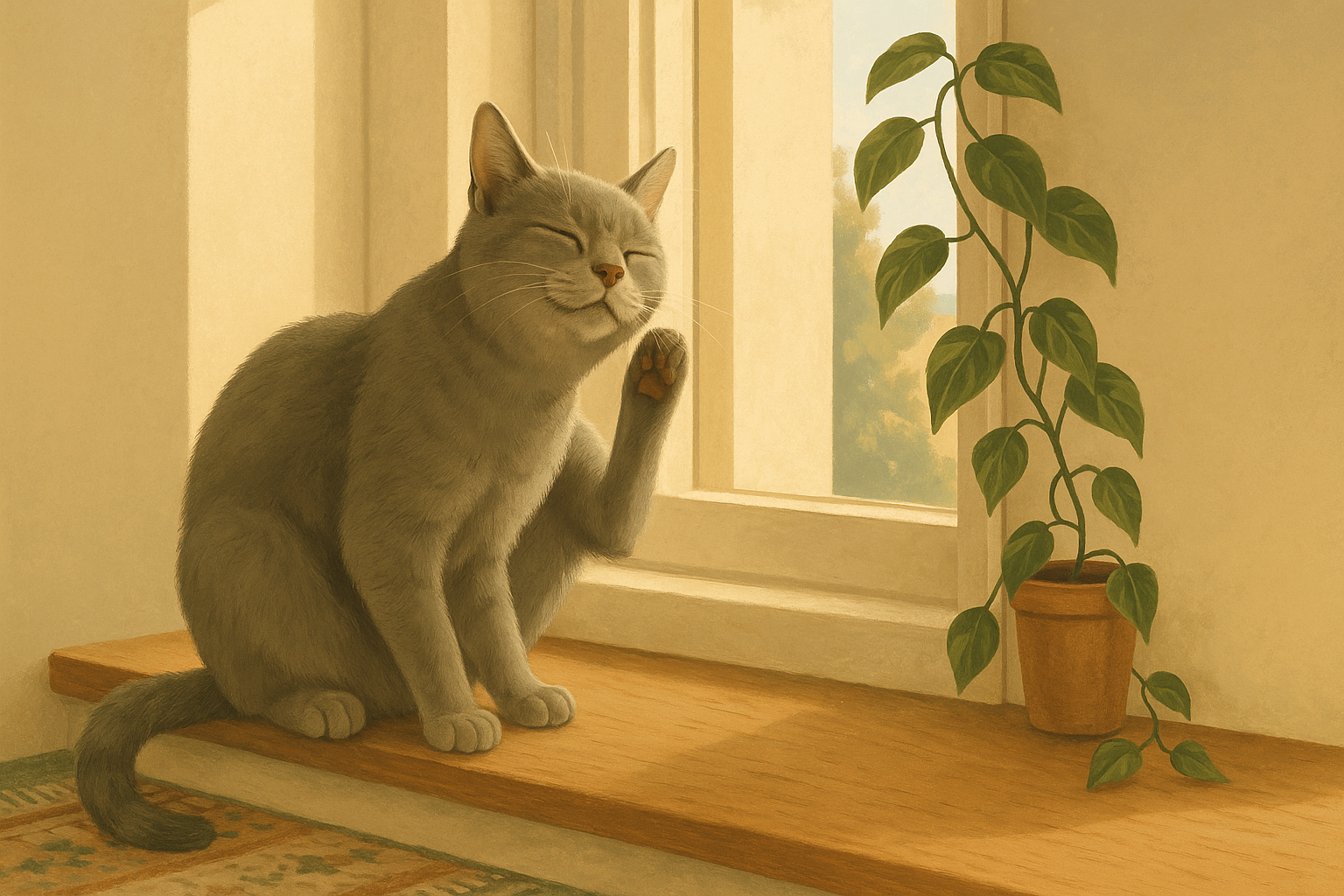
Most people expect a food allergy to be a stomach thing. In cats it is mainly a skin thing. Food allergy is the third most common type of allergy in cats, behind reactions to flea bites and to inhaled substances, and its signature sign is itching.1 Cornell’s Feline Health Center describes the itch as landing mostly on the head and neck, often intense enough that the constant scratching breaks the skin and opens the door to a secondary infection.1 If your cat is grooming her face and ears raw, an allergy belongs high on the list.
The gut is not entirely off the hook. Cornell notes that an estimated 10 to 15 percent of food-allergic cats also vomit or have diarrhea, so some cats show both.1 Two other features are worth holding onto. First, a food allergy builds slowly, over months, as the immune system gradually turns against a protein.1 Second, and this trips up a lot of owners, it can appear in a cat who has eaten the exact same food for years without a problem.1 “She can’t be allergic, she’s always eaten this” is one of the most common and most understandable mistakes. A long, happy history with a food does not rule it out.
What a food intolerance looks like instead
An intolerance keeps its business in the digestive tract. Because the immune system is not involved, there is no slow sensitizing period, and there is no itchy skin as the headline. Instead you tend to see vomiting, loose or liquid stool, gas or plain stomach upset, and it often shows up soon after the meal rather than weeks later.3
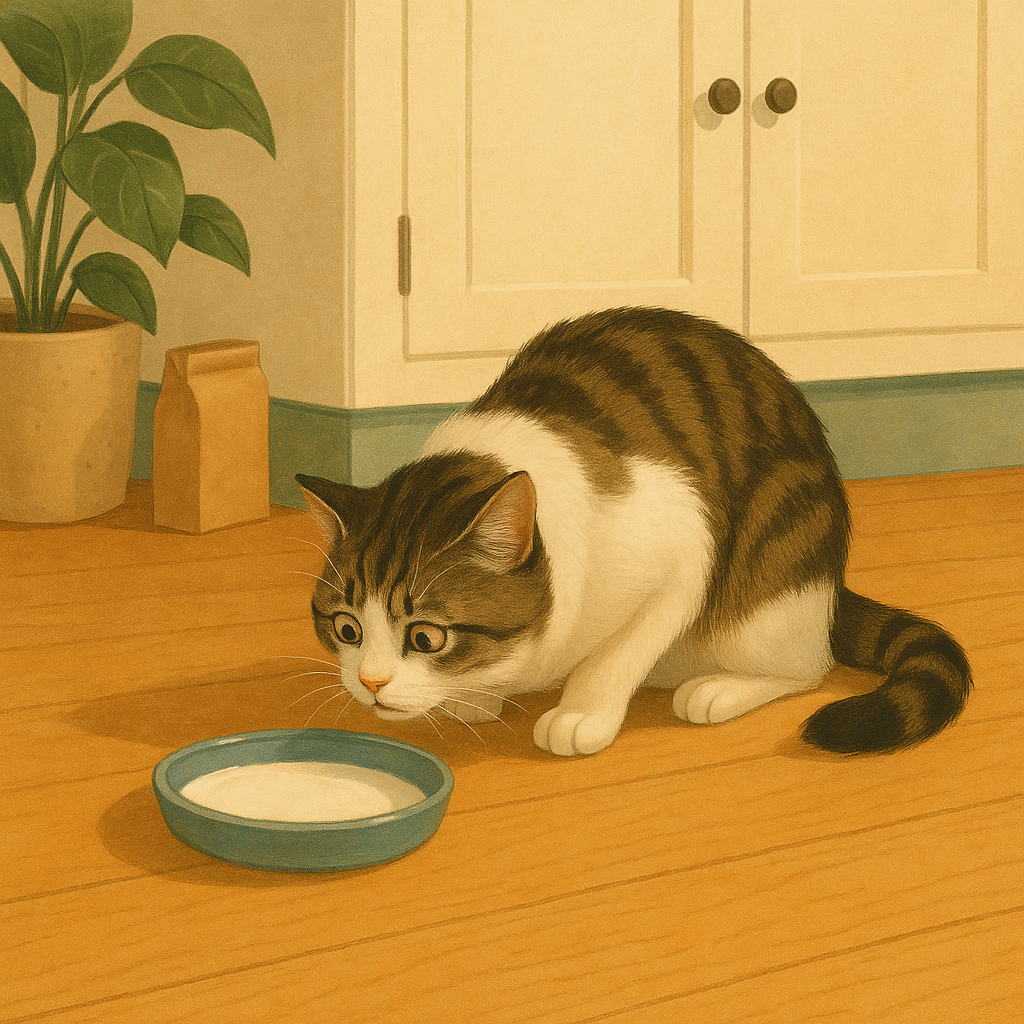
The cleanest everyday example is milk. It is a genuinely surprising one to most people, because the cartoon image of a cat lapping a bowl of cream is everywhere. Most adult cats stop making much of the enzyme that breaks down lactose once they are weaned, so a saucer of cow’s milk can go straight through them as diarrhea.3 That is textbook intolerance: no allergy, no immune reaction, only a gut that no longer has the tool for the job. The fix is equally simple, which is to skip the milk. There is no diet trial and no detective work, plain cause and effect you can usually spot yourself.
Why the grain-free aisle keeps disappointing people
Here is where a lot of money goes to die. The grain-free shelf implies that grain is the thing making cats itch, so switching to it should fix an allergy. The trouble is that grains are not usually the offender. The foods most often behind a feline food allergy are animal proteins the cat has eaten a lot of. Cornell lists the usual suspects as beef, pork, lamb, chicken, turkey and eggs, with dairy also common.1 Carbohydrates can contribute in some cats, but proteins do the bulk of the damage.1
So when a cat is truly allergic to chicken and the owner swaps a chicken-based food for a grain-free one that is also chicken-based, nothing gets better, because the allergen never left the bowl. That is the loop I watched play out at the intake desk again and again. The label changed, the protein did not. If you are going to change the food to chase an allergy, the ingredient that matters is the meat, not the grain.
The only test that works: an elimination diet
People understandably want a quick blood test that names the food. For allergies, it does not exist. No blood, skin, saliva or hair test reliably diagnoses a feline food allergy, and results from those tests are generally regarded as inaccurate.12 What does work is an elimination diet, run with your vet.
The idea is to feed a food built around a protein the cat has never met, a “novel” protein like venison or rabbit, or a veterinary hydrolyzed diet whose proteins are broken into pieces too small for the immune system to recognize.12 You feed that and nothing else, which means no treats, no table scraps and no flavored medicines, for roughly eight to twelve weeks while the old proteins clear and the skin settles.2 If the itching fades on the trial diet, a food allergy was likely the cause. To name the actual culprit, you reintroduce the old ingredients one at a time and watch. If a food is a trigger, the signs usually return within a week or two, and you have your answer.1
The hard part is not the science, it is the discipline. One stolen lick of a family member’s yogurt or one flavored treat can quietly reset the clock, which is why a diet trial that everyone in the house is not committed to tends to fail. If a strict trial feels daunting, that is a sign to lean on your vet to structure it rather than to improvise another bag from the store.
What to do at home, and when to call the vet
If the signs are purely digestive and you can tie them to one obvious food, milk being the classic, you can reasonably drop that food and watch. Making any diet change slowly rather than overnight also spares the gut some grief, which we cover in our guide to switching cat food without upsetting her stomach. For a cat with an ongoing sensitive stomach that no single food explains, our piece on the best diet for a sensitive-stomach cat is a better starting point than another random swap.
Call the vet when the picture is bigger than a one-food hunch. Persistent itching, scabs, hair loss or raw skin around the head and neck deserve a proper look rather than another food change, and skin problems have many causes beyond diet, which is why they anchor our coat and skin guide.1 Book a visit too for repeated vomiting or diarrhea, any weight loss or a cat who is scratching herself bloody, since incessant scratching invites a serious secondary skin infection.1 An elimination diet is worth doing right, and a vet keeps it honest. The reward is a cat who finally stops itching, and a cupboard that stops filling with bags that never worked.