Senior cat behavior changes: when it’s aging, and when it’s not
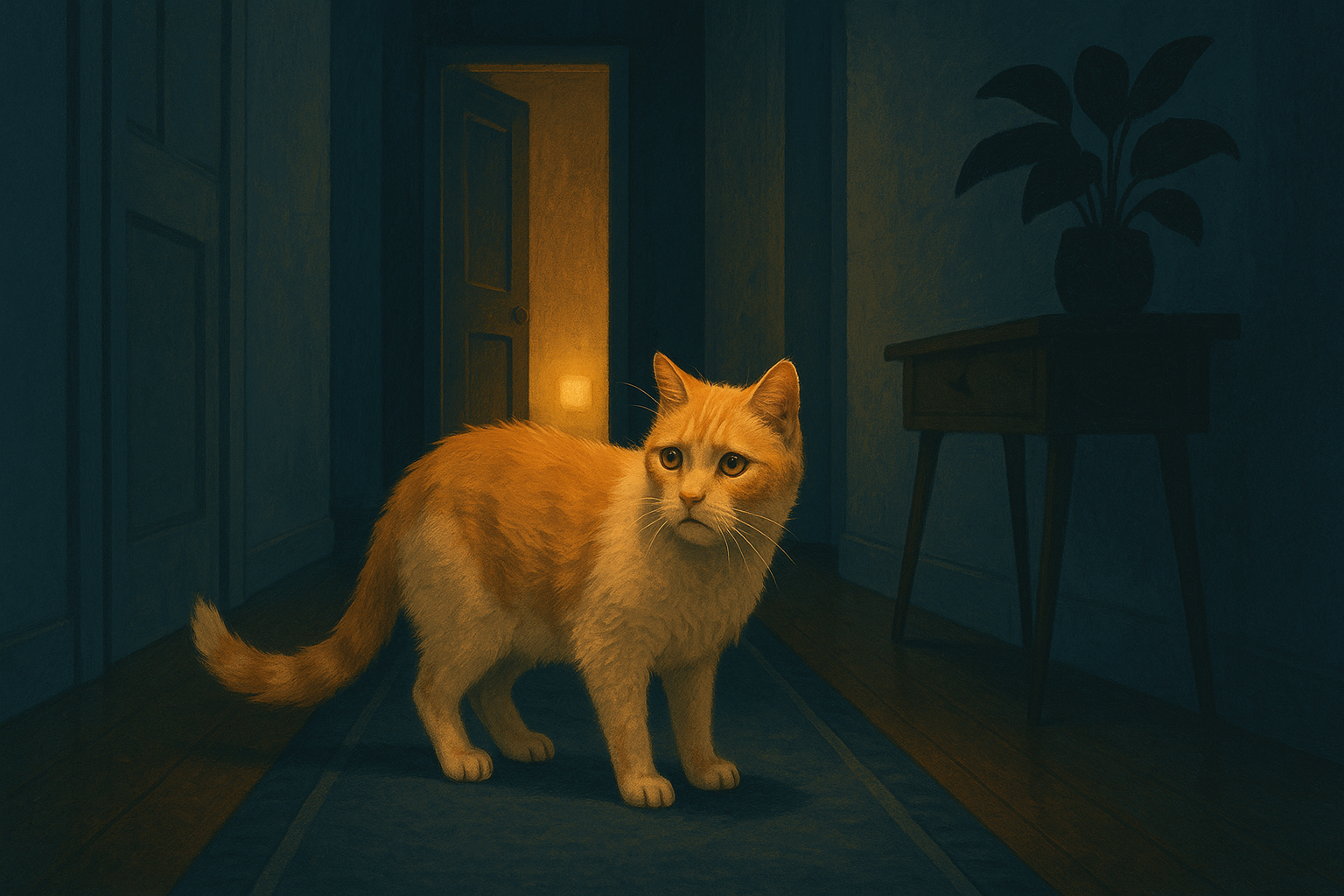
The call I still think about came from a woman whose seventeen-year-old cat had started howling at the bottom of the stairs at three in the morning. Every night, in the same spot, in a voice the owner had never heard from her before, like she was lost in a house she had lived in for a decade. The owner was sure it meant the end was near. What it actually meant was more hopeful and more complicated than that, and it started with a vet visit, not a goodbye.
When an old cat’s behavior shifts, the easy story is “she’s just getting old.” That story is a trap. Some of what you are seeing may be the feline version of dementia, but a lot of it is treatable illness wearing a costume, and you can’t tell which is which from the couch.
Quick take:
- New behavior changes in a senior cat are a health question first, not a sign to shrug off. Book the vet before you assume it’s age.
- Cognitive dysfunction is real and common in old cats, but arthritis, dental pain, thyroid disease, high blood pressure and kidney disease all cause the same behaviors and many are treatable.
- The classic signs are disorientation, night yowling, flipped sleep, new house-soiling, clinginess or withdrawal and staring at walls.
- You can slow the distress a lot with a predictable routine, easy-access litter boxes, ramps, daytime play and a calm home.
- If your cat seems lost in her own house or is crying at night, that is worth a call, not a wait.
“She’s getting old” is the wrong first thought
Cats are living longer than they used to. It is no longer unusual for a cat to reach twenty, and the more cats reach real old age, the more owners run into the behavior changes that come with an aging brain. Indoor cats sit right in the middle of this. They are the ones most likely to make it to fifteen, sixteen, seventeen, so they are the ones most likely to show these changes at all.
Here is the part the rescue taught me to say first. Many of the changes that look like senility are signs of a medical problem you can do something about, so the worst move is to decide nothing can be done and stop looking.2 A cat who suddenly can’t find her litter box might have failing kidneys making her go more often. A cat who stopped jumping to the windowsill might have arthritis, not apathy. The behavior is the smoke. Your vet’s job is to find the fire, and a lot of those fires are ones a treatment can put out.
What cognitive dysfunction looks like
Feline cognitive dysfunction is the closest thing cats have to Alzheimer’s, and it is far more common than most owners realize. One estimate puts it at more than half of cats aged eleven to fifteen and more than 80 percent of cats sixteen to twenty.2 The signs tend to become clearly noticeable around ten years and older.1
What it looks like in a real home: spatial disorientation and wandering, a cat getting stuck in a corner or on the wrong side of a door she has used for years. Excessive sleeping during the day and a flipped sleep-wake cycle, so she is up and restless at night. Long spells of staring blankly at a wall or into space. Less interest in play and in you, or the opposite, a new clinginess she never had. Eliminating outside the box. And the one that breaks owners’ hearts, loud unprompted yowling in the small hours.1 Disorientation is often the first thing owners notice, and it shows up in a large share of cats past seventeen.2
None of these on their own proves dementia. That is the whole point of the next section.
Rule out the body before you blame the brain
This is where the vet visit earns its place, because several common old-cat illnesses produce the exact behaviors people file under senility. Arthritis pain can turn an athletic cat into one who won’t climb, won’t groom her back end and snaps when you touch her. Kidney disease makes a cat urinate more, which can look like she has forgotten her litter box. Painful dental disease can put her off her food bowl. Overactive thyroid and high blood pressure are both known to drive night-time yowling, and high blood pressure can detach the retinas and take a cat’s sight, which leaves her genuinely confused and anxious about a house she can no longer see.1
Any illness that causes pain, poor mobility or sensory loss can also make a cat more irritable, more anxious about being touched and slower to adapt to change.2 So the first step for any of these signs is the same: a thorough exam, usually with bloodwork, a urine check and a blood-pressure reading. If your vet rules the medical causes out, then and only then does the behavior get attributed to the aging brain, and you move on to managing it.
The 3 a.m. yowling
Night crying deserves its own mention because it is the sign that wears people down and, too often, the one that gets a cat punished. Don’t. Showing frustration or yelling only adds anxiety to a cat who is already anxious and disoriented, and it makes the crying worse.2
Once your vet has ruled out the thyroid, blood-pressure and pain causes, the practical fix is to reset her day. Cats who sleep all day are wired to be restless at night, so a real play session in the late afternoon and again in the evening helps tire her toward a normal sleep window. A calm, predictable bedtime routine and easy access to everything she needs in the dark take the edge off the panic. Your vet may also suggest a synthetic pheromone or, in harder cases, an anti-anxiety medication to help her settle.2
How to help a cat whose brain is aging
Most of the help you can give at home comes down to one idea: make her world smaller, softer and more predictable. An aging brain copes badly with surprise, so keep her routine, her food, her furniture and her litter boxes where they are.2 If she seems genuinely lost, shrinking her territory to one floor, or even one room in advanced cases, can make the difference between a cat who is frightened and a cat who can find everything she needs.
A few specific moves matter more than the rest, and they matter more in an apartment where stairs and tight corners get in an old cat’s way:
- Make the litter box effortless. Use boxes with low sides she can step into without pain, keep at least one on every level and add an obvious extra box or two, since house-soiling is the single most common reason older cats end up in front of a behaviorist.2
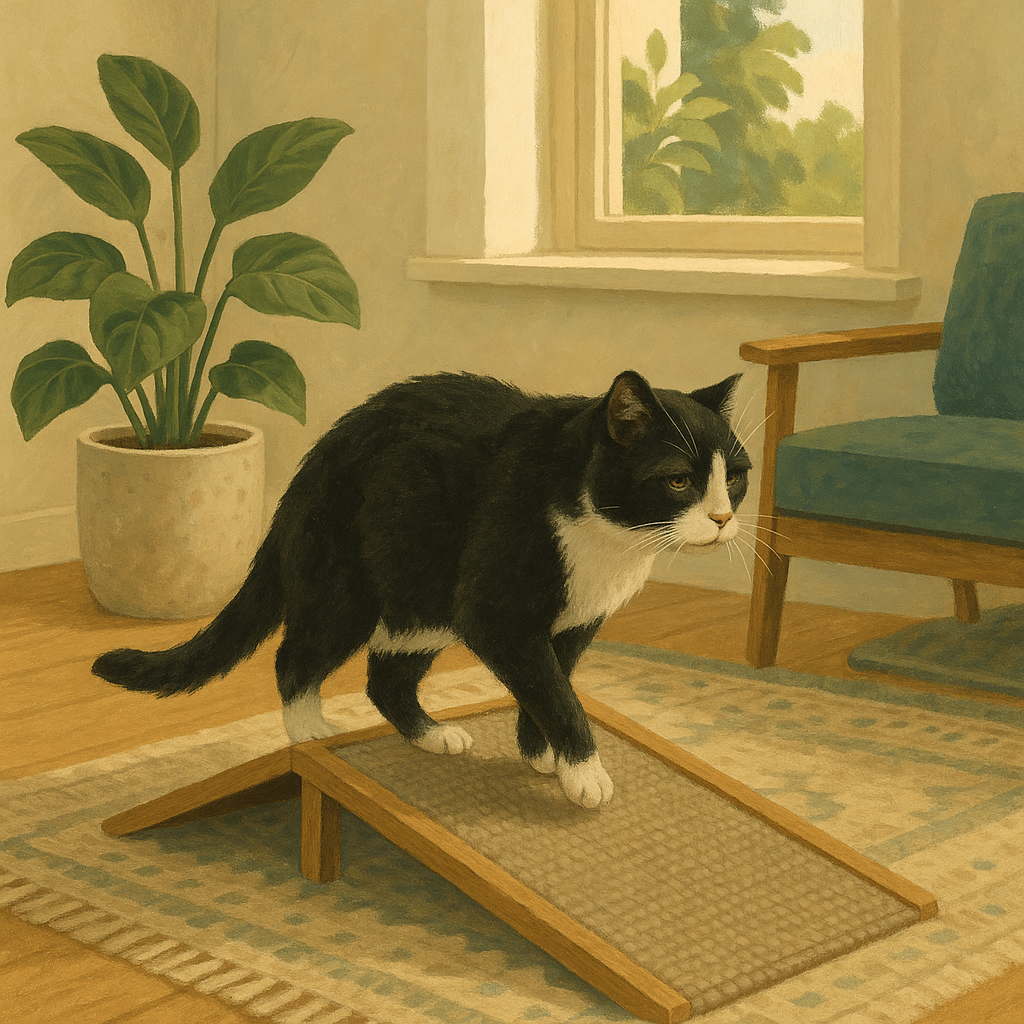
- Add ramps and steps. If she is struggling with stairs or can no longer reach her favorite perch, ramps and low steps give her back the vertical space and the routine she is used to.1
- Protect the routine. Feed, play and wind down at consistent times. Avoid bringing a stressful new pet into the home, which an aging cat handles poorly.1
- Ask about diet and medication. Some vets recommend a senior diet richer in antioxidants and vitamin E, and there are anti-anxiety options like fluoxetine that can ease the worst signs once medical causes are ruled out.1
If you want a broader plan for the whole cat, not only the behavior, our senior cat health checklist lays out the vet cadence and the physical changes to track as she ages, and the litter side has its own detailed fixes in why your cat suddenly stopped using the litter box. For keeping an older indoor cat engaged without overwhelming her, our indoor enrichment guide has gentler, age-appropriate ideas.
When to call the vet
With a senior cat, new behavior is a reason to check in, not a reason to wait. Call your vet if:
- Your cat seems disoriented, gets lost or stuck in familiar rooms or stares at walls
- She has started crying at night, or her sleeping and waking hours have flipped
- She is eliminating outside the box, or going more often than she used to2
- She has become newly clingy, withdrawn, irritable or is grooming and eating less2
- Any change is sudden or paired with weight loss, since fast changes point to a treatable illness rather than slow aging
That owner with the seventeen-year-old? Her cat had high blood pressure. Treated, the night howling eased within weeks. It was never “just old age,” and I am glad she picked up the phone instead of assuming the worst.