How to Groom a Ragdoll Cat: Coat, Mats and the Weekly Routine
A Ragdoll named Biscuit came through the clinic one spring for a routine visit, and the owner mentioned almost in passing that he had stopped letting her touch his back end. When she parted the fur behind his hind legs, the reason was obvious: a tight mat the size of a walnut pulling at the skin. Biscuit was not neglected. His owner brushed him most days. She just brushed the parts she could see, the soft ruff and the top of the back, and missed the spots where a Ragdoll coat actually knots. That is the thing about this breed. The fur looks so silky and low-maintenance that it lulls you, and then the friction zones catch you out.
If you have read our rundown on what to expect from a Ragdoll, you already know the coat mats less than most longhairs. That is true. It still needs a real routine, and doing it well takes about ten minutes a week.
The Ragdoll grooming routine, in short
- Comb, don’t just brush. A steel comb reaches the skin where mats start. A surface brush glides over the top and misses them.1
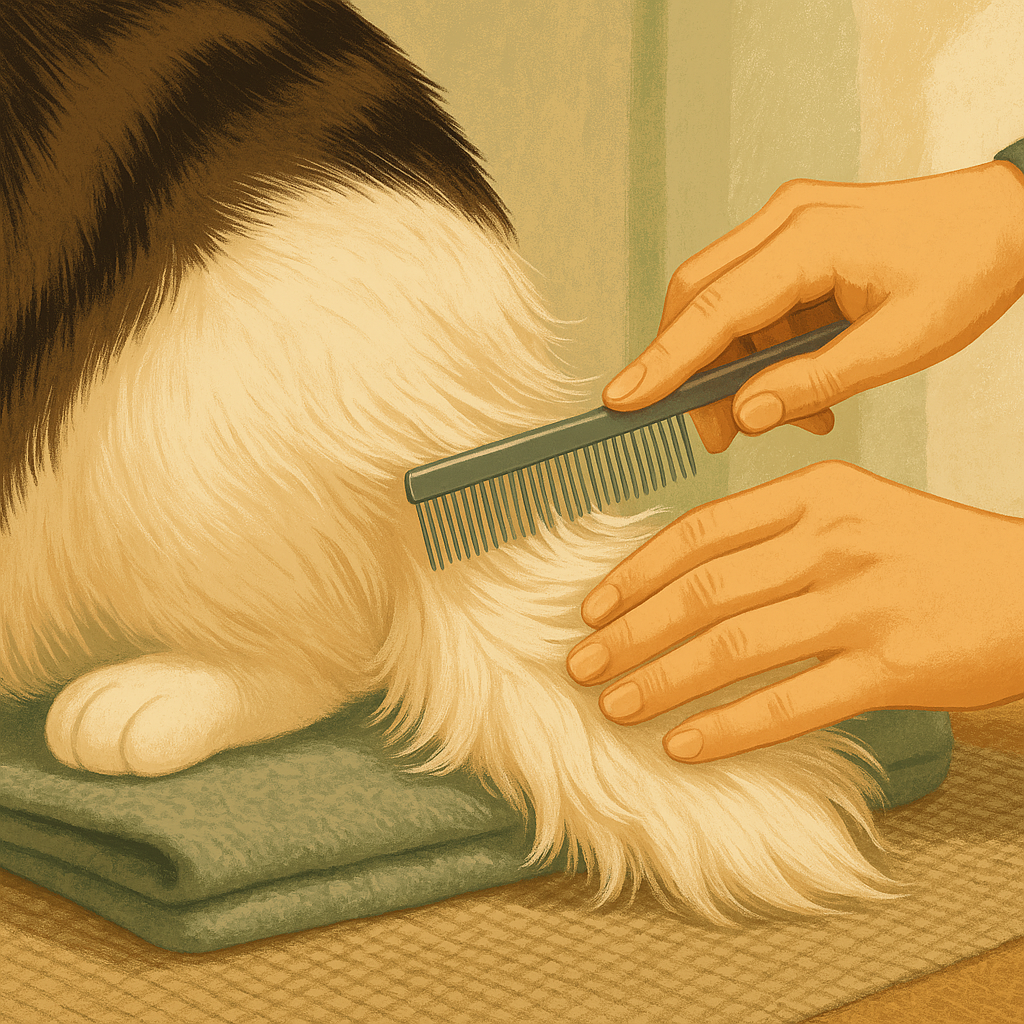
- Go through the whole coat once or twice a week, and hit the friction zones every time: behind the ears, the armpits, the belly and the britches behind the hind legs.2
- Expect a heavier shed when the seasons turn, and step up combing then to keep hairballs down.3
- Work a mat loose with your fingers or a mat-splitter. Never cut one out with scissors.2
- Fold grooming into a body check: nails every couple of weeks, a look at the ears and eyes, a glance at the skin underneath.2
- Start young and keep it short and pleasant so your cat leans into it instead of dreading it.
Why the coat fools people
The Ragdoll coat is mostly guard hair with little of the dense woolly undercoat that drives matting in a Persian or a Maine Coon.1 That is why it feels like rabbit fur and why the registry says a comb-through once or twice a week is enough to keep it in order.1 The trap is that “less matting” is not “no matting.” Wherever the fur rubs against itself, a Ragdoll will still knot, and those spots are predictable. The armpits where the front legs meet the body, the belly, the ruff around the neck and the long feathery britches on the back of the hind legs are the usual suspects. Biscuit’s owner combed the showy parts and skipped the hidden ones, which is the most common grooming mistake I saw with this breed.
There is also an indoor wrinkle. A cat living in a climate-controlled apartment never gets the strong seasonal light cues that trigger a clean twice-a-year molt, so indoor longhairs tend to shed a bit all year round.2 That means the loose hair keeps coming, and if you are not lifting it out with a comb, your cat is swallowing it. More on that below.
The right tool and the right technique
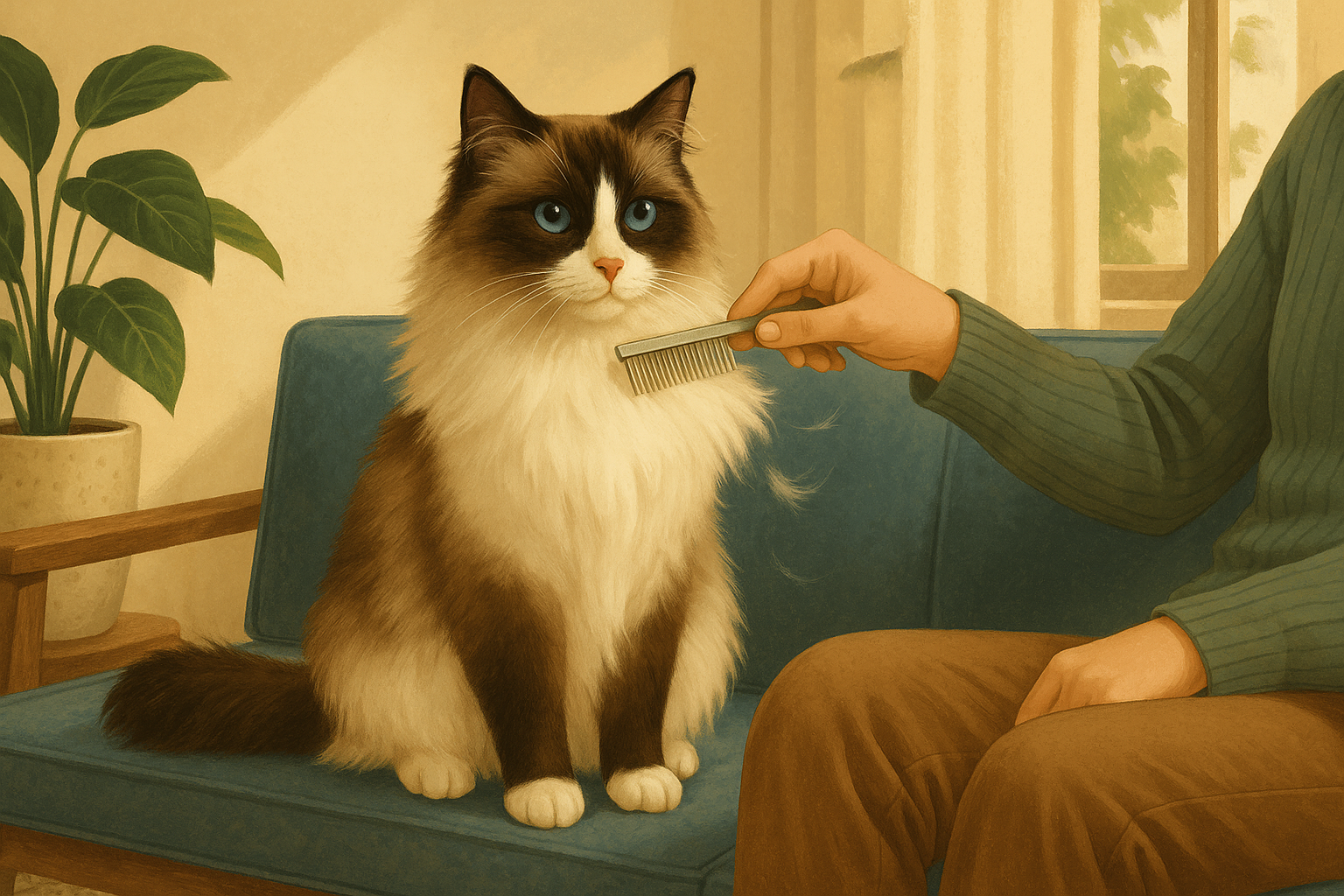
The single change that fixes most Ragdoll coats is switching from a soft brush to a metal comb. A brush with short bristles or rubber nubs feels nice and pulls off the top layer of loose hair, but it rides over the surface and never reaches the base of the coat, which is exactly where mats form. A steel comb with the teeth long enough to reach skin does the real work.1 Many owners use both, a comb to find and clear the tangles and a brush or deshedding tool afterward to lift the loosened undercoat. If you want to go deeper on picking a tool, we compared options in our guide to the best deshedding brushes for long-haired cats.
Technique matters as much as the tool. Work in the direction the fur grows and go one section at a time rather than raking the whole cat at once. On a longhair the ASPCA suggests starting low, at the belly and legs, and combing upward, then doing the neck fur up toward the chin and parting the tail down the middle to comb each side.2 Keep the sessions short. A Ragdoll that gets a calm two-minute pass over the trouble spots most days stays mat-free far more reliably than one that gets a single wrestling match on Sunday.
When you find a mat
Sooner or later you will find one, usually in a spot you missed for a week or two. A small mat you can often tease apart. Hold the fur at the base, between the mat and the skin, so you are not tugging the cat’s skin with every pull, and work it loose with your fingers. Sprinkling a little cornstarch or talc-free powder over a knot helps you separate the strands, and a mat-splitter or a wide-toothed comb can pick it apart from the outside in.2
The one rule I will repeat because it lands people in the emergency room, not the cat: never cut a mat out with scissors. A cat’s skin is loose and thin, and a mat sits right against it, so it is frighteningly easy to lift skin into the blades along with the fur. Cats jerk without warning. The ASPCA is blunt that this leads to lacerations, and I have seen the stitched-up result.2 If a mat is too tight or too close to the skin to work loose gently, that is a job for a groomer or a vet with clippers, not for kitchen scissors. A badly matted coat that has gone past combing is worth a professional groom, and for a heavily pelted cat a short trim once or twice a year is a perfectly good option.2
Grooming is also a hairball defense
Every loose hair you lift out with a comb is a hair your cat does not swallow. That is not a small thing for a longhair. Cornell notes that long-haired breeds are at greater risk of hairballs than short-haired cats, and that they form more often during the shedding seasons, so the advice is to get in the habit of combing the coat regularly, and daily during a heavy molt.3 A Ragdoll grooming itself all day, which they do, is a Ragdoll moving a lot of that shed coat into its own stomach. Consistent combing is the simplest lever you have on how many hairballs you clean off the floor. If you want to sort a true hairball from other kinds of vomiting, we walk through it in hairball or vomit: how to tell.
The rest of the body check
Because you already have your hands on the cat, grooming is the natural time to run through the other bits of upkeep. Nails want a trim every ten days to two weeks, taking only the clear tip and staying well clear of the pink quick.2 A big fluffy Ragdoll can also grow tufts of hair between the toes and around the sanitary area at the rear, which are worth keeping tidy. Glance in the ears for dark waxy debris or an odor, look at the eyes for discharge and run your hands along the skin feeling for scabs, bumps or bald patches.2 None of this takes long once it is a habit, and it means nothing new sneaks up on you between vet visits.
When to talk to your vet
Most Ragdoll grooming is a home job, but a few things earn a call. A mat that has tightened against the skin can trap moisture and hide sores underneath, so if the skin below one looks red, raw or smells off, have it seen rather than fought with at home.2 A sudden jump in shedding, thinning fur or bald patches is not a grooming issue at all but a signal to rule out fleas, allergies, ringworm or a hormonal problem like an overactive thyroid, so book an exam if the coat changes on its own.2 And treat the hairballs as information. An occasional one every week or two is normal, but a cat that retches repeatedly without bringing anything up, or goes off its food or turns lethargic, needs to be checked promptly, because a hairball lodged in the intestine is rare but genuinely dangerous.3 When grooming stops being cosmetic and starts pointing at the skin or the gut underneath, that is your cue to loop in the vet.