The Best Deshedding Brushes for Long-Haired Cats
A long-haired cat sheds on a different schedule than the rest of the house runs on. You vacuum, and by evening there’s a fresh drift of fur along the baseboard and a felted clump forming somewhere you can’t see yet. The owners who came through the clinic intake desk with a Maine Coon or a Persian almost always asked the same thing: which brush actually works on this coat, and is the expensive one worth it? A short answer up front. For a long-haired cat you usually want two tools, not one, and the good news is that neither has to cost much. Here are the deshedding tools worth owning, sorted by the job each one does.
As Amazon Associates we earn from qualifying purchases. Some links in this post are affiliate links; if you buy through them, we earn a small commission at no extra cost to you. We only recommend products we’ve used or researched thoroughly. See our full disclosure.
The picks at a glance
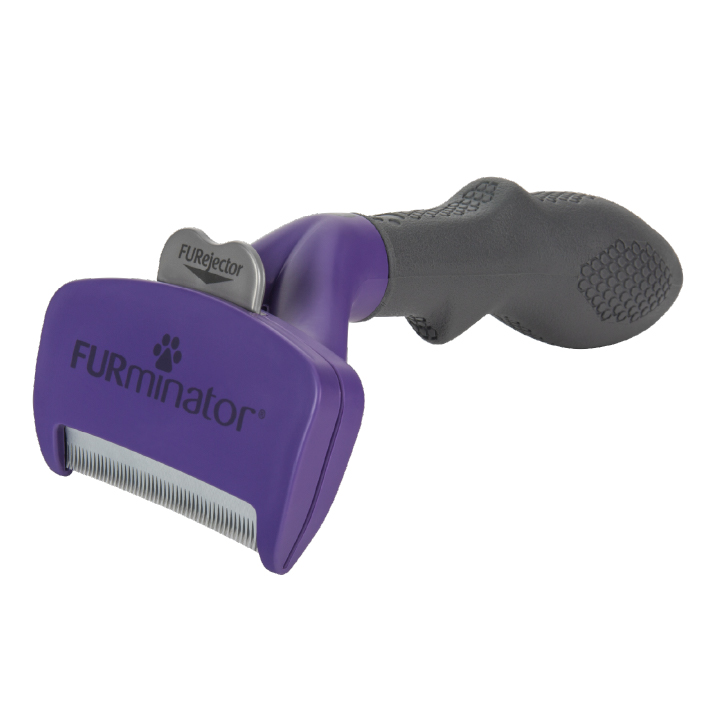
FURminator deShedding Tool (Long Hair)
Stainless undercoat edge · long-hair version · the original
- ✓ Reaches deep undercoat without cutting the healthy topcoat
- ✓ Skin guard keeps the teeth from digging in at the edges
- ✓ FURejector button clears the caught fur in one push
- ✓ Premium tier, sized for medium and large cats
on Amazon
Price as of Sep 21, 2026, 9:21 AM EDT. Product prices and availability are accurate as of the date/time indicated and are subject to change.
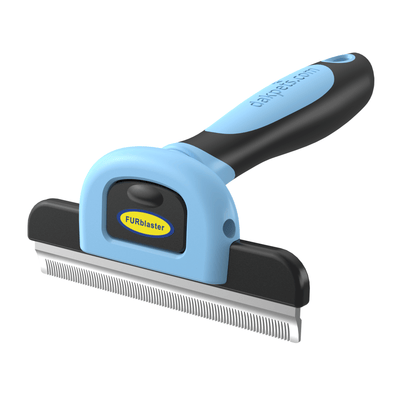
DakPets Deshedding Tool
Same blade idea · lower price · detachable head
- ✓ 4-inch stainless edge lifts loose undercoat the same way
- ✓ Quick-release head pops off for the base of the tail
- ✓ Comes with a blade cover for safe storage
- ✓ Budget-friendly, handles a long coat well
on Amazon
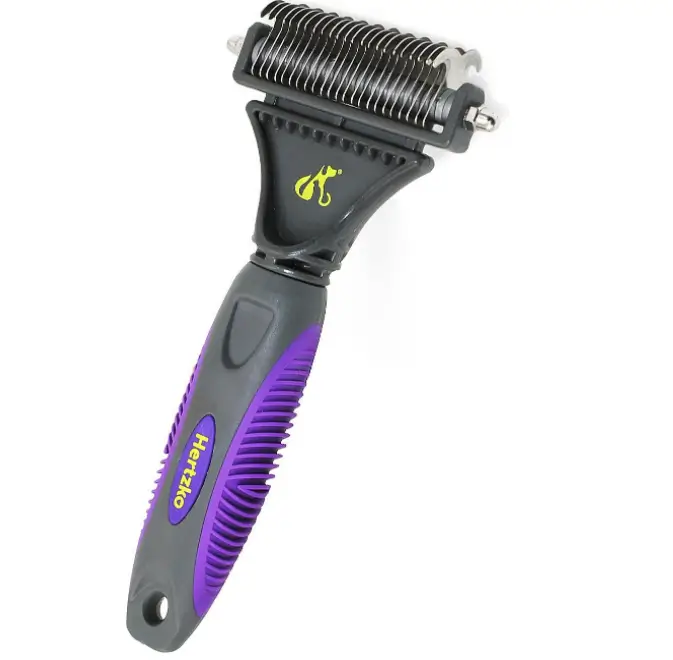
Hertzko Dematting Tool
Double-sided rake · mats and knots · the long-hair problem
- ✓ Curved blades cut through the mats a deshedder skips
- ✓ Two sides: coarse for knots, denser for a lighter pass
- ✓ Rounded tips meant to spare the skin underneath
- ✓ The pairing tool for a coat that felts, not for daily fluff
on Amazon
Price as of Sep 21, 2026, 9:21 AM EDT. Product prices and availability are accurate as of the date/time indicated and are subject to change.
The short version
- A long coat needs two tools. A deshedder for the loose undercoat and a dematting rake for the knots. They do different jobs, and one won’t cover the other.
- FURminator is the best deshedder for the money most people should spend. The long-hair version reaches deep undercoat, the skin guard and eject button are genuinely better than the copies, and it earns the premium tier.
- DakPets is the value pick. A near-identical blade for a fraction of the outlay. If you don’t want to pay for the original, this gets a long coat under control.
- Hertzko solves the thing deshedders can’t. Mats behind the ears, in the armpits and along the belly. Cut them apart with a dematting tool, don’t drag a deshedder through them.
- This is preventive care, not just tidiness. Pulling loose hair before your cat swallows it means fewer hairballs, which Cornell notes hit long-haired cats hardest. [1][2]
- Technique beats the brand. Short sessions, light pressure and never over bare or sore skin.
Why long-haired cats need a different plan
Every cat has two coat layers: the coarse guard hairs you see and a soft undercoat beneath them. In a long-haired cat that undercoat is denser and longer, so when it sheds it doesn’t just fall away. It tangles into the topcoat and, left alone, felts into mats close to the skin. That’s the fork in the road for buying a tool. A deshedder is built to lift the loose undercoat out before it tangles. A dematting rake is built to break apart the tangle once it has already formed. You can’t substitute one for the other, and a long coat regularly needs both across a month.
There’s a health reason to stay on top of it, beyond a cleaner couch. When your cat grooms, the tiny backward-facing barbs on her tongue sweep loose hair down her throat, where it gathers in the stomach as a hairball. [1] Long-haired cats swallow the most, so they’re the ones bringing up the most. Cornell’s guidance for owners is plain: comb a long-haired cat daily to remove that hair before she ingests it. [2] A good deshedding tool is simply the most efficient way to do that daily job on a heavy coat.
Best overall: FURminator deShedding Tool
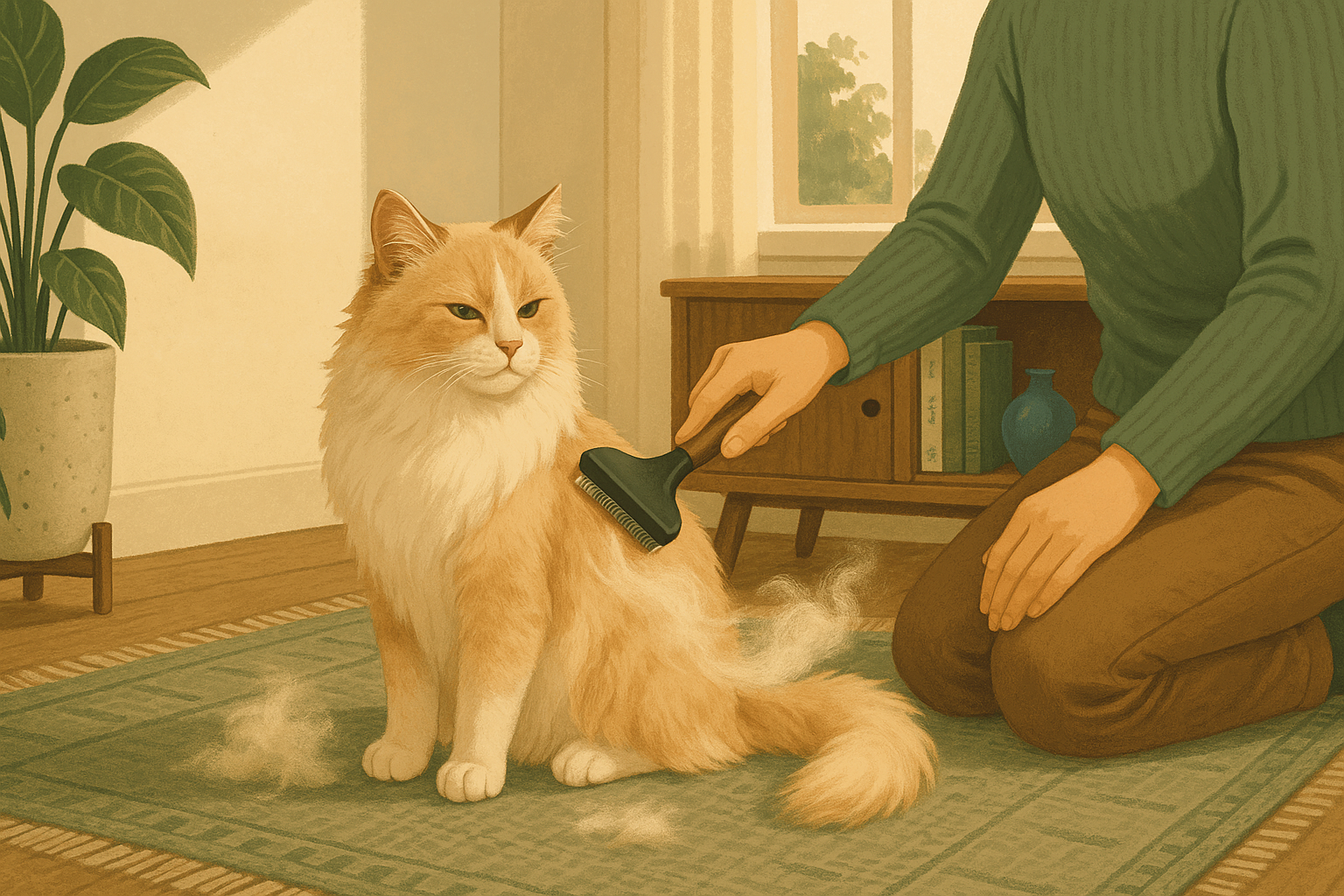
The FURminator built this category, and on a long coat the engineering earns its keep. Buy the long-hair version rather than the short-hair one, since the teeth are set for a deeper coat. The stainless edge slips through the guard hairs and grabs the loose undercoat without slicing the healthy topcoat when you use it as directed. Two touches separate it from the imitators. The molded skin guard stops the teeth biting in at the ends, which matters on a squirmy cat you’ve got about ninety seconds with. And the FURejector button shoots the packed fur off the blade in one press, so you’re not peeling a felted wad off the teeth between strokes. The maker claims regular use removes loose hair up to roughly ninety percent. [3] Take any round marketing number lightly, but the lived experience tracks the idea: the first few sessions on a long-haired shedder produce an almost comic pile of undercoat, then far less floating around the apartment. It sits at the premium tier, and for a coat this demanding it’s the tool I’d point most owners to first.
Best value: DakPets Deshedding Tool
The DakPets answers the fair question every owner asks in the grooming aisle: do you have to pay the premium to get the deshedding effect? For most people, no. It uses the same style of 4-inch stainless edge and works identically, with light strokes in the direction the coat grows, lifting dead undercoat and leaving the topcoat be. It throws in a detachable head that pops off at a button so you can hand-work an awkward spot like the base of the tail, plus a cover so the blade isn’t loose in a drawer. Where the FURminator pulls ahead is refinement. The skin guard and the fur ejector are better, and the build holds up longer under weekly use on a thick coat. But for an owner who grooms a couple of times a week and wants the result without the bill, the DakPets does the core work at a budget-friendly price. It’s a value choice, not a downgrade in what the blade actually removes.
Best for mats: Hertzko Dematting Tool
Sooner or later a long coat forms a mat, and no deshedder will touch it. The Hertzko is a dematting comb, which in this roundup is the point, not a mismatch. It’s a double-sided rake with curved stainless blades. One side carries fewer, wider-set teeth for the stubborn knots, the other packs denser teeth for thinning and a gentler finishing pass. The tips are rounded so the skin is spared while the blade edges cut into the tangle. For the long-haired indoor cat who felts up behind the ears, in the armpits or down the belly, this is the tool that fixes what the deshedders leave behind. One honest caution, from watching owners use these and from the pattern in the reviews: a dematting rake tugs if you rush. The blades work by cutting into the mat, so yanking pulls the skin that’s already drawn tight under the knot, and that hurts. Pinch the base of the mat between the skin and the comb, tease the edge of the tangle in small strokes, and stop the moment your cat tenses.
How to groom a long coat without a fight
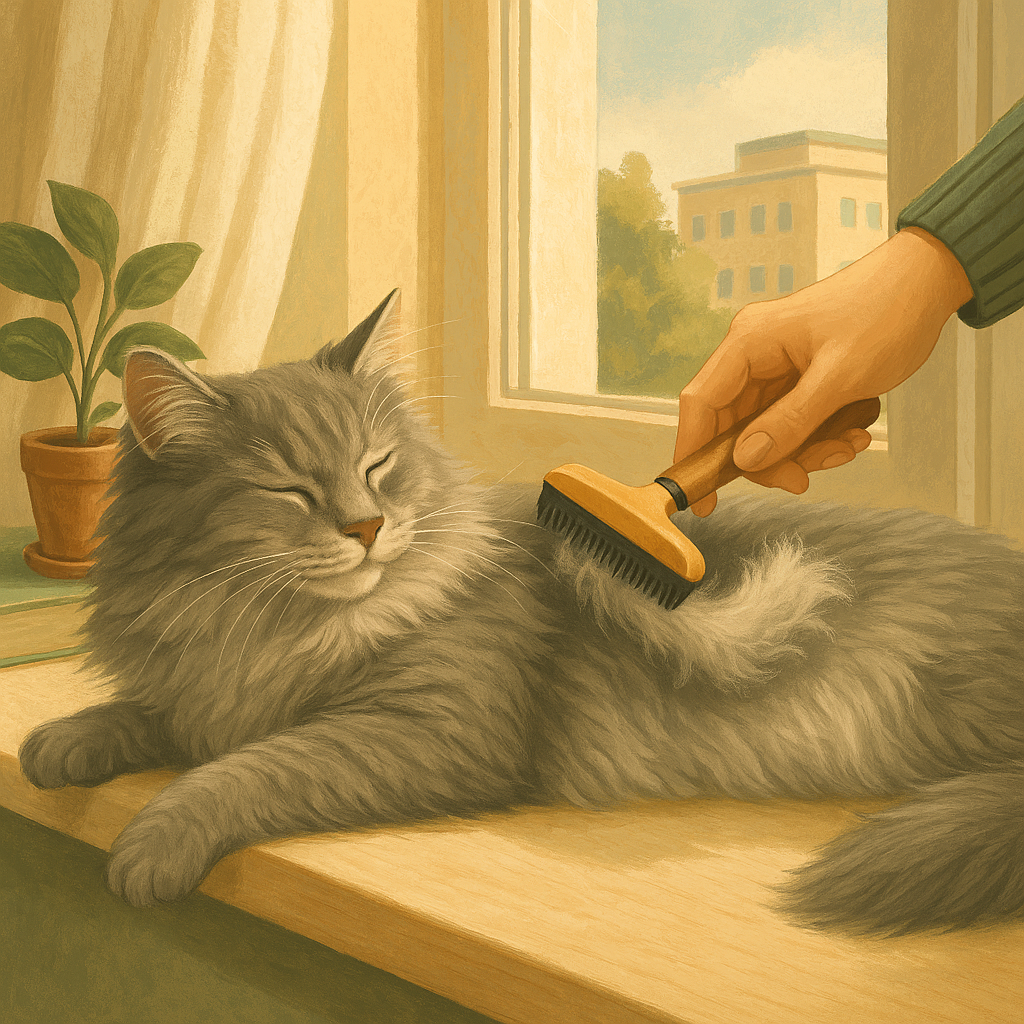
The tool matters less than the hand using it, and this is where grooming a long-haired cat in a small apartment tends to go sideways. Keep sessions short, a few minutes, and quit while she’s still tolerating it instead of pushing to the swat. Always work with the grain of the coat, never against it. Let the tool do the work rather than pressing down. These edges are sharp on purpose. Stay off the belly and the ridge of the spine where the skin sits close, and never run any of them over a scab, a raw patch or bare skin. Senior cats need an even lighter touch, because their skin thins with age and they groom themselves less, which is often why they start to mat in the first place. [4] A cat who learns the brush comes with a warm lap and a treat afterward will settle for it. A cat who got dug into once learns to vanish when the drawer opens.
When to talk to your vet
A brush is for a healthy coat on a healthy cat. It’s not a fix for a skin problem. If your long-haired cat is suddenly blowing far more coat than usual, or you find bald patches, scabs, redness, flaky skin or a spot she’s licked raw, that’s a call to the vet rather than a trip to the grooming aisle, since those can signal allergies, parasites, a thyroid issue or stress. [4] The same holds for a cat who has stopped grooming and is matting all over, which in an older cat can be an early hint that something aches or that she’s unwell. [4] And when mats are tight to the skin or spread across a wide area, let a vet or a professional groomer shave them off rather than risk nicking the skin at home. The right tool keeps a well cat comfortable. It won’t treat one who isn’t.
The bottom line
For a long-haired cat, the honest recommendation is a pair. Get the FURminator long-hair deshedder if you want the best of the loose-undercoat tools and don’t mind paying for the original, or the DakPets if you want nearly the same result for far less. Then keep a Hertzko dematting tool on hand for the knots that a deshedder can’t solve. None of them is magic, and the round-number claims oversell it, but a deshedder used weekly genuinely thins the fur around your home and the hairballs your cat brings up. [1] Match the tool to the coat, work gently and often, then watch the skin underneath. On a long-haired cat, that routine is most of the battle.
Sources
- Cornell Feline Health Center, “The Danger of Hairballs”
- Cornell Feline Health Center, “A Hairy Dilemma”
- FURminator, “Undercoat deShedding Tool, Medium/Large Cat, Long Hair” (manufacturer product page)
- Cornell Feline Health Center, “Feline Skin Diseases”
Some links in this post are affiliate links. If you buy through them, we earn a small commission at no extra cost to you. See our full disclosure for details.