The Best Wet Cat Food for Indoor Cats
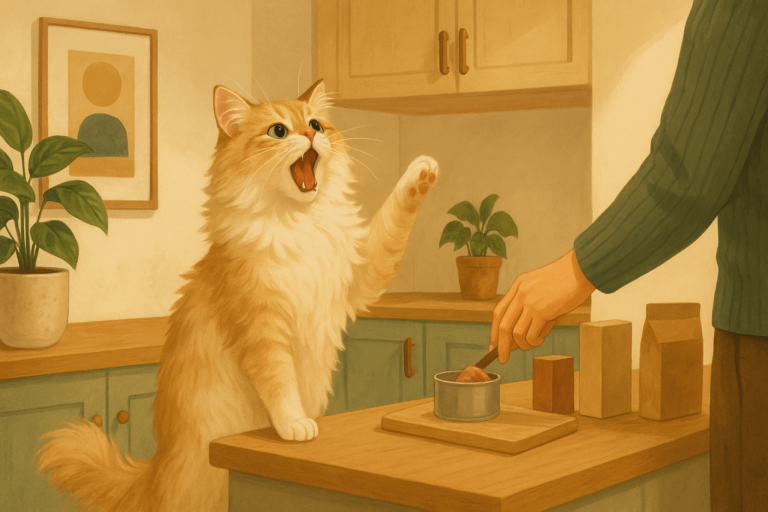
Most of the indoor cats I saw at the front desk weren’t sick. They were soft around the middle, a little too fond of the food bowl and living a life with almost no built-in exercise: no yard, no prey to chase, only a warm apartment and a full dish waiting whenever they wanted it. Wet food was one of the simplest levers I could hand an owner. It carries more water than dry, it forces a meal instead of endless grazing, and it tends to pack more protein per calorie. None of that is a magic fix, but for an indoor cat it stacks the deck in the right direction. Here’s what I look for and the wet foods I’d put in the bowl.
As Amazon Associates we earn from qualifying purchases. Some links in this post are affiliate links; if you buy through them, we earn a small commission at no extra cost to you. We only recommend products we’ve used or researched thoroughly. See our full disclosure.
The indoor-cat wet foods, at a glance
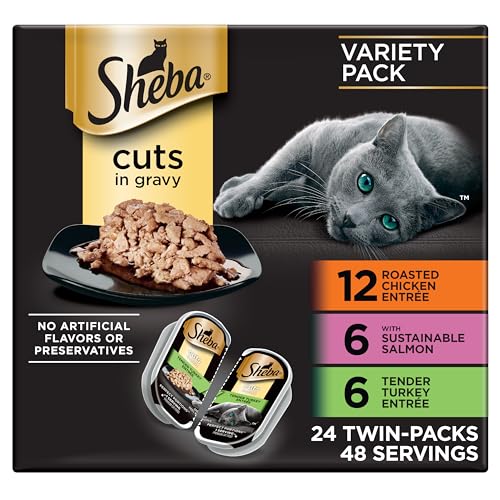
Sheba Perfect Portions
Twin-pack trays · pâté · several proteins
- ✓ Pre-portioned trays sized for one meal
- ✓ Grain-free pâté, no corn or soy
- ✓ Chicken, turkey, beef and salmon options
- ✓ Budget-friendly, widely stocked
on Amazon
Price as of Sep 21, 2026, 9:21 AM EDT. Product prices and availability are accurate as of the date/time indicated and are subject to change.
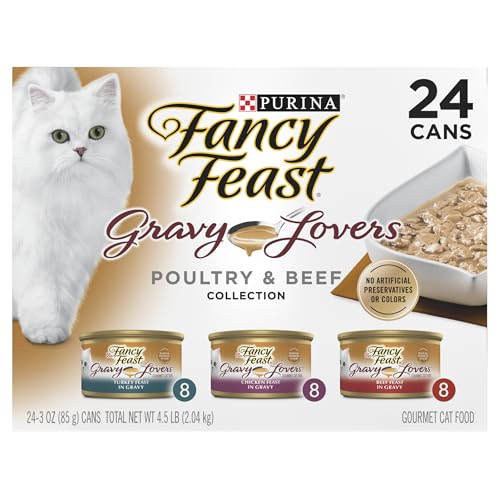
Fancy Feast Gravy Lovers
Gravy format · poultry and beef · 24-count
- ✓ Gravy texture, a hit with picky eaters
- ✓ Poultry and beef flavors to rotate
- ✓ Very affordable, easy to buy anywhere
- ✓ 24-can case for daily meals
on Amazon
Price as of Sep 21, 2026, 9:21 AM EDT. Product prices and availability are accurate as of the date/time indicated and are subject to change.

Tiki Cat After Dark
High protein · grain-free · named meats
- ✓ Recipes built on named meat and organs
- ✓ Grain-free, no corn wheat or soy
- ✓ High moisture, high protein per can
- ✓ Fits a lean, protein-forward indoor diet
on Amazon
Price as of Sep 21, 2026, 9:21 AM EDT. Product prices and availability are accurate as of the date/time indicated and are subject to change.
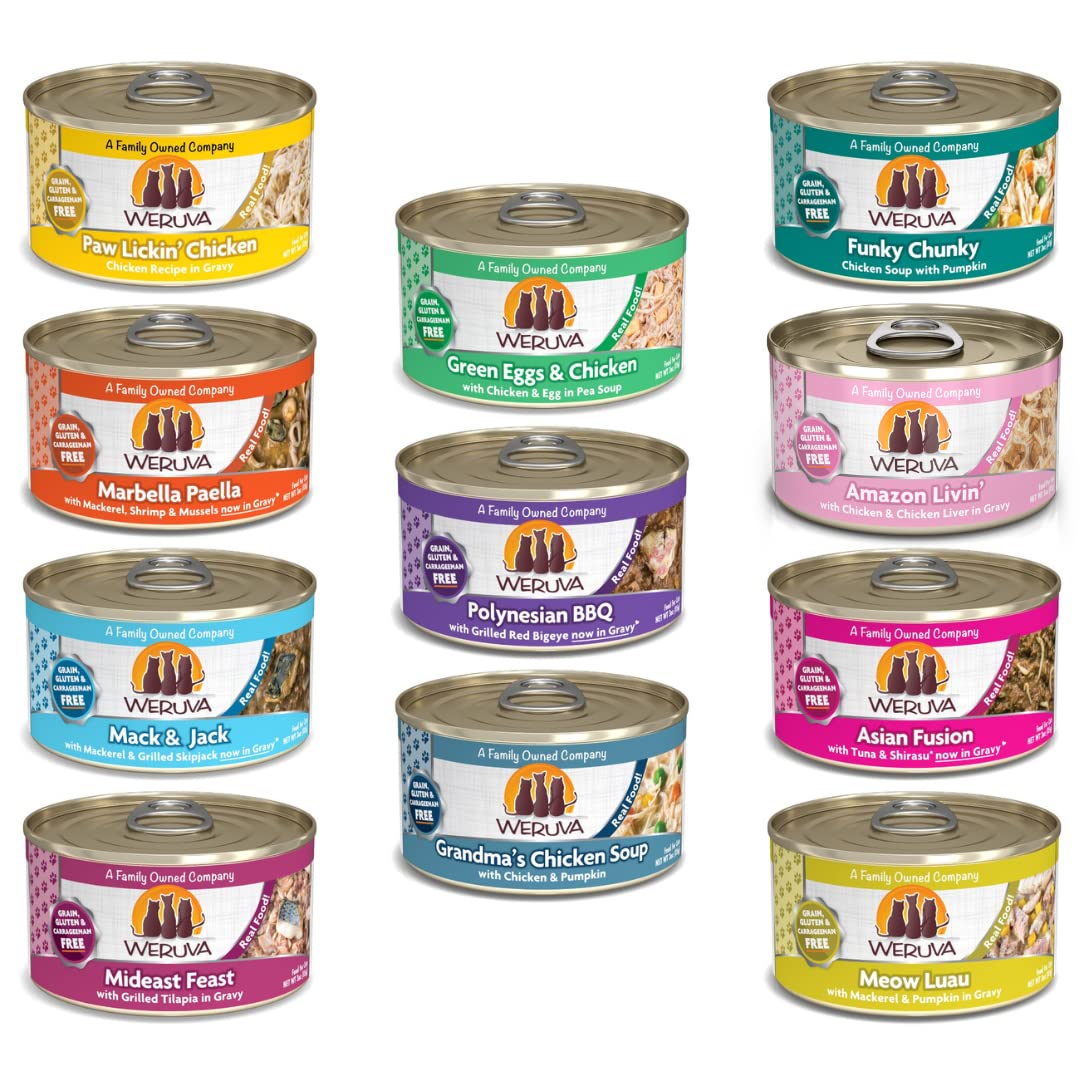
Weruva Classic Cat
Very high moisture · whole proteins · grain-free
- ✓ High water content in every can
- ✓ Recognizable whole-muscle meat and fish
- ✓ Grain-free and carrageenan-free
- ✓ Premium tier for a hydration-first rotation
on Amazon
Price as of Sep 21, 2026, 9:21 AM EDT. Product prices and availability are accurate as of the date/time indicated and are subject to change.
Quick take:
- Canned food runs at least 75 percent water against six to ten percent for dry kibble, so it’s doing double duty as food and hydration.1
- Obesity is the most common nutrition problem cats have, and indoor cats carry more of that risk because they move less than a cat with outdoor access.2
- Sheba Perfect Portions is my pick when portion control is the whole point. Fancy Feast Gravy Lovers is the everyday budget option. Tiki Cat suits a lean, protein-forward diet. Weruva is the pick when hydration matters most.
- Feed it as a meal, not a standing buffet. A cat that grazes on food left out all day has an easier time overeating than one fed on a schedule.2
- Check the label for an AAFCO complete-and-balanced statement before anything else. That’s the baseline, not a bonus feature.1
Why wet food fits an indoor cat’s life
An indoor cat’s day looks nothing like a barn cat’s. There’s no mousing, no territory to patrol, often not much more exercise than a sprint to the window when a bird lands. Cats are obligate carnivores built to run on a high-protein, moderate-fat, low-carbohydrate diet, and that biology doesn’t change just because the cat lives in a one-bedroom apartment.1 What changes is the calorie math: fewer calories burned, same drive to eat. That’s the setup behind most of the soft, round cats I saw come through the clinic doors.
Obesity is the single most common nutrition-related problem in cats, and one Cornell clinician put a number on it that stuck with me: roughly half the cats she saw in practice were overweight or obese.2 Her advice leaned hard on canned food specifically, since it tends to carry more protein and less carbohydrate than kibble and is around 90 percent water, on top of forcing an actual mealtime instead of an all-day buffet.2 None of that makes wet food a weight-loss product. It just removes a few of the easy ways an indoor cat’s day tips toward overeating.
What to look for on the label
Start with the AAFCO statement. Every food I’d actually feed carries a nutritional adequacy claim showing it’s complete and balanced for the life stage on the label, set by the Association of American Feed Control Officials and required under FDA and AAFCO labeling rules.1 That’s the floor, not a selling point. Any can without it gets set back on the shelf.
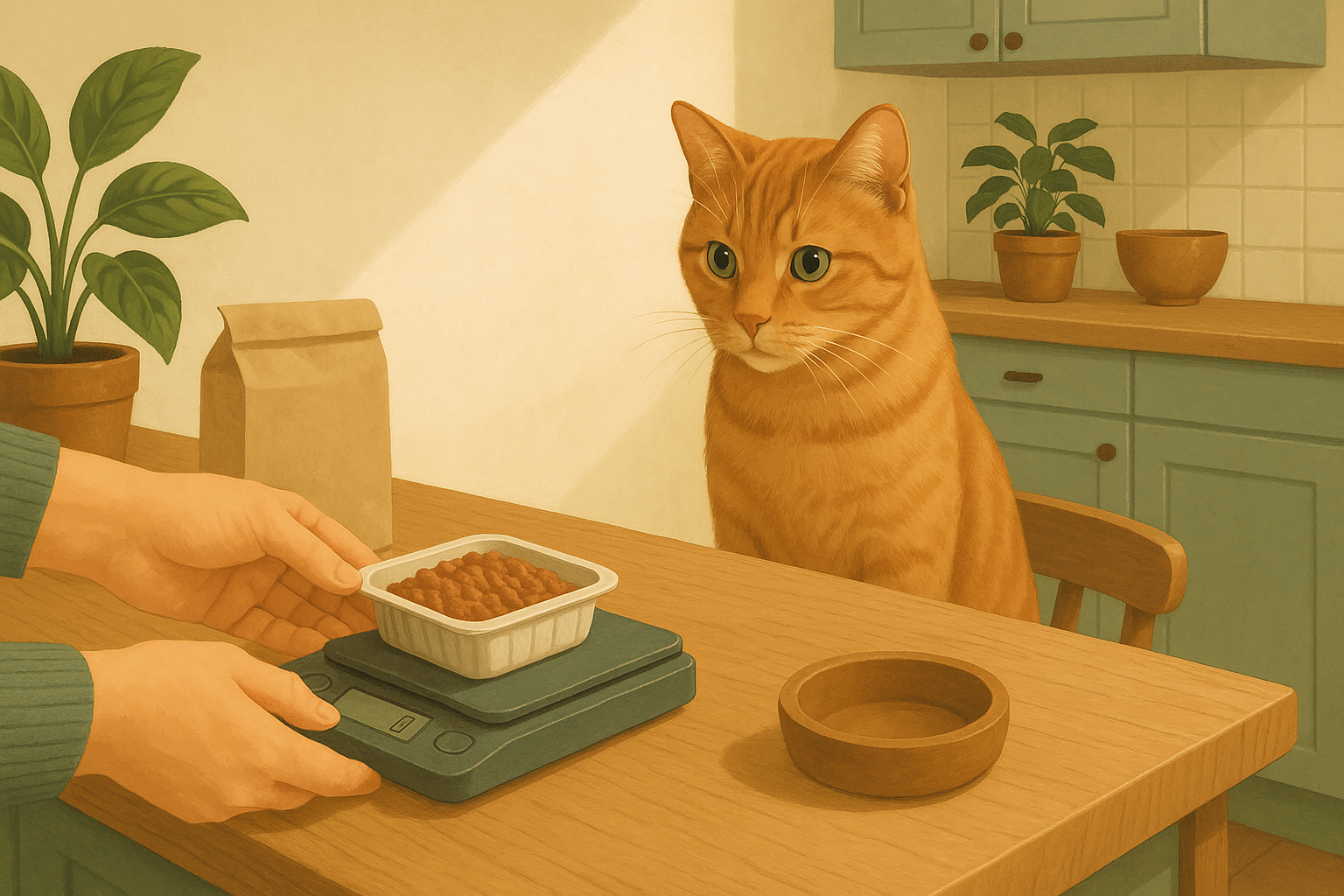
After that, read the ingredient list the way you’d read a nutrition label on your own food: items are listed by weight, heaviest first. Meat, meat byproducts or seafood near the top of the list is the signal that there’s enough animal-source protein to cover a cat’s amino acid needs.1 Beyond the label, think about format. A pre-portioned tray takes the guesswork out of how much goes in the bowl, which matters more for an indoor cat than most owners realize. A gravy or pâté that your cat actually finishes in one sitting beats a “premium” food that sits out going stale, because half-eaten food left down all day is exactly the grazing pattern that works against weight control.
The wet foods I’d start from
Sheba Perfect Portions
Sheba Perfect Portions solves the portion-control problem before you’ve even thought about it. Each twin-pack tray is sized for one serving, peels open clean and doesn’t leave you eyeballing a half-used can in the fridge. The pâté is grain-free with no corn or soy, and it comes in enough protein options (chicken, turkey, beef, salmon) that rotating flavors is easy. For an indoor cat prone to finishing whatever’s in front of it, portioned trays are a small structural fix that does real work.
Fancy Feast Gravy Lovers
If budget and reliability matter most, Fancy Feast Gravy Lovers is the everyday answer. The gravy format tends to win over cats who turn their nose up at thicker pâtés, the poultry and beef variety pack gives you rotation without hunting down new brands, and it’s stocked in nearly every grocery store, which counts for a lot when you’re out of food on a Tuesday night. It’s not a premium formula and I wouldn’t market it as one. It’s the food I’d hand a new indoor-cat owner who wants something their cat will eat, consistently, without a fuss.
Tiki Cat After Dark
For an indoor cat that needs to lean lower-carb and higher-protein, Tiki Cat After Dark is where I’d look. The recipes build around named meats plus organ ingredients like liver, gizzard and heart, they skip grain entirely and the moisture content runs high. This is the pick for a cat who’s carrying a little extra weight and whose vet has recommended trimming carbohydrate intake, not a food to switch to because “high protein” sounds better.
Weruva Classic Cat
Weruva Classic Cat sits at the wettest end of the shelf, built on whole pieces of chicken or fish rather than a uniform paste, grain-free and free of carrageenan. If hydration is the priority, whether because your cat drinks little on its own or you’re managing a cat with a history of urinary issues alongside your vet, this is the can I’d reach for. It’s a premium price for a premium amount of actual meat and water in the bowl.
Feeding it right matters as much as the food
The single biggest lever I saw owners pull wrong wasn’t the brand, it was the schedule. Free feeding, a bowl topped off and left out all day, is an easy habit and an easy way for an indoor cat to overeat with no real cue that it’s happening.2 Two or three set mealtimes, with the bowl picked up between them, does more for an indoor cat’s waistline than swapping brands ever will. Ask your vet for a target calorie range and a body condition check at your next visit rather than guessing at portions from the can’s feeding chart, which is written for an average cat that doesn’t exist.
When to talk to your vet
None of this replaces an actual weight check. If you can’t feel your cat’s ribs with light pressure, if the waist has disappeared when you look down from above, or if your cat is already carrying a diagnosed weight problem, loop your vet in before changing food on your own. They can score your cat’s body condition, set a real calorie target and flag if a therapeutic weight-management diet is the better tool. Sudden weight loss, a cat that stops eating for more than a day, or vomiting after meals are all reasons to call sooner, not later. Wet food is a good default for an indoor cat’s life. It isn’t a substitute for a professional read on your specific cat.
The bottom line
For most indoor cats, I’d start with Sheba Perfect Portions or Fancy Feast Gravy Lovers for the everyday rotation, keep Tiki Cat in the mix if your vet wants the diet leaner and higher-protein, and reach for Weruva when hydration is the priority. Whatever you pick, check for the AAFCO statement, read the ingredient list and feed it on a schedule instead of leaving it out all day. An indoor cat’s life is smaller and lower-energy than an outdoor cat’s by design. The food and the feeding routine should account for that, not fight it.
Sources
TheCatWellness is reader-supported and we are not veterinarians. This article is general information, not medical advice for your individual cat. If you’re concerned about your cat’s weight or appetite, talk to your vet.