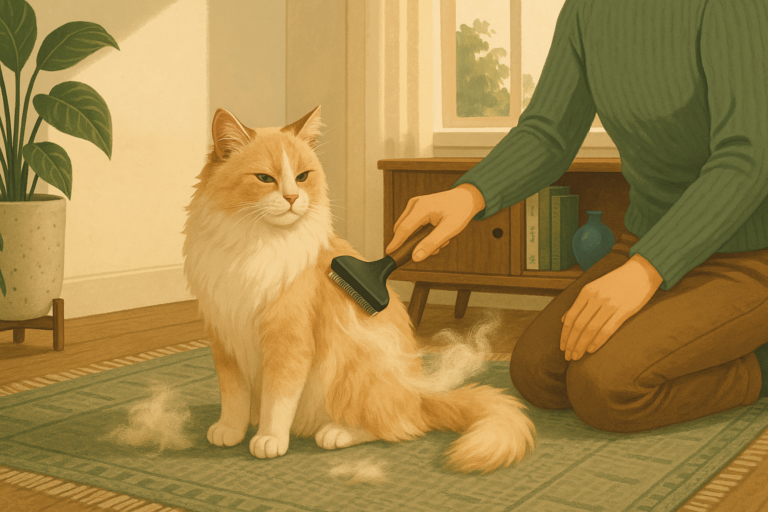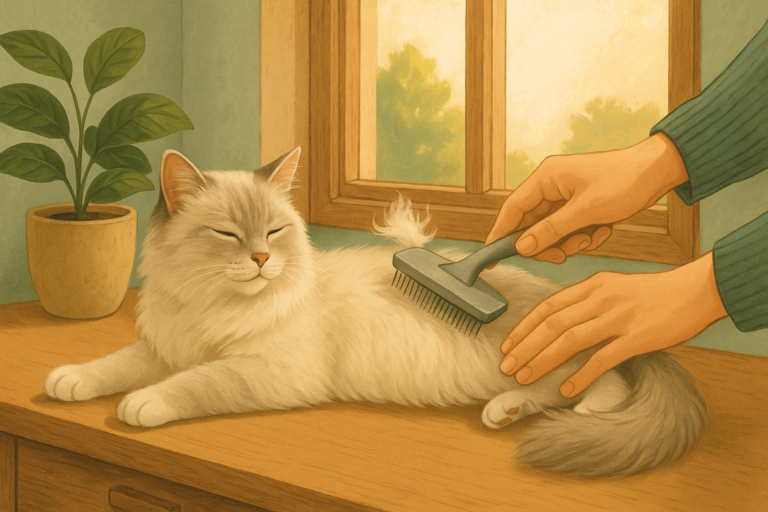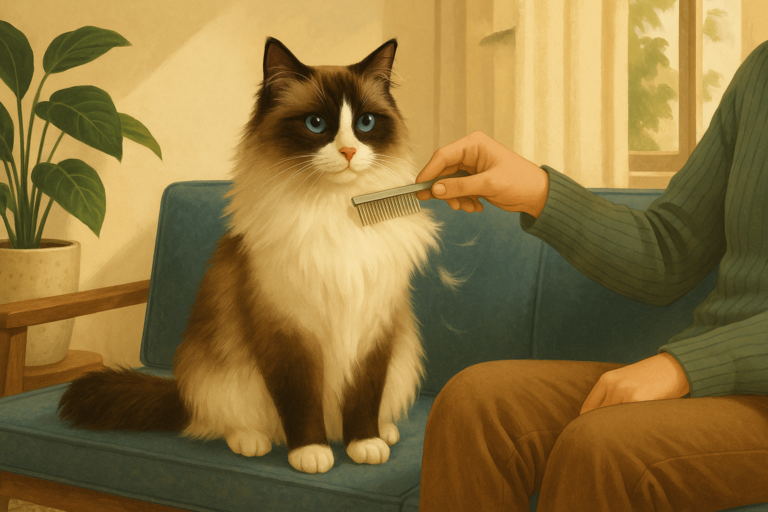
How do I get a mat out of my cat’s fur?
Small mats: a wide-tooth comb and patience. Big mats: a professional groomer, not scissors. Why DIY scissors are the wrong move.
Research-backed guides on cat shedding, hairballs, coat health, and skin care.
Small mats: a wide-tooth comb and patience. Big mats: a professional groomer, not scissors. Why DIY scissors are the wrong move.
Short sessions, calm timing, light pressure and food rewards. The setup that turns brushing from a fight into a routine.
Most cats never need a bath. The exceptions: long-haired cats with mats, seniors who can’t groom, hairless breeds, medical conditions.
Daily for long-haired, weekly for short-haired, more during heavy-shed periods. Why frequency matters more than tool choice.
Not really. Some breeds produce less of the protein that triggers most reactions, but no breed is allergy-free.
Damp rubber gloves on furniture, a lint roller for clothes, and a vacuum with a pet attachment. The setup that beats the hair.
Yes, but no breed is shed-free. Sphynx, Cornish Rex, Devon Rex, Siamese and others shed less; care for hair you can’t see still matters.
Indoor cats shed year-round because indoor temperature and lighting don’t vary. Heavy winter shedding is usually normal.
The practical playbook for indoor cat coat and skin: what normal looks like, the highest-leverage fixes, and when symptoms mean a vet visit.
Indoor cats shed year-round because their environment is stable. What’s normal heavy shedding versus a vet visit.