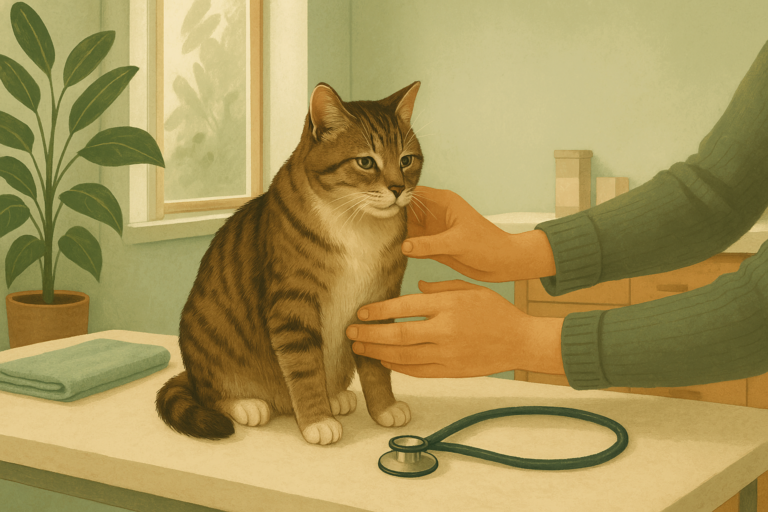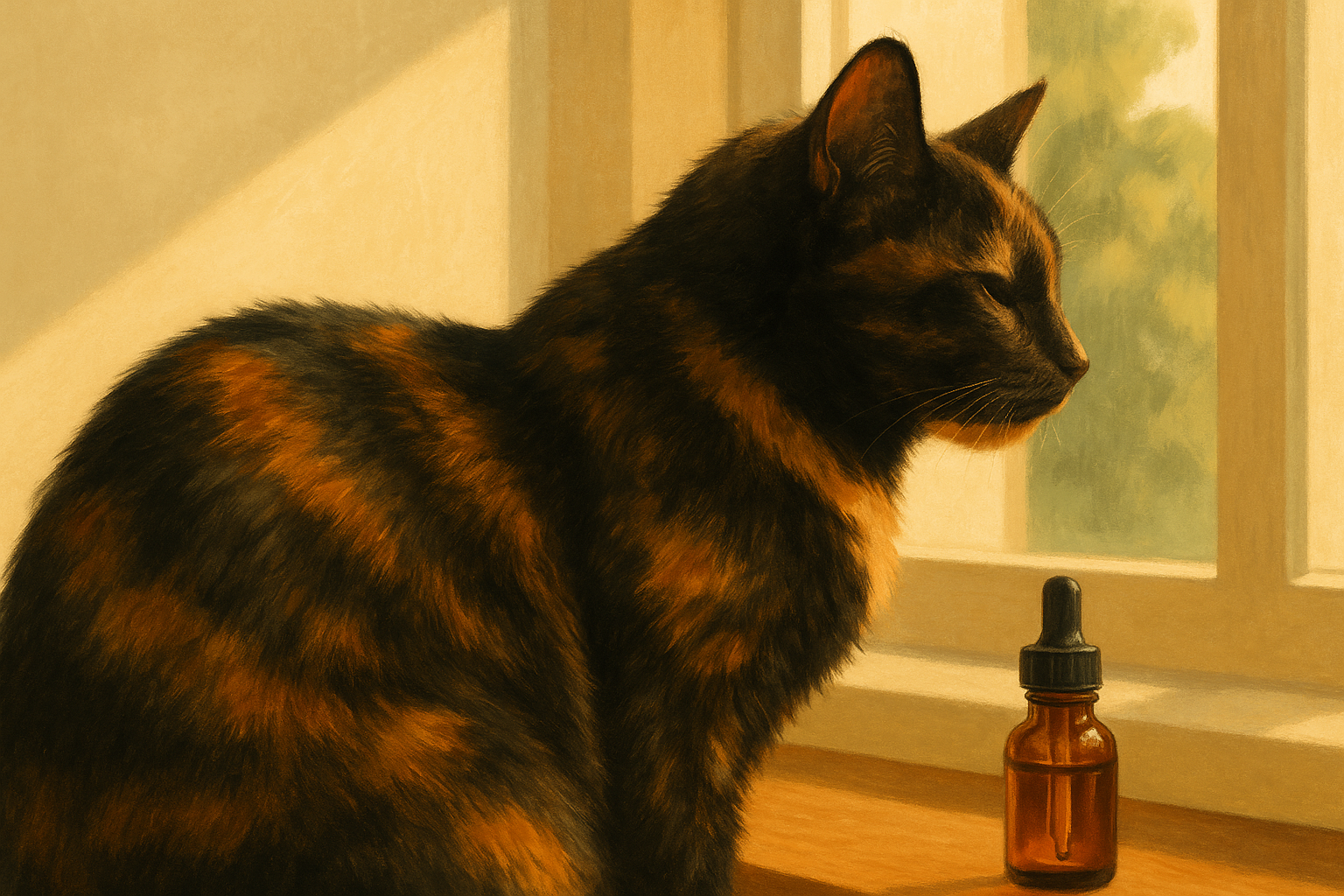
Do omega-3 supplements actually help cats’ skin and coat?
Modestly, yes, but the marketing claims oversell what’s there. Omega-3 fatty acids (EPA and DHA) have a real evidence base for cats with inflammatory skin conditions and allergic dermatitis. For an otherwise-healthy cat on a complete commercial diet, the case is much weaker and the diet does most of the work that the supplement gets credit for.
Quick take:
- Omega-3 helps cats with diagnosed inflammatory skin conditions, allergic dermatitis or arthritis. The evidence is real.1
- For healthy cats on a complete diet, evidence for adding fish oil specifically to improve coat is weak. The diet already covers it.
- If you supplement, pick a veterinary-grade fish oil with declared EPA + DHA content per dose. The pet-store market is loose.
- Common side effects: GI upset (vomiting, soft stool), especially when started too quickly or added to a higher-fat diet.
- Talk to your vet about dosing before starting. Therapeutic doses run higher than what’s on the bottle label.
What the research actually shows
The strongest evidence for omega-3 in cats is for inflammatory and allergic skin disease. EPA (eicosapentaenoic acid) reduces production of inflammatory signaling molecules, which translates to less itching, less redness and a calmer coat in cats with conditions like atopic dermatitis. A 2011 review in the Journal of the American Veterinary Medical Association covers the therapeutic uses across allergic skin disease, arthritis, kidney disease and others.1 More recent work in Nutrition Research Reviews has summarized the dosing data, noting that optimal doses for companion animals haven’t been firmly established and a vet conversation is warranted before starting therapy.2
For an otherwise-healthy cat with a normal coat on a complete commercial diet, the evidence for incremental benefit is weaker. The diet already contains the fatty acids the cat needs, and a typical bottle dose adds a small amount on top of that. The effect, if any, is modest.
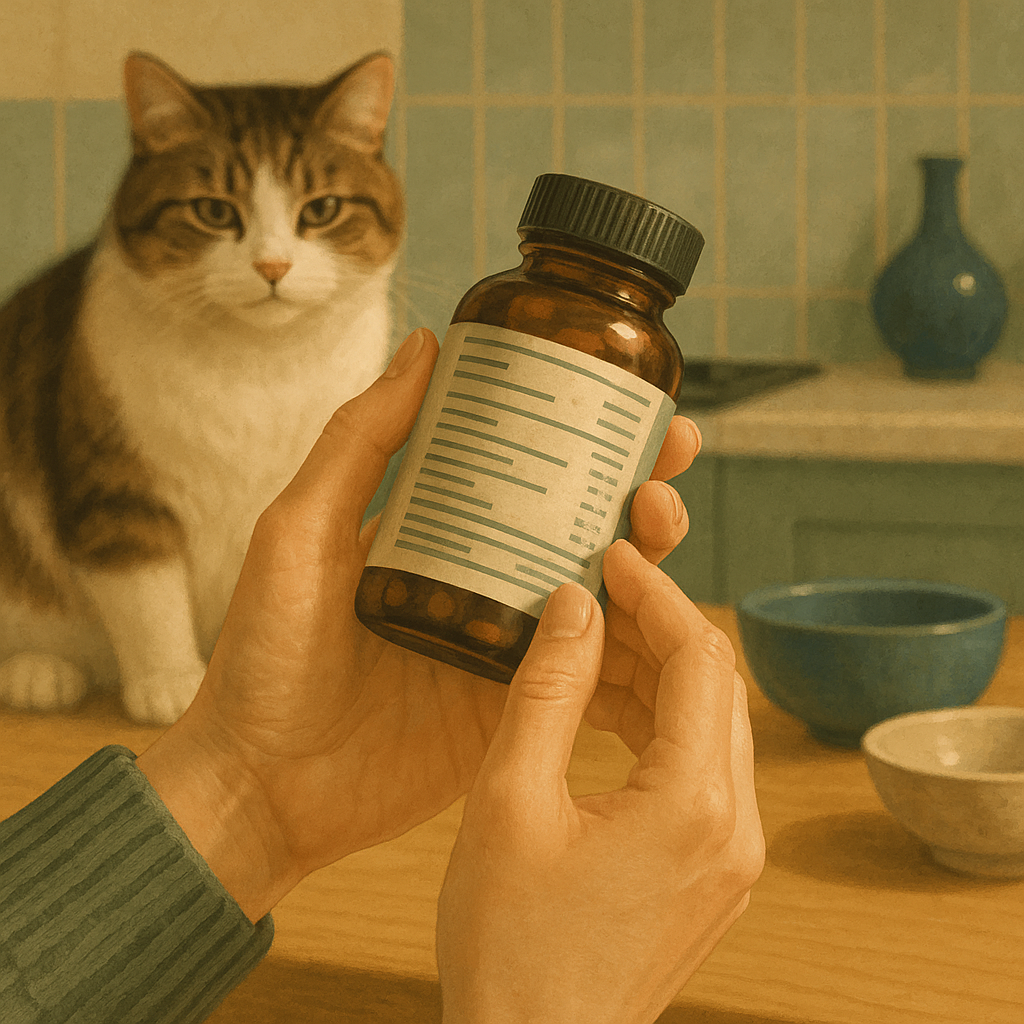
Diet does the heavy lifting
Cornell flags nutritional deficiencies as a direct cause of coat problems: dry brittle hair, dull texture, even skin issues.3 A cat on a complete and balanced commercial diet (look for the AAFCO statement on the bag) is getting the building blocks for a healthy coat through food. If a cat’s coat is dull on a cheap or imbalanced diet, the answer is usually a better diet, not a supplement on top of the worse diet.
If you do supplement
Pick a veterinary-grade fish oil rather than a generic pet-store product. The pet-store market is variable: declared EPA and DHA content doesn’t always match the bottle, and rancidity is a real issue with cheaper fish oils. Salmon oil and sardine-anchovy blends are both fine. Start with a low dose and ramp up over a week, since GI upset (vomiting, soft stool) is the most common side effect, especially when starting too fast.
When to talk to your vet
- Before starting omega-3 if your cat has kidney disease, pancreatitis or any clotting issue
- If you’re considering supplements because of visible skin or coat problems: get the diagnosis first
- If your cat develops vomiting or diarrhea after starting a supplement
- If you’re seeing no change after 8 to 12 weeks at a reasonable dose
For the broader coat-and-skin picture, see our complete guide to indoor cat coat and skin health.
Sources
- Bauer, J.E. (2011). “Therapeutic use of fish oils in companion animals.” Journal of the American Veterinary Medical Association
- Cambridge Nutrition Research Reviews, “Exploring the efficacy and optimal dosages of omega-3 supplementation for companion animals”
- Cornell Feline Health Center, “Feline Skin Diseases”