
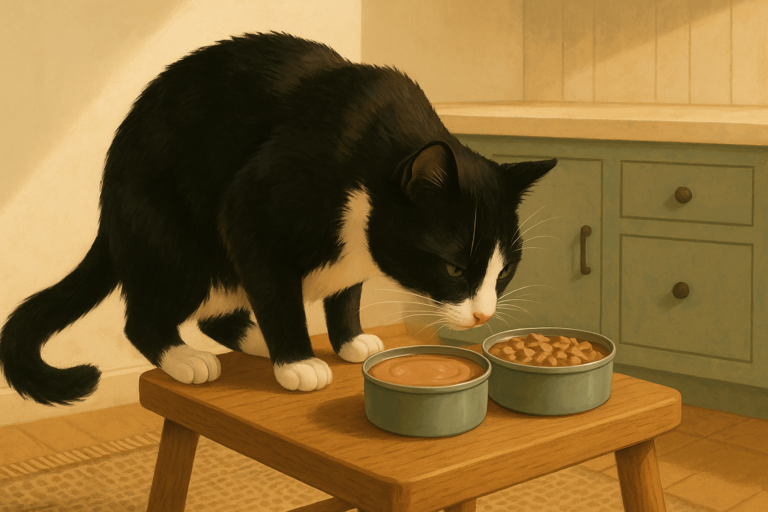
Why does my cat beg for food then walk away?
A cat who begs then refuses is usually asking for fresh food, the routine or your attention. What the begging really means and how to fix it.
Cats are wired to distrust new food. The slow-transition method that works, the small things that tip the balance and the one thing never to do.
Dental pain is a common, easy-to-miss cause of fussy eating. The signs of feline dental disease, what the vet checks and when to book a visit.
A cat that suddenly stops eating is not being picky. Why feline appetite loss escalates fast, what to do in the first 24 hours and when to call the vet.
Picky eating and true appetite loss are different problems. Here is how to tell them apart, the setup fixes that work, and when fussiness means a vet visit.
Scheduled wins for most indoor cats. Why free-feeding kibble leads to weight gain and hides appetite changes.
Transition over 7 to 10 days, slower for sensitive stomachs. The day-by-day mix and what to watch for.
Yellow vomit is bile on an empty stomach. Most common in cats fed twice a day with long gaps overnight. The fix is feeding schedule.
Common, but Cornell flags weekly vomiting as outside normal range. The difference between ‘common’ and ‘fine,’ and what to try.
Undigested food coming up in a tube shape is regurgitation, not true vomiting. Usually from eating too fast.