The Best Cat Trees for Small Apartments
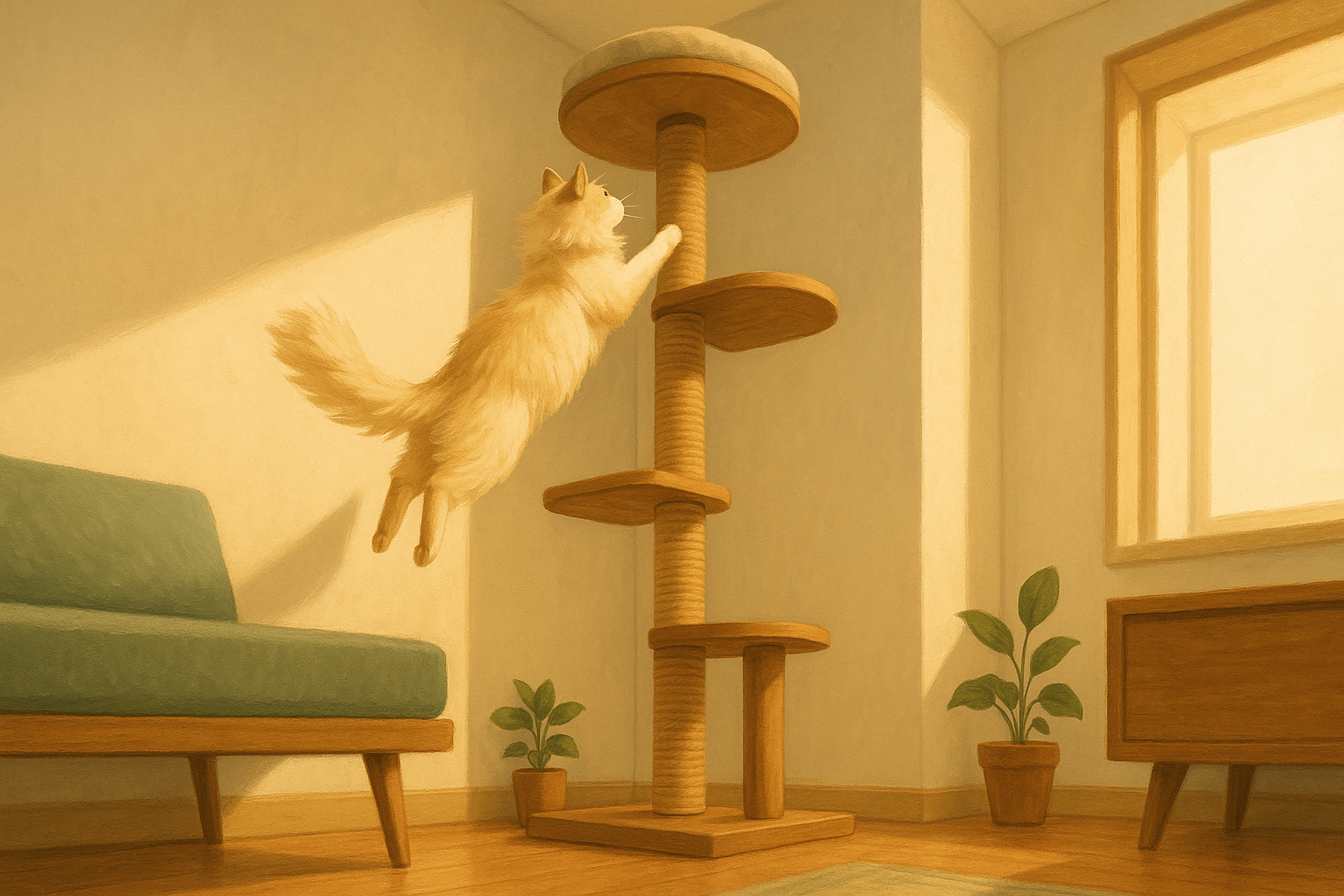
A cat in a 500-square-foot studio doesn’t need less enrichment than a cat in a house with a yard. She needs the same resources stacked a different way: up, instead of out. The floor plan doesn’t grow, but the walls do, and a tree that claims two square feet of floor space can still hand a cat six or seven feet of usable territory. Here are the two trees I’d point a small-apartment owner toward first, and how to tell which footprint actually fits your room.
As Amazon Associates we earn from qualifying purchases. Some links in this post are affiliate links; if you buy through them, we earn a small commission at no extra cost to you. We only recommend products we’ve used or researched thoroughly. See our full disclosure.
The picks at a glance

Vesper Cat Tree, High Base (Walnut)
Roughly 48in tall · 22in square base · enclosed cube plus open top perch
- ✓ Nearly four feet of climbing height on a base that fits in a corner
- ✓ An enclosed cube den partway up for a cat that wants to hide, not only perch
- ✓ Furniture-grade walnut finish that reads as a side table, not a carpeted tower
on Amazon

Made4Pets 29in Multi-Level Cat Tree (Light Grey)
29in tall · roughly 17in by 16in footprint · sisal posts, pad step and plush cave
- ✓ A footprint small enough to tuck beside a couch or in a studio corner
- ✓ An enclosed cave for a cat that wants to disappear, not display itself
- ✓ Light enough that renters can move it between apartments without help
on Amazon
Quick take:
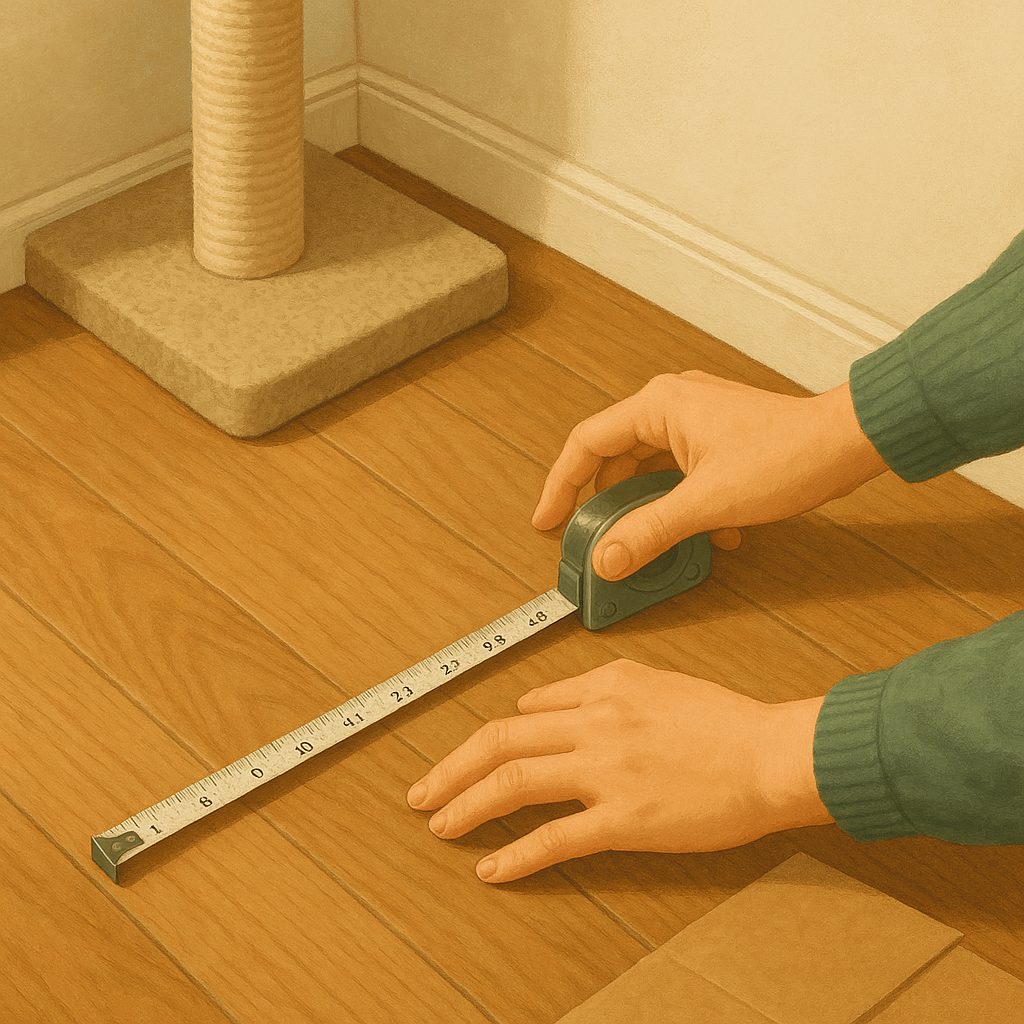
- Measure the corner before the cat, not the other way around. A base under 24 inches square fits most apartment corners without eating a walking path.
- Height matters more than width. A cat gets more usable territory from four vertical feet than from a wide floor-level condo that takes up the same square footage.1
- An enclosed cube or cave gives a cat somewhere to retreat, not just somewhere to sit, which matters more in a small home where there’s nowhere else to get away from foot traffic.1
- Vertical outlets aren’t decoration. They’re one of the resources that reduce stress-linked behavior problems, especially in homes where a cat can’t get outside.2
- One tree is rarely enough in a multi-cat apartment. Two smaller trees in different rooms beat one tall tree that forces every cat to share a single perch.
Square footage and territory aren’t the same thing
Cats read their environment as a set of resources spread through their core territory: places to eat, drink, eliminate, rest and perch, each ideally separated from the others. The AAFP and ISFM’s feline environmental needs guidelines list an elevated resting spot as one of those core resources on its own, not a bonus. A cat that can climb above the room gets to monitor the space and choose distance from whatever’s stressing her, whether that’s a vacuum, a visitor or another cat in the household.1 None of that requires floor space. It requires height, and height is the one dimension a studio apartment usually has more of than it knows what to do with.
I saw the floor-space assumption play out constantly at the shelter’s foster program, where volunteers living in one-bedroom apartments would apologize for not having “enough room” for a second cat. Almost every time, the fix wasn’t a bigger apartment. It was a tree in the corner nobody used and a second one across the room, so two cats had separate places to retreat to without ever needing separate square footage.
How to fit a tree into a small footprint without it taking over the room
Corners do the most work. A tree tucked against two walls loses almost no usable floor space compared to the same tree stranded in the middle of a room. Measure the corner itself, not just the tree’s listed base dimensions, since a square base against a wall reads smaller than the same base sitting free. If the apartment is a rental, weight matters as much as footprint: a lighter tree can move between apartments, get shifted for a repaint, or slide out of the way when guests are over, without needing two people to carry it.
Place the tree near a window when the layout allows it. It doesn’t change the footprint, and it turns a climbing outlet into a lookout post at the same time, which is usually the fastest way to get a cat to actually use a new tree instead of ignoring it for the couch.
When to talk to your vet
A cat that suddenly stops climbing a tree she used daily isn’t being lazy. Sudden reluctance to jump or climb, hesitation before a leap she used to take without thinking, or stiffness after getting down are common early signs of joint pain or arthritis, especially in cats over seven. That’s a reason to call your vet, not to assume she’s simply lost interest in the tree. Restricted living space and reduced opportunities for natural movement are also on Cornell’s list of stress factors linked to lower urinary tract disease in cats, so a sudden change in how a cat uses her vertical space is worth mentioning at her next visit even if nothing else seems wrong.2
The bottom line
A small apartment doesn’t disqualify a cat from having real territory. It means the tree has to earn its footprint: a tall corner piece like the Vesper for households with the wall space to spare, or a genuinely compact tower like the Made4Pets for the smallest studios and rentals. Either beats leaving a cat to make do with the couch arm and the windowsill.