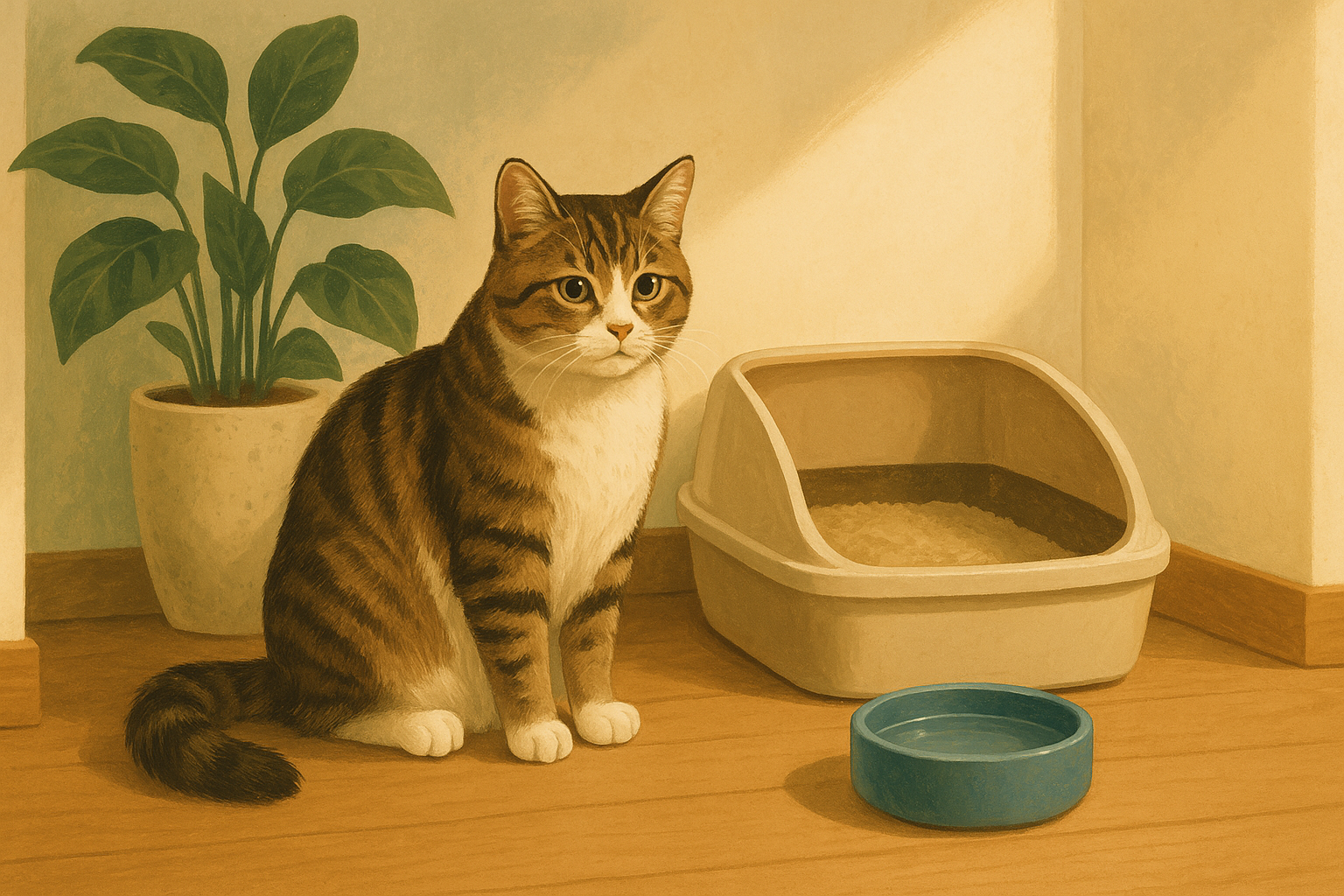
Why is my cat constipated?
Most cat constipation traces back to dehydration. Indoor cats on dry-food diets don’t take in enough water, the colon pulls water out of the stool to compensate, and what comes out the other end is hard, dry and difficult to pass. The fix is usually upstream of the litter box.
Quick fixes:
- Add wet food to the diet (or increase the wet-food portion).
- Put out more water stations, away from food and the litter box.
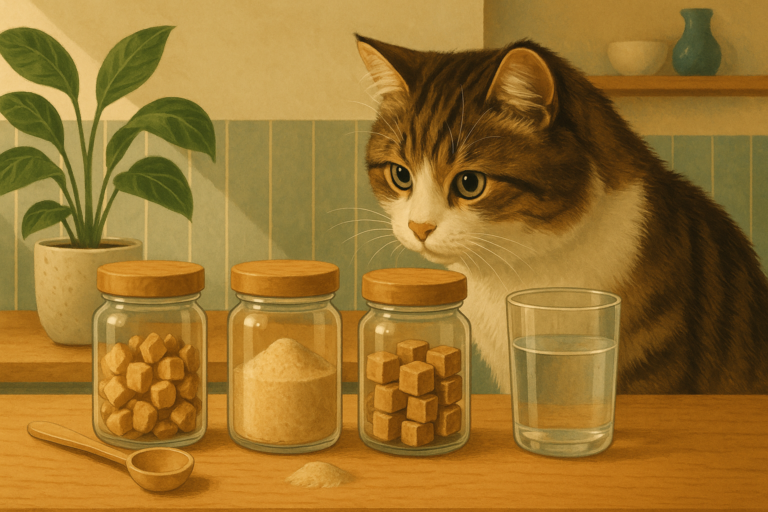
- Try a teaspoon of plain canned pumpkin a couple of times a week for fiber.
- More play and movement: even ten minutes of feather-wand chasing helps colon motility.
- If your cat hasn’t passed stool in more than 48 hours, or is straining without producing, that’s a vet call.
Dr. Sarah Wooten, DVM on what causes constipation in cats and the home moves that help (PetMD).
What’s happening inside
Constipation is what you see at the litter box. The actual problem is usually in the colon, where stool sits longer than it should and gets progressively drier as the body reabsorbs water. Cornell describes this as the colon’s normal job (extracting water from waste) becoming a problem when the contents move too slowly.1 The slower the transit, the harder and drier the stool, the harder it is to pass.
Why indoor cats are especially prone
Three factors stack up. First, indoor cats often eat mostly dry food, which is 6 to 10 percent water versus the 75-plus percent in canned. Less water in means less water available for soft stool. Second, indoor cats move less, and physical activity is one of the main signals that drives colon motility. Third, indoor cats groom more, which means more swallowed hair adding bulk to the gut.
Senior cats, overweight cats and long-haired cats are all at higher risk, and Cornell flags repeated constipation as something that can progress to megacolon (a permanently stretched, weakened colon) if it’s not addressed.1
The home moves that actually help
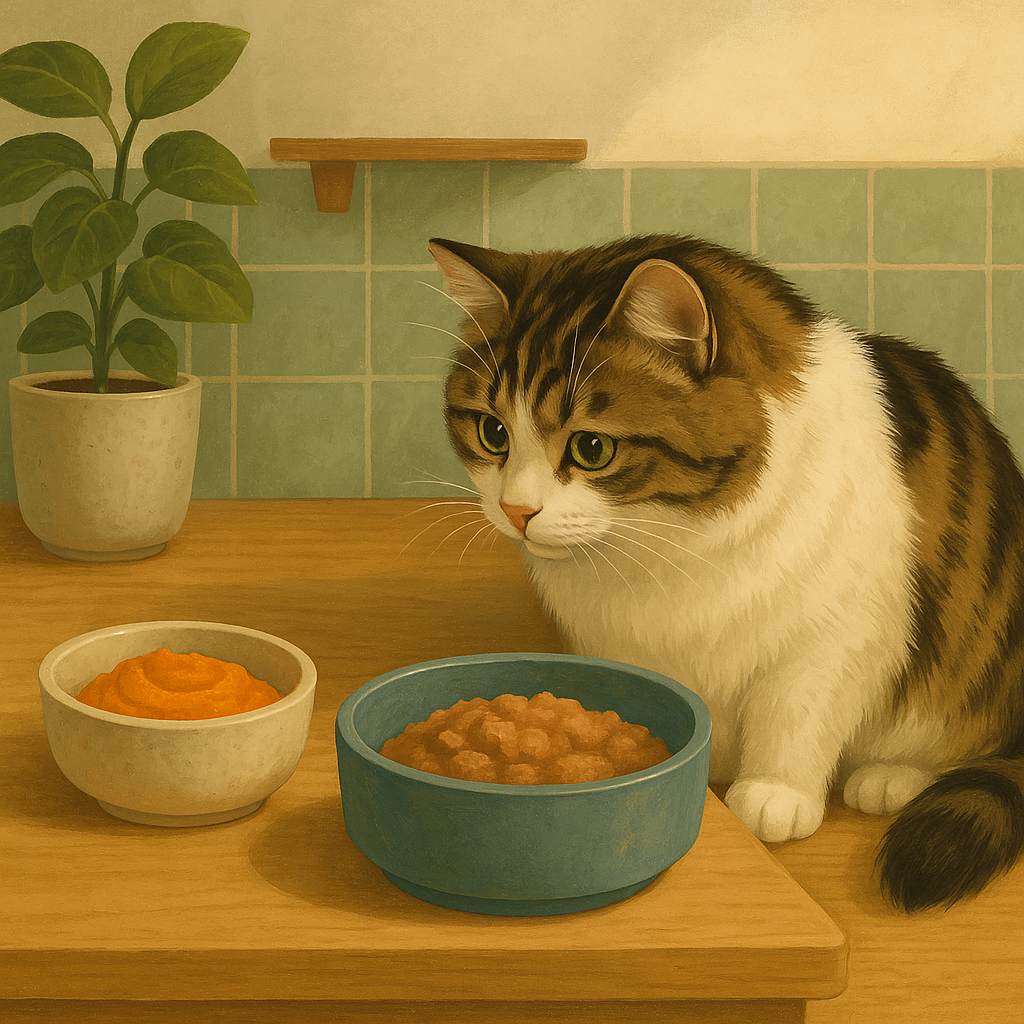
Hydration first. A partial switch to wet food usually does more than any other single change. Extra water bowls placed away from food and the litter box help too: cats often won’t drink right next to where they eat or eliminate. The digestion pillar covers the broader setup.
Fiber second. A teaspoon of plain canned pumpkin (not pie filling) a couple of times a week adds soluble fiber that holds water in the stool. Some cats also do well on commercial fiber-enriched diets.
Movement third. Five to ten minutes of active play, once or twice a day, stimulates motility. It also helps with weight, which matters because obesity is itself a constipation risk factor.
When to call the vet
- No stool in more than 48 hours1
- Visible straining in the box without producing
- Crying or vocalizing during litter-box visits
- Vomiting alongside the constipation
- Blood in the stool, or repeat episodes within a couple of weeks