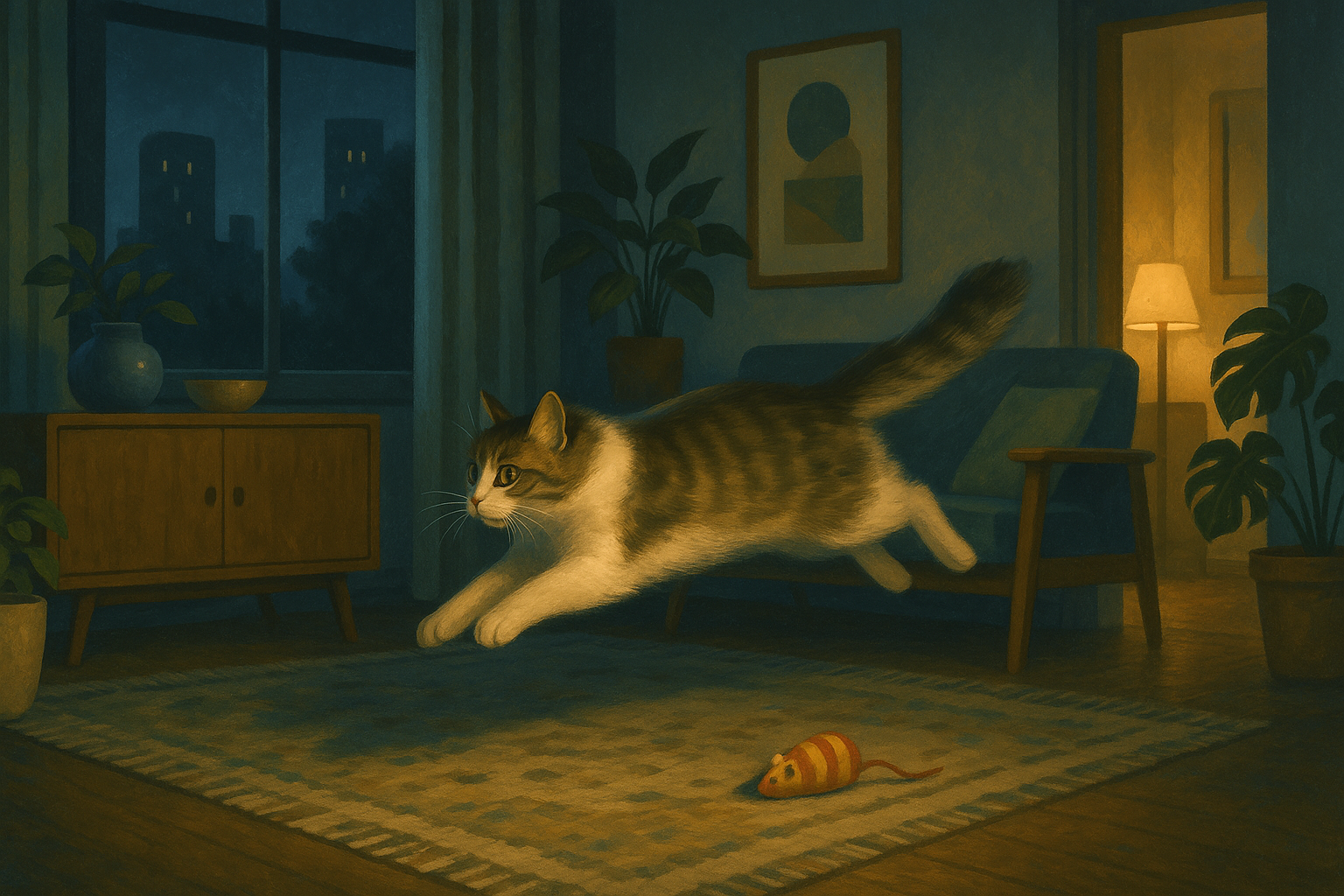
Why does my cat zoom at 3 AM?
Indoor cats have a predator’s energy budget and almost nothing to spend it on during the day. The energy doesn’t disappear; it gets stored, and it comes out as the classic 3 AM zoomies. The cure isn’t a quieter cat. It’s a more tired cat at bedtime, and that takes structured play earlier in the day.
Quick fixes:
- Two play sessions a day, 10 to 15 minutes each. Use a feather wand or similar prey-mimicking toy.
- Run the full predator sequence: stalk, chase, pounce, “catch,” reward. Don’t skip the catch.
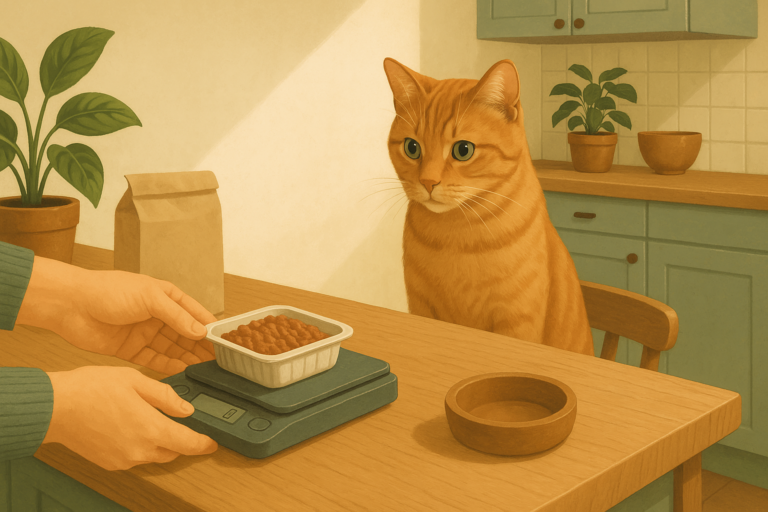
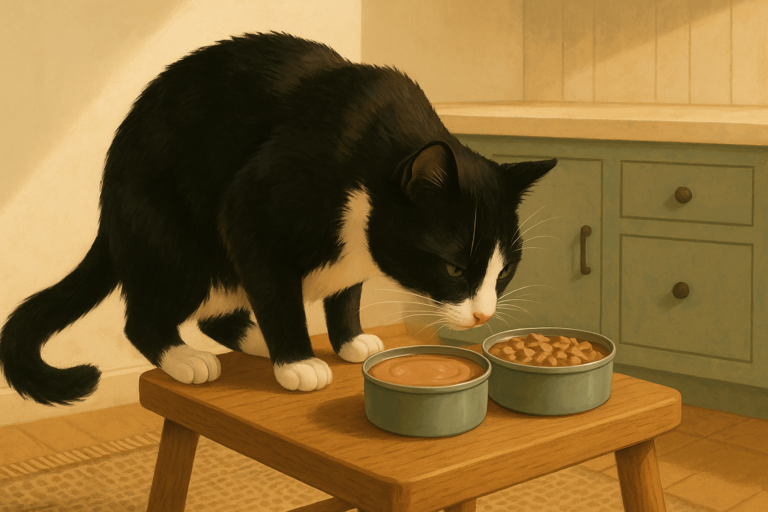
- End the evening session with a small wet-food meal. Predator-eat-sleep is the natural cycle.
- Don’t reward zoomie episodes with attention. It teaches her that 3 AM is when humans get up.
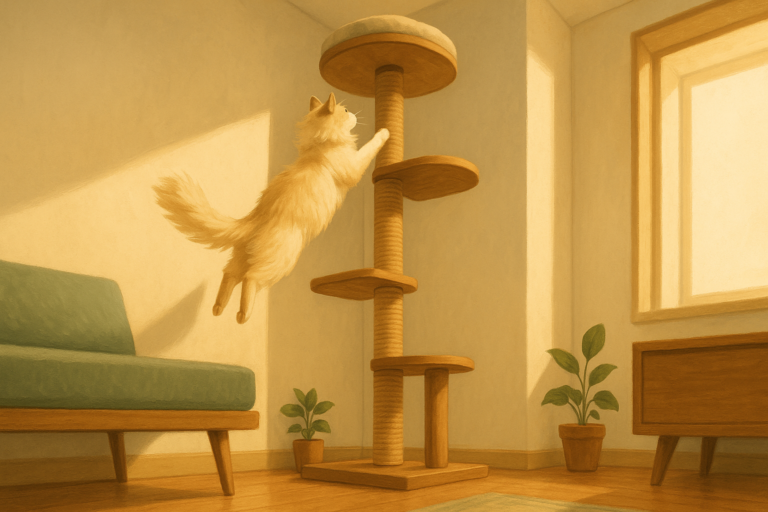
- Give her something to do during the day if you’re out: puzzle feeder, window perch, rotating toys.
Why it happens at 3 AM specifically
Cats are crepuscular, meaning they’re naturally most active around dawn and dusk. In the wild, this is when their prey is most active. Domestic indoor cats inherit that wiring even if they’ve never hunted anything more dangerous than a sock. The 3 AM hour falls in the pre-dawn slope of that cycle. If she’s slept much of the day (which most indoor cats do), she comes online right around the time you’ve finally fallen asleep.
What’s actually being released
The cat is running the predator sequence with no prey to chase. Stalking, sprinting, leaping, pouncing. It looks frantic to a human but it’s a normal cat doing what its nervous system was built for. The amount of energy involved is significant, especially in young cats and athletic breeds (Bengals, Abyssinians, Orientals).
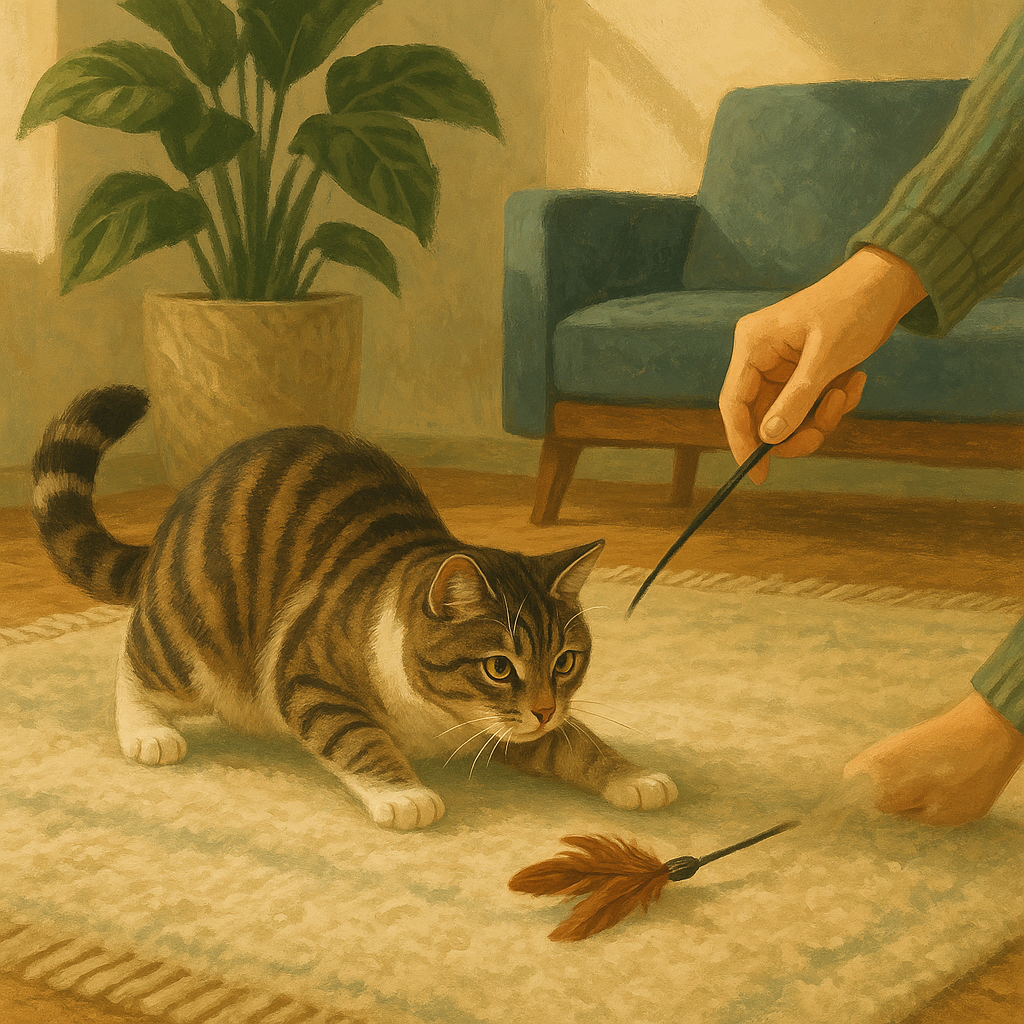
The fix is daytime structured play
Cornell flags interactive play and prey-mimicking toys as essential enrichment for indoor cats.1 Two sessions a day, ten to fifteen minutes each, with a feather wand or similar moving toy. The structure matters: run the full predator sequence. Let her stalk (move the toy slowly along the floor, then stop). Let her chase (move it away from her in short bursts). Let her pounce and “catch” (let her actually grab it; failing every time is frustrating, not enriching). End with a small food reward, ideally a wet-food snack, since predator-eat-sleep is the natural sequence that makes a cat tired.
What not to do
Don’t get up and play at 3 AM. Cats are observant; you teach her exactly once that 3 AM is when humans can be summoned. Don’t yell or spray her. That increases her arousal, doesn’t decrease it. If she escalates at night to get your attention (knocking things off shelves, scratching at your door), the actual cure is the daytime play schedule plus an evening wet meal and an enrichment puzzle or rotating toys. For the broader behavior picture, see our complete guide to indoor cat behavior and enrichment.
When to call the vet
- Sudden onset of nighttime activity in a previously quiet cat (could be hyperthyroidism in older cats)
- Vocalizing loudly during the zoomies, especially in a senior cat (cognitive dysfunction)
- Zoomies plus weight loss, appetite changes or new aggression
- Repeated nighttime activity that doesn’t respond to consistent daytime play after a few weeks