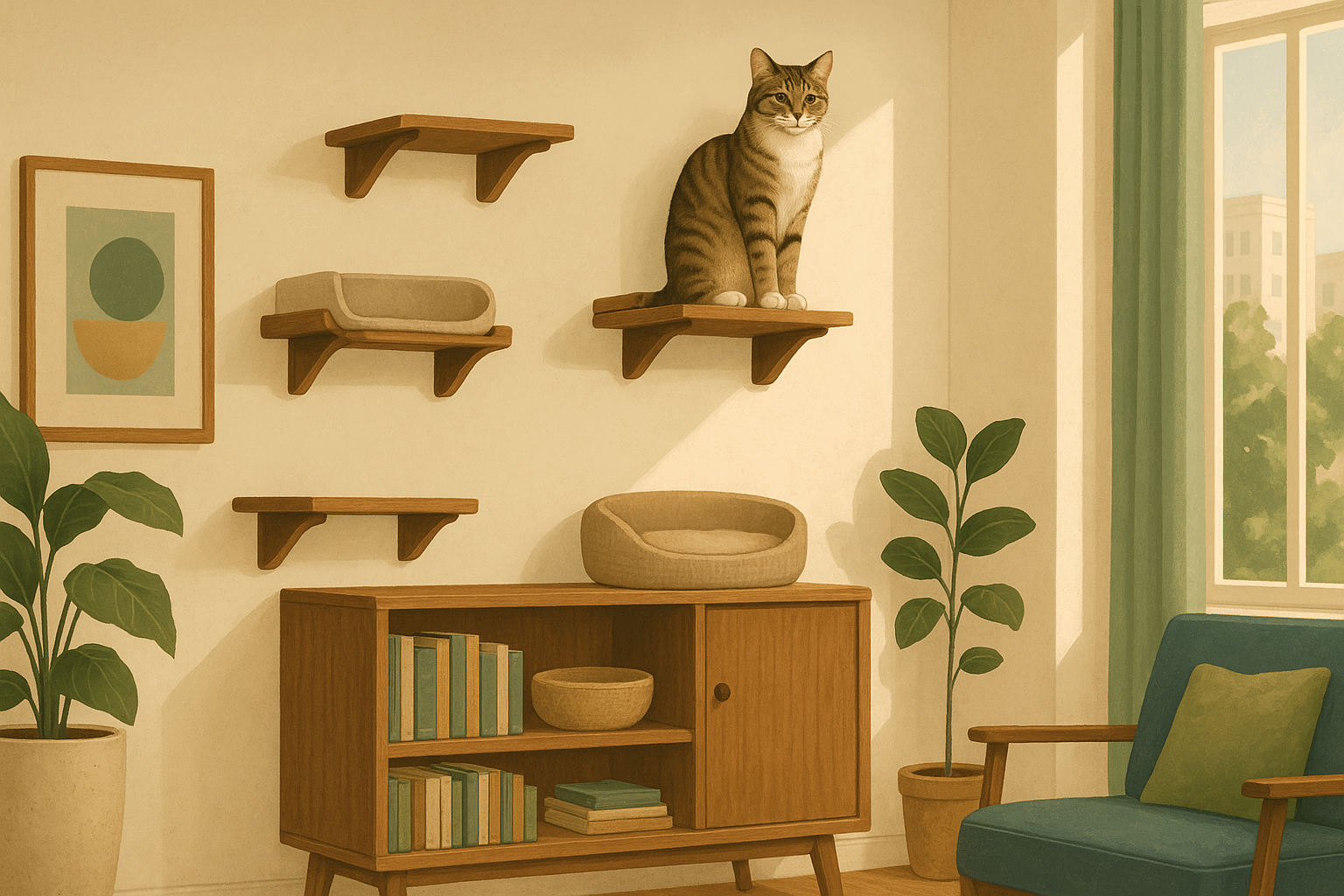
Vertical space for cats: the apartment-design guide
A small apartment can hold a lot of cat territory if you build upward. Cats use the third dimension naturally, and a cat with only floor-level access is using a fraction of her home. Vertical space is one of the highest-leverage and lowest-cost upgrades you can make in an indoor home; it improves stress regulation, reduces multi-cat tension and gives a nervous cat a way to control her own environment.
Quick fixes:
- Add at least one elevated perch per cat, ideally two. A cleared bookshelf top counts.
- Wall-mounted shelves at varying heights extend the climbable territory without taking floor space.
- A tall cat tree near a window provides both vertical access and outside-watching entertainment.
- For multi-cat homes, make sure perches are accessible from multiple routes so a cat can’t be cornered.
- Test by adding one new high spot, watch where she goes. Cats tell you what they need.
Why height matters more than floor space
Cats are both predator and prey. In the wild, climbing is one of the main ways they avoid threats and survey their territory. Domestic indoor cats inherit that wiring. Cornell’s enrichment guidance flags vertical space as a core part of an indoor cat’s environment, alongside scratching posts, interactive play and resting spots.1 A cat at height has visibility, control over who can approach her and a fallback when something on the floor (a vacuum, a guest, another pet) stresses her out.

The lowest-cost setup that works
You don’t need a $400 cat tree to start. Three approaches that cost almost nothing:
- Clear off the top of a bookshelf or wardrobe. Add a folded blanket or a small cat bed. Many cats will adopt this within a day.
- A cat bed on top of a cleared cabinet near a window. Window view + height + safe perch.
- Removable wall-mounted shelves. Affordable wall shelves rated for 20+ pounds, mounted in a staircase pattern at 12-18 inch intervals, create a wall path she can climb. Wall-anchored, so it doesn’t damage the wall when she leaps.
If you do want a cat tree, the form matters less than two things: tall enough that she can stretch out at the top and sturdy enough that it doesn’t wobble when she climbs. Cheap unstable trees often get ignored.
Why it matters in multi-cat homes
Cornell’s aggression guidance flags resource competition (food, water, litter, sleeping spots) as a major driver of multi-cat conflict.2 Vertical space helps in two ways. A higher-status cat can rest on a perch and monitor without controlling floor-level access. A lower-status cat has an escape route that doesn’t require running through the more confident cat’s space. In apartments where two cats have been low-grade tense, adding two or three new perches in different rooms often reduces the friction within a week or two.
For the broader behavior picture, see our complete guide to indoor cat behavior and enrichment.
When to call the vet
- Sudden change in your cat’s climbing or perching behavior (she stops going up, or struggles to)
- A senior cat who used to perch and no longer can (often arthritis, usually treatable)
- A cat hiding in high spots more than usual, refusing to come down for meals
- Falls or near-falls. Even sure-footed cats can have inner ear or neurological issues