Why Your Cat Begs for Food Then Won’t Eat It
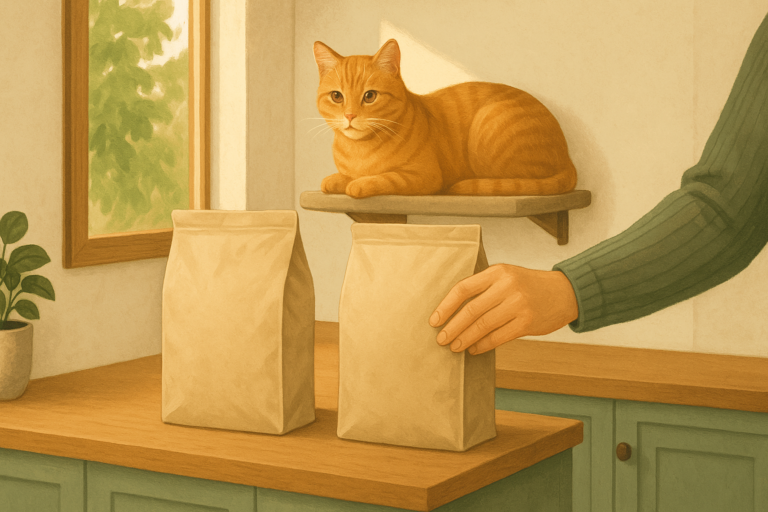
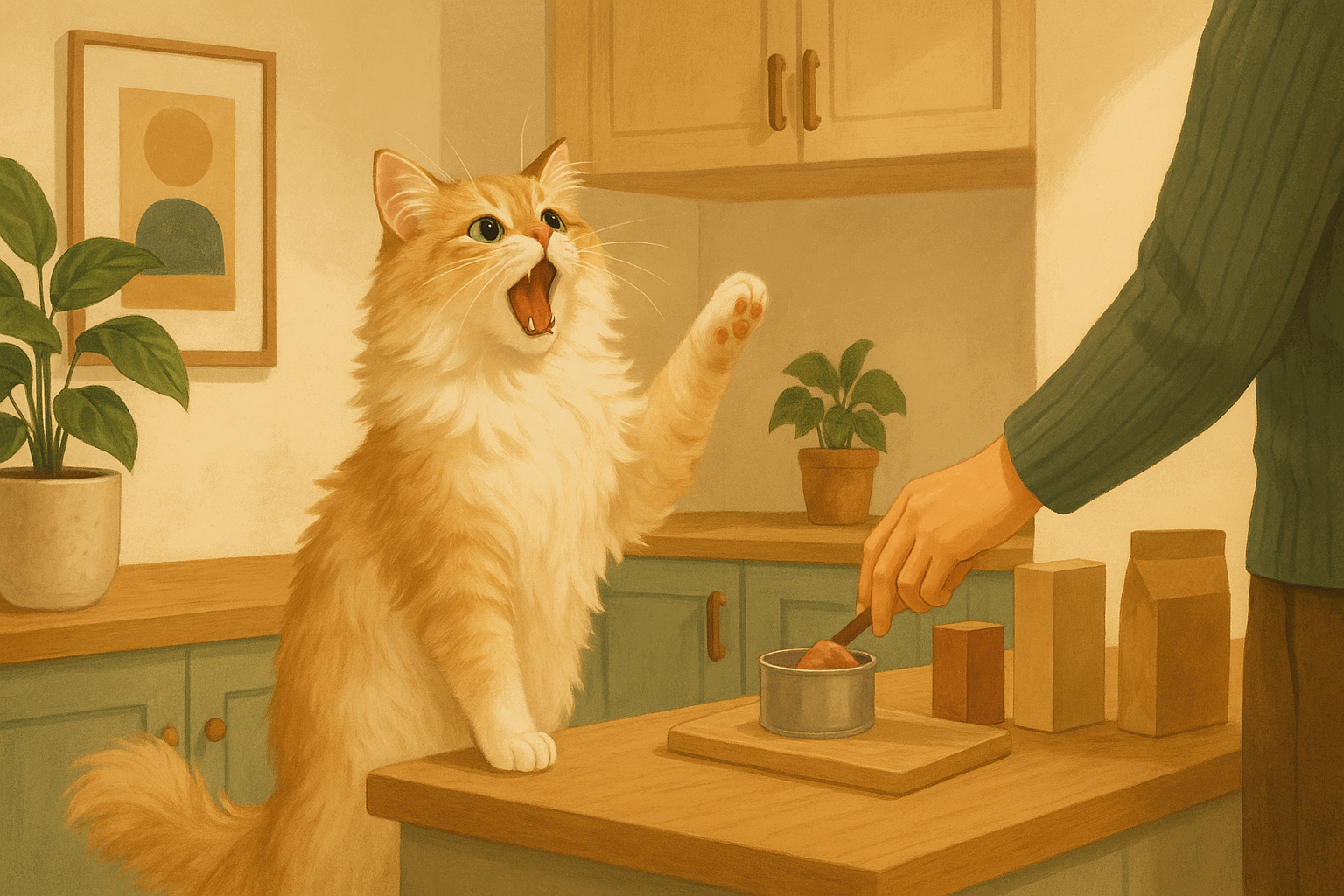
One of the most stubborn cases I worked at the rescue was a tabby named Biscuit who would station herself by the food cupboard, cry like she hadn’t eaten in days, trot ahead of me to the bowls, then sniff the food I put down and walk off with her tail up. Her foster was convinced something was wrong. Nothing was. Biscuit is the rule, not the exception. A cat who begs hard and then refuses the meal is almost always asking for something specific, and it is rarely “more food.”
The quick version:
- Begging often means “fresh,” not “more.” Serve a small portion, freshly opened and warmed to about body temperature.
- Cold or sat-out food is the most common trigger. Wet food loses its aroma within an hour or two, and aroma is most of what makes a cat want to eat.
- Some begging is for you, not the bowl. If she settles once you sit nearby, the request was social.
- Check the dish and the spot: a deep, narrow bowl or a busy corner can make a cat quit a meal she wanted.
- If the beg-and-refuse happens at nearly every meal, or comes with weight loss or vomiting, rule out a medical cause with your vet.
What the begging is actually asking for
When a cat cries at the bowl, we hear “I’m starving.” Often what she means is closer to “I want it fresh,” or “I want the routine,” or simply “I want you.” Cats tie meals to ritual and to the person who delivers them, so the begging is real but it’s a request for an event, the kitchen, the fresh scoop, the bit of attention, not only for calories.1 When the food that lands in the bowl isn’t what she pictured, her interest drops. Seeing it that way changes the problem from “my cat is being difficult” into “my cat is asking for something I can usually give.” For the wider picture on fussy eating, our picky-eater guide has the full breakdown, and the cat eating problems hub sorts the other refusal patterns by what they mean.
It’s probably not fresh enough
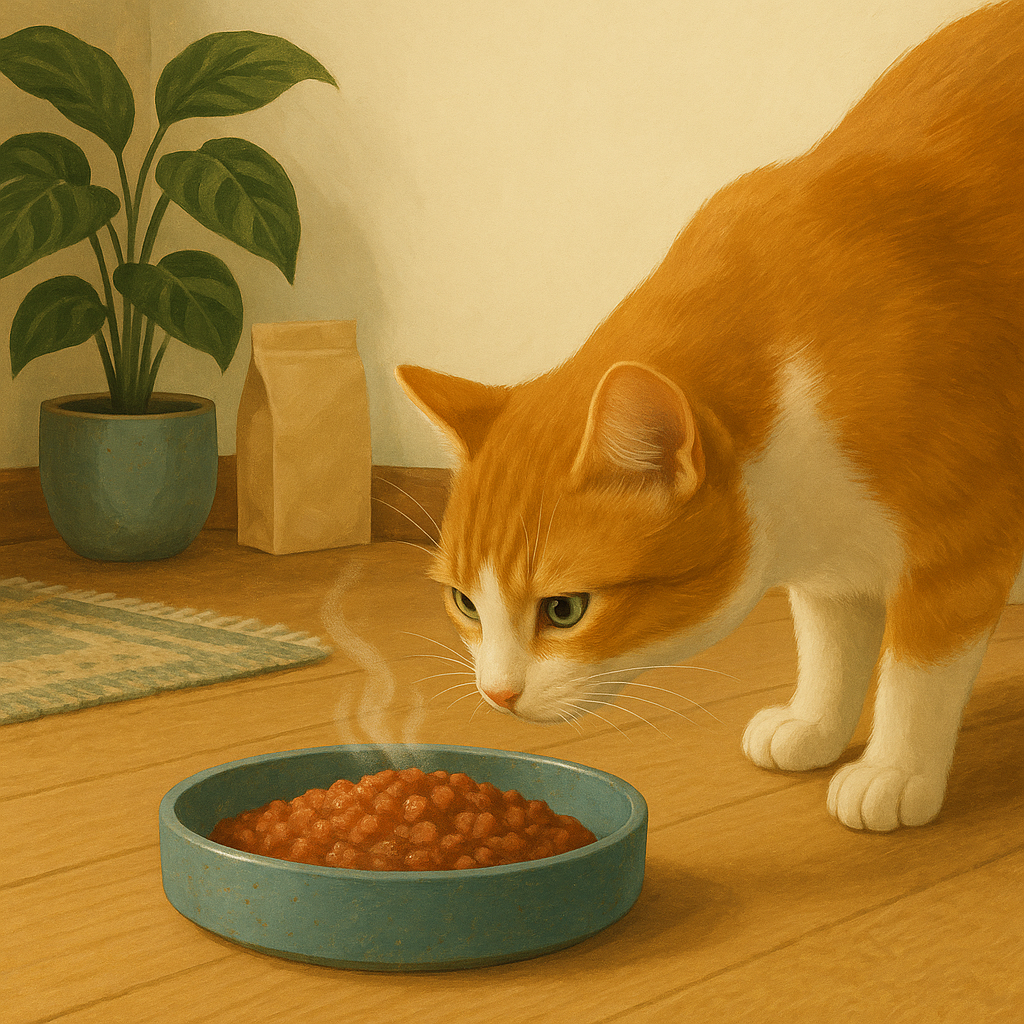
The single most common reason a begged-for meal gets refused is that the food isn’t fresh. Wet food dries on top and loses its smell within an hour or two, so a portion that has sat out since the last meal reads as stale to a cat even when it looks fine to you. Food straight from the fridge has the opposite problem: it gives off almost no aroma. That matters more than most owners realize. In one Waltham study, cats ate the most when wet food was served at about 37 degrees Celsius, the body temperature of prey, and the least when it came chilled from the fridge. Warming the food released more of the sulphur-containing compounds that carry meaty smell.2
So the fix is small, freshly opened portions, warmed to roughly body temperature. A few seconds of stirring in a little warm water, or a very short warm-up, brings the smell back. A cat who turned up her nose ten minutes ago will often eat the same food re-served warm. If you want a reliable aroma lever, a sprinkle of a strong-smelling freeze-dried topper does the same job. Our guide to the best freeze-dried cat food toppers covers which ones work and how to introduce them.
When the begging is for you, not the bowl
Some begging is purely social. If your cat begs, gets a fresh dish, ignores it, then settles happily the moment you sit down beside her or give her a few minutes of attention, the request was for you the whole time. This is easy to reinforce without meaning to. Every time the crying produces a new bowl or a fuss, the behavior gets rewarded and repeats. The answer isn’t to ignore your cat, it’s to uncouple the two things. Feed on a predictable schedule so meals aren’t a negotiation, and give play and lap time at other points in the day so she doesn’t have to use the bowl to get you to show up. With Biscuit, the foster started a five-minute wand-toy session an hour before dinner, and the bowl drama faded inside a week.
The bowl and the spot
If the food is fresh and warm and the begging still ends in a walk-off, look at the dish and where it sits. A deep, narrow bowl presses on a cat’s whiskers as she reaches in, and a wide shallow dish removes that. You’ll see this sold as a cure for “whisker fatigue,” and here I’d be honest: the term gets used with a lot more confidence than the evidence supports. The AVMA’s position is that there’s no good evidence whiskers brushing a bowl causes cats stress, and the one controlled study that tested it found a wide bowl didn’t make cats eat more or faster. The same study did find that, given the choice, more cats went to the shallow dish first, so a preference may be real even if the “fatigue” story isn’t.3 A shallow dish is cheap and harmless to try. Just don’t expect it to fix a refusal that’s really about freshness or stress.
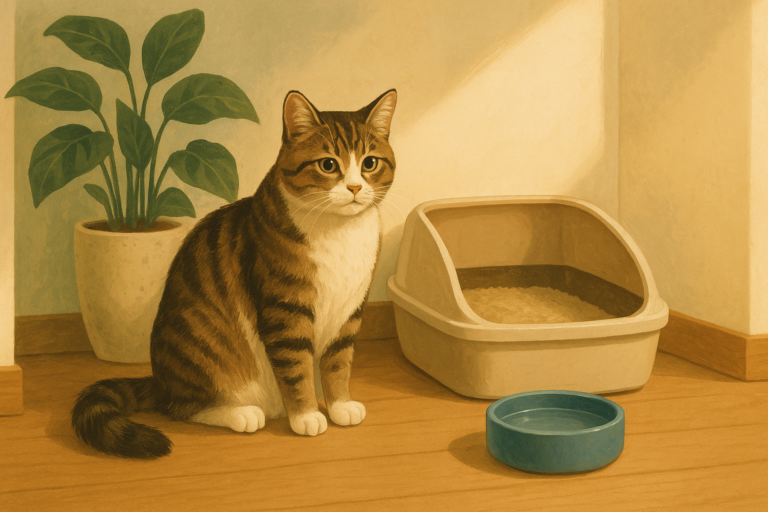
Location matters as much as the bowl. A dish wedged in a loud, high-traffic corner, sat right next to the water or the litter box, or in a spot a second cat likes to loom over, can turn a wanted meal into one she abandons halfway. Move it somewhere quiet and open where she can eat with her back to a wall and see the room.
When it’s the body, not the behavior
Most beg-and-refuse is ordinary fussiness. But the same pattern can mean a cat wants to eat and then finds that eating hurts or feels wrong, which is a different thing entirely. Nausea, dental pain and mouth disease all produce a cat who approaches the bowl eager and then backs off. The tell is consistency and company. Occasional pickiness in a bright, playful cat is behavior. A cat who does this at nearly every meal, or who is also losing weight, vomiting, drooling or hiding, needs a vet, not a different flavor.
One line is not negotiable. Never try to wait a refusing cat out. A cat who eats almost nothing for 24 to 48 hours is at real risk of hepatic lipidosis, a dangerous fatty-liver condition that sets in fast, especially in overweight cats.4 Our guide to a cat who suddenly won’t eat walks through that emergency in full. Beg-and-refuse where she still eats something at some point is a behavior puzzle. A true hunger strike is a clock.
When to call the vet
- The beg-and-refuse happens at nearly every meal rather than now and then
- It comes with weight loss, vomiting, drooling or lethargy
- She seems to want to eat but stops fast, as if eating is uncomfortable
- The pattern shows up suddenly in an older cat
- She refuses all food, fresh and warm included, for 24 to 48 hours
For a feeding plan matched to how your cat actually eats, take our free picky-eater quiz.