Cat Eating Problems: What Your Cat’s Refusal Is Actually Telling You
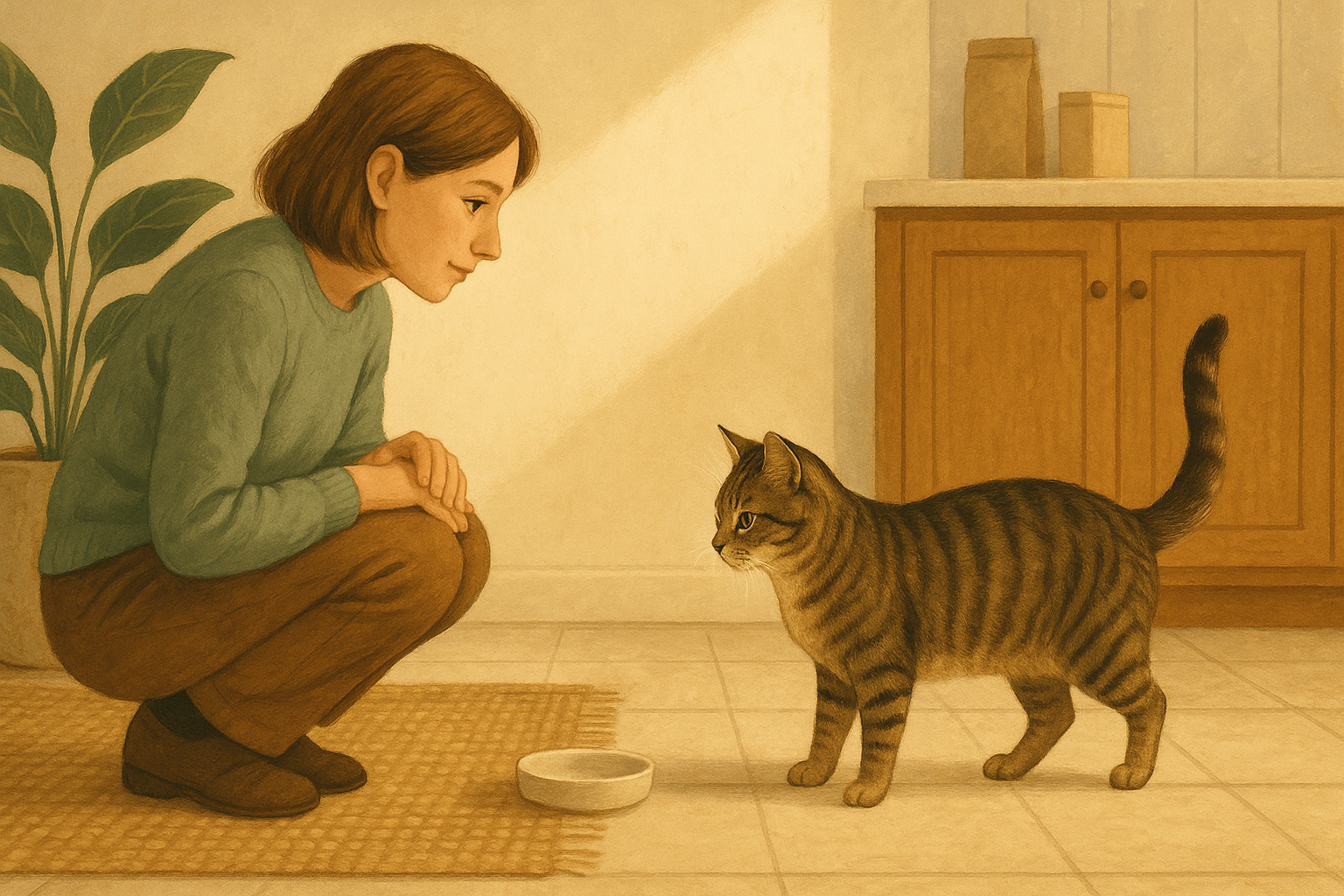
A grey tabby named Biscuit came through the rescue convinced that food was a trick. He would lean toward the bowl, freeze, then back away as if it had moved. His foster thought he was the pickiest cat alive. He wasn’t picky. He was telling us something, and once we learned to read it he ate fine. Most “eating problems” are like that. The refusal is a message, and the cat is rarely being difficult on purpose.
If your cat won’t eat, eats a few bites and quits or treats a once-loved food like an insult, this page is the map. It sorts the common patterns by what they actually mean, points you to the in-depth fix for each one and covers the handful of levers that help almost any fussy eater. It also draws a hard line: the point where a feeding quirk stops being behavior and becomes a reason to call your vet.
The short version
- Read the pattern, not the bowl. Sudden refusal, slow grazing, burying and flinching each point somewhere different.
- Lead with aroma and warmth. Cats decide to eat by smell first. A cold, sat-out bowl has lost the thing that triggers appetite.
- Serve small and fresh. A little food, offered often, beats a big bowl that cools and skins over.
- Look at the bowl and the room. Location, dish shape and household stress change eating more than owners expect.
- Rotate before boredom sets in. Cats are wired to want variety, so a single forever-food often stops working.
- Know the safety line. A cat eating almost nothing for 24 to 48 hours is a vet call, not a waiting game.
Eating is a behavior, not just an appetite
Here’s the thing I wish more owners knew. A cat’s decision to eat runs through her senses and her sense of safety long before it reaches her stomach. Smell comes first. Warmth, texture, the shape of the dish, where the bowl sits, who else is in the room, what happened the last time she ate there. All of it feeds into a yes or a no. Cornell’s feeding guidance describes cats as creatures of strong, individual food habits whose preferences are shaped early and held firmly.3 That’s why two cats in the same home can have opposite rules about the exact same can.
So when a cat refuses, she isn’t usually rejecting the nutrition. She’s reacting to a sensory or emotional signal that says this isn’t right. The fix is almost never “find the one perfect food.” It’s working out which signal is firing, then changing that. The patterns below are the ones I saw over and over in shelter and foster work, each with its own tell.
Match the refusal to the pattern
She stopped eating, suddenly and completely
A cat who ate normally yesterday and wants nothing today is the pattern to take most seriously. Sudden, total refusal is less often pickiness and more often nausea, pain, a dental problem or illness brewing. Don’t wait this one out. Our full walkthrough on a cat who suddenly won’t eat covers what to check, what to try in the first few hours and when the clock starts mattering.
She’s recovering from being sick and still won’t eat
Appetite often lags behind recovery. Lingering nausea, a stuffy nose that mutes smell or a bad association with the food she was eating when she felt awful can all keep a cat off her dish after she’s technically better. Tempting her with the old favorite can backfire and deepen the aversion. The recovery-appetite playbook is in why your cat won’t eat after illness.
She eats a few bites, then walks away
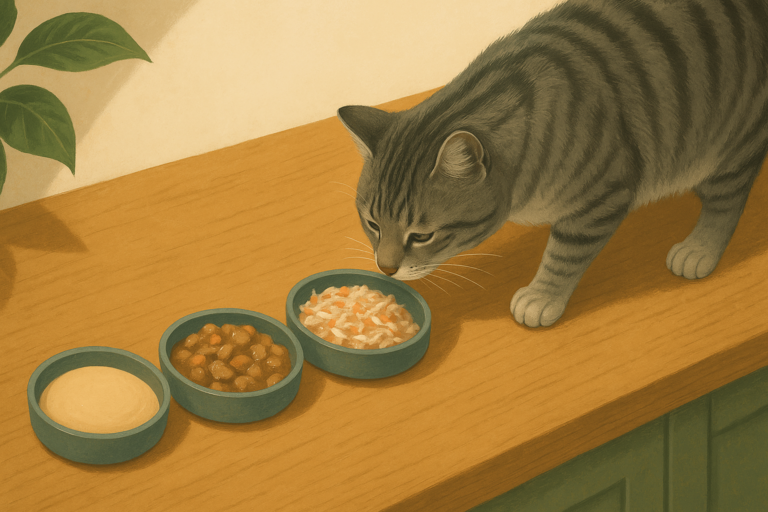
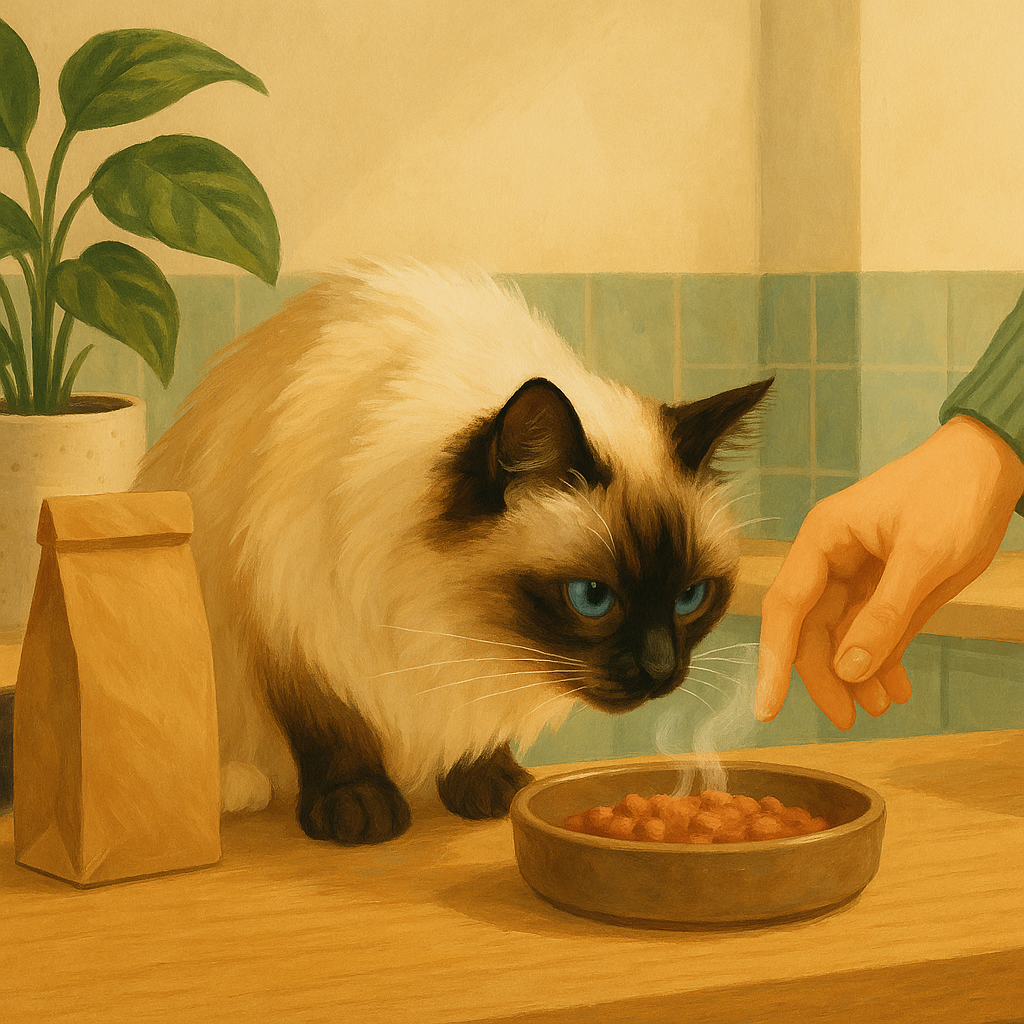
This one fools people because she clearly wants the food. She just abandons it. The usual reason is that the food changes in the bowl: a wet scoop cools, the surface dries into a skin and the aroma drains off within minutes, so by bite four it no longer smells like the thing she started eating. Warming wet food to roughly body temperature releases the meaty volatiles that drive feline appetite, which is why a fresh warm scoop often gets eaten when the cooled one didn’t.4 The within-meal version is covered in why your cat takes a few bites then refuses the rest.
She loved it yesterday and snubs it today
A food that was a favorite all week suddenly gets a sniff and a walk-off. This is the novelty effect, and it’s normal. Cats are built to seek dietary variety, so the same flavor every day eventually goes flat. The behavioral side, why it happens and how to build a rotation, is in why your cat won’t eat the same food twice. If you want the what-to-buy companion, the best cat food for cats who get bored of their food lays out the variety packs and toppers that keep mealtime interesting.
She buries the food or scratches around the bowl
The pawing motion around a full or half-eaten dish looks like rejection, and sometimes it is. It’s an inherited scent-hiding instinct, and it carries two opposite messages depending on timing. Burying after a good meal is harmless saving behavior. Pawing at a barely-touched bowl is closer to “no thanks.” How to tell them apart is in why your cat buries food and walks away.
She acts nervous or flinchy at the bowl
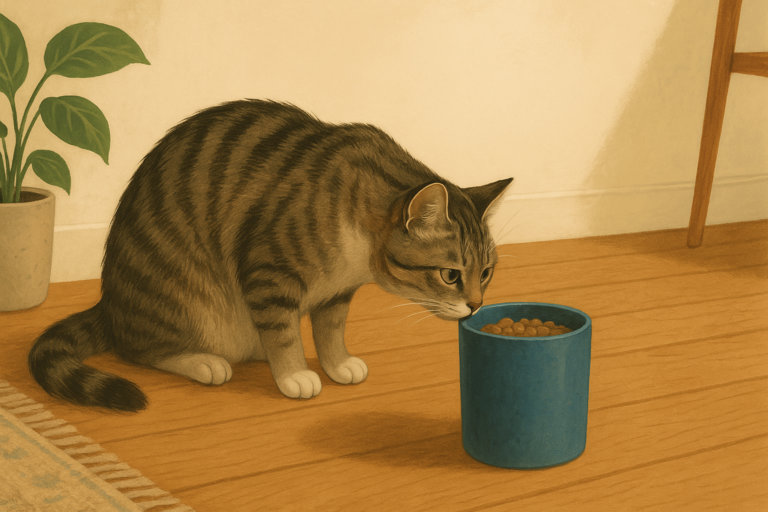
Biscuit’s pattern. A cat who approaches, hesitates and eats from the very edge usually has a problem with the bowl or its location, not the food. A deep dish, a noisy spot, a cramped corner or one tense encounter with another cat can all turn the feeding station into something to avoid. The station fixes, plus an honest look at the disputed “whisker fatigue” idea, are in cat scared of the food bowl.
She holds out for kibble and snubs anything wet
A lifelong kibble cat often treats wet food like a foreign object. It’s neophobia plus a texture and grazing mismatch, and it’s very common in indoor cats who’ve free-fed dry food their whole lives. The slow-bridge method that gets most of them eating wet is in how to get a kibble cat to eat wet food.
The levers that move almost every fussy eater
Whatever the specific pattern, a handful of adjustments help across the board. None of them involve buying a fancier food, which is usually the wrong instinct anyway.
- Warm it and lead with smell. A few seconds of gentle warming to about body temperature wakes up the aroma. Cold food straight from the fridge is the single most common own-goal I see.4
- Small portions, served fresh. Put down less than you think, take it up after 20 to 30 minutes and offer again later rather than topping up a congealing bowl.
- Fix the station before the food. A wide, shallow dish, a quiet location, separation from the litter box and in a multi-cat home a bowl per cat with space between them.
- Rotate on purpose. Cycle two to four proteins and textures so no single flavor wears out. Hold a couple in reserve for refusal days.
- Use aroma as a reset. A pinch of a strong-smelling topper or a single-ingredient treat crumbled on top can turn a “no” into a “fine.” The best freeze-dried cat food toppers and best single-ingredient cat treats guides cover the ones that work.
If you’re not sure which pattern you’re dealing with, our picky-eater quiz sorts your cat into one of six eating profiles in a couple of minutes and points you straight at the fix that fits. It’s the fastest way to skip the trial and error. For the broader question of fussiness in general, the why is my cat such a picky eater pillar is the companion to this one.
When it’s not behavior: the line that means a vet
Most of what’s on this page is fixable at home. One thing isn’t, and the line matters. Refusing a particular flavor, a cooled bowl or a bad spot is a preference. Eating almost nothing at all is a medical situation. Cornell lists true anorexia, a real loss of appetite rather than choosiness, among the signs that something underlying needs attention.1
The reason the clock matters so much in cats is hepatic lipidosis. When a cat stops eating, her body mobilizes fat faster than her liver can process it, and the liver can begin to fail. It develops quickly and it can be fatal, which is why a cat who eats almost nothing for 24 to 48 hours needs a vet rather than another new flavor.2 Call sooner if the refusal comes with vomiting, hiding, drooling, weight loss or any sign of pain. When the whole cat seems off, the problem isn’t the menu.
The bottom line
Stop hunting for the perfect food and start reading the pattern. Nine times out of ten the refusal is a sensory or emotional signal you can change: warm the food, serve it small and fresh, fix the bowl and the room, then rotate before boredom sets in. Match your cat’s specific tell to the guide that covers it, and keep the 24 to 48 hour rule in your back pocket as the one moment to stop experimenting and pick up the phone. Biscuit, for the record, just needed a quiet corner and a shallow plate. He lived another nine years and never once thought food was a trick again.