Why does my cat scratch the furniture, and how to make it stop?
Cats scratch because they have to. It’s marking, claw maintenance and stretching all in one and a cat who isn’t scratching at all is either declawed or has a problem. You can’t stop the behavior. You can redirect it onto a scratching post so completely that the furniture is left alone, which is what most owners actually want.
Quick fixes:
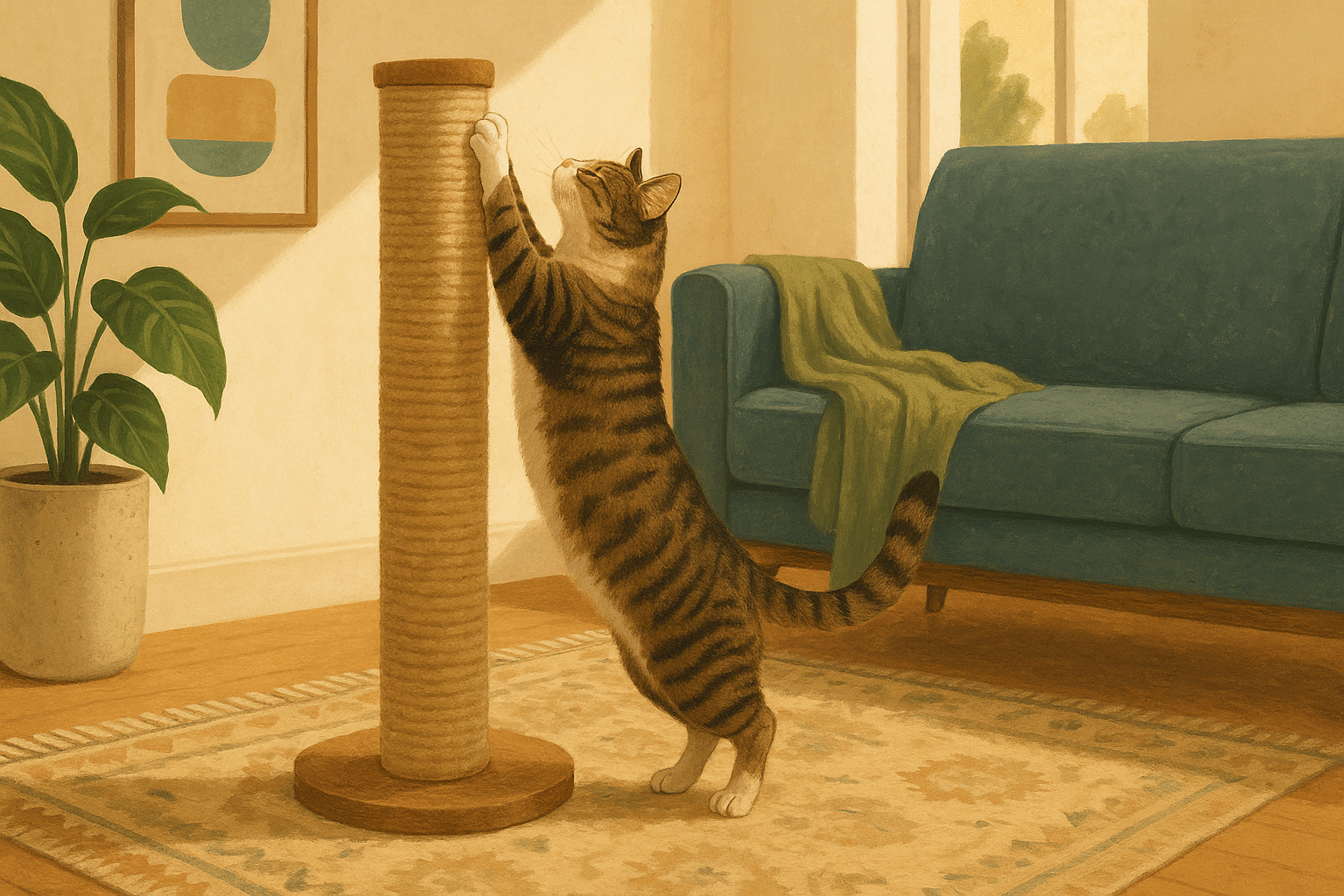
- Pick a post that matches her current behavior: vertical if she stretches up the couch arm, horizontal if she shreds the rug.
- The post must be tall enough for her to stretch fully and sturdy enough not to wobble. Wobble kills the post.
- Sisal rope and cardboard are the most-preferred materials. Carpet posts often get ignored.
- Put the post next to the furniture she’s currently scratching, not across the room.
- Cover the scratched furniture (a throw, a piece of double-sided tape) while she transitions to the post.
Dr. Sarah Wooten, DVM on why declawing isn’t the answer and how to redirect scratching properly (PetMD).
Why cats scratch (three things at once)
Scratching is three behaviors in one. Cornell describes it as a marking behavior (paw scent glands deposit territory cues), a claw-maintenance behavior (the outer claw sheaths come off) and a stretching behavior for the shoulders and back.1 All three are wired in. Trying to stop scratching is like trying to stop a cat from purring or kneading; it isn’t optional. What’s flexible is where she does it, and that’s the lever you have.
What the right post actually looks like
Cornell’s guidance is specific. Match her preference for orientation (vertical or horizontal, watch where she’s already scratching) and match her preference for substrate (sisal rope, cardboard, wood, sometimes carpet).1 Sturdy enough that it doesn’t topple or wobble when she leans into it. Tall enough that she can fully stretch on her hind legs with front legs out. The cheap short carpeted post sold at most pet stores fails on at least two of those three counts. Spend a little more on a tall sisal post or a sturdy cardboard scratcher.
Where to put it
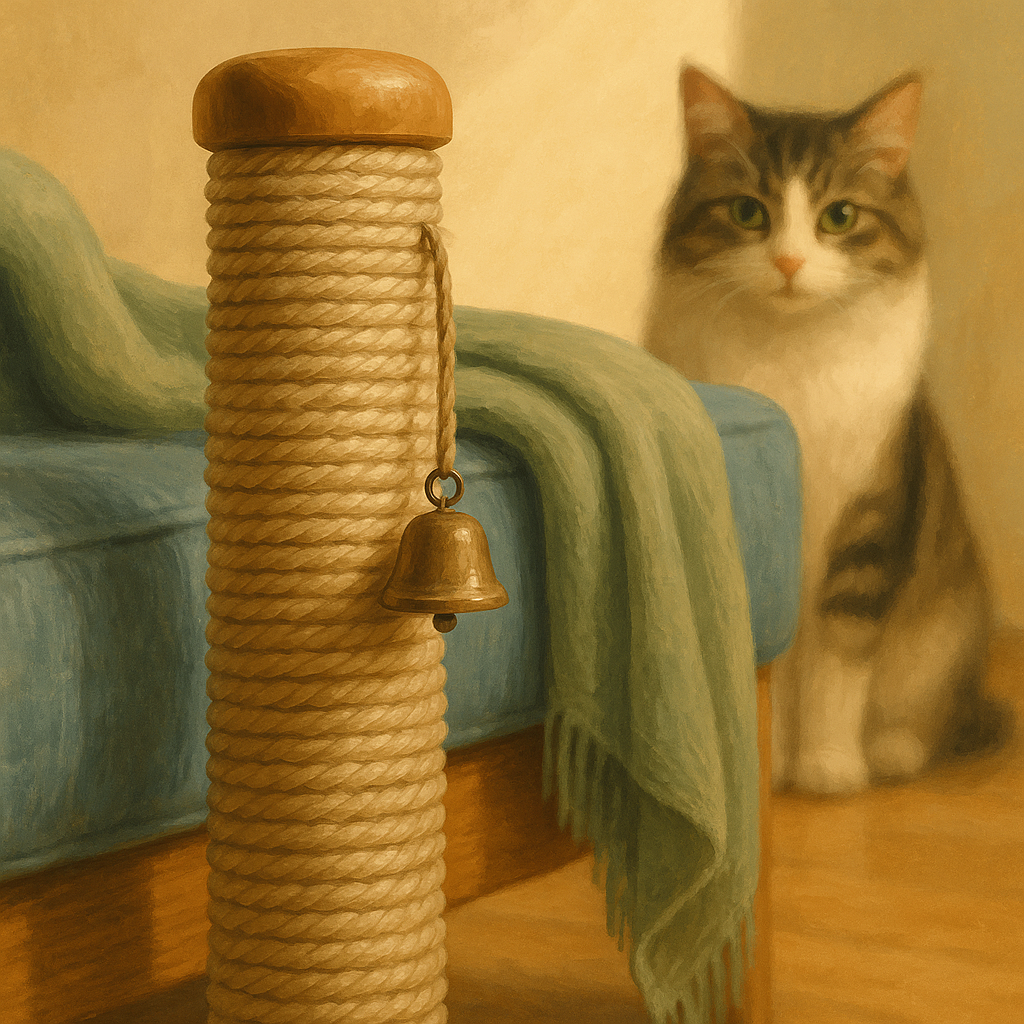
Place the post next to wherever she’s currently scratching, not in the corner you’d prefer it to live. A scratching post she ignores is just expensive furniture. Once she’s using the post reliably for a few weeks, you can move it slowly (a foot at a time, every few days) toward a less central location. If she scratches in multiple spots, you need multiple posts. One post per area she likes to scratch, plus one common-area post, is the rule that works.
Making the transition
Reward her every time you see her using the post, treat, praise, a couple of soft strokes. Cornell suggests entice with treats or catnip placed on or around the post.1 At the same time, make the furniture less appealing. A throw covering the scratched spot, double-sided tape on the surface or aluminum foil temporarily over it will all break the scratching habit at that location without punishing her. Don’t yell at scratching: it teaches her to hide the behavior, not stop it. For the broader behavior picture, see our complete guide to indoor cat behavior and enrichment.
When it’s worth a vet visit
- A cat who stops scratching entirely (often a pain or claw issue)
- A cat who scratches anxiously at one spot, sometimes themselves (over-grooming territory)
- A cat who suddenly starts scratching destructively when she didn’t before, sometimes a stress response to a household change