Is pet insurance worth it for an indoor cat?
The email we get most often about money starts the same way: “She’s never set a paw outside, so I figured she was safe.” Then comes the bill. A blocked bladder over a holiday weekend, a kidney workup at twelve, a swallowed hair tie that needed surgery. Four figures, out of nowhere, for a cat who spends her whole life on the couch. Pet insurance is the thing everyone wishes they’d looked into the week before that happens, and the thing almost nobody wants to think about while the cat is healthy. So let’s think about it now, honestly, for a cat that never goes out.
The short version
- Staying indoors cuts the injury risks (cars, fights, disease from other cats) but it does not cut the big bills. Those come from chronic illness and internal emergencies, which indoor cats get at the same rate.
- Some of the most expensive feline emergencies are, if anything, more common in indoor cats. Urinary blockage is the clearest example.1
- Pet insurance is catastrophe cover, not a discount card. You pay bills up front and get reimbursed after a deductible.2
- The one rule that decides everything: pre-existing conditions are not covered, so insurance is only worth buying while your cat is still healthy.2
- It’s worth it if a surprise $3,000 bill would be a genuine crisis for you. It’s less compelling if you have the savings and the discipline to self-insure.
“Indoors” protects against the wrong risks
Keeping a cat inside is one of the best health decisions you can make. It takes cars, fights, predators and most infectious disease off the table. But notice what that list has in common: it’s all trauma and contagion. It’s the stuff that lands an outdoor cat in the emergency room. The bills that tend to blindside indoor-cat owners are a different category entirely, and staying inside does almost nothing to prevent them.
Take the emergency indoor-cat owners dread most once they’ve lived through it. A male cat straining in the litter box, producing little or no urine, is a urethral obstruction, and it’s a true emergency that needs a vet the same hour.1 Here’s the uncomfortable part. Feline lower urinary tract disease is seen most often in middle-aged, overweight cats that get little exercise, use an indoor litter box, have restricted access to the outdoors and drink less water.1 That’s a description of a normal indoor cat. The very lifestyle that protects your cat from a car is a risk factor for one of the priciest emergencies she can have.
Then there’s the slow, expensive stuff that arrives with age. Chronic kidney disease is one of the most common diseases in older cats, affecting up to 40 percent of cats over ten and 80 percent of cats over fifteen.3 An indoor cat lives longer on average, which is wonderful, and it also means she’s more likely to reach the age where kidney disease, thyroid problems, diabetes and dental disease show up. Managing a chronic condition isn’t one big bill. It’s bloodwork, prescription food and medication, month after month. None of it is prevented by a closed front door.
How pet insurance actually works
Most people picture pet insurance like human health insurance, where you hand over a card and pay a small copay at the desk. It doesn’t work that way. Pet plans are almost always reimbursement plans: you pay the vet in full, file a claim and get paid back later, minus your deductible and whatever your reimbursement percentage leaves out.2 So you still need to cover the emergency up front. The insurance softens the blow afterward, it doesn’t remove it at the counter. If fronting the money is the part that worries you, that’s worth asking your vet about payment options ahead of time, before you’re standing there in a crisis.2
A few mechanics matter more than the glossy brochure suggests. Premiums rise as your cat ages and can rise after you make claims, so the cheap quote for a kitten is not the price you’ll pay forever.2 Routine and wellness care (vaccines, dental cleanings, checkups) is usually not included in a standard accident-and-illness policy and comes as a pricier add-on.2 Some providers won’t insure a pet or breed they consider high risk.2 And the AVMA is blunt that there’s no magic formula here: the right move depends on your cat, your budget and the fine print, which is worth reading with your vet before you sign.2
The single most important clause is the one about pre-existing conditions. Anything your cat is diagnosed with, or shows signs of, before you’re covered is typically excluded for good.2 That’s the whole game. It means insurance is something you buy while your cat is young and healthy and nothing is wrong yet. Wait until the kidney values tick up or the first blockage happens, and the exact thing you now want covered is the thing they won’t touch. Insurance rewards the person who bought it before they needed it, which is precisely why it’s such an easy decision to put off and regret.
When it’s worth it, and when it isn’t
We’re not going to tell you to buy it or skip it, because the honest answer depends on your finances, not your cat’s cuteness. This is a personal money decision, and we’re translators of the trade-offs here, not financial advisors. But the factors that tip the call are clear enough to lay out.
Insurance earns its keep when a sudden four-figure bill would be a real crisis rather than a painful inconvenience. If a $3,000 emergency this month would go on a credit card you’d carry for a year, insurance buys you the ability to say yes to treatment without the money being the deciding factor. It also makes more sense for a young cat, where premiums are lowest and there are no pre-existing conditions to exclude yet, and for breeds prone to a costly inherited condition. A Ragdoll or Maine Coon owner planning around hypertrophic cardiomyopathy, for instance, is insuring against something with real odds behind it.
It’s a weaker deal in a couple of situations. If you already keep a healthy emergency fund and you’re the kind of person who won’t raid it, you may come out ahead self-insuring (more on that below). And if your cat is already older or already has a diagnosis, the pre-existing exclusion hollows out much of the value, since the conditions most likely to cost you are the ones already on the record. That doesn’t always make it pointless, a new unrelated problem can still be covered, but the math gets less favorable the longer you wait.
If you skip it, self-insure on purpose
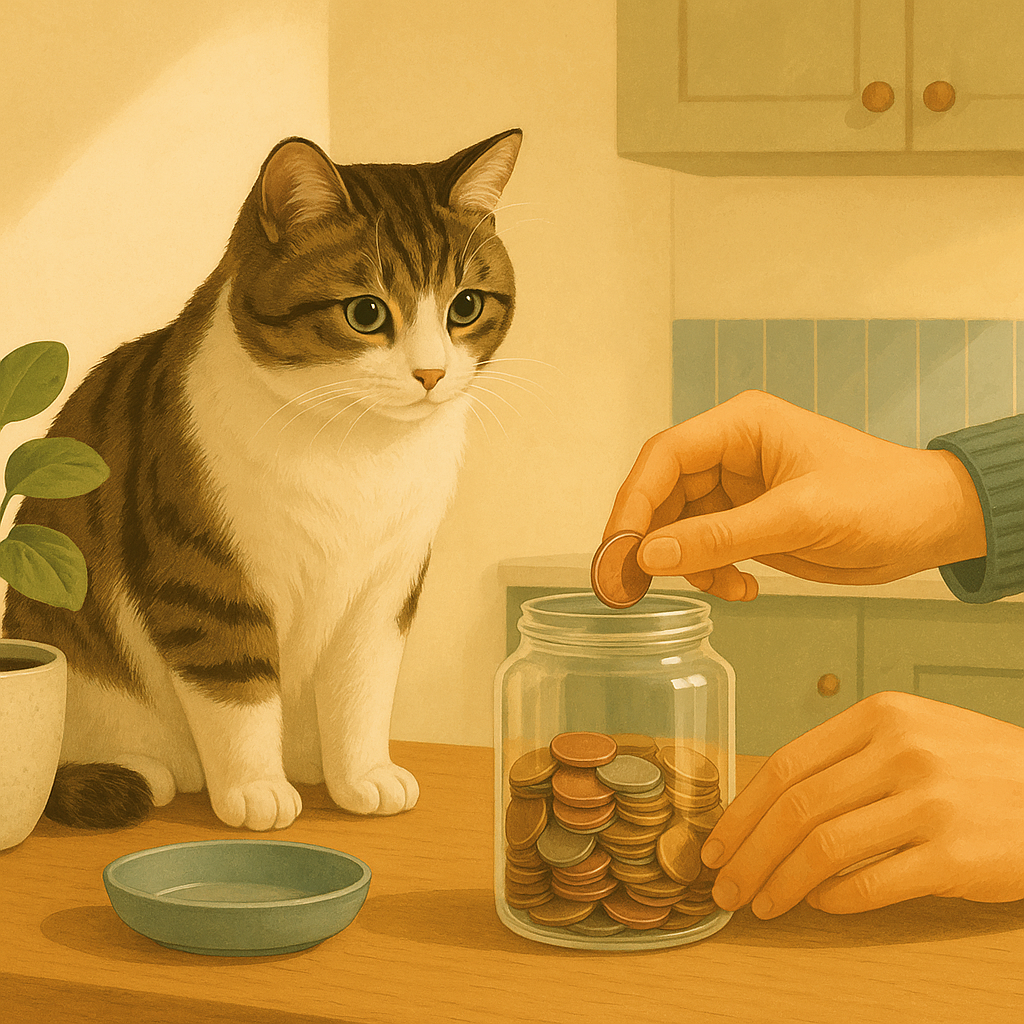
“I’ll just save the money instead” is a fine plan, but only if you actually do it. The version that fails is the one where the premium you didn’t pay quietly becomes takeout and the emergency lands on a credit card anyway. The version that works is deliberate: open a separate savings account, put a fixed amount in every month and don’t touch it for anything but the cat. Set it up so a bad month has a cushion waiting instead of a hard choice between your cat and your budget. Whether that cushion comes from an insurer or from your own account matters less than whether it exists at all when the blockage happens at 11pm.
How to decide for yourself
Ask yourself three questions. Could you cover a surprise $2,000 to $4,000 bill tomorrow without real hardship? How old and how healthy is your cat right now, today, before any diagnosis is on file? And if you told yourself you’d save instead, would you genuinely follow through every month? If the honest answers are “not easily,” “young and healthy” and “probably not,” insurance is doing a job you’d struggle to do yourself. If they’re “yes,” “already managing something” and “yes, reliably,” you may not need it. There’s no wrong answer, only the one that fits your situation, and the worst move is drifting along with no plan at all and hoping the bill never comes.
When to talk to your vet
Insurance itself is a conversation worth having with your vet, who knows your cat’s history and can flag what a given policy would and wouldn’t cover.2 On the health side, don’t let cost calculations delay an emergency. A male cat straining in the box with little or no urine, or a cat who hasn’t eaten in a day, needs a vet now, not after you’ve checked your coverage.1 And because kidney disease and other senior conditions show few signs early, regular checkups with bloodwork for any cat over ten are how you catch the expensive problems while they’re still cheap to manage.3 If you want to go deeper, our guides on catching kidney disease early, the health red flags that mean call the vet and the senior cat checklist all walk through the conditions insurance is really there to cover.
Sources