Cat spraying vs urinating: how to tell the difference
A few years ago a family surrendered a young tomcat to the rescue because, as they put it, he had started “peeing all over the house.” I braced for a cat with a painful bladder or a filthy litter box. What I found instead was a healthy, unneutered boy who used his box perfectly well for the ordinary business of the day, then backed up to the living room curtains each evening and left a thin, pungent stripe up the fabric. That is not a cat with a toilet problem. That is a cat leaving messages. Once we neutered him and gave his adopters a plan, the curtains stayed clean. The reason so many of these cats lose their homes is that the two behaviors look alike in the moment but come from completely different places, and telling them apart is the whole game.
The short version
- A cat that squats and leaves a puddle on the floor, the bed or the carpet is urinating in the wrong place. That points to a medical problem or something she dislikes about the litter box.1
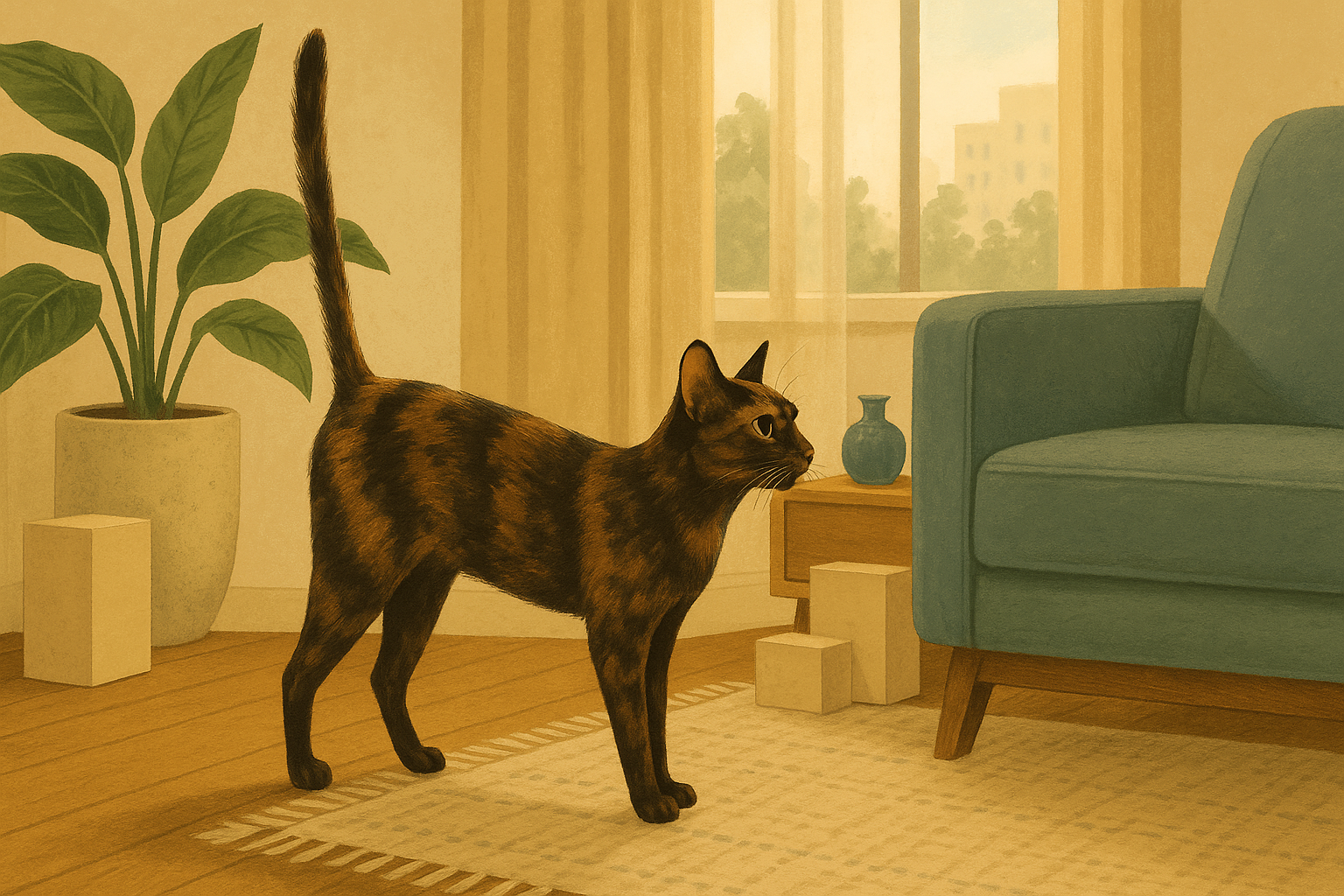
- A cat that stands, backs up to a wall or a chair, lifts a quivering tail and leaves a small amount of urine on that vertical surface is spraying. Spraying is communication, not a bathroom failure.12
- A marking cat usually keeps using her box normally for the rest, so urine in the box does not rule out spraying elsewhere.2
- Whichever it is, see the vet first. A male cat straining with little or no urine is a same-day emergency.3
- Spraying is driven by hormones and stress, so the fixes are neutering, calming the triggers and cleaning thoroughly, not scolding.1
Two behaviors that only look the same
When a cat empties her bladder, she is relieving herself. When she sprays, she is talking. By leaving small amounts of urine around a space, a cat announces that she was here, marks out territory she considers hers and, if she is intact, advertises that she is available to mate.1 The ASPCA makes the same point a different way: a urine mark is not just urine, it carries extra communication chemicals, which is exactly why it smells so sharp to us and so informative to another cat.2 House soiling is the most common behavior complaint owners bring to the vet, and a good chunk of those cats are not soiling at all. They are marking.1 Treating a marker as if he had a dirty box, or treating a sick cat as if he were being territorial, is how people spend months on the wrong fix.
How to read the evidence
You usually will not catch the act, so learn to read the scene. The single most reliable tell is the surface. Marks left up high on something vertical, the back of a chair, a wall, a speaker or a curtain, are almost always spray.2 Cats do not squat to spray the way they squat to urinate, so a puddle on a flat surface like the floor, a rug or a pile of laundry points the other way, toward a litter box issue or a medical one.1
A few more clues sharpen the picture. Spray tends to be a smaller amount than a full bladder’s worth, and it smells noticeably more pungent than ordinary urine.2 Watch the posture if you can: a spraying cat stands with her body erect, holds a straight-up tail that twitches and treads with her back feet.1 And notice what else the cat is doing. A cat that is marking will usually still use her litter box normally and still bury her stool there, while a cat that has soured on the box often abandons it for both jobs.1 If you truly cannot tell, a phone propped in the room or a cheap camera pointed at the trouble spot will settle it in a day or two.1
Rule out a medical problem first
No matter which behavior you think you are seeing, the first stop is the vet, and this is not a formality. Inflammation of the urinary tract makes peeing painful and urgent, and a cat who hurts in the box will start going wherever she happens to be, then sometimes keep favoring that new spot out of habit.1 Kidney disease, thyroid trouble and diabetes all make a cat drink and urinate more, which can overwhelm even a tidy box.1 Even for genuine marking, a physical problem that raises a cat’s anxiety can be part of the trigger, so a clean bill of health clears the ground before you start changing anything else.2
One situation is not a wait-and-see. A male cat crouching in the box, straining, crying and producing little or nothing is very likely blocked, and a urinary obstruction can become life-threatening within a day. That is an emergency-vet trip, not a Monday-morning appointment. It is worth knowing the other feline health red flags that mean call the vet now so a real crisis never gets filed under “she’s just being difficult.”3
What sets a cat off
Once the vet has cleared your cat, the pattern of what triggers a marker is remarkably consistent, and almost all of it comes back to feeling insecure. Hormones lead the list, so intact males spray most, unspayed females next, though a slice of altered cats still do it, roughly one in ten neutered males and one in twenty spayed females.1 Numbers matter too: the more cats under one roof, the higher the odds that one of them marks, and homes packed with cats almost always have a sprayer.12
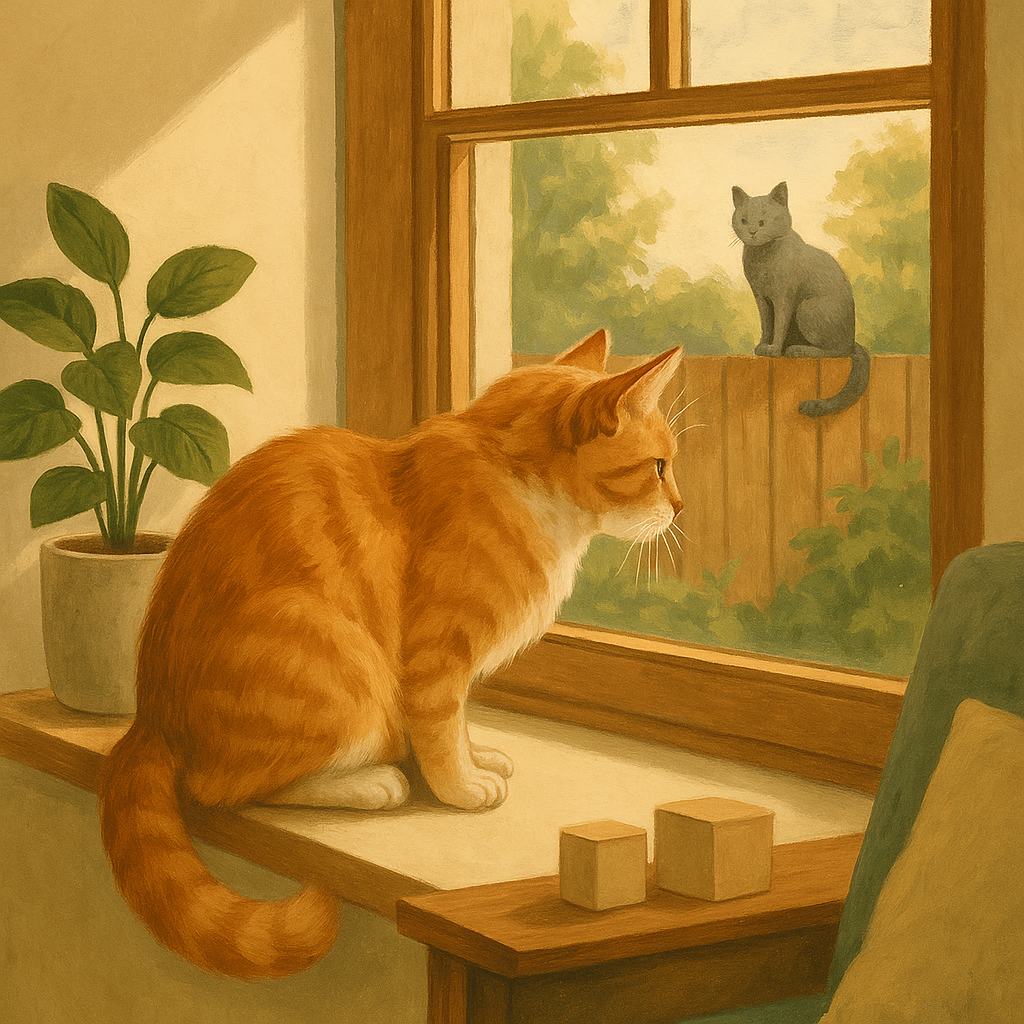
The biggest everyday trigger for an indoor cat, though, is another cat she can see but cannot reach. A strange cat strolling across the yard, glimpsed through a window, is often all it takes, because your cat feels her territory is under threat and answers the only way she knows how.2 Change of almost any kind can do it as well, a new person or pet in the house, a remodel, a shift in your schedule, even new furniture or grocery bags carrying unfamiliar smells.1 Tension between cats already living together is one of the most common causes of all, and it is usually anxiety rather than aggression, a cat who lacks the social tools to handle another cat’s presence and marks to feel more secure.2
What actually helps
Because spraying is a different problem from a dirty box, it needs different fixes.1 If your cat is intact, neutering or spaying is the single highest-value step, since it takes the hormonal fuel out of the fire and resolves marking in a large share of cats.12 Next, cut off the view of outdoor cats by closing blinds or blocking access to the windowsill your cat patrols, and if strays keep visiting, a motion-activated sprinkler outside can move them along.2
Cleaning is not optional. Cats return to spots that already smell like their own mark, so you have to neutralize the odor rather than cover it, ideally with an enzymatic pet cleaner. Skip anything with ammonia or vinegar, because to a cat those smell like urine and can invite a repeat.12 In a multi-cat home, ease the competition the way you would for any litter box trouble: one box per cat plus a spare, spread around the house, plus extra perches and separate food, water and scratching spots so nobody has to fight for anything.2 The same environmental thinking runs through everything in a good indoor enrichment routine, and it overlaps heavily with the fixes for a cat that has stopped using the litter box.
A synthetic facial pheromone can take the edge off, since many cats will not spray over a surface that already carries that reassuring cheek-gland scent.12 It is a finishing touch rather than a cure, and it works best alongside the changes above. If you want to weigh the options, we compared the common pheromone diffusers side by side. For a cat who keeps marking after you have done all of this, ask your vet about a referral to a veterinary behaviorist, who can build a plan and, when it is warranted, add anti-anxiety medication as one piece of a larger effort.12
What not to do
Do not punish a cat for either behavior. Rubbing her nose in it, shouting or throwing things does nothing useful, and it makes the anxiety worse, which for a marking cat means more spraying, not less.12 Cats do not soil the house for revenge, and they cannot connect a scolding to something they did minutes earlier.1 The behavior is a symptom of how your cat feels, so the goal is to change the feeling, not to win an argument she does not know she is having.
When to call the vet
Call the same day if your cat is straining, crying in the box or passing little urine, especially a male, since that can signal a blockage.3 Book a visit soon if the accidents started suddenly, if you spot blood, if your cat seems to be drinking or peeing much more than usual or if you simply cannot tell whether you are dealing with marking or a medical problem, because sorting that out is a job for an exam and a urine test, not guesswork.1 And if you have neutered your cat, calmed the household and cleaned every spot and the spraying continues, that is your cue to ask about a behaviorist rather than to give up. Most of these cats can be helped once you know which problem you are actually solving.