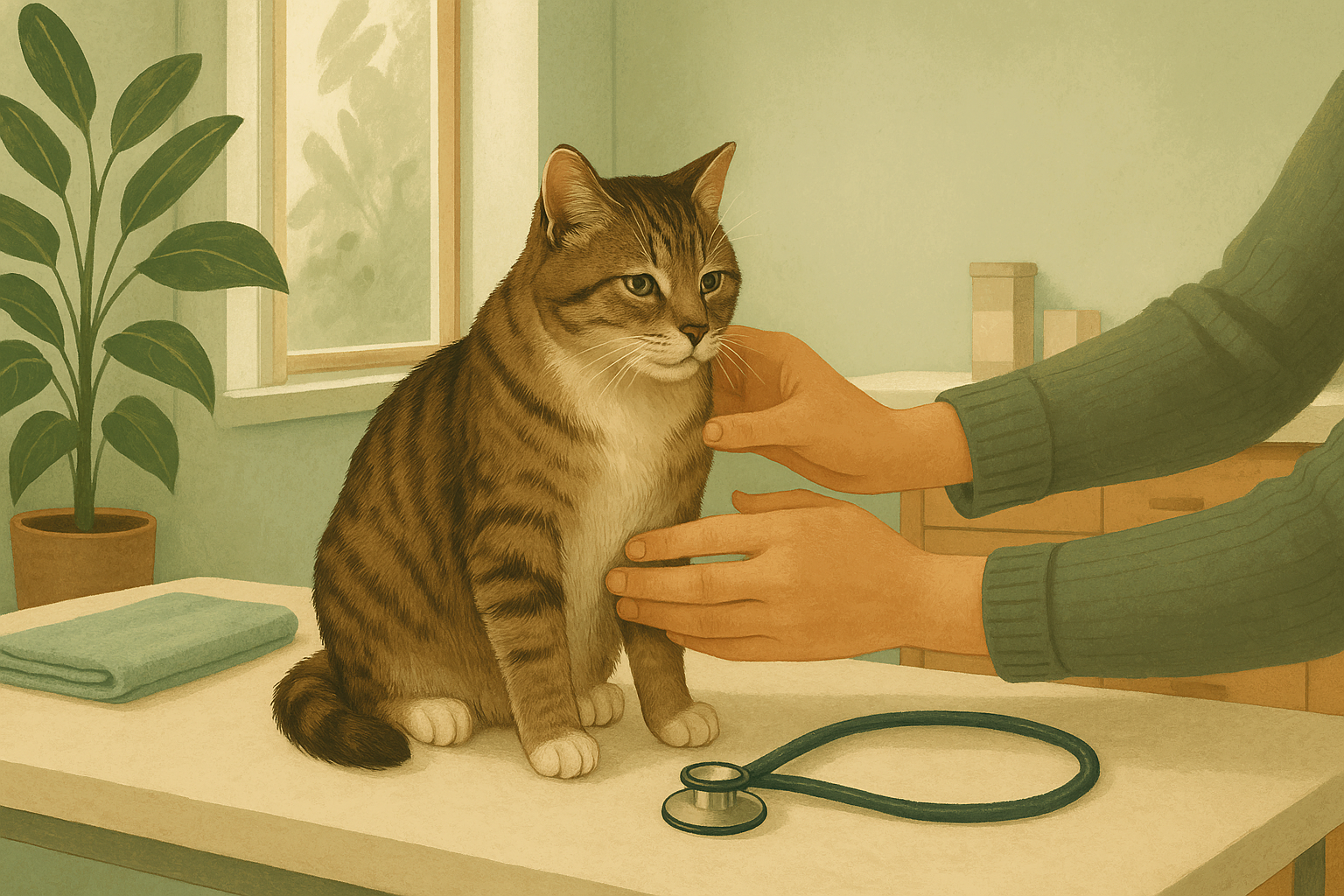
Indoor cat kidney disease: how to lower the risk and catch it early
I spent a few years working the intake desk at a small-animal clinic, and there was one worry that owners almost never said out loud but you could see behind their eyes. They’d mention, half apologizing, that their older cat had started drinking a lot more water lately, and you could watch them brace. Some part of them already knew that with a senior cat, more drinking can mean the kidneys. Chronic kidney disease is one of the most common things that goes wrong in older cats, and the hard part is that by the time you notice the drinking, the disease has usually been quietly underway for a while.
Here’s the honest version, the one I wish more owners heard early. You can’t fully prevent kidney disease. The only proven risk factor is age, and you can’t do anything about that.1 What you can do is stack the odds in your cat’s favor and, above all, catch it early, because early is where the good outcomes live.
The short answer
- Keep water going in. Wet food, clean water in more than one spot, a fountain if she likes moving water.
- Keep her lean. An overweight cat carries a stack of other health risks into old age.
- Mind the mouth. Dental pain quietly drags down appetite and overall health.
- Get senior bloodwork on a schedule. This is the single highest-value thing you can do.
- Learn the early signs so you call the vet in weeks, not months.
A reader who stops here has the gist. The rest is why each of these matters, and what early disease looks like at home.
What kidney disease is, and why age is the real driver
The kidneys filter waste out of the blood, make urine and help hold blood pressure steady. Chronic kidney disease, or CKD, is the slow, persistent loss of that function over time. Cornell’s Feline Health Center puts the numbers plainly: CKD affects up to 40% of cats over the age of 10, and as many as 80% of cats over 15.1 Those are not rare-disease numbers. For a cat lucky enough to reach a real old age, some degree of kidney decline is close to a fact of life.
That’s also why so much of the advice you’ll read sounds vague. There’s no single cause to avoid, no vaccine, no food that guarantees clean kidneys at 16. The kidneys simply wear with age, and the goal shifts from preventing the disease to slowing it down and finding it sooner. The good news is that finding it sooner genuinely changes the story, which I’ll come back to.
Why indoor cats are worth watching closely
There’s a quiet irony for indoor-cat owners. Keeping a cat inside, away from cars, fights and disease, is one of the best things you can do for her lifespan. But living longer means more cats reach the age where kidney disease shows up. The reward for good care is a cat who lives into the years when this matters most.
Indoor life adds a second wrinkle. Cats descend from desert animals and carry a low thirst drive, so they’re built to pull most of their water from prey rather than a bowl.2 A sedentary apartment cat eating dry food can run a little dry without ever looking obviously dehydrated. Hydration is one of the few levers you actually hold, so it’s worth taking seriously well before there’s any problem to fix.
The levers you actually control
Keep water going in
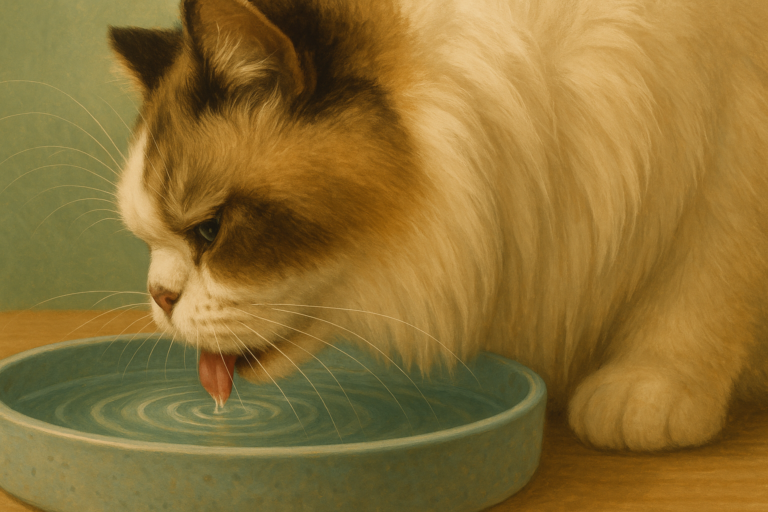
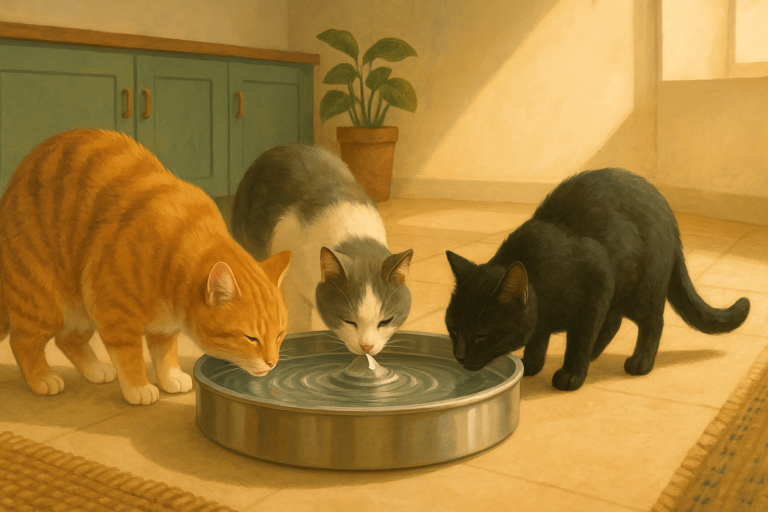
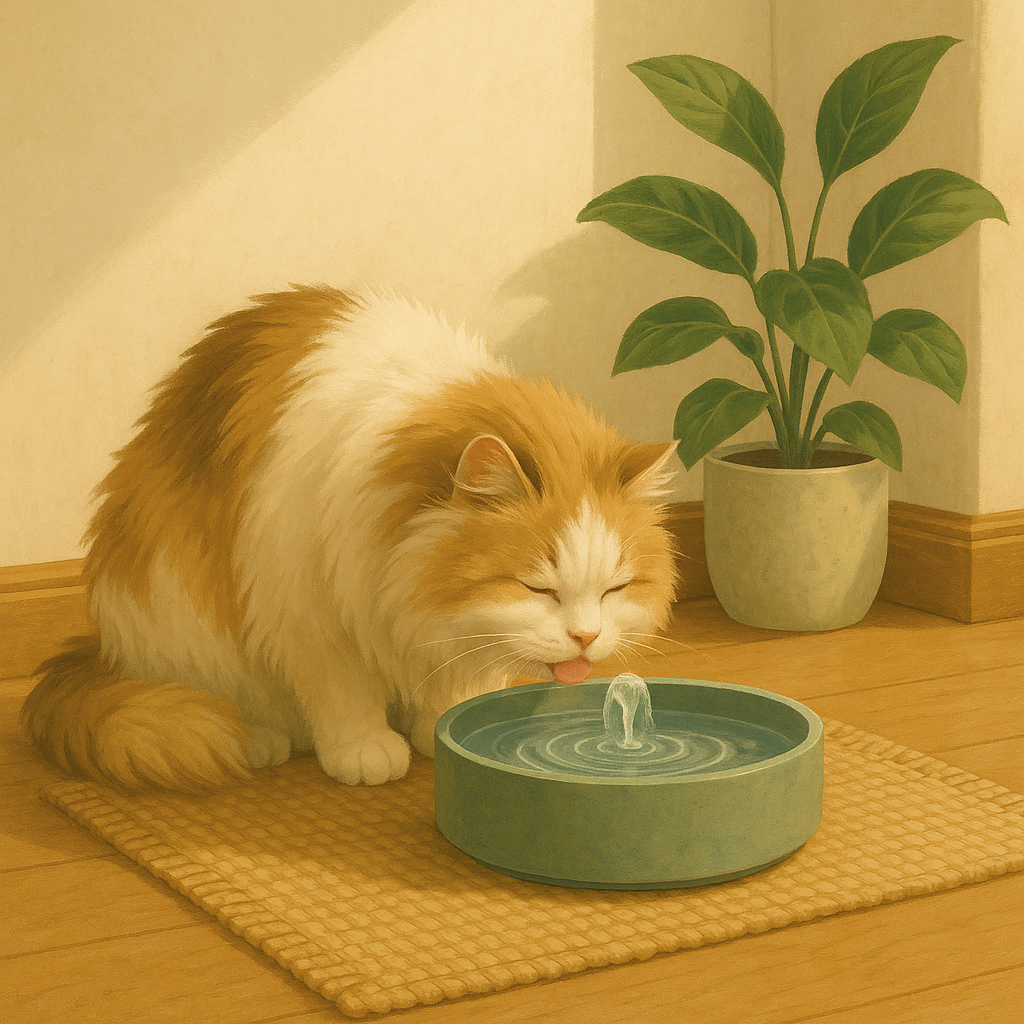
For a cat with kidney disease, staying well hydrated is one of the core goals of treatment, because dehydration speeds the damage along.1 You don’t have to wait for a diagnosis to act on that. Wet food is the biggest lever, since canned food is roughly three-quarters water and lifts a cat’s intake without relying on her choosing to drink. Beyond that, Cornell’s own advice for CKD cats is the same advice that helps a healthy one: offer clean water in several spots around the home, and lean into the fact that many cats prefer to drink from a fountain.1 If you want the deeper version, we’ve written separately on wet versus dry food and the hydration math, on choosing a water fountain, and on the early signs of dehydration that are easy to miss indoors.
Keep her lean
Weight isn’t a direct cause of kidney disease, but an overweight cat walks into her senior years carrying extra risk for diabetes, joint trouble and the kind of general decline that makes any other illness harder to weather. A lean cat ages better. Free-feeding dry food all day is the usual culprit indoors, so portioned meals and a bit of play go a long way. Our hydration playbook covers how wet feeding and weight management tend to travel together.
Mind the mouth
This one surprises people. Dental disease is common in older cats, and a sore mouth pulls down appetite, which pulls down the food and water that a senior cat can’t afford to lose. It also adds a low simmer of inflammation that does an aging body no favors. Regular dental checks won’t save the kidneys on their own, but they keep one avoidable problem from stacking on top of an unavoidable one.
Watch blood pressure and the conditions that travel with CKD
Kidneys help regulate blood pressure, so the two problems tend to ride together. Roughly 60% of cats with CKD also develop hypertension, which can show up as sudden vision changes, disorientation or weakness.1 CKD can also cause anemia, since the kidneys make a hormone the body needs to produce red blood cells.1 You can’t manage any of this at home, but you can make sure your vet checks blood pressure as part of a senior workup, which folds neatly into the next point.
Get the bloodwork, on a schedule
If you do one thing from this whole piece, do this. Early CKD is silent, because the body compensates for a falling kidney function until a lot of it is gone.1 A blood test sees it before your cat does. For years the standard marker was creatinine, but creatinine doesn’t usually climb until a cat has lost almost 75% of kidney function. A newer marker called SDMA is less thrown off by dehydration and muscle loss, and it rises when roughly 40% of function is gone, which can flag the disease much sooner.1 Paired with a urinalysis, it’s the closest thing we have to an early-warning system.
How often? The American Association of Feline Practitioners suggests baseline diagnostics at least once a year from age 7 to 10, twice-yearly exams from 10 to 15 and a check every four months for healthy cats over 15.3 That cadence isn’t fussiness. It’s built around the fact that an older cat can change a lot in twelve months, and a number that’s drifted since last year is exactly the kind of early signal that buys time.
What early kidney disease looks like at home
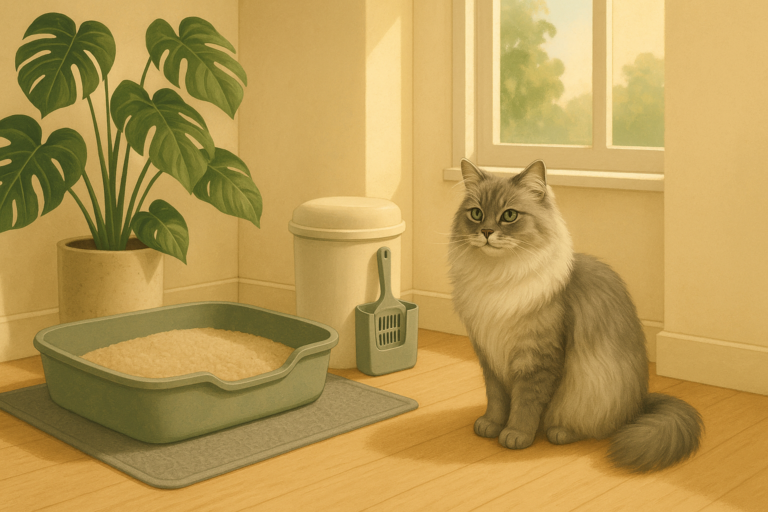
By the time signs are obvious, the disease is usually well along, so treat the subtle stuff as worth a phone call. The classic early pattern is drinking more and peeing more, often together, as the kidneys lose the ability to concentrate urine.1 You might notice the water bowl emptying faster, heavier clumps in the litter box or your cat parked at the tap. Past that, watch for a slow slide in weight, a duller or unkempt coat, a softer appetite and a cat who seems flatter and less herself.1 None of these prove kidney disease on their own. Plenty of them point at it.
When to talk to your vet
Book a visit if your senior cat is drinking or urinating noticeably more than usual, is losing weight without you changing anything or has gone quiet, scruffy and off her food over a few weeks. Treat sudden vision changes, disorientation or weakness as urgent, since those can signal the high blood pressure that rides with kidney disease.1 And if your cat is over seven and hasn’t had bloodwork in the last year, that alone is reason enough to call. CKD can’t be cured, but Cornell is clear that the earlier it’s caught and treated, the better the outlook for both length and quality of life.1 Early really is the whole game.