Why Your Cat Takes a Few Bites, Then Refuses the Rest
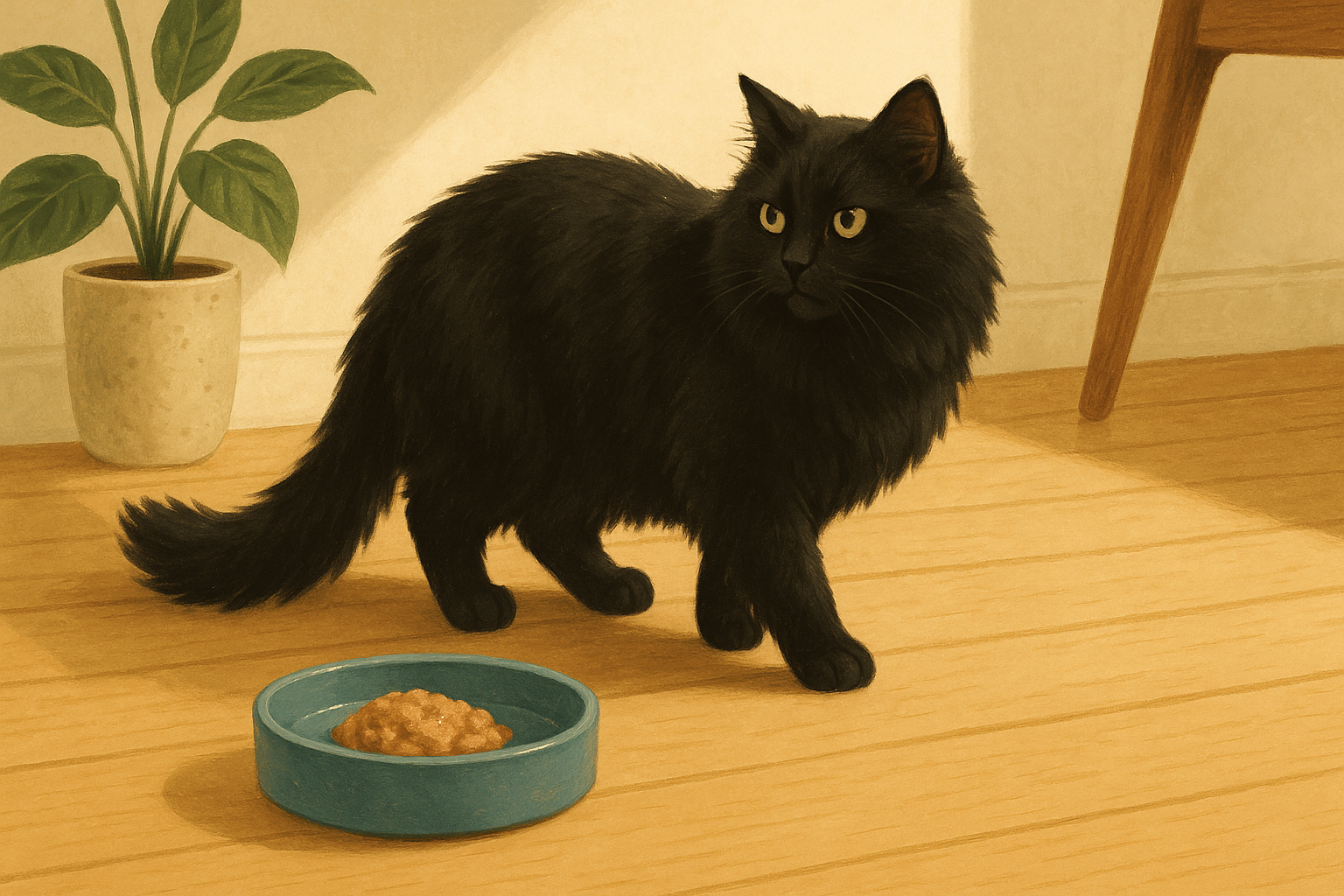
She comes running when the pouch opens. She takes three or four eager bites, then stops, sniffs the bowl she was just inhaling and walks off. Twenty minutes later you scrape the rest into the bin, put down a fresh scoop of the very same food, and she eats again like nothing happened. If that little routine sounds familiar, you do not have a cat who hates her food. You have a cat who is fussy about its state: warm and fresh she is in, cooled and sat-out she is gone. Once you see that the food is changing in the bowl while she eats, the fix gets a lot simpler.
Quick take:
- The food changes the moment it hits the bowl. It cools, the surface dries into a skin and the aroma fades, and a cat reads all three as “this is no longer fresh.”
- Cats eat most when food is near prey body temperature, around 37 degrees Celsius, because warmth is what releases the meaty aromas they hunt by.1
- Serve small, fresh, warm portions instead of one big bowl she picks at and abandons.
- Revive a cooling bowl with aroma: warm it back to body temperature or sprinkle a freeze-dried topper over it.
- If she refuses food that is fresh and warm too, this isn’t fussiness about freshness. A sudden across-the-board refusal for 24 to 48 hours is a vet call.2
Why she quits halfway through
Here is the thing most owners miss: the food your cat refuses is not the food you served. A scoop of wet food starts changing the second it leaves the pouch. It cools toward room temperature, the top dries and forms a faint skin, and the smell that pulled her across the kitchen quietly drains away. She ate the fresh, fragrant version. She is refusing the cooled, flat one a few minutes later. Same can, different food as far as her nose is concerned.
Aroma is most of what makes food appealing to a cat, and aroma depends on warmth. A Waltham study published in the Journal of Veterinary Behaviour offered cats the same wet food at three temperatures: fridge-cold at 6 degrees Celsius, room temperature at 21, and 37 degrees, roughly the body temperature of prey. The cats ate the most at 37 and the least straight from the fridge.1 When the researchers looked at why, they found that warming the food released more of the sulphur-containing compounds that carry meat flavour. Cool the food and those volatiles stop lifting off it. The bowl looks the same to you and smells like almost nothing to her.
The texture and smell critic
In our picky-eater framework this cat is a sensory critic. She is not bored of the flavor and she is not anxious about the bowl. Her standards are about the food’s state in the moment: how it smells, how warm it is, whether the texture is fresh or starting to congeal. The giveaway is the reset. Refresh the food, with a warm-up or a new scoop, and she eats. That is the opposite of a cat who is off a flavor entirely or feeling unwell, and it tells you the problem is freshness, not the recipe.
It is worth separating this from its close cousin. A cat who loves a flavor for a week then snubs it for days is a different pattern, flavor fatigue, and the fix there is rotating proteins rather than managing freshness. We cover that one in why your cat won’t eat the same food twice. The sensory critic refuses within a single meal. The flavor fatiguer refuses across meals. Knowing which clock your cat runs on points you at the right fix.
Serve it the way she’ll eat it
If the food is best in the first few minutes, the answer is to give her less of it more often, and to keep it warm and fresh while she eats.
- Serve small portions. Put down a quarter or a third of what you used to, let her finish it fresh, and offer more later. A small scoop she clears beats a big bowl she picks at and abandons. It also means less food sitting out going stale.
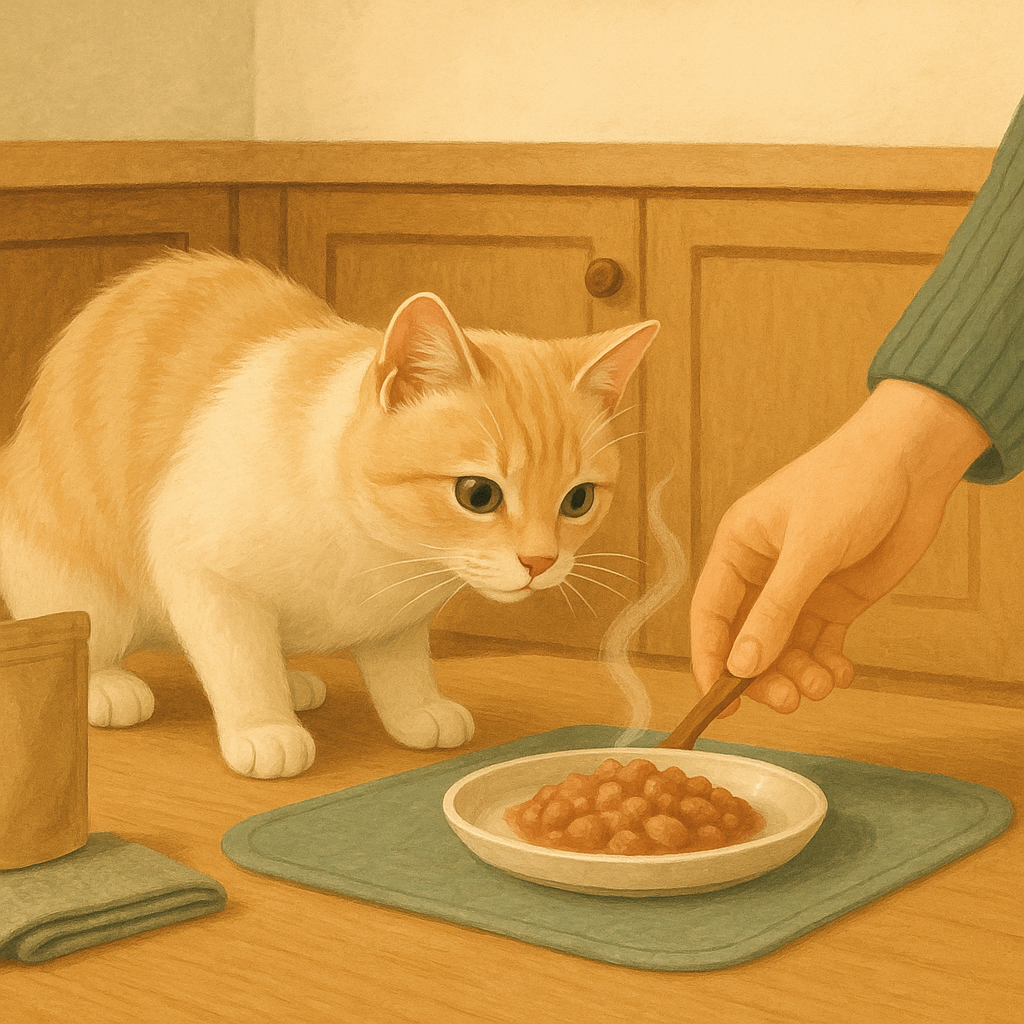
- Warm it to body temperature. Food from the fridge is nearly scentless to her. Take the chill off with a few seconds in the microwave, stirred well so there are no hot spots, or stand the dish in a bowl of warm water. Aim for warm to the touch, never hot. Around body temperature is the target the research points to.1
- Use a wide, shallow dish. A flat plate or a shallow saucer spreads the food thin so it stays close to the temperature you served it and is easy to reach. Food piled deep in a narrow bowl cools and crusts on top while the middle sits untouched.
- Don’t let it sit. Give her 20 to 30 minutes, then take up what’s left rather than leaving it to dry out all afternoon. A bowl that has been out for hours is the least appetizing version of that meal.
Refresh the aroma when she stalls
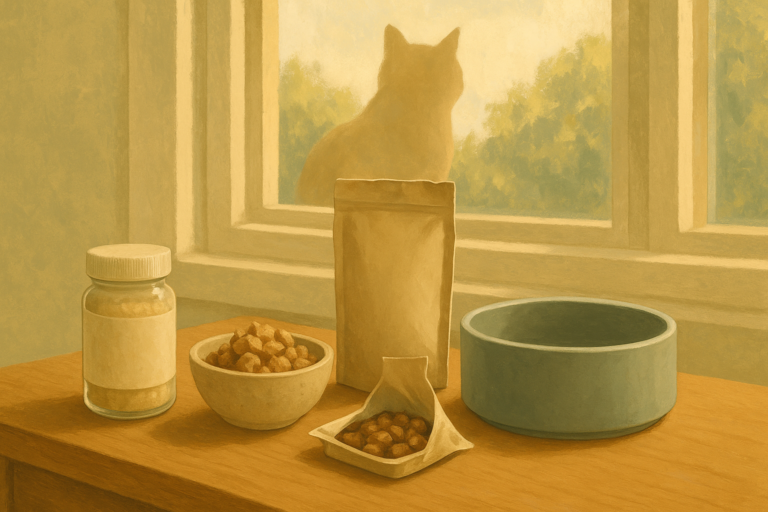
When a bowl goes flat partway through and you would rather not start over, you can often bring it back by putting the smell back. A freeze-dried topper is the cleanest tool for this. A pinch of crushed freeze-dried chicken or fish over a cooling bowl throws off a hit of concentrated aroma that a sensory critic responds to, often enough to flip a refusal into a finished plate. A quick stir to fold the dried-out top layer back into the moist food underneath helps too. For aroma-forward options worth keeping in the cupboard, our roundup of single-ingredient cat treats covers the ones that double as toppers.
What not to do
- Don’t keep topping up the same congealing bowl. Adding fresh food on top of a dried-out base just contaminates the new scoop with the stale smell she already rejected. Clear the dish and start clean.
- Don’t leave food out all day to graze. For a cat this sensitive to freshness, a bowl sitting out for hours is the worst version of the meal, not a backup she’ll return to. It dries, loses its smell and teaches her the bowl is usually disappointing.
- Don’t read it as her demanding fancier food. If a refusal reliably produces a richer can or a handful of treats, a quick learner starts holding out on purpose. Fix the freshness first before you decide the recipe is the problem.
- Don’t microwave it hot. Overheated food can scald a cat’s mouth and actually drives some cats off. Warm, stirred and tested on your wrist is the goal, not steaming.
When it isn’t about freshness
The freshness pattern has a clear signature: she refuses the cooled, sat-out bowl but eats a fresh warm one happily. The moment that signature breaks, treat it as something else. A cat who turns down food that is fresh and warm too, or who refuses every food across the board, who is hiding, drooling, losing weight or just seems off, is not being a critic. A refusal that comes on suddenly and covers everything is worth reading carefully in our guide to a cat who suddenly won’t eat.
There is a firm safety line under all of this. A cat must not go without eating for long. Cornell’s Feline Health Center notes that a loss of appetite can seriously affect a cat’s health within about 24 hours, and that going without food puts cats at risk of hepatic lipidosis, a dangerous fatty-liver condition that can become life-threatening.23 The practical rule: refusing a cold, picked-over bowl is normal fussiness. Eating almost nothing for 24 to 48 hours is not. Put down whatever she will reliably eat and call your vet. Getting calories into her safely always comes first.
Know what kind of eater you have
A sensory critic who needs her food fresh and warm is a different cat from one who tires of a flavor, or one who is loyal to dry food, or one who gets anxious around the bowl itself, and each pattern responds to a different fix. If you are not sure which one you have, our picky-eater quiz sorts your cat into a profile in a couple of minutes and points you at the feeding approach and the products most likely to suit her. It is the fastest way to stop guessing and start with a plan that fits the cat in front of you.
Sources
- Waltham Petcare Science Institute, “Could science hold the answer to senior cats’ picky palate?”
- Cornell Feline Health Center, “Anorexia”
- Cornell Feline Health Center, “Hepatic Lipidosis”
TheCatWellness is reader-supported and we are not veterinarians. This article is general information, not medical advice for your individual cat. If your cat stops eating, loses weight or seems unwell, talk to your vet.