Best probiotics for cats: the three I’d actually reach for
At the intake desk, the question came up almost every week: a cat had finished a round of antibiotics days earlier, or was three days into a new shelter, or had a big move coming up, and the owner wanted to know if a probiotic would settle the stomach that was about to get upset. The honest answer is that it depends on why the gut is upset in the first place. Probiotics are not a cure-all, but for a few specific situations they have real evidence behind them. Here are the three I’d reach for, and how to tell if your cat is actually a candidate.
As Amazon Associates we earn from qualifying purchases. Some links in this post are affiliate links; if you buy through them, we earn a small commission at no extra cost to you. We only recommend products we’ve used or researched thoroughly. See our full disclosure.
The three probiotics, at a glance

Purina Pro Plan FortiFlora Probiotic Powder
Single-strain powder · sprinkle-on sachets · the one clinics send home most
- ✓ Individually portioned daily sachets
- ✓ Mixes into wet or dry food easily
- ✓ The brand most cats have already tried at a clinic
- ✓ Budget-friendly per dose
on Amazon
Price as of Sep 21, 2026, 9:21 AM EDT. Product prices and availability are accurate as of the date/time indicated and are subject to change.
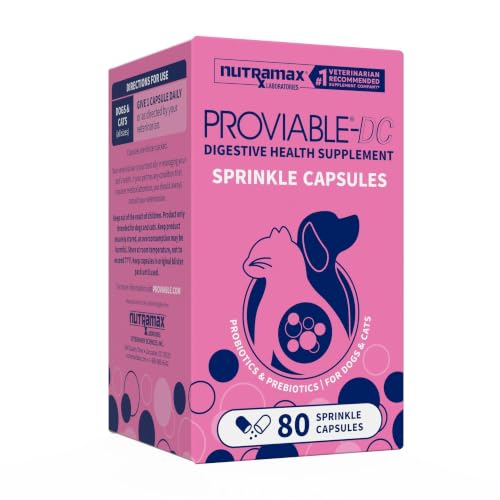
Nutramax Proviable Probiotics
Multi-strain capsule · can be opened onto food · 80-count bottle
- ✓ Seven bacterial strains in one capsule
- ✓ Capsule opens easily for a picky cat
- ✓ Same family of formula studied in chronic-diarrhea research
- ✓ Widely stocked, long shelf life
on Amazon
Price as of Sep 21, 2026, 9:21 AM EDT. Product prices and availability are accurate as of the date/time indicated and are subject to change.

VetriScience Extra Strength Gut Health
High-count multi-strain capsule · added prebiotic fiber · 120-count bottle
- ✓ Higher colony-forming-unit count per dose
- ✓ Includes prebiotic fiber alongside the probiotic strains
- ✓ Large bottle suits daily long-term use
- ✓ Made by a company that also formulates joint and calming supplements
on Amazon
Price as of Sep 21, 2026, 9:21 AM EDT. Product prices and availability are accurate as of the date/time indicated and are subject to change.
Quick take:
- Probiotics have the most consistent support for a few specific triggers: antibiotic courses, stress-related diarrhea and shelter or transition upset, not for a generally healthy cat with a normal gut.2
- Cornell’s Feline Health Center lists probiotics among the newer supportive therapies for feline gut inflammation, alongside prebiotics and dietary fiber.1
- A 2025 systematic review of the feline probiotic research found real but modest benefits, and flagged that study quality varies a lot between products.3
- FortiFlora is the one most cats have already met at a vet clinic. Proviable and VetriScience Extra Strength Gut Health are the multi-strain options for longer-term or more stubborn cases.
- None of this replaces a vet visit for diarrhea that is frequent, bloody or paired with weight loss or lethargy.1
What a probiotic is doing
A probiotic is a dose of live bacteria meant to support the population already living in your cat’s gut. The idea is straightforward: a healthy gut runs on a balanced mix of bacterial species, and things like antibiotics, a stomach bug, a sudden food change or a stressful few days can knock that balance around. Cornell’s Feline Health Center describes probiotics this way in its overview of feline gastrointestinal disease, listing them alongside prebiotics as one of the newer supportive tools for a gut that has become inflamed or unsettled.1 They are a support, not a fix for whatever knocked the gut off balance in the first place.
That distinction mattered constantly at the front desk. Owners would ask for a probiotic the way they’d ask for an aspirin, expecting it to handle the problem on its own. Sometimes it helped within a couple of days. Other times the diarrhea kept going because the actual cause, a parasite, an intestinal disease or a food intolerance, was still sitting there underneath. A probiotic can smooth out a rough patch. It can’t out-argue a real underlying illness.
Where the evidence holds up
An open-label trial of a multi-strain synbiotic supplement in cats with chronic diarrhea found meaningful improvement in stool consistency over the course of the study, published in the Journal of Feline Medicine and Surgery.2 That is one of the more direct pieces of feline-specific evidence behind this category, and it lines up with what most vets see in practice: probiotics tend to earn their keep during a defined stretch of gut trouble, not as a daily multivitamin for a cat who is already doing fine.
A broader 2025 systematic review and meta-analysis of probiotic, prebiotic, synbiotic and postbiotic supplementation in cats pooled the available feline trials and found real, if modest, benefits for gastrointestinal outcomes, while noting that the quality and design of individual studies varies considerably.3 Read plainly: this is a supplement category with genuine support, not a fringe one, but it is also not a category where every product on a shelf has been through the same rigor. That is part of why I stick to brands with an actual clinical track record rather than whatever has the flashiest label.
When a probiotic is actually worth trying
The situations where I’d reach for one first: right after a course of antibiotics, since those drugs don’t distinguish between harmful bacteria and the helpful ones; during a stressful transition like a move, a new pet in the house or a stay at a boarding facility, where stress diarrhea is genuinely common; and for a cat with a history of loose stool during any diet change, as a buffer while the gut adjusts. I’d think twice about starting one for a cat with no symptoms at all, purely as a just-in-case measure. There’s no strong evidence that a healthy gut needs ongoing supplementation, and it’s an easy way to spend money on something that isn’t doing much.

The three I’d start from
Purina Pro Plan FortiFlora
FortiFlora is the probiotic most cats have already been sent home with, because it’s the one that shows up most often in vet clinics and shelters. It’s a single-strain powder in individually portioned sachets, which makes dosing foolproof: tear, sprinkle, done. It mixes into wet or dry food without much fuss, even for a cat who’s suspicious of anything new on their plate, and it’s budget-friendly enough to use for a short course without a second thought. If your cat’s vet has already mentioned a probiotic by name, there’s a good chance this is the one.
Nutramax Proviable
Proviable packs seven bacterial strains into one capsule, which puts it in the same multi-strain family as the synbiotic formula studied in the chronic-diarrhea trial above. The capsule twists open easily if your cat won’t take a pill outright, so you can sprinkle the contents over food the same way as a powder. It’s the option I’d reach for when a single-strain product hasn’t moved the needle, or when the case has dragged on longer than a few days.
VetriScience Extra Strength Gut Health
VetriScience’s Extra Strength Gut Health (sold under the Vetri-Mega Probiotic name) combines a higher bacterial count with added prebiotic fiber, which feeds the bacteria you’re introducing rather than only delivering them and hoping for the best. The 120-count bottle is built for daily, longer-term use rather than a short course, so this is the pick for a cat with a genuinely touchy gut who needs ongoing support, not only a bridge through one rough week.
When it’s a probiotic and when it’s a vet visit
A probiotic is a reasonable first move for mild, short-term diarrhea with no other symptoms: a cat who is otherwise bright, eating and using the litter box normally, only with looser stool than usual for a few days. It stops being the right first move the moment other signs show up. Cornell’s guidance on feline gut disease is clear that diarrhea paired with lethargy, vomiting, blood in the stool, weight loss or a drop in appetite needs a veterinary workup, since those signs point toward causes a probiotic was never going to touch: parasites, inflammatory bowel disease, infection or a metabolic condition.1 If loose stool has gone on for more than a few days despite a probiotic, that’s the same signal. Stop guessing and get it looked at.
The bottom line
Probiotics genuinely help in the situations they’re built for: after antibiotics, during a stressful transition, or as a buffer through a diet change. FortiFlora is the reliable everyday choice, Proviable is the step up for a stubborn case, and VetriScience Extra Strength Gut Health is built for ongoing support rather than a short course. What they aren’t is a substitute for figuring out why the gut got upset in the first place. If the loose stool sticks around, or your cat seems unwell in any other way, that’s a vet visit, not another supplement.
One more option worth trying
If you’d rather have single-serving sachets than a scoop-from-a-tub powder, this combination pre/probiotic is worth trying:
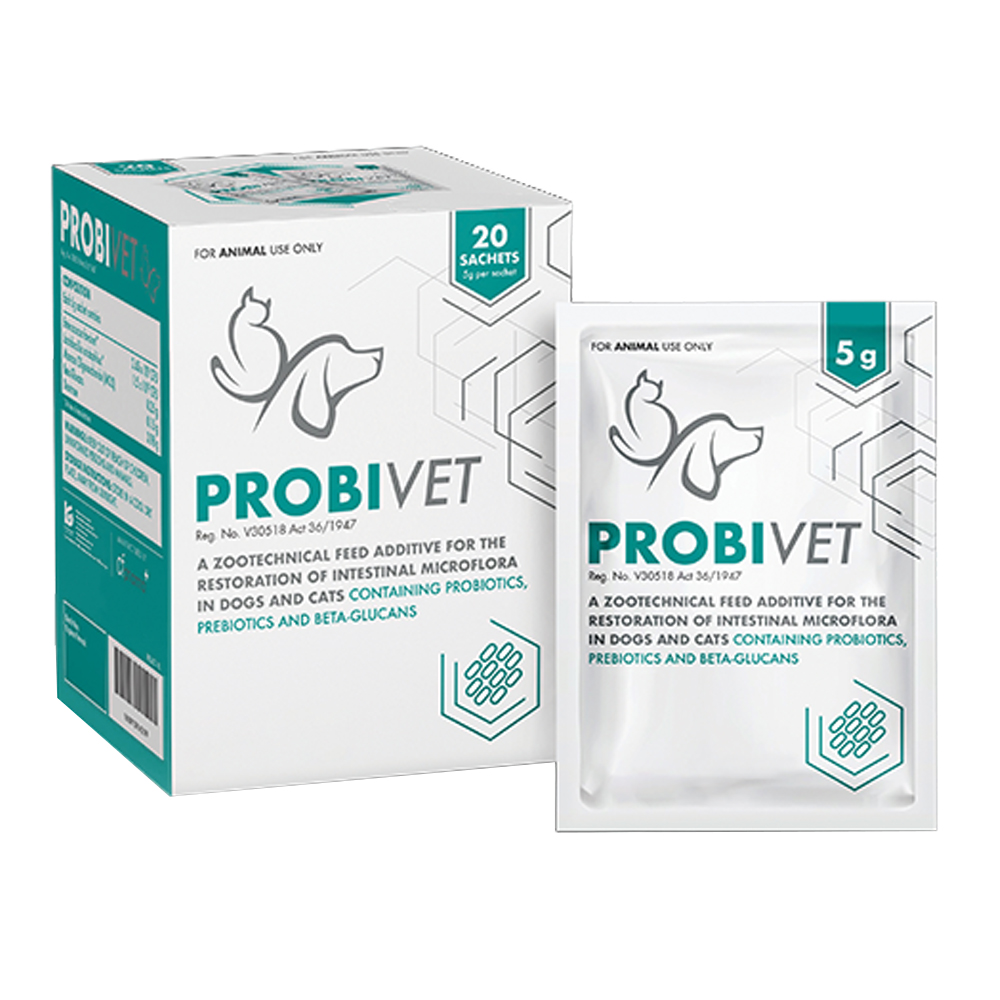
Probivet Pre & Probiotic Sachets
10 sachets · 5g each · pre + probiotic combination
- ✓ Combines a prebiotic and probiotic in one single-serving sachet
- ✓ Pre-portioned sachets take the guesswork out of dosing versus a scoop-from-a-tub powder
- ✓ Formulated for dogs and cats
- ✓ Another option alongside the three we reach for above
on Best Vet Care
Sources
- Cornell Feline Health Center, “Inflammatory Bowel Disease”
- Hart et al., “Open-label trial of a multi-strain synbiotic in cats with chronic diarrhea,” Journal of Feline Medicine and Surgery
- López Martí et al., “Efficacy of probiotic, prebiotic, synbiotic and postbiotic supplementation on gastrointestinal health in cats: systematic review and meta-analysis,” Journal of Small Animal Practice
TheCatWellness is reader-supported and we are not veterinarians. This article is general information, not medical advice for your individual cat. If your cat’s diarrhea is frequent, bloody or paired with other symptoms, talk to your vet.