Wet vs dry cat food: the hydration math
Canned is at least 75% water, kibble is 6-10%. The math behind why hydration tilts toward wet food, and when dry food is fine.

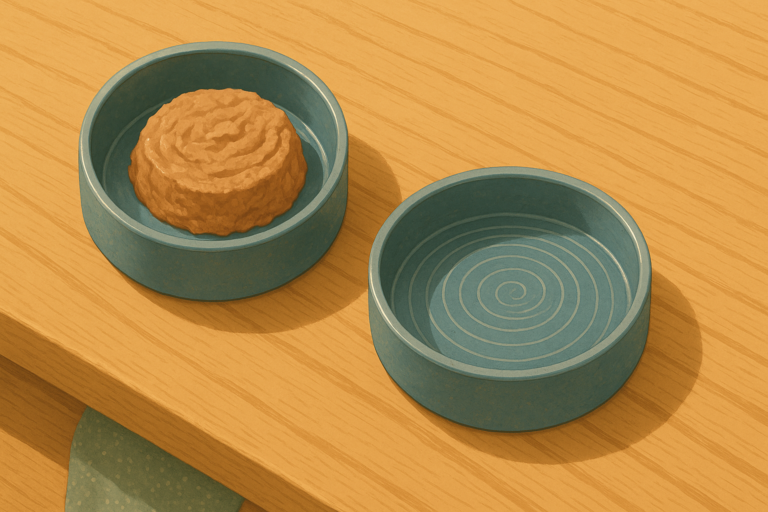
Canned is at least 75% water, kibble is 6-10%. The math behind why hydration tilts toward wet food, and when dry food is fine.

A food allergy is the immune system attacking a protein and shows up as itchy skin. A food intolerance is a digestive problem with no immune system involved. Here’s how to tell them apart, why grain-free rarely helps, and why an elimination diet is the only reliable test.
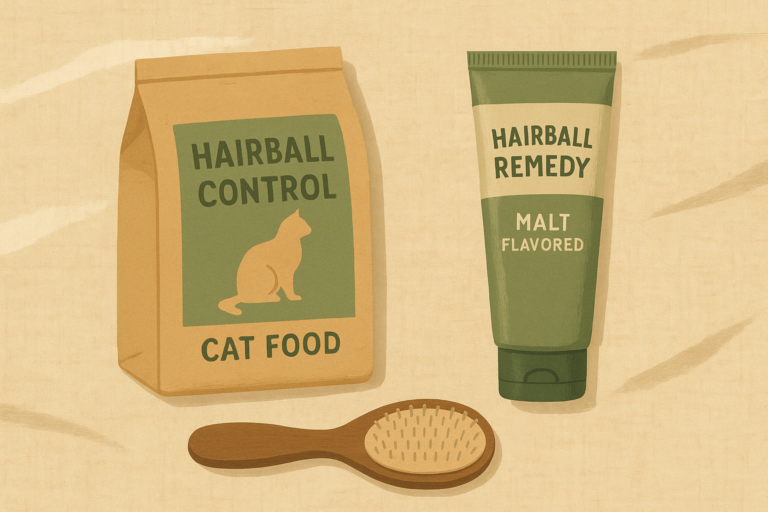
Both work modestly. Brushing does more. The evidence-based comparison between hairball-control foods and supplements.
The practical playbook for indoor cat digestion: what normal looks like, the highest-leverage fixes, and when symptoms mean a vet visit.
Clear-liquid vomit usually means an empty stomach. Here’s when it’s a quick feeding fix and when it’s a vet call.
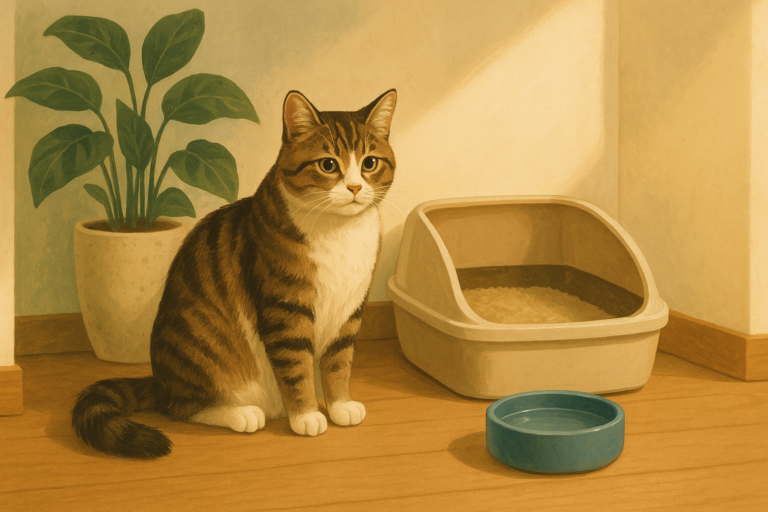
Most cat constipation traces back to dehydration and dry food. Here’s the home playbook plus when straining means a vet call.
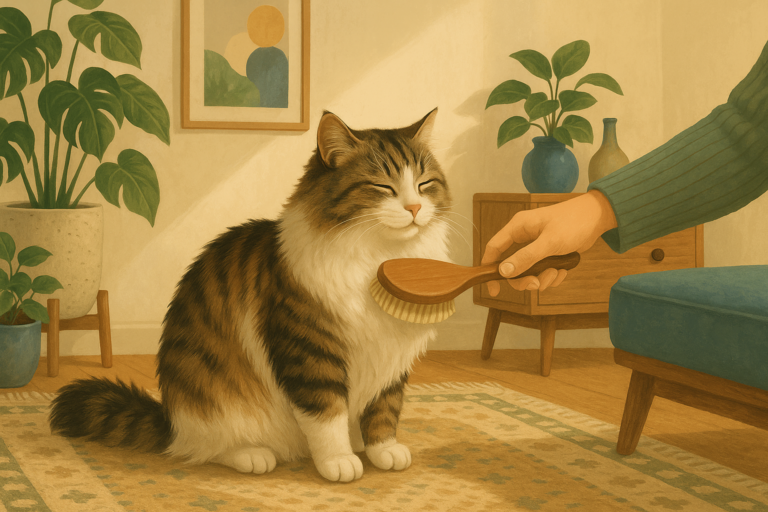
Hairball or vomit? The shape, contents and behavior beforehand tell you which is which, and when it’s a vet call.

The early signs of dehydration in cats are quiet: tacky gums, low energy, a poor appetite. A quick at-home check, plus when it turns into a vet visit.
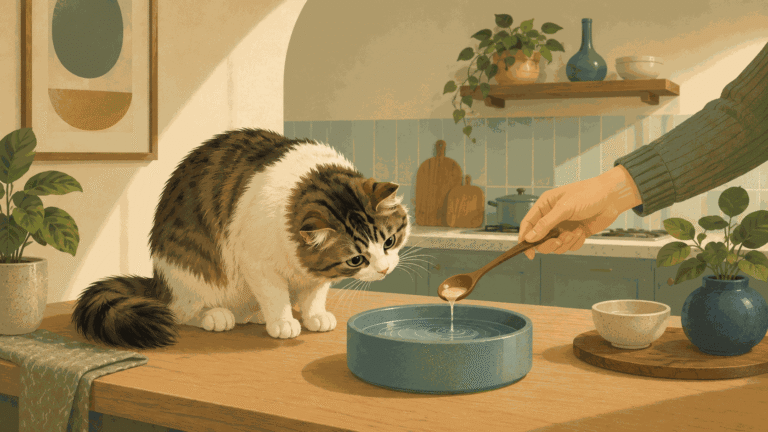
Plain low-sodium broth can nudge a cat to drink more, but most store-bought broth contains onion or garlic. The safe-broth checklist and when it’s a vet call.
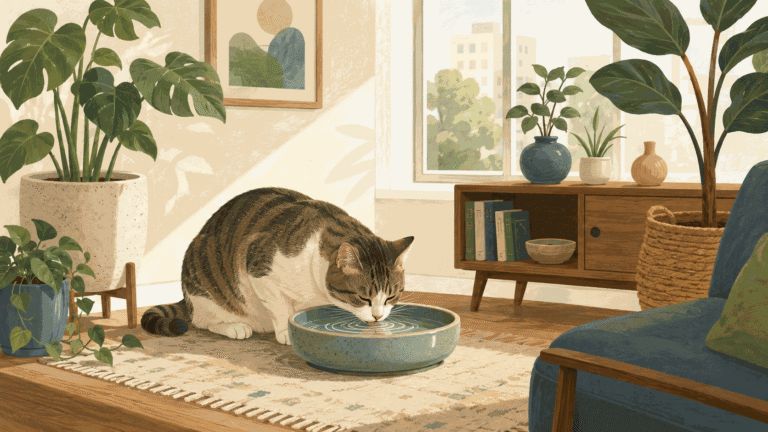
What indoor cats actually need to stay hydrated: the water math, bowl placement, wet vs dry food and the small changes that move the needle the most.