Bone Broth vs Goat Milk for Cat Hydration
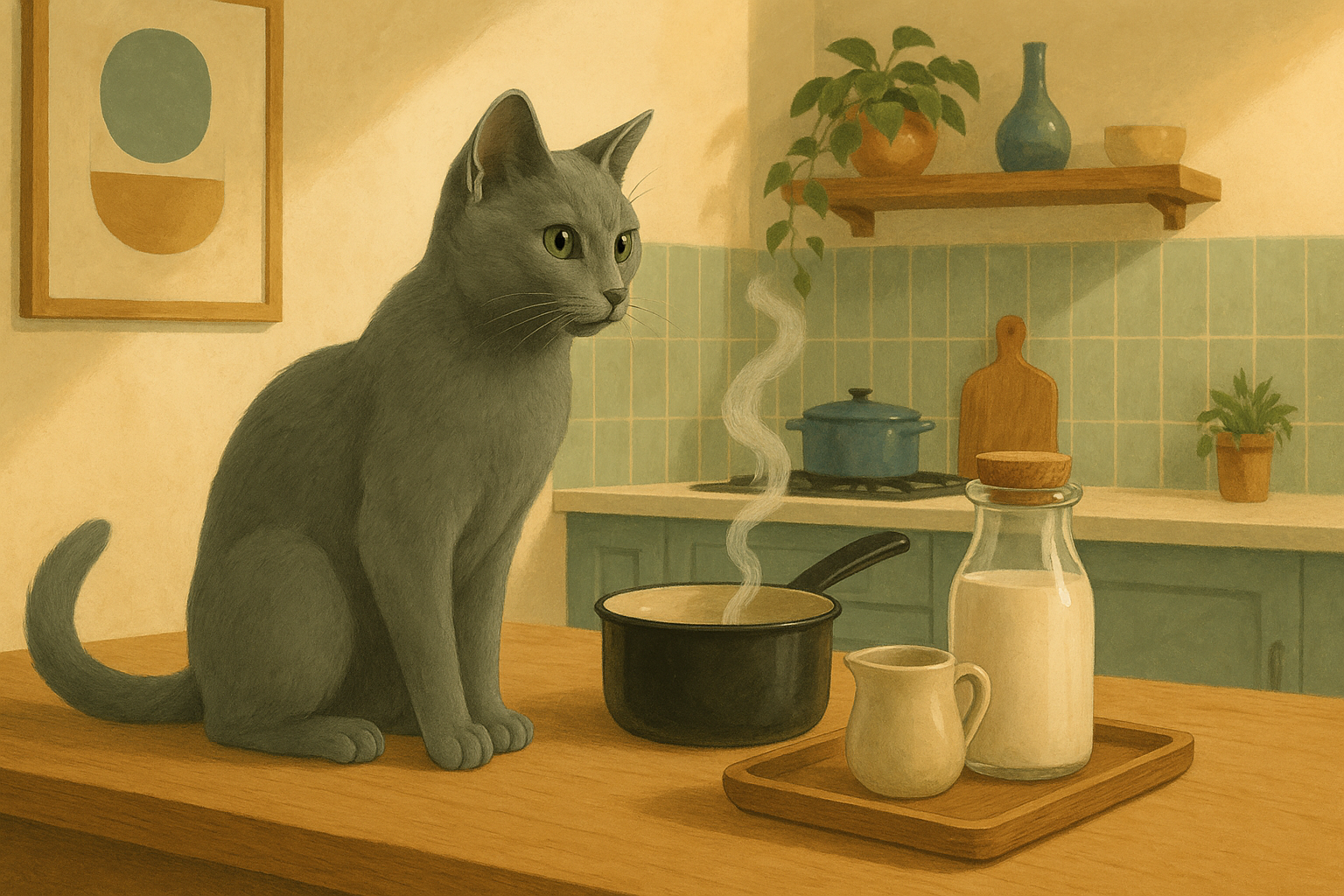
At the shelter, the question usually arrived with a carton in someone’s hand. A visitor would hold up goat milk and ask whether it was the “safe” version of the milk they’d been told never to give a cat, and then ask about bone broth in the same breath because a neighbor swore by it. Both get sold as hydration helpers. They aren’t the same kind of help. Bone broth wins when you want extra fluid, because it’s mostly water. Goat milk wins only as a small flavor boost for a picky eater, and it carries a lactose catch that broth doesn’t.
As Amazon Associates we earn from qualifying purchases. Some links in this post are affiliate links; if you buy through them, we earn a small commission at no extra cost to you. We only recommend products we’ve used or researched thoroughly. See our full disclosure.
Bone broth and goat milk toppers at a glance

Solid Gold Bone Broth Cat Food Topper (Chicken)
Lickable liquid topper · single-serve pouches · chicken flavor
- ✓ Liquid format that adds fluid to a meal
- ✓ Pre-portioned pouches take the guesswork out of serving
- ✓ Works over dry food or mixed into wet
on Amazon
Price as of Oct 26, 2026, 9:21 AM EDT. Product prices and availability are accurate as of the date/time indicated and are subject to change.

Instinct Bone Broth Meal Topper for Cats (Chicken)
Cage-free chicken broth · 16 oz pouch · pack of 2
- ✓ Larger pouch you can spread across several meals
- ✓ Pours over any food or stirs into a little warm water
- ✓ Cage-free chicken as the named protein
on Amazon
Price as of Oct 26, 2026, 9:21 AM EDT. Product prices and availability are accurate as of the date/time indicated and are subject to change.
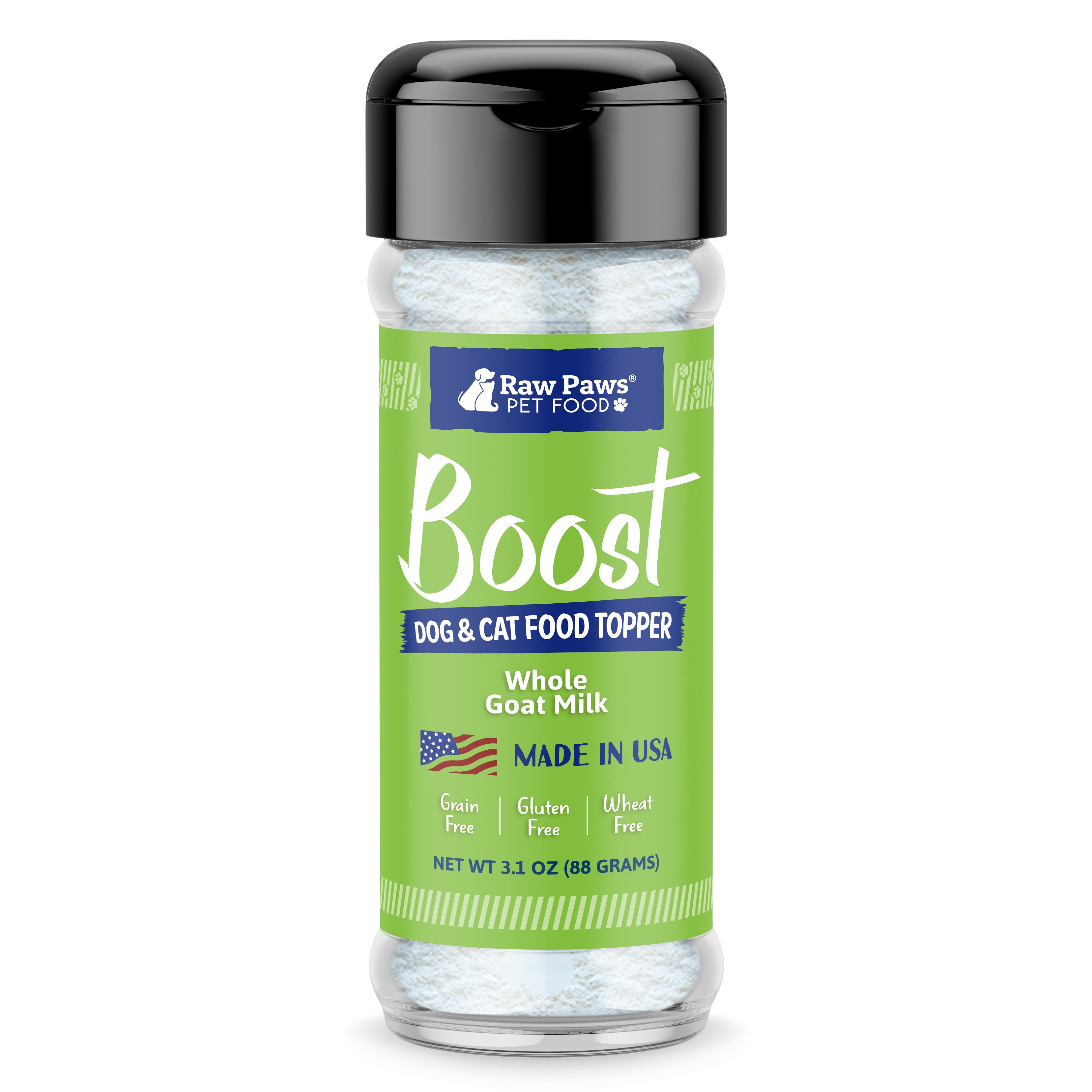
Raw Paws Boost Whole Goat Milk Topper
Freeze-dried powder · 3.1 oz shaker jar · single ingredient
- ✓ Whole goat milk as the only ingredient
- ✓ Sprinkles onto food, so it adds flavor rather than fluid
- ✓ About 40 calories per ounce, so portion it like a treat
on Raw Paws Pet Food
Price as of Oct 26, 2026, 9:21 AM EDT. Product prices and availability are accurate as of the date/time indicated and are subject to change.
| Solid Gold bone broth | Instinct bone broth | Raw Paws goat milk | |
|---|---|---|---|
| Form | Liquid in single-serve pouches | Liquid in a larger 16 oz pouch (pack of 2) | Freeze-dried powder you sprinkle on |
| Fluid it adds | Real fluid, since it’s a liquid | Real fluid, same liquid format, more volume per pouch | Almost none unless you mix it with water (the label lists 4% moisture) |
| Main catch | Sodium content isn’t listed on the pouch, so check with your vet if sodium is a concern | Same sodium caveat; the larger pouch also means more to use up once opened | Still contains lactose, and many adult cats don’t handle it well |
| Calories | Low per serving | Low per serving | About 40 per ounce of powder, so it counts as a treat |
| Best fit | A cat that needs a simple, single-serve fluid boost | A multi-cat home or multiple meals from one pouch | A picky eater that needs a flavor nudge, in tiny amounts |
The short version
- Cornell’s Feline Health Center puts a cat’s daily water need at about 4 ounces per 5 pounds of lean body weight, and it lists low-sodium chicken broth as an acceptable way to flavor water.1
- A controlled study found that cats eating a higher-moisture diet took in more total fluid and made more dilute urine, which is the real goal behind any hydration trick.3
- Cornell doesn’t recommend milk as a treat because many cats are lactose intolerant, and goat milk is lower in lactose than cow milk but not free of it.25
- Pick a pet-made broth such as Instinct Bone Broth when fluid is the goal. Keep the Raw Paws goat milk topper for a picky eater and portion it as a treat.
Fluid first, flavor second
Cornell’s number is easy to hold in your head: about a cup of water a day for a 10-pound cat.1 A cat eating wet food gets a big share of that from the food itself, since wet food runs up to about 80 percent water, while a cat on dry food has to make up the difference at the bowl.1 Many apartment cats fall into the second group. They graze on kibble in a warm, dry home and drink very little in view of anyone.
Researchers measured what moisture does. In a British Journal of Nutrition study, cats fed a diet that was 73.3 percent water took in more total fluid and produced more dilute urine than cats on drier diets, even though they drank less from the bowl.3 That’s the standard to hold both toppers against. Does the product put more water into the cat? A liquid broth does. A sprinkle of powder mostly doesn’t. If you’re still sorting out the bowl itself, our fountain versus bowl comparison covers that side.
Bone broth: more fluid, with a label to read
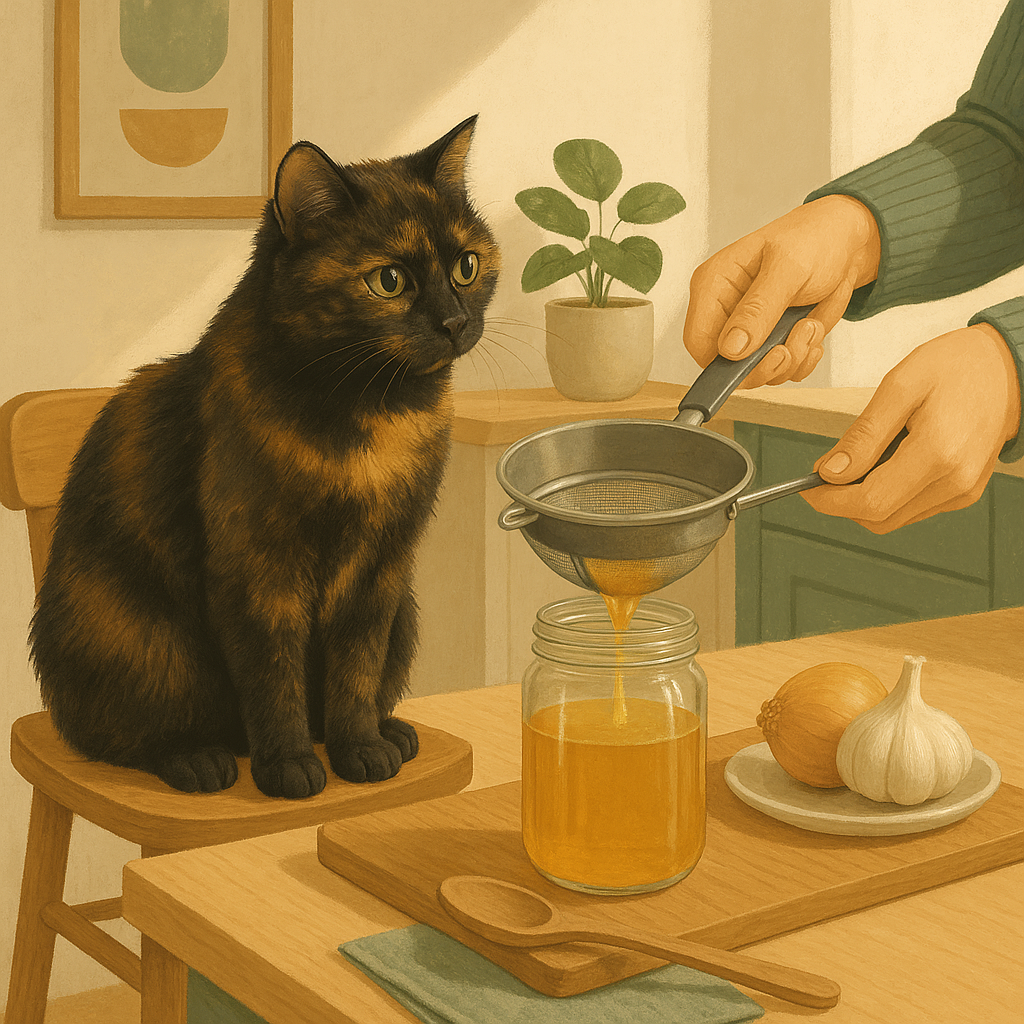
A pet-made broth topper is liquid by design, so each serving carries real water. I haven’t found a peer-reviewed trial showing that bone broth itself improves hydration in cats, so I won’t pretend the bone part does anything special. The value is the fluid and the smell, which can coax a cat that ignores a plain bowl. Cornell’s own suggestion is a little low-sodium chicken broth in the water.1 You can read more about the whole category in our best bone broths for cat hydration roundup.
The catch is the grocery-store carton. Most human broths contain salt and many contain onion or garlic. The ASPCA warns that onion and garlic can damage red blood cells and that cats are at higher risk than dogs, and it lists vomiting, diarrhea and worse for salt toxicity.4 That’s why I’d reach for a pet-labeled option like Solid Gold’s chicken broth pouches and read the ingredient list for allium before anything else. If you ever make your own at home, leave the onion and garlic out entirely and skip the salt.
Goat milk: lower in lactose, still not lactose-free
Cornell says plainly that milk isn’t generally recommended as a treat for cats because many of them are lactose intolerant and can develop digestive trouble from dairy.2 The ASPCA gives the same reason: pets often lack enough lactase to process lactose, and dairy can cause diarrhea or other digestive upset.4 Goat milk helps a little on paper. A Mississippi State University Extension comparison puts goat milk at 3.6 to 4.8 percent lactose against 4.2 to 5.2 percent for cow milk.5 Those ranges overlap, so “goat” isn’t a safe pass.
The Raw Paws Boost topper is freeze-dried whole goat milk with a listed moisture of 4 percent and about 40 calories per ounce, and the maker says to sprinkle it on food.6 So it behaves like a treat. Cornell’s rule of thumb is that treats shouldn’t exceed 10 to 15 percent of a cat’s daily calories.2 The product page also doesn’t say whether the milk is pasteurized, so I’d ask the maker before feeding it to a kitten or an older cat.
Which one for an indoor cat
Start with the cat’s eating pattern. A kibble-only cat in a small apartment is the textbook case for more moisture, so a liquid broth over the meal or stirred into a little warm water makes sense. A cat that already eats mostly wet food has less to gain from either one. Goat milk fits a narrower job: the cat that sniffs at its food and walks off, where a pinch of something savory gets it eating at all. Use a pinch, watch the litter box for loose stool and stop if it shows up.
How I compared them
I haven’t run these side by side in my own home, so I won’t claim I did. What I did instead was read Cornell’s hydration and feeding pages, the ASPCA’s people-food list and the Mississippi State lactose figures, then checked each product’s form, ingredients and calorie data against the maker’s listing. Goat milk earns a real point here. It’s a single-ingredient label with no sodium to worry about. It also keeps on a shelf as a powder, and a cat that turns up its nose at broth may still take it. Bone broth wins on the thing the page is about, which is fluid, and it avoids the lactose question altogether.
Common questions
Can I use the broth I cook for myself? Only if it has no onion, no garlic and no added salt. Cornell’s wording is low-sodium chicken broth, used in small amounts.1
Does either one replace fresh water? No. Both are add-ons, and the water bowl stays full either way.1
Can I mix the goat milk powder with water to make it count as fluid? You can, and that makes it a small drink, but the lactose is still in there and the calories add up quickly.56
When to talk to your vet
We’re not vets, and neither topper treats a medical problem. If your cat is drinking much more or much less than usual, has gone off food or is losing weight, call your vet before adding anything. The same goes for cats with kidney disease, diabetes or a prescription diet, where sodium, calories and dairy all need a vet’s sign-off.
The bottom line
- Choose bone broth, such as Solid Gold or Instinct, if your cat eats mostly dry food and you want more fluid in the day.
- Choose goat milk, such as the Raw Paws Boost topper, only if flavor is the problem, in tiny amounts and with your vet’s okay.
For hydration, fluid beats flavor every time, so broth is where I’d start.
Sources
- Cornell Feline Health Center, “Hydration”
- Cornell Feline Health Center, “Feeding Your Cat”
- Buckley et al., “Effect of dietary water intake on urinary output, specific gravity and relative supersaturation for calcium oxalate and struvite in the cat,” British Journal of Nutrition
- ASPCA, “People Foods to Avoid Feeding Your Pets”
- Mississippi State University Extension, “Educational Tips for Farmers: Dairy Goat Versus Dairy Cow”
- Raw Paws Pet Food, “Boost Whole Goat Milk Pet Food Topper, 3.1-oz” (manufacturer product page, used for specifications only)