How can I tell if my cat is dehydrated?
Dehydration in cats is easy to miss because the early signs are quiet. And an indoor cat doesn’t give you the outdoor cues, like how much they’re drinking from puddles, that might tip you off. Here’s a quick at-home check, what each sign actually means and when looking turns into calling.
The signs to check:
- Gums: should feel wet and slick when you touch them. Dry or tacky is a flag.
- Skin pinch: gently lift the skin over the shoulders. In a hydrated cat it settles back almost at once; in a dehydrated cat it can stay tented.
- Energy: lethargy or weakness that’s new
- Appetite: a sudden drop in eating
- Eyes: sunken or dull-looking (a later-stage sign)
- Recent context: vomiting, diarrhea or drinking noticeably less than usual
A veterinary demonstration of the skin turgor test on a cat (VETgirl).
What the home checks actually tell you
The skin pinch and the gum check are crude but useful. A well-hydrated cat’s gums are slick, almost slippery; tacky or dry gums mean fluid is low. The skin over the shoulders should return immediately when you lift and release a small fold. A noticeable lag, or skin that stays tented, points to dehydration.1
One real caveat on the pinch: Cornell notes that older cats can show reduced skin elasticity even when they’re properly hydrated.1 So in a senior cat especially, weigh the pinch alongside gums, energy and appetite rather than reading it alone. The picture is the combination, not any single sign.
What’s usually causing it
Dehydration means total body water has dropped, usually because intake is too low, loss is too high, or both.1 On the intake side: a stale or badly placed bowl, dental pain that makes drinking uncomfortable, or in a multi-cat home, being quietly blocked from the water by another cat.1 On the loss side: vomiting, diarrhea, chronic kidney disease, diabetes or an overactive thyroid all pull fluid out faster than a cat can replace it.1 If the problem is intake-side and your cat seems otherwise well, the hydration playbook walks through the setup changes that fix it. If loss-side, it’s a vet call.
When to talk to your vet
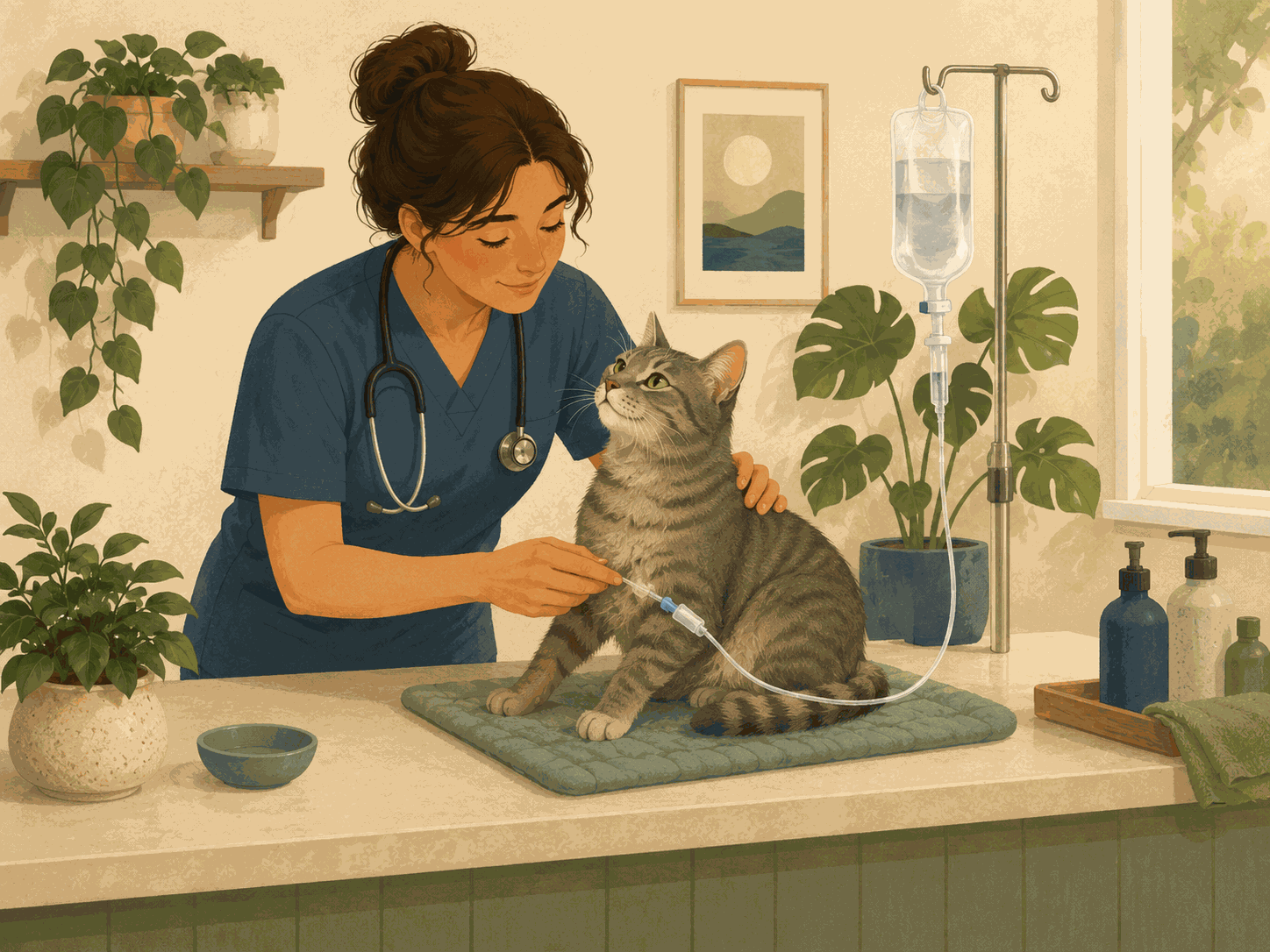
Treat clear dehydration as a same-day call. Get in promptly if your cat has dry or tacky gums, sunken eyes, won’t eat, or has been weak or withdrawn.1 Don’t wait it out if there’s also vomiting or diarrhea; fluid loss is fast in cats. The clinic can rehydrate your cat with subcutaneous or IV fluids and look for the underlying cause. And if you’ve noticed your cat drinking much more than usual lately, mention that too. It points in a different direction, toward kidney or metabolic disease, and is worth testing for.2