Orijen vs Acana Cat Food: Same Maker, Different Protein Tier
I worked the intake desk at a vet clinic for years, and few product questions came up more than this one. A cat owner would hold up their phone with a photo of one kibble bag, then swipe to a photo of a different bag, and ask why the two cost so differently when both said “Champion Petfoods” somewhere on the label. Orijen and Acana come out of the same company’s kitchens in Alberta, but they are not the same diet wearing two names. Orijen wins when your cat is lean, active or you specifically want the richest protein and fat ratio Champion Petfoods makes. Acana‘s indoor formula wins when your cat needs fewer calories per cup, a fiber assist and a friendlier price. Here’s the real gap, not just the marketing one.
As Amazon Associates we earn from qualifying purchases. Some links in this post are affiliate links; if you buy through them, we earn a small commission at no extra cost to you. We only recommend products we’ve used or researched thoroughly. See our full disclosure for details.
How they compare at a glance

12 lb bag · Original recipe · adult cats
- ✓ 40% crude protein minimum, 20% fat minimum
- ✓ 90% poultry and fish ingredients: fresh or raw chicken, turkey and wild-caught fish
- ✓ WholePrey ratio of meat, organs and bone modeled on a wild diet
- ✓ One core recipe, not split by life stage or condition
on Amazon
Price as of Oct 26, 2026, 9:21 AM EDT. Product prices and availability are accurate as of the date/time indicated and are subject to change.

10 lb bag · poultry and fish · adult cats
- ✓ 36% crude protein minimum, 14% fat minimum
- ✓ 65% animal ingredients, tuned down from Orijen’s ratio
- ✓ Fiber and probiotic blend aimed at weight and hairball management
- ✓ Added L-carnitine, tied to how the body uses fat for energy
on Amazon
Price as of Oct 26, 2026, 9:21 AM EDT. Product prices and availability are accurate as of the date/time indicated and are subject to change.
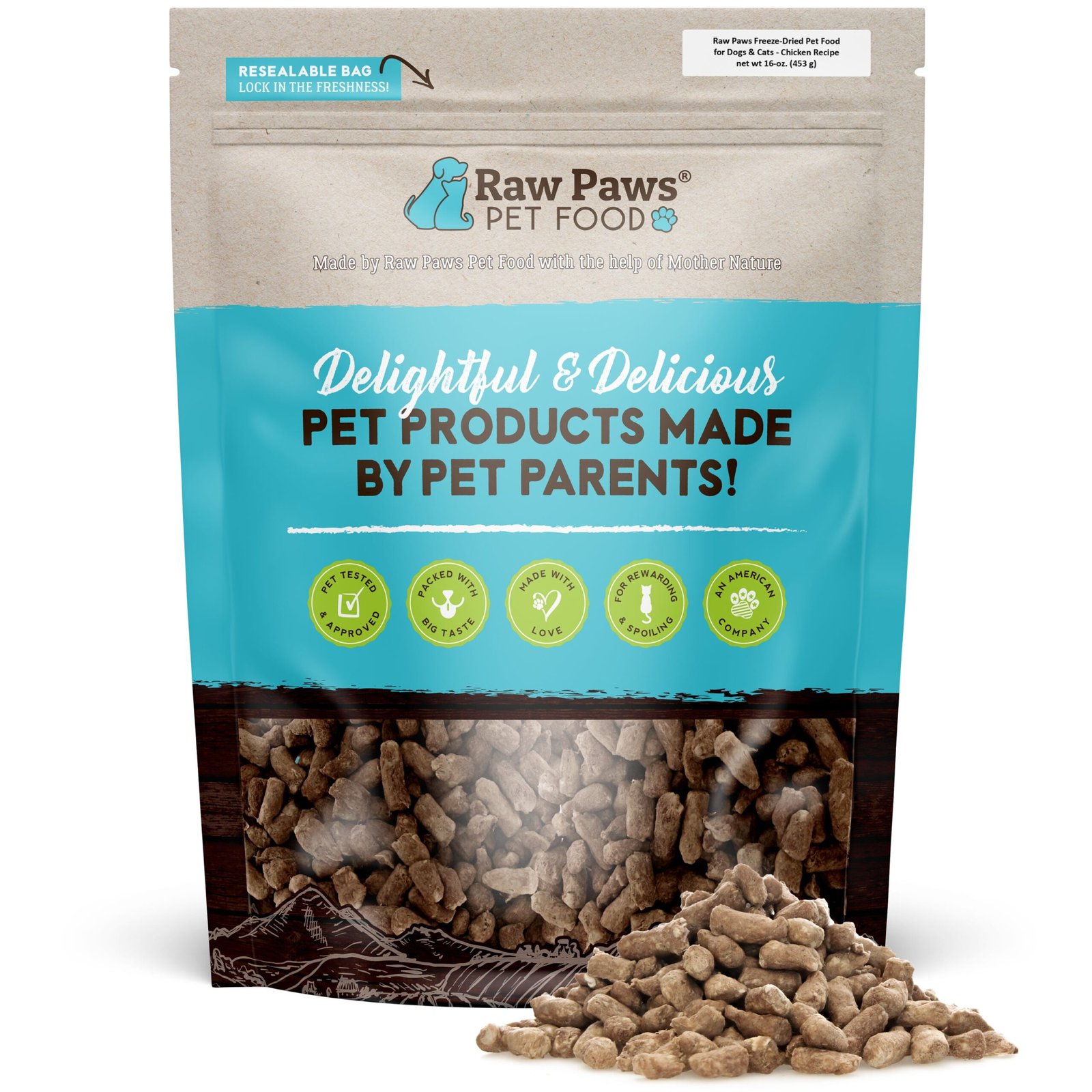
Raw Paws Freeze-Dried Chicken Recipe
16 oz bag · freeze-dried raw · a genuine third recipe, not just an add-on
- ✓ 45% muscle, 45% organ and 10% bone: a whole-prey ratio built as a meal, not a mix-in
- ✓ Grain-free, single named protein, no corn, wheat or soy
- ✓ Rehydrates with warm water for a softer texture, or serves freeze-dried as-is
- ✓ No AAFCO statement of nutritional adequacy on the label, unlike the two bags above
on Raw Paws Pet Food
Price as of Oct 26, 2026, 9:21 AM EDT. Product prices and availability are accurate as of the date/time indicated and are subject to change.
| Orijen Original | Acana Indoor Entrée | Staff Pick: Freeze-Dried Chicken Recipe | |
|---|---|---|---|
| Formula approach | WholePrey ratio: meat, organs and bone modeled on a wild diet | Same WholePrey philosophy, tuned lower for a less active cat | 45% muscle, 45% organ and 10% bone freeze-dried raw, marketed as a stand-alone meal |
| Protein and fat | 40% protein minimum, 20% fat minimum | 36% protein minimum, 14% fat minimum | No guaranteed protein % listed; sold on its 45/45/10 muscle-organ-bone ratio instead |
| Price tier | Premium tier, the pricier of the two | A notch below Orijen | Runs at a premium per ounce, priced like a boutique raw add-on |
| Selection | One core recipe plus regional variants; 90% animal ingredients | Indoor-specific recipe plus several regional lines; 65% animal ingredients | One recipe used here (chicken); turkey, beef, duck and rabbit recipes also available |
| Best fit | A lean, active cat or an owner chasing the highest protein ratio Champion Petfoods sells | A lower-activity indoor cat prone to weight gain or hairballs, on a tighter budget | An owner who wants a genuine raw recipe to rotate in alongside kibble, not another topper |
The short version
- Both are complete and balanced. Each meets the AAFCO nutrient profile for adult maintenance, so neither is leaving your cat short on the basics. [2]
- Orijen‘s edge is density. 40% protein and 20% fat minimum, built from 90% poultry and fish ingredients, the richest formula in the Champion Petfoods lineup.
- Acana‘s indoor recipe is tuned down on purpose. 36% protein, 14% fat, plus fiber and L-carnitine aimed at weight and hairball management.
- Acana costs less, and the gap tracks the protein and fat difference more than it tracks branding.
- For a typical low-activity indoor cat, Acana’s Indoor Entrée is often the better fit, not a downgrade.
- Both come from the same company. Champion Petfoods runs both kitchens, so consistency and quality control are shared, not brand-specific.
In this guide
One company, two very different diets · What “complete and balanced” guarantees · Protein, fat and the ratio that separates them · Price and selection · Which one fits an indoor cat · How I compared them · Common questions · When to talk to your vet
One company, two very different diets
Champion Petfoods, based in Alberta, Canada, owns both brands. That single fact explains more about the price gap than any marketing copy does. These aren’t competing formulas from rival companies. They’re the same company’s answer to two different questions: how close to a wild, prey-based diet can a bag of kibble get, which is Orijen‘s job, and how do you keep that same philosophy while trimming calories and cost for a cat that spends its day on a windowsill, which is Acana‘s job. Both brands share Champion’s WholePrey approach: meat, organs and bone in ratios meant to echo what a cat would eat if she caught her own dinner. Orijen pushes that ratio as far as a dry kibble can go. Acana pulls it back a notch, on purpose.
What “complete and balanced” guarantees
Before getting into the numbers that separate these two, it helps to know what the label already promises. Both bags carry an AAFCO statement of nutritional adequacy. For a food to claim “complete and balanced,” it has to either meet AAFCO’s nutrient profile for the relevant life stage or pass an AAFCO feeding trial. [2] Cats are obligate carnivores, meaning they need nutrients like taurine, arachidonic acid and preformed vitamin A that only come from animal tissue, and a complete-and-balanced food is built to deliver them regardless of price tier. [1] Adult maintenance food only has to clear a 26% crude protein floor on a dry matter basis to meet that standard. [3] Orijen and Acana both clear that minimum by a wide margin, and so does most of the premium kibble aisle. The AAFCO floor tells you a food is safe as a sole diet. It doesn’t tell you which bag actually fits your cat.
Protein, fat and the ratio that separates them
Here’s where the real difference lives. Orijen Original carries a guaranteed minimum of 40% crude protein and 20% fat, built from what the label calls 90% poultry and fish ingredients: fresh or raw chicken, turkey, wild-caught fish, organs and bone. Acana‘s Indoor Entrée drops to 36% protein and 14% fat, with 65% animal ingredients and a fiber-and-probiotic blend layered in for a cat that isn’t burning calories chasing anything. That’s not a small gap. A cat eating Orijen takes in noticeably more fat and calories per cup than the same cat eating Acana.
More protein isn’t automatically better for every cat, and Cornell’s own guidance on feline nutrition makes a point of saying so: more isn’t always the goal, particularly once you’ve cleared what the body needs. [1] For a cat that spends most of the day asleep on a windowsill, Orijen’s calorie density can work against you unless you watch portions closely. Acana built its indoor formula specifically to avoid that problem: lower fat, added fiber and L-carnitine, an ingredient tied to how the body uses fat for energy.
Price and which recipes you get
Orijen sits at the top of Champion Petfoods’ own price ladder. Acana runs a clear notch below it, and the indoor-specific recipe compared here is one of Acana’s more affordable lines. The gap tracks the protein and fat difference closely: you’re largely paying for animal-ingredient density, not packaging. Orijen’s lineup leans toward one core Original recipe plus regional variants built around different prey mixes. Acana spreads wider, with recipes tuned for weight, coat, sensitivities and life stage on top of the indoor line, which makes it easier to land on a formula that matches a specific cat’s situation without paying Orijen’s premium for it.

Which one fits an indoor cat
This is the part most comparisons skip. Indoor cats burn fewer calories than the marketing photos on either bag suggest, and free feeding a calorie-dense food is one of the more common ways an indoor cat ends up overweight. [4] If your cat is genuinely active, still chasing bugs and sprinting laps around the apartment at 2 AM, Orijen’s density isn’t wasted on her. If she’s more of a windowsill supervisor, Acana’s Indoor Entrée was built with that cat in mind: lower calories per cup, fiber for hairballs and a price that doesn’t punish you for feeding a lower-activity cat well. Portion control matters more than the brand either way. Measure by weight, not by eyeballing a cup, and adjust down if you switch to Orijen’s richer formula.
How I compared them
This is a researched comparison, not a feeding trial. I haven’t run these two side by side in my own home, so I won’t claim I did. What I did was read the AAFCO statement on each bag, line up the guaranteed analysis panels, check Champion Petfoods’ own ingredient breakdowns and cross-reference current pricing across a few retailers rather than trusting one listing. I weighed that against the pattern from years at intake, where the question was rarely which brand is better and almost always which one fits the cat in front of me. Orijen’s edge is protein and fat density: nothing else at this price point from the same maker gets closer to a prey-based ratio. Acana’s edge isn’t a consolation prize either. For a typical low-activity indoor cat, the lower calorie density and added fiber are the better match, and you’re not overpaying for richness your cat won’t burn off. Where the two genuinely tie, both are AAFCO complete and balanced and both come off the same production standard, I’ve said so instead of manufacturing a gap that isn’t there.
Common questions
Is Acana a “lesser” version of Orijen?
No, and that framing undersells it. Acana is a deliberately different formula, not a diluted one. It’s built for a different kind of cat, not a worse cat food.
Can I switch a cat from one to the other?
Yes, but do it gradually. Mix a little of the new food into the old over seven to ten days. A sudden switch is a common trigger for stomach upset in cats regardless of which two foods are involved. [1]
Which one is better for weight loss?
Acana’s Indoor Entrée, on paper, simply because it carries less fat and fewer calories per cup. Portion size still matters more than the bag you pick. Weigh the food, not the cup.
When to talk to your vet
Switching food is usually low stakes, but call your vet first if your cat has a diagnosed kidney, urinary or digestive condition before moving to a noticeably higher-protein, higher-fat diet like Orijen’s. Call sooner rather than later if a food switch is followed by vomiting, diarrhea that lasts more than a day or two, or a cat who stops eating entirely. A cat that refuses food for more than about 24 hours is its own medical concern, separate from which bag caused it. [1]
The bottom line
- Choose Orijen if your cat is lean, active or genuinely burns through the extra protein and fat, and you want the richest ratio Champion Petfoods sells.
- Choose Acana‘s Indoor Entrée if your cat spends most of the day resting or needs help with weight or hairballs, and you’d rather not pay Orijen’s premium for calories she won’t use.
They’re built by the same company on the same nutritional floor. The right one comes down to how your particular cat actually spends her day, not which bag looks more serious on the shelf.
Sources
More cat food guides
- The Best High-Protein Dry Cat Foods for Indoor Cats
- Best indoor cat food: 5 formulas that account for a life spent mostly on the couch
- Royal Canin vs Hill’s Science Diet: which one fits your indoor cat?
- Purina Pro Plan vs Blue Buffalo Wilderness
- Open Farm vs Wellness CORE
- Stella & Chewy’s vs Primal freeze-dried: which raw food fits your indoor cat?