Best waterless cat shampoo: the two real no-rinse options
At the front desk, a bottle of no-rinse cat shampoo came up in conversation almost every week, usually from an owner who wanted to skip an actual bath and asked whether the foam version did the same job. Most healthy cats don’t need either one. A cat’s tongue does a genuinely effective cleaning job on its own, and cats spend a surprising chunk of the day proving it.1 But there are real situations where a waterless formula earns a spot in the cabinet, and once you’re in one of them, the ingredient list matters more than it does for most pet products. Here are the two worth using, and the one difference between them worth knowing first.
As Amazon Associates we earn from qualifying purchases. Some links in this post are affiliate links; if you buy through them, we earn a small commission at no extra cost to you. We only recommend products we’ve used or researched thoroughly. See our full disclosure.
The two waterless formulas, at a glance

Earthbath Waterless Cat Grooming Foam
Hypo-allergenic · fragrance-free · no added plant oils
- ✓ Built on colloidal oatmeal, panthenol, aloe vera and vitamin E
- ✓ No essential oils or added botanical actives
- ✓ Formulated for kittens and cats with sensitive skin
- ✓ Budget-friendly, compact bottle
on Amazon
Price as of Oct 26, 2026, 9:21 AM EDT. Product prices and availability are accurate as of the date/time indicated and are subject to change.

Vet’s Best Waterless Cat Bath Foam
Veterinarian-formulated · neem oil, oatmeal, aloe and panthenol · leave-in foam
- ✓ Built around neem oil, colloidal oatmeal, aloe vera and panthenol
- ✓ No-rinse, leave-in foam that towels off
- ✓ Marketed for odor control and coat freshening between baths
- ✓ Comparable compact bottle, mid-range tier
on Amazon
Price as of Oct 26, 2026, 9:21 AM EDT. Product prices and availability are accurate as of the date/time indicated and are subject to change.
Quick take:
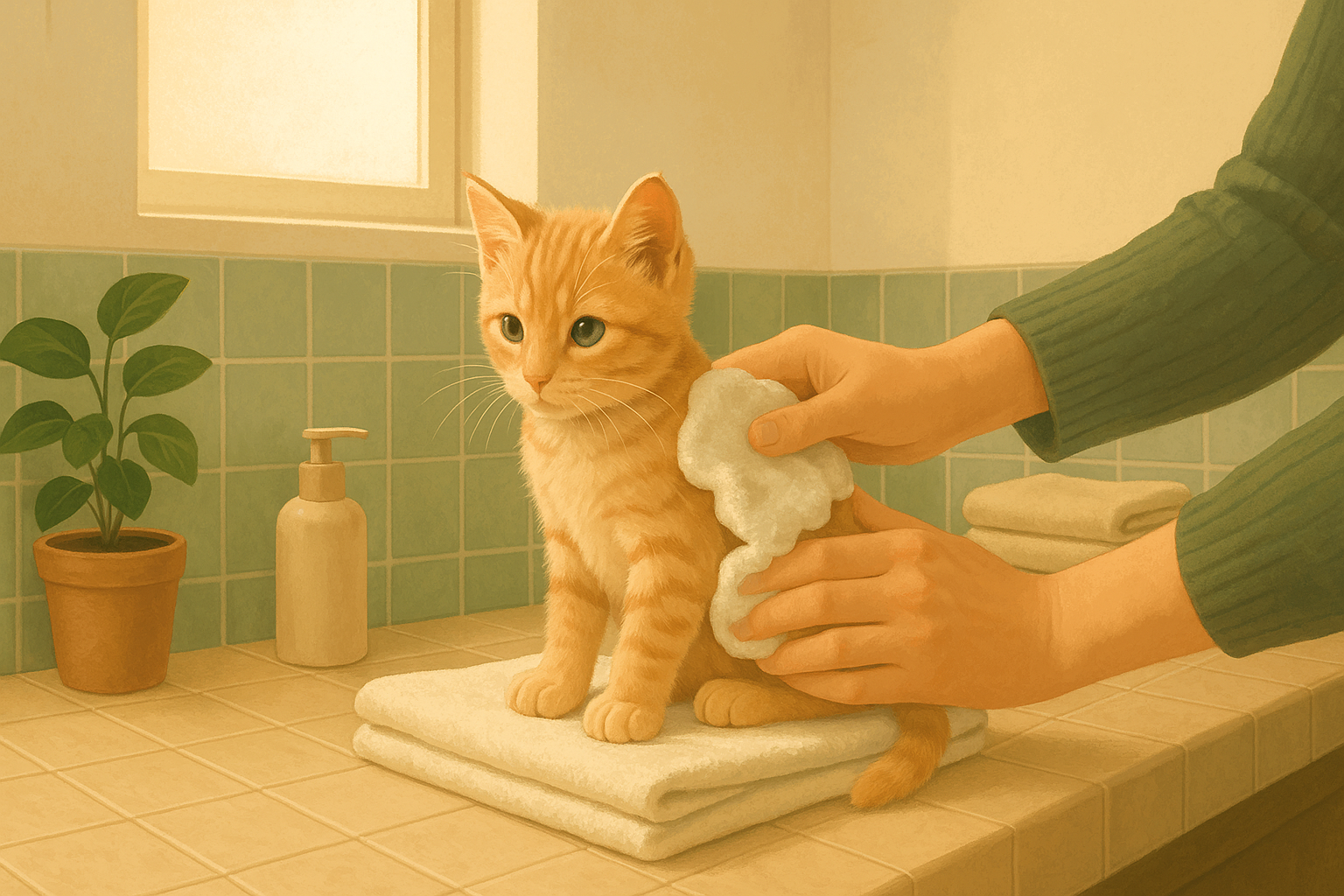
- Waterless shampoo is a freshening and odor-control product, not a substitute for water when a cat is genuinely dirty, greasy or matted.2
- Vets reach for an actual water bath in a short list of cases: fleas, a medicated treatment for a diagnosed skin condition, a cat whose arthritis or weight keeps it from grooming well, a hairless breed prone to excess skin oil or visible mess like sap or paint.2
- Because cats groom themselves so thoroughly, almost anything left on their coat gets ingested within minutes, which is exactly why the ingredient list on a leave-in product matters more for a cat than it would for a dog.3
- Earthbath’s fragrance-free formula skips added plant oils entirely. Vet’s Best builds its formula around neem oil, an ingredient tied to a documented case series of adverse reactions reported in cats, at exposure levels well above what a leave-in foam contains and not officially classified as toxic by poison-control authorities.4
- For a first try, a kitten, or a cat with already irritated skin, the oil-free formula is the safer default to reach for.
When a waterless formula actually helps
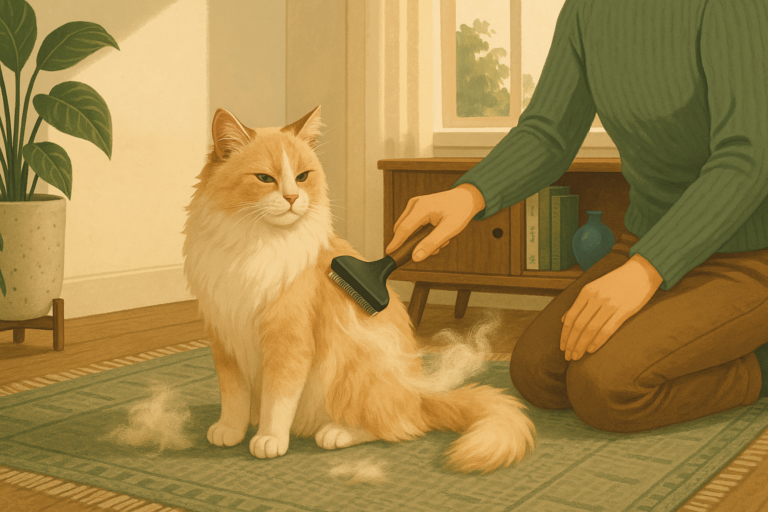
Cats spend between 30 and 50 percent of their waking day grooming themselves, according to Cornell’s Feline Health Center, which is why the average healthy cat never needs a bath of any kind, wet or waterless.1 A no-rinse foam earns its place in a much narrower set of situations: a senior cat whose arthritis makes it hard to reach its back half, an overweight cat with the same problem, a hairless breed that produces more skin oil than a coated cat can absorb on its own or a quick freshen-up between the occasional real bath a vet has recommended.2 If your cat has a diagnosed skin condition, your vet may prescribe a medicated shampoo on a set schedule, and that’s a different product with a different job than either of the two below.
The ingredient difference worth checking
Both formulas here share the same basic backbone: colloidal oatmeal, panthenol and aloe vera, ingredients meant to soothe skin rather than strip it. Where they split is that Vet’s Best adds neem oil, and Earthbath’s fragrance-free version doesn’t add any plant oil at all. That split matters more for a cat than a dog because of how cats clean themselves. VCA Animal Hospitals notes that cats are fastidious self-groomers, so anything sitting on their skin or fur tends to get licked off and swallowed, and that cats have a reduced capacity, compared with most mammals, to break down certain plant-derived compounds.3 Neem oil isn’t on any current poison-control list of toxic substances for cats, but it isn’t risk-free either: a peer-reviewed case series in the Veterinary Record catalogued 99 reports of adverse reactions in cats exposed to neem oil products, with signs including lethargy, drooling and tremors, though at concentrations and exposure levels well beyond a leave-in foam.4 None of that makes Vet’s Best unsafe as directed. It’s a reason to patch-test on a small area first, and a reason I’d default to the plain oatmeal-only formula for a kitten, a first-time try, or a cat whose skin is already inflamed.
When to talk to your vet instead
Skip either product and call your vet if your cat suddenly can’t groom itself the way it used to, if you notice bald patches, redness, scabs or a strong odor that a wipe-down doesn’t fix, or if your cat reacts to any leave-in product with drooling, vomiting, lethargy or trembling.4 Those are signs of something beyond routine coat maintenance, and a foam bottle isn’t the fix.
The bottom line
Most cats don’t need either of these, and that’s worth saying plainly before recommending a product. When one earns its spot, the oatmeal-and-panthenol basics do most of the actual work in both formulas. The neem oil in Vet’s Best isn’t a reason to avoid it outright, just a reason to know it’s there and patch-test first. Earthbath’s plainer formula is the one I’d reach for by default, especially for a kitten or a cat that’s already dealing with irritated skin.
Sources
- Cornell Feline Health Center, “Cats that Lick Too Much”
- VCA Animal Hospitals, “Grooming and Coat Care for Your Cat”
- VCA Animal Hospitals, “Essential Oil and Liquid Potpourri Poisoning in Cats”
- Sutton, Bates and Campbell, “Apparent adverse reactions to neem (margosa) oil in cats,” Veterinary Record
TheCatWellness is reader-supported and we are not veterinarians. This article is general information, not medical advice for your individual cat. If your cat shows a reaction to any grooming product, or can’t groom itself the way it used to, talk to your vet.