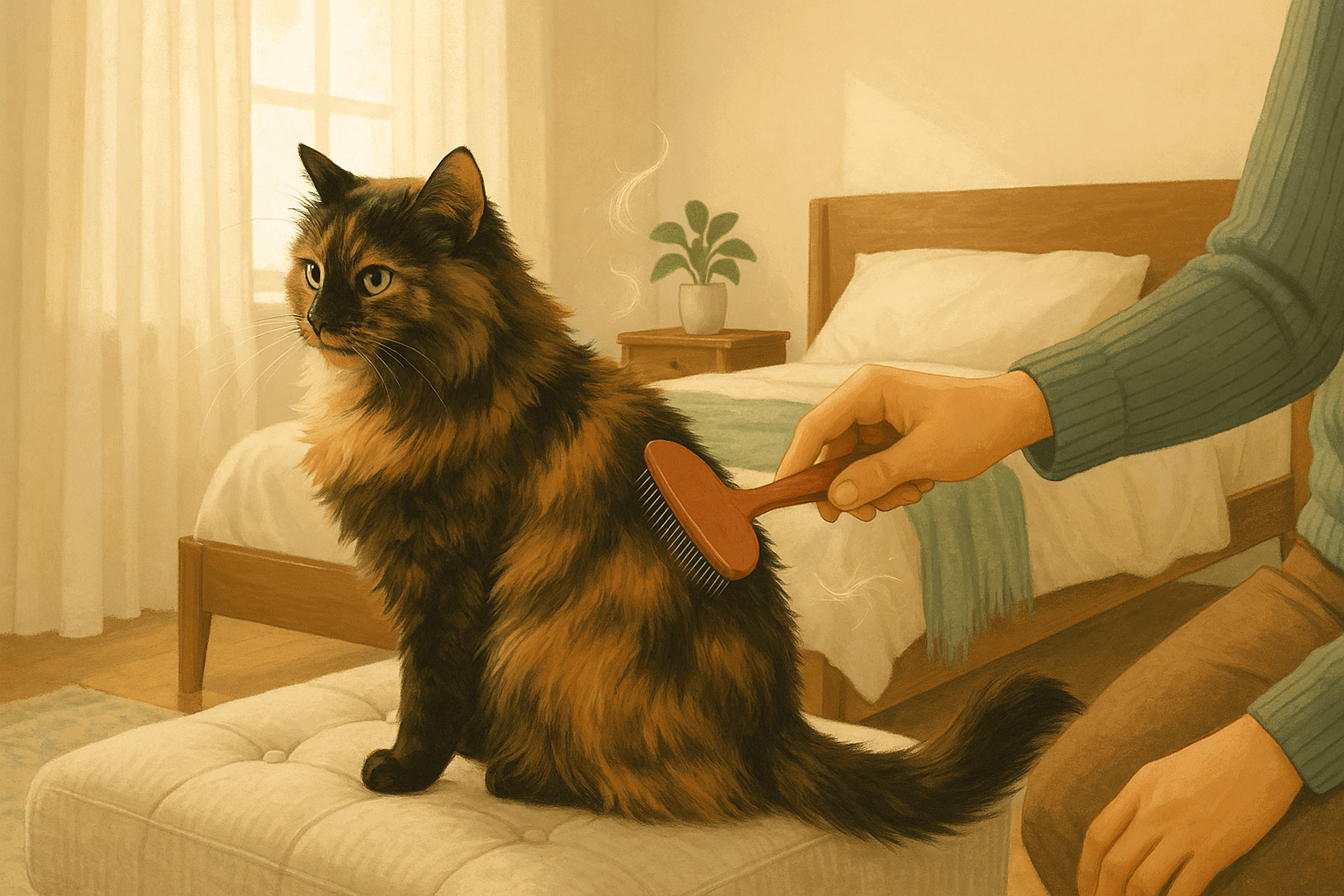
Best slicker brushes for long-haired cats: the two real options
I worked the intake desk long enough to notice a pattern: the cats who came in already shaved down to the skin were almost always longhaired, and almost always because the mats behind the ears or under the front legs had gone unnoticed for weeks. Two brushes come up most often for this: the Safari Self-Cleaning Slicker Brush and the Glendan Dog & Cat Grooming Slicker Brush. The Safari wins when cleanup time is the thing keeping you from brushing often enough. The Glendan wins when the mats keep forming in the spots a flat brush can’t reach. Here’s how to tell which situation you’re in.
As Amazon Associates we earn from qualifying purchases. Some links in this post are affiliate links; if you buy through them, we earn a small commission at no extra cost to you. We only recommend products we’ve used or researched thoroughly. See our full disclosure.
How they compare at a glance
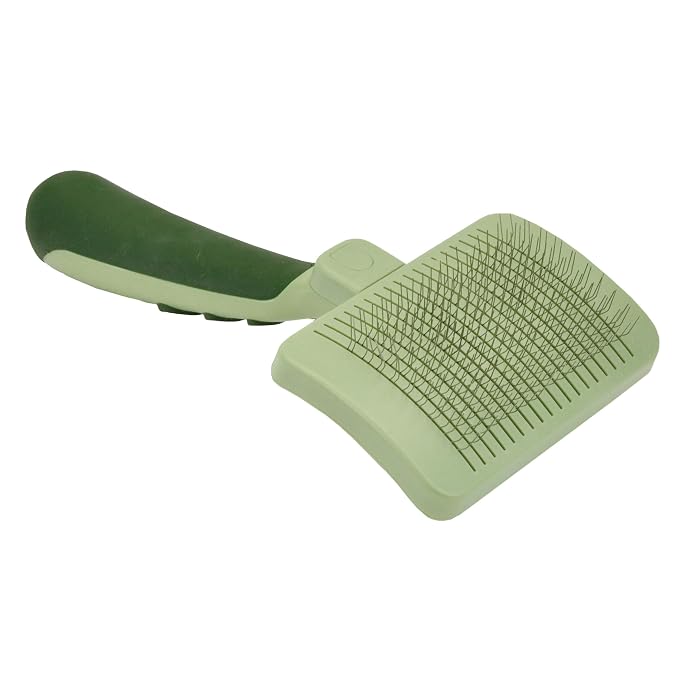
Safari Self-Cleaning Slicker Brush
Stainless steel pins · retractable self-cleaning pad · comfort grip handle
- ✓ Retractable pins pull back at the push of a button, so collected fur lifts off the pad instead of being picked out by hand
- ✓ One flat brushing head built for a straightforward pass down the back and sides
- ✓ Comfort grip handle made for repeat use through the week
on Amazon
Price as of Oct 26, 2026, 9:21 AM EDT. Product prices and availability are accurate as of the date/time indicated and are subject to change.

Glendan Dog & Cat Grooming Slicker Brush
Stainless steel pins · 180-degree pivoting head · works on dogs too
- ✓ Head pivots up to 180 degrees to follow the curve of a leg, paw or belly, the spots where mats form first
- ✓ Curved fine pins are shaped to glide through tangles without the metal pressing straight into skin
- ✓ Doubles as a dog brush if there’s more than one pet in the house
on Amazon
Price as of Oct 26, 2026, 9:21 AM EDT. Product prices and availability are accurate as of the date/time indicated and are subject to change.
| Safari Self-Cleaning | Glendan Pivoting Head | |
|---|---|---|
| Cleaning mechanism | Push-button retractable pins, fur drops off the pad | Fixed pins, fur pulled off by hand or comb |
| Head design | Single flat head | 180-degree pivoting head |
| Reaches easily | Back and sides | Legs, paws, belly, the tighter spots |
| Typical price tier | Budget-friendly | Budget-friendly, no real gap either way |
| Best fit | Someone who’ll brush more often once cleanup is fast | A cat whose mats keep forming in hard-to-reach spots |
The short version
- Both do the same basic job. Fine stainless steel pins pulled gently through the coat to lift loose undercoat before it turns into a mat.
- Cats with long, silky or curly coats need daily brushing, especially around the ears, in the armpits and along the back of the legs, per VCA Animal Hospitals. Left alone, mats there can restrict movement and lead to poor circulation or hot spots. [2]
- The Safari‘s self-cleaning mechanism is a convenience upgrade, not a grooming upgrade. It saves you from picking hair out of the pins by hand, but it won’t detangle a coat any faster than a brush without the feature.
- The Glendan‘s pivoting head is the real edge for the trouble spots, armpits, belly, behind the legs, that VCA names as where mats form first. [2]
- If a mat is already tight against the skin, VCA’s guidance is to see a groomer or vet rather than force a brush through it. [2]
In this guide
Why daily brushing beats a weekly catch-up · What actually separates these two brushes · Which one fits your cat’s trouble spots · How I compared them · Common questions · When to talk to your vet instead
Why daily brushing beats a weekly catch-up
Cats groom themselves constantly, but a long, dense undercoat outpaces what a cat’s tongue can manage alone, especially in the spots she can’t easily reach: behind the ears, under the front legs, along the backs of the thighs. Cornell’s guidance on new-cat care is straightforward about the payoff of doing some of that work for her: regular brushing keeps the coat clean and shiny, gives you a chance to spot fleas or skin problems early and cuts down on how much loose hair she swallows and how many hairballs she develops. It’s also just an easier habit to build early. A cat introduced to a brush as a kitten tolerates it far better than one meeting one for the first time as an adult with a mat already forming. [1]
What actually separates these two brushes
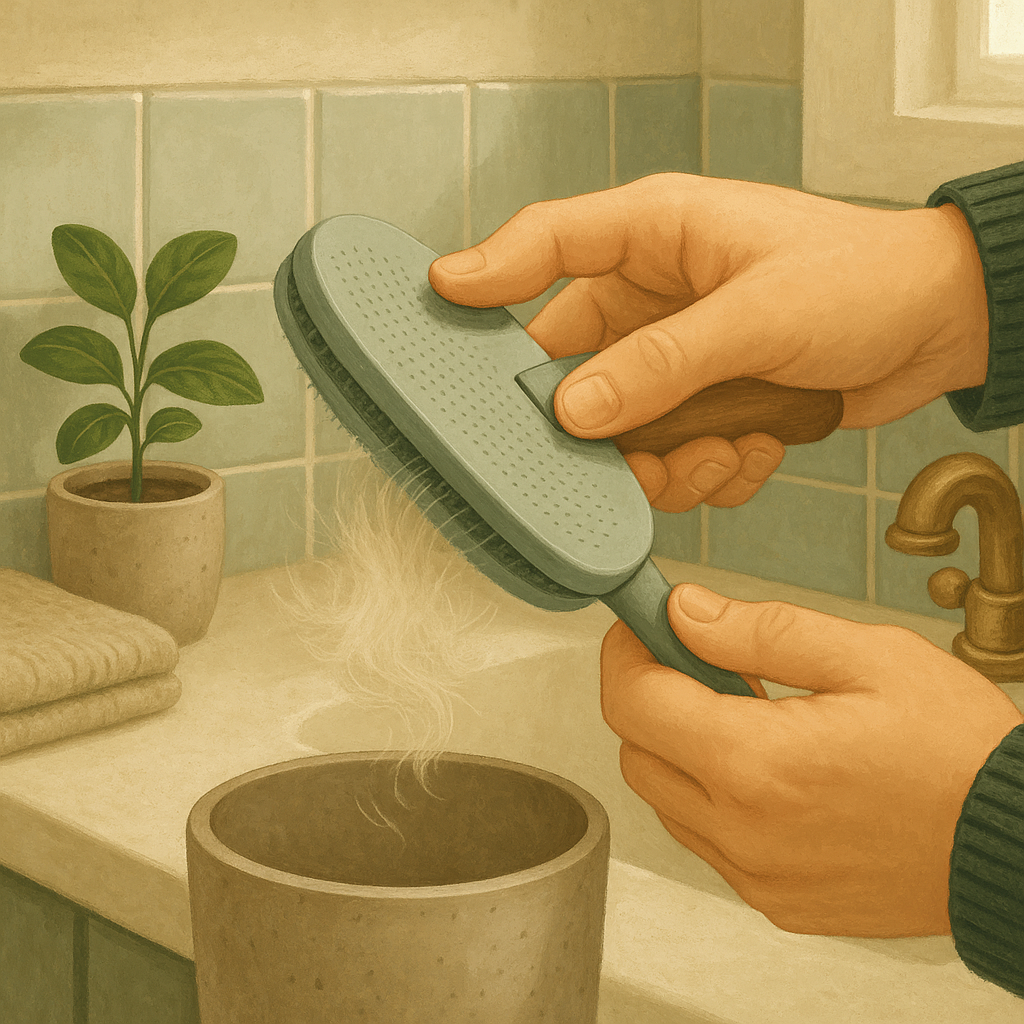
Strip away the marketing and these two do the same basic job with the same basic tool: fine stainless steel pins pulled gently through the coat. The Safari‘s headline feature is what happens after the brushing, not during it. Press the button on the back and the pins retract, dropping the collected fur off the pad in one motion instead of leaving you to pull it out strand by strand. That’s a real time-saver over a week of daily use, but it doesn’t groom any better than a brush without the feature. The Glendan‘s edge shows up mid-brush instead: the head pivots up to 180 degrees, which matters more than it sounds like it should once you’re trying to angle a flat brush around a hind leg or a belly, the exact spots VCA names as where mats form first. Neither brush wins outright on mechanism alone; they’re solving two different pieces of friction in the same daily habit. [2]
Which one fits your cat’s trouble spots
For a cat who mostly sheds and tangles across her back and sides, the Safari is plenty. Its flat head covers that ground fine, and the self-cleaning mechanism pays off most on the areas you’re brushing daily anyway. For a cat whose mats consistently show up behind the front legs, in the belly fluff or around a back leg she won’t fully extend for you, a flat head keeps missing the angle no matter how often you brush. That’s where the Glendan‘s pivoting head earns its keep. Neither product carries a real price premium over the other, so this comes down to your cat’s actual trouble spots rather than budget. If you’re not sure yet which pattern your cat falls into, a few weeks of brushing with either one will usually tell you: watch for where the tangles keep coming back.
How I compared them
This is a researched comparison, not a side-by-side trial: I haven’t run these two brushes on the same cat, so I won’t claim I did. What I did do is read the mechanism claims each product makes for itself, cross-check them against how the pins and head actually move (retractable versus fixed, flat versus pivoting) and weigh that against the pattern I saw for years at intake, where matting almost always showed up in the same handful of spots: behind the ears, under the front legs, along the belly. Where the two genuinely tie, and they do on core grooming power, since both use the same basic fine stainless steel pins, I’ve said so instead of manufacturing a difference. Where one has a real edge, the Safari on cleanup speed, the Glendan on reaching tight spots, I’ve named it plainly rather than picking one overall winner.
Common questions
Can I use a slicker brush on a mat that’s already formed?
For light, early tangles, careful short strokes can sometimes work them loose. Once a mat is tight against the skin, VCA’s guidance is to stop and get professional care from a groomer or vet instead of forcing a brush through it. [2]
How young can I start brushing a kitten?
As early as she’ll tolerate it. Cornell’s guidance is direct that brushing goes over far better when a cat is introduced to it as a kitten than when she’s meeting a brush for the first time as an adult with a mat already forming. [1]
Will a slicker brush replace the need for a comb?
Not entirely. A slicker brush is built for loose undercoat, not for working through a mat that’s already tight against the skin, which is where a metal comb, used slowly and gently, or a groomer’s hands, does a safer job.
When to talk to your vet instead
Call your vet or book a groomer if a mat is already tight against the skin, your cat won’t tolerate paw or belly handling at all, or you notice redness, swelling or an odor once fur is parted. VCA’s guidance is direct on this: when tangles are severe or extensive, professional care from a groomer or vet is the right call rather than working a brush through them at home. [2]
The bottom line
- Choose the Safari if cleanup time is the friction point keeping you from brushing often enough, and your cat’s tangles are mostly across her back and sides.
- Choose the Glendan if the trouble spots are her legs, paws or belly, the places a flat head keeps missing.
Both do the fundamental job: fine pins that pull loose undercoat free before it turns into a mat. Either way, the brush matters less than the schedule. Two or three short passes a week beats one long session after the coat’s already a problem.
Sources
- Cornell Feline Health Center, “Choosing and Caring for Your New Cat”
- VCA Animal Hospitals, “Grooming and Coat Care for Your Cat”
TheCatWellness is reader-supported and we are not veterinarians. This article is general information, not medical advice for your individual cat. If a mat is causing pain, swelling or an odor, talk to your vet.