Probiotics vs prebiotics for cats
The question reached the intake desk in two forms, usually from the same person a week apart. First: “Should I give my cat a probiotic?” Then, after a shelf full of labels: “What’s the difference between a probiotic and a prebiotic, and do I need both?” Short answer: a probiotic is live bacteria and a prebiotic is the food those bacteria thrive on. A probiotic is the pick when your cat’s gut needs a fast, targeted assist after antibiotics or a stressful stretch. A prebiotic is the pick for steady, background support through the diet.
As Amazon Associates we earn from qualifying purchases. Some links in this post are affiliate links; if you buy through them, we earn a small commission at no extra cost to you. We only recommend products we’ve used or researched thoroughly. See our full disclosure.
Products that combine both, at a glance

Multi-strain capsule · can be opened onto food · 80-count bottle
- ✓ Seven bacterial strains in one capsule
- ✓ Capsule opens easily for a picky cat
- ✓ Same family of formula studied in chronic-diarrhea research
on Amazon
Price as of Oct 26, 2026, 9:21 AM EDT. Product prices and availability are accurate as of the date/time indicated and are subject to change.
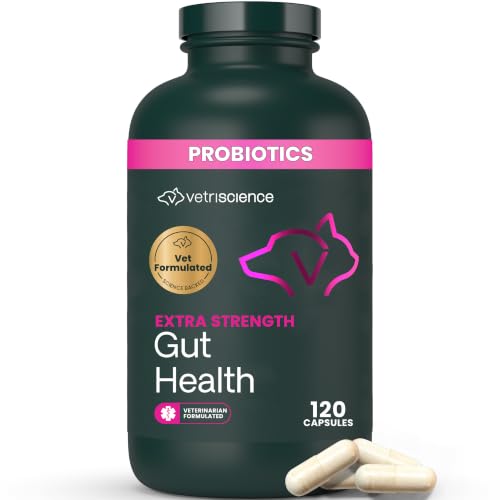
VetriScience Extra Strength Gut Health
High-count multi-strain capsule · added prebiotic fiber · 120-count bottle
- ✓ Higher colony-forming-unit count per dose
- ✓ Includes prebiotic fiber alongside the probiotic strains
- ✓ Large bottle suits daily long-term use
on Amazon
Price as of Oct 26, 2026, 9:21 AM EDT. Product prices and availability are accurate as of the date/time indicated and are subject to change.
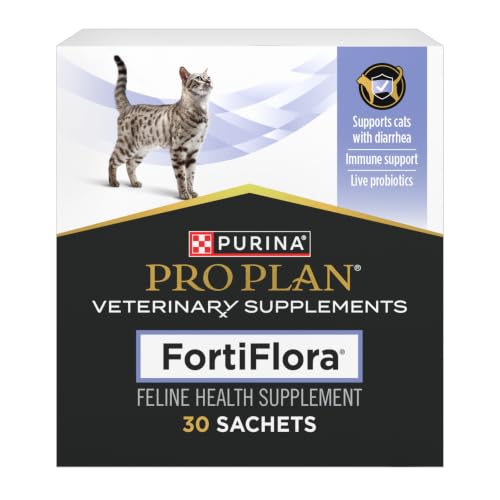
Purina Pro Plan FortiFlora Probiotic Powder
Single-strain powder · sprinkle-on sachets · probiotic only
- ✓ Individually portioned daily sachets
- ✓ Mixes into wet or dry food easily
- ✓ No added prebiotic, so it pairs with a fiber-forward diet
on Amazon
Price as of Oct 26, 2026, 9:21 AM EDT. Product prices and availability are accurate as of the date/time indicated and are subject to change.

ProbiVet Pre & Probiotic Sachets
Pre and probiotic in one · 5 g sachets · labeled for dogs and cats
- ✓ Both halves of the question in a single sachet
- ✓ Small pack size works as a short trial
- ✓ A bonus pick rather than one of the products compared above
on Pet Care Supplies
Price as of Oct 25, 2026, 9:05 AM EDT. Product prices and availability are accurate as of the date/time indicated and are subject to change.
| Probiotics | Prebiotics | |
|---|---|---|
| What it is | Live bacterial strains | A substrate the gut’s own bacteria use as fuel |
| Where it comes from | Powders, capsules and chews | Fibers in the diet or added to a supplement |
| How it acts | Adds helpful organisms | Feeds the helpful organisms already there |
| Usual timing | A defined short course | Ongoing, built into the diet |
| Best fit | After antibiotics or a stressful stretch | A cat with a sluggish or sensitive gut, under vet guidance |
The short version
- Cornell’s Feline Health Center describes prebiotics as substances that promote certain bacterial populations and probiotics as bacterial strains that promote gut health.1
- The scientific definition of a prebiotic is a substrate selectively used by host microorganisms that confers a health benefit, which is why a random fiber doesn’t automatically qualify.2
- A 2025 systematic review covered probiotics, prebiotics, synbiotics and postbiotics in cats and reported real but modest benefit, with uneven study quality.3
- A synbiotic puts both in one product. The Nutramax Proviable and VetriScience Extra Strength Gut Health picks sit in that category, while FortiFlora is probiotic only.
What each one does
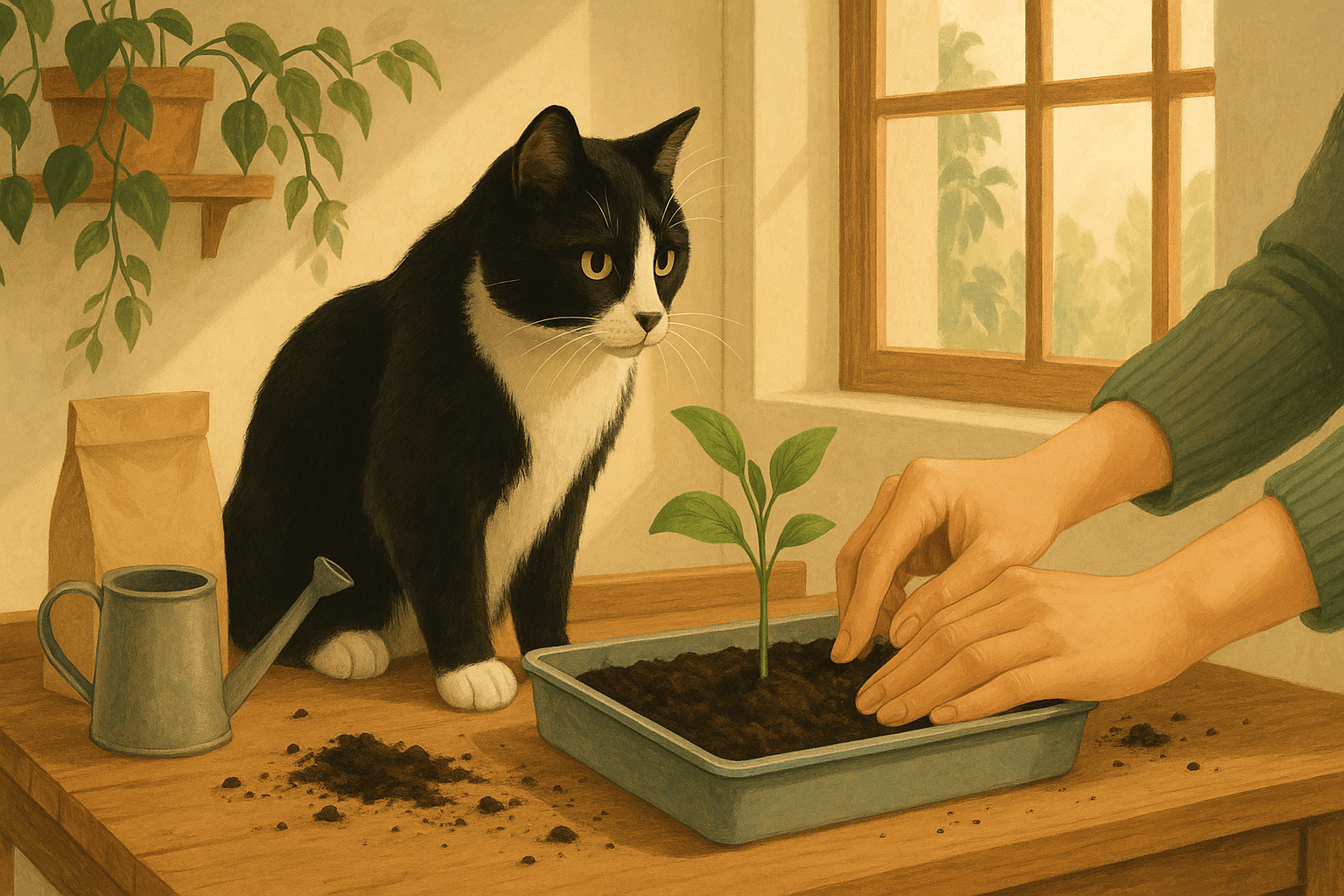
Think of a window box. A probiotic is the seedlings you plant. A prebiotic is the soil and feed that help whatever is already growing there keep going. Cornell’s Feline Health Center puts it in plainer terms: prebiotics are substances that promote certain bacterial populations, and probiotics are bacterial strains that promote gut health.1 Both show up in its list of newer supportive therapies for cats with gut inflammation.
The prebiotic side has a tighter definition than most labels let on. An international expert panel defined a prebiotic as a substrate that is selectively used by host microorganisms and confers a health benefit.2 Fibers such as inulin and fructooligosaccharides are the usual examples you’ll see on an ingredient panel. Plenty of other fibers make stool bulkier without doing that selective-feeding job, so “high fiber” and “prebiotic” aren’t the same claim. If you’re weighing fiber for a different reason, our pumpkin versus psyllium comparison covers the stool-bulk side.
One pattern showed up over and over at the shelter. A cat would arrive stressed, get a round of antibiotics for an unrelated problem and then hit a week of loose stool. The owners who asked about “gut support” almost always wanted the live-bacteria side of the shelf first, because the trouble had a clear start date. The ones who asked about it for a cat with a lifelong touchy stomach were really asking about diet, and that’s a prebiotic-shaped question.

Where the evidence stands
An open-label trial of a multi-strain synbiotic in cats with chronic diarrhea reported improved stool consistency, published in the Journal of Feline Medicine and Surgery.4 Open-label means nobody was blinded, so treat it as encouraging rather than settled. The broader 2025 systematic review and meta-analysis of probiotic, prebiotic, synbiotic and postbiotic supplements in cats pooled the available trials and found real but modest benefit, with study quality varying a lot from one product to the next.3
That second finding matters for shopping. These products don’t fall under a dedicated supplement category in the US. The FDA treats products sold as dietary supplements for animals as either food or new animal drugs depending on their intended use.5 In practice, that means the label alone won’t tell you whether the strains and counts have been tested in cats, so I lean on products with a feline research trail.
Which one first
For an indoor cat in an apartment, the triggers I see most often are a move, a new roommate or pet, a boarding stay and a medication course. Those are short, dated events, so a short probiotic course is the natural first step. For a cat whose stomach is touchy month after month, the better question is what’s in the daily diet, and a synbiotic that carries a prebiotic fiber alongside the strains is a reasonable add-on to raise with your vet. Our full best probiotics for cats roundup goes deeper on product choice.
How I compared them
I haven’t run these side by side in my own home, so I won’t claim I did. What I did instead was read the Cornell page on feline gut inflammation, the expert definition of a prebiotic and the 2025 review, then lined up each product’s format and what it contains from the manufacturer listings. Prebiotics earn a real point here: they’re the only half of the pair that works through the diet every day, and they carry less of a “will the bacteria survive” question than live strains do. Probiotics win on timing, since a short course can follow a dated trigger. For stool problems that run long, neither wins, and a vet visit beats both.
Common questions
Can my cat take both? Many products already combine them, which is what a synbiotic is. Whether to stack separate products is a question for your vet.
Is pumpkin a prebiotic? Not by the strict definition. It adds fiber, but fiber and a prebiotic aren’t the same thing, per the definition above.2
Do healthy cats need either? There’s no strong evidence that a cat with a normal gut needs ongoing supplementation, and the review’s modest findings point the same way.3
When to talk to your vet
We’re not vets, and neither supplement is a treatment. Cornell lists vomiting, weight loss, diarrhea, bloody stools, lethargy and decreased appetite as common signs of feline inflammatory bowel disease.1 If your cat has any of those, or loose stool that hasn’t settled within a few days, talk to your vet before reaching for a probiotic or a prebiotic.
The bottom line
- Choose a probiotic such as FortiFlora if the trouble has a clear start date, like antibiotics, a move or a boarding stay.
- Choose a prebiotic-forward approach, either through a vet-guided diet or a synbiotic like VetriScience Extra Strength Gut Health, if the sensitivity is ongoing and you want steady support.
- Choose a synbiotic such as Nutramax Proviable if you want both halves in one capsule and your vet agrees.
Pick the one that matches the trigger, and keep the vet in the loop.
Sources
- Cornell Feline Health Center, “Inflammatory Bowel Disease”
- Gibson et al., “Expert consensus document: The International Scientific Association for Probiotics and Prebiotics (ISAPP) consensus statement on the definition and scope of prebiotics,” Nature Reviews Gastroenterology & Hepatology
- López Martí et al., “Efficacy of probiotic, prebiotic, synbiotic and postbiotic supplementation on gastrointestinal health in cats: systematic review and meta-analysis,” Journal of Small Animal Practice
- Hart et al., “Open-label trial of a multi-strain synbiotic in cats with chronic diarrhea,” Journal of Feline Medicine and Surgery
- U.S. Food and Drug Administration, “Animal Foods & Feeds”