Do pheromone diffusers actually work for cats?
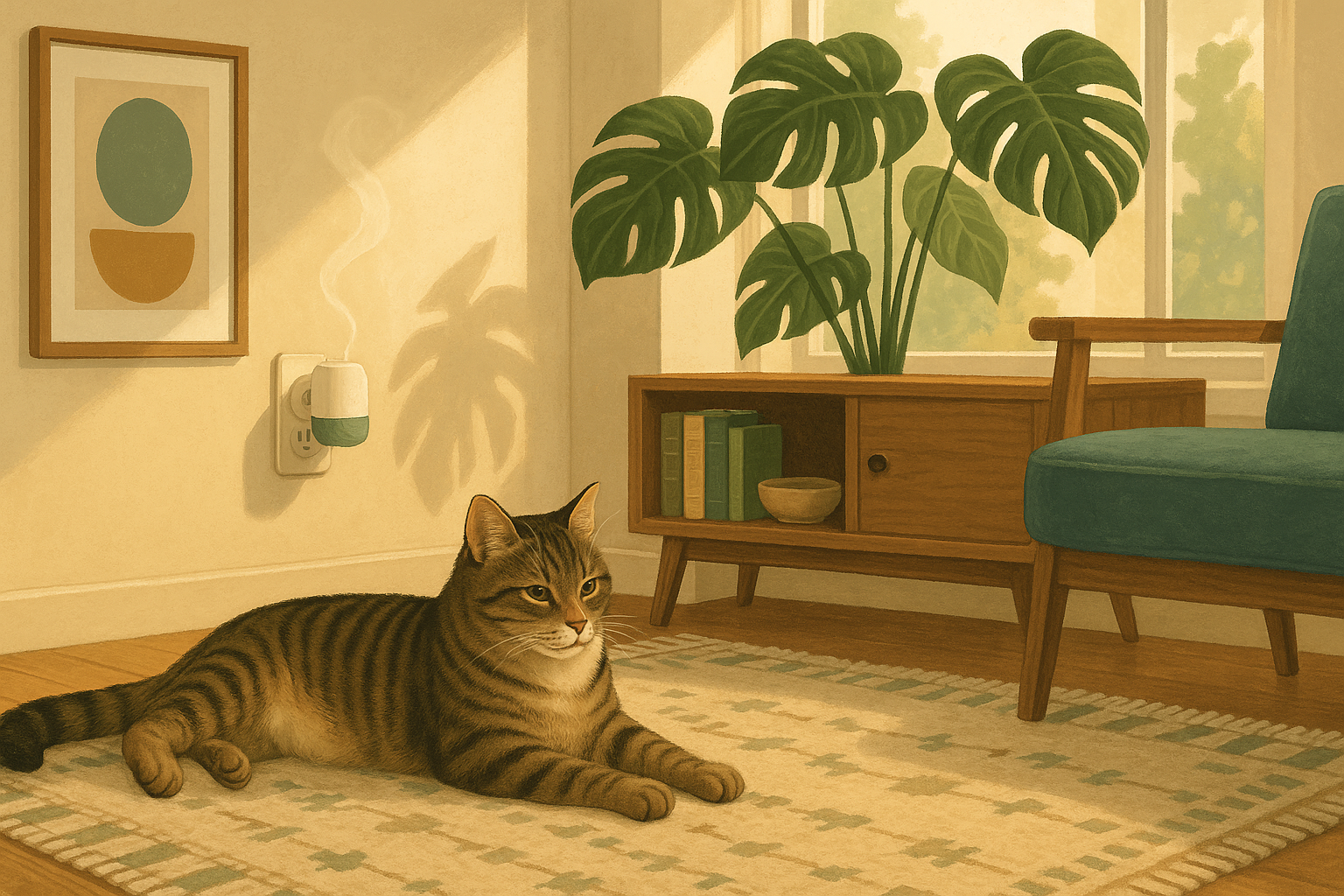
Modestly, in specific contexts. A 2023 randomized triple-blind trial in 1060 cats found that pheromone diffusers reduced unwanted scratching, but the placebo group also improved a lot, the real effect of the diffuser, above baseline owner-attention effects, was about 15 percentage points. That’s a real signal, but it’s smaller than the marketing suggests. Pheromones can be one tool in the box, but they don’t replace setup fixes.
Quick take:
- Real evidence base for reducing unwanted scratching, multi-cat tension and travel/vet stress. Modest effect sizes.12
- The placebo group in the scratching study improved 68.5% versus 83.5% for the pheromone group. A lot of “it worked” is owner-attention and time, not the diffuser.1
- Pheromones are an add-on to environmental fixes, not a substitute. The cat trees, the scratching posts, the multi-cat resource setup still matter.
- Cost is moderate ($25 to $35 per refill, lasting ~30 days). Worth trying if the underlying setup is already correct.
- Side effects in cats are essentially zero; in dogs the analogous products are different.
What the studies actually show
The strongest evidence is for two specific applications. First, reducing unwanted indoor scratching: a 2023 PLOS One trial randomized 1060 caregiver-cat pairs across 28 days, triple-blind, with a placebo diffuser. Scratching frequency dropped in 83.5% of the pheromone group versus 68.5% of the placebo group, a statistically significant difference at days 7, 14 and 28.1 The placebo improvement number matters: it tells you most of the “it worked” reports are owners watching more closely and intervening, not the diffuser. The pheromone added about a 15 percentage-point real effect.
Second, reducing aggression in multi-cat households: a 2019 pilot trial in the Journal of Feline Medicine and Surgery randomized 45 multi-cat households between the feline appeasing pheromone and a placebo and found modest reductions in aggression-related behaviors in the pheromone group.2 Smaller sample, smaller effect, but a measurable signal.
The take: pheromones work, modestly, in specific contexts. They’re not snake oil and they’re not a miracle.
Where the marketing oversells
Marketing claims often imply general calming or anxiety reduction across any situation. The evidence is thinner for general use. The strongest data is on specific behaviors (scratching, multi-cat aggression, travel stress). For “my cat seems anxious in general” the evidence is much weaker, and the placebo effect on owner-reported anxiety is large.
When it makes sense to try one
Three contexts where the evidence supports it: a cat scratching destructively despite a correct post setup, multi-cat aggression after the resource setup has already been improved and short-term stress events (a move, a renovation, vet visits). In each case, the diffuser is layered on top of the environmental fixes that should already be in place. For the broader behavior picture, see our complete guide to indoor cat behavior and enrichment.
What pheromones won’t fix
A cat in pain, a cat with a urinary or thyroid issue, a multi-cat household with one of every resource shared between three cats, a young cat with no daytime play. None of those gets better from a diffuser. The setup has to be right first; the pheromone is a finishing touch, not a foundation.
When to call the vet
- Pheromone or no pheromone, sudden behavior changes (litter box avoidance, hiding, new aggression) need a vet workup first
- A senior cat with new behavior changes, often pain or cognitive decline
- Symptoms that persist past four to six weeks of consistent diffuser use plus the right environmental setup
Sources
- Beck, A., et al. (2023). “Efficacy of the Feliway® Classic Diffuser in reducing undesirable scratching in cats: A randomised, triple-blind, placebo-controlled study.” PLOS One
- DePorter, T.L., et al. (2019). “Evaluation of the efficacy of an appeasing pheromone diffuser product vs placebo for management of feline aggression in multi-cat households: a pilot study.” Journal of Feline Medicine and Surgery