Why is my cat shedding so much?
Most heavy shedding in indoor cats is normal. They live in stable temperature and lighting year-round, so the seasonal cycle that drives outdoor cats’ shedding patterns flattens out and they shed steadily all year. The exception is shedding that comes with visible bare patches or skin changes underneath, which is medical territory.
Quick fixes for normal shedding:
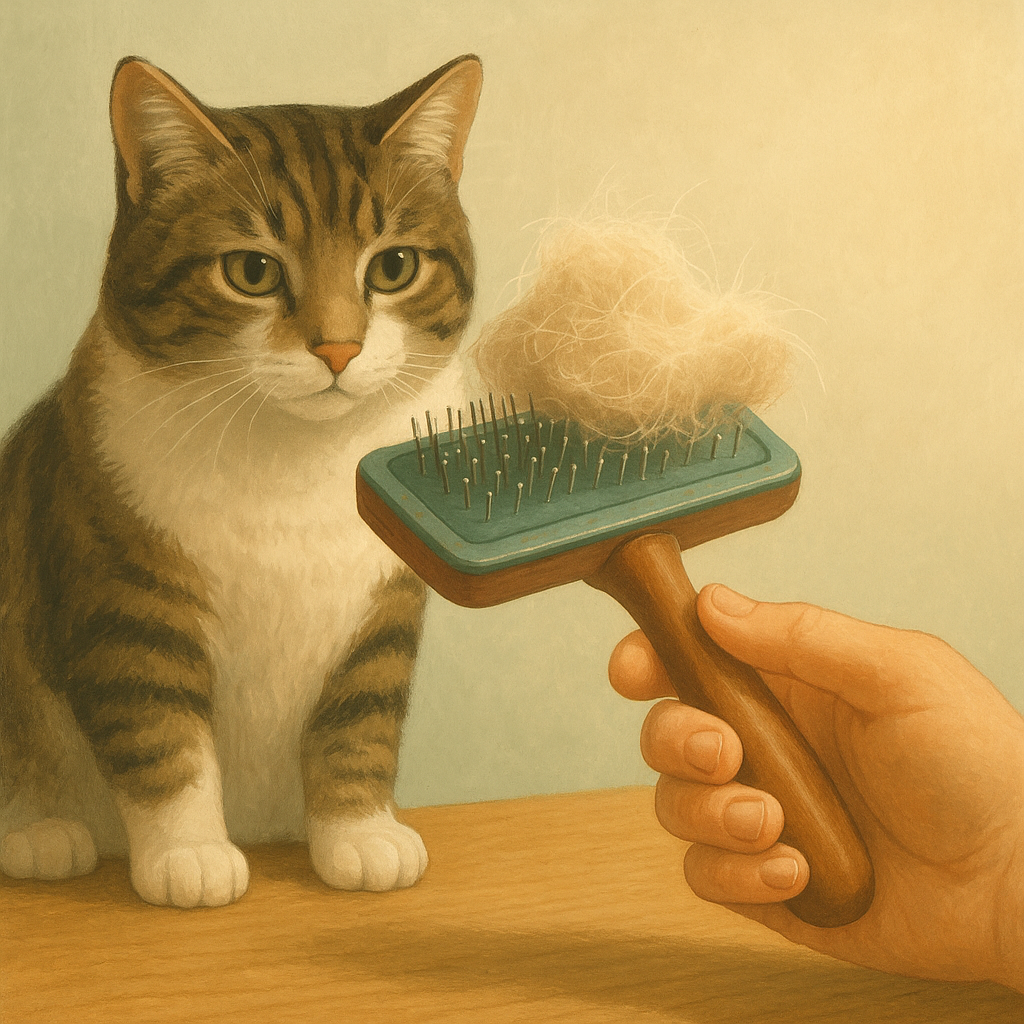
- Brush long-haired cats every day; short-haired cats once or twice a week. A two-minute daily session beats a fifteen-minute weekly one.
- Use a slicker brush for the outer coat plus a metal comb for tangles closer to the skin.
- Feed a complete commercial diet. Cheap food often shows up in the coat first.
- Vacuum more often than you think. Cat hair builds fast on soft surfaces.
- Skip “anti-shedding supplements.” The body sheds the hair it sheds.
Dr. Uri Burstyn (Helpful Vancouver Vet) on what’s normal cat shedding and what’s not.
Why indoor cats shed all year
Outdoor cats shed in response to day length and ambient temperature. Spring brings a heavy shed as the winter coat comes out; fall brings a lighter one as it grows back. Indoor cats live in artificially stable temperature and lighting, and the seasonal cues that drive that cycle are muted or absent. They shed steadily and continuously, which can feel like “way too much” when really it’s just “spread evenly across all twelve months.”
When heavy shedding is fine
Heavy shedding in an otherwise-well indoor cat (eating normally, drinking normally, no behavior changes, no visible skin changes) is usually not a medical problem. It’s a coat-quality issue at worst. The fixes are mechanical: more brushing, more vacuuming, accepting the black sweater. Brushing is the highest-leverage move because it removes hair before it ends up on furniture or in the cat’s stomach as a hairball. Long-haired breeds (Ragdolls, Maine Coons, Persians) especially benefit from a daily routine.
When it’s not normal
Cornell flags a list of skin and coat problems that go beyond regular shedding: dry brittle hair, baldness, open wounds, scabs.1 Heavy shedding alongside any of these is a different problem. The common causes per Cornell: nutritional deficiencies, food hypersensitivity, parasites, fungal infections, bacterial infections and environmental allergies.1 Stress can also drive over-grooming, where the cat licks one area until the hair is gone. Symmetrical bald patches are especially worth flagging.
The supplement question
The supplement aisle is full of products that promise to reduce shedding. The evidence for most of them is thin. Omega-3 supplements have a real evidence base for inflammatory skin conditions, but for an otherwise-healthy cat on a complete diet, the case for adding them to reduce shedding specifically is weak. Diet does most of the work; brushing does the rest. For the full picture, see our complete guide to indoor cat coat and skin health.
When to call the vet
- Bald patches, especially symmetrical ones or any patch where you can see skin
- Repeated grooming or scratching at one specific spot
- Scabs, redness or weepy skin anywhere on the body
- Heavy shedding alongside weight loss, appetite changes or lethargy
- A sudden change in coat quality (dull, brittle, greasy) in a previously well cat