Bristle vs slicker vs pin brushes for cats: which one fits your cat’s coat?
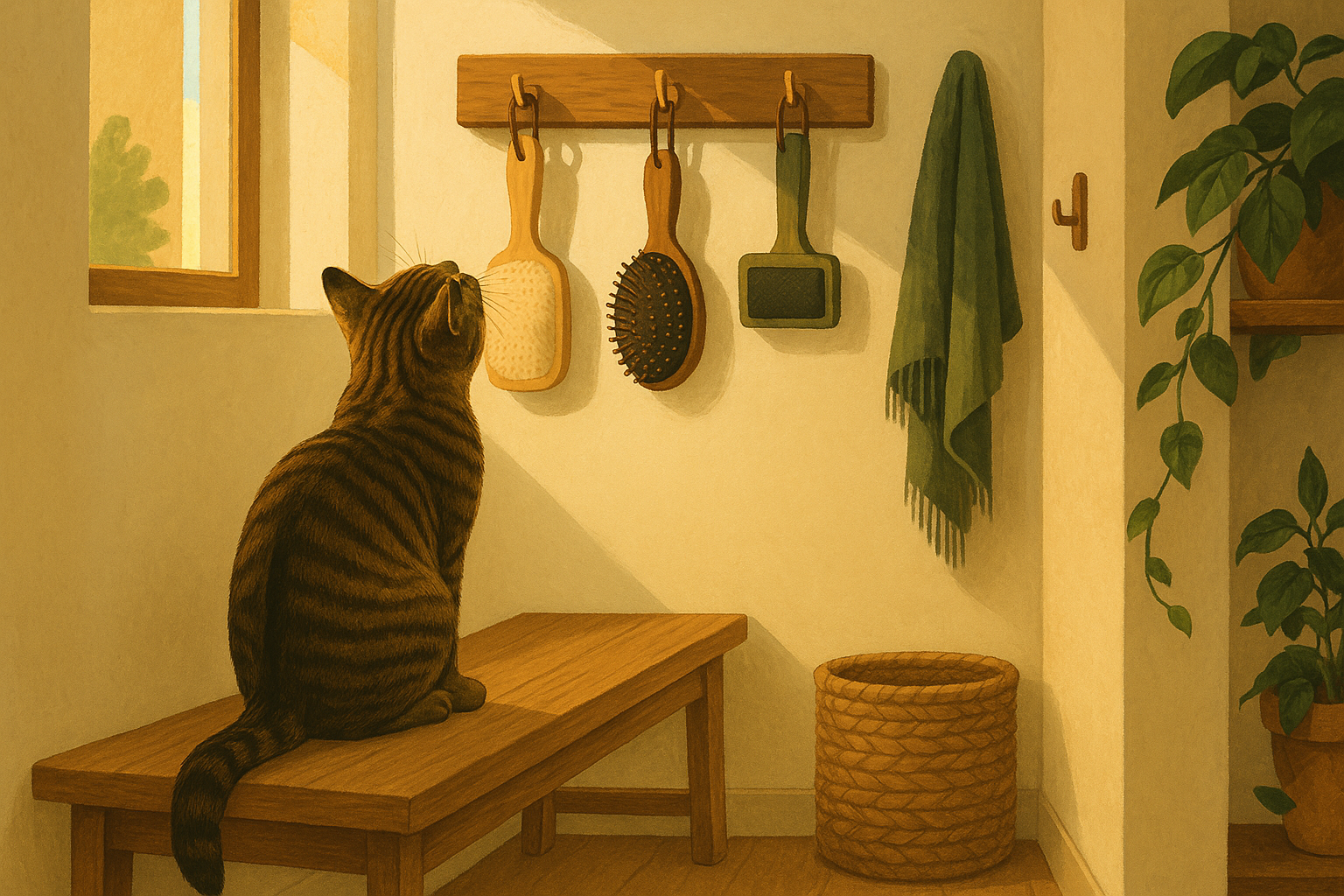
The most common grooming mistake I watched at the intake desk happened at the checkout counter. An owner would grab whichever cat brush was nearest, take it home and report back a week later that it “doesn’t do anything.” Usually the brush was fine. It was just the wrong shape for that cat’s coat. A pin brush glides over a sleek short coat and picks up almost nothing. A slicker dug into a fluffy coat can feel scratchy to a cat who was fine with a gentler tool. The three styles are bristle, pin and slicker, and they do three different jobs. A slicker wins when your cat’s coat tangles. A pin brush wins when the coat is long or fluffy and your cat is touchy about grooming. A bristle brush wins when the coat is short and you want a gentle daily pass.
As Amazon Associates we earn from qualifying purchases. Some links in this post are affiliate links; if you buy through them, we earn a small commission at no extra cost to you. We only recommend products we’ve used or researched thoroughly. See our full disclosure for details.
How they compare at a glance

Safari Self-Cleaning Slicker Brush
Slicker · fine coated steel pins · one size for cats
- ✓ Coated stainless steel pins that reach into the coat to lift loose hair
- ✓ Push button retracts the pins so hair slides off the pad
- ✓ Compact 7 by 3.25 inch size, made for cats
- ✓ Listed by the maker for both short and long coats
on Amazon
Price as of Oct 26, 2026, 9:21 AM EDT. Product prices and availability are accurate as of the date/time indicated and are subject to change.

H&H Pets 2-in-1 Grooming Brush
Pin side plus bristle side · one handle · dogs and cats
- ✓ Pin side with rounded tips for combing through thicker coats
- ✓ Bristle side with nylon bristles for loose hair, dirt and light knots
- ✓ About 8 inches long, rubber and plastic handle
- ✓ Budget-friendly way to try two brush styles at once
on Amazon
Price as of Oct 26, 2026, 9:21 AM EDT. Product prices and availability are accurate as of the date/time indicated and are subject to change.

Raw Paws Rubber-Tipped Pin Brush
Pin brush · rubber-tipped pins · a true third style, not an add-on
- ✓ Rounded rubber tips, described by the maker as softer on the skin
- ✓ Made for medium, long, fluffy or feathered coats
- ✓ Removes loose fur and lightly detangles for everyday grooming
- ✓ For heavy mats, the maker points you to a groomer
on Raw Paws Pet Food
Price as of Oct 26, 2026, 9:21 AM EDT. Product prices and availability are accurate as of the date/time indicated and are subject to change.
| Safari Self-Cleaning Slicker | H&H 2-in-1 Pin and Bristle | Raw Paws Rubber-Tipped Pin | |
|---|---|---|---|
| Style | Slicker: fine, closely set steel pins | Pin on one side, nylon bristle on the other | Pin: wider-set pins with rubber tips |
| Main job | Lifts loose undercoat and works out small tangles | Pin side combs through the coat, bristle side sweeps loose hair and dirt | Everyday pass through a long or fluffy coat with a softer feel |
| Coat it suits | Short or long, with the best payoff on coats that tangle | Medium to long coats, with the bristle side usable on shorter ones | Medium, long, fluffy or feathered coats |
| Cleanup | Push button retracts the pins | Pull the hair off by hand | Pull the hair off by hand |
| Price tier | Mid-range | Budget-friendly | Budget-friendly |
| Best fit | A cat whose coat forms small tangles and who tolerates a firmer brush | One household with a mix of coats, or an owner who wants to try two styles | A fluffy cat who dislikes fine pins and needs a gentle everyday brush |
The short version
- Match the brush to the coat, not the cat’s size. A tidy short coat and a long coat that knots need different tools.
- Bristle brushes are the gentle option. They sweep loose hair off the surface of a short coat and finish the job after another tool. The bristle side of the H&H 2-in-1 covers it.
- Pin brushes suit long and fluffy coats. The Raw Paws rubber-tipped pin brush is the softer-feeling example here.
- Slicker brushes go deepest. The Safari self-cleaning slicker is the one to reach for when a coat tangles, and the button makes cleanup quick.
- Brushing is preventive care, not just tidiness. Cornell recommends getting a cat used to daily brushing and combing to cut down on hairballs. [1]
- Go lightly with any brush that has pins. Short sessions and light pressure beat a long, stressful one.
In this guide
Three brushes, three jobs · Why brushing matters · Bristle brushes · Pin brushes · Slicker brushes · Which one fits your cat · How I compared them · Common questions · When to talk to your vet
Three brushes, three jobs
Walk down the grooming aisle and every brush looks like a variation on one idea. They aren’t. Each style is built around how far into the coat it reaches. A bristle brush works the surface. A pin brush goes through the length of the hair. A slicker gets down toward the base of the coat, where loose undercoat and tangles collect. That one difference, how deep the tool reaches, decides which cat it suits. A short-haired cat has little depth to work with, so a deep tool tends to be overkill. A long-haired cat has plenty, and a surface brush leaves the trouble spots untouched.
Why brushing matters more than it looks
Loose hair doesn’t stay on the couch. When a cat grooms, the backward-facing barbs on her tongue sweep dead hair down her throat. Most of it passes through, but some collects in the stomach and forms a hairball. [2] Long-haired breeds such as Persians and Maine Coons face a higher risk than short-haired cats, and hairballs are more common in the seasons when cats shed. [1] Cornell’s advice is plain: get your cat used to daily brushing and combing. [1] The brush you pick is the one you’ll use consistently, which is why fit beats features. A tool your cat tolerates for three calm minutes does more good than a better tool she hides from.
Bristle brushes: the gentle surface pass
A bristle brush has close-packed, soft-ended bristles, usually nylon or natural fiber. It skims the top of the coat, sweeps off loose hair and dust and leaves a smoother finish. That makes it the easy first brush for a short-haired cat or one who doesn’t like being groomed. The H&H listing describes the bristle side as built to work out loose fur, dirt and light knots. [5] The limit is depth. A bristle brush won’t reach into a dense coat or break up a real tangle, and Safari’s own stand-alone bristle brush says as much, telling owners to pair it with a slicker for heavily matted hair. A stand-alone Safari bristle brush is out of stock as I write this, so rather than point you to a dead listing I’ve leaned on the H&H 2-in-1, whose bristle side does the same job.
Pin brushes: the everyday pass for long coats
A pin brush has widely spaced wire pins, often with rounded or rubber-capped tips, set into a cushioned pad. The spacing lets the pins travel through a long or fluffy coat without grabbing. It detangles lightly and doesn’t dig. The Raw Paws rubber-tipped pin brush is built that way. The maker says the rounded rubber tips feel softer on the skin and that the brush suits medium, long, fluffy or feathered coats. [6] I’d put it in the “gentle daily brush” category. It won’t fix a mat, and the maker says as much, advising a groomer for heavy tangles. [6] The pin side of the H&H 2-in-1 is described the same way: rounded pin tips meant for combing through thicker coats. [5]
Slicker brushes: the deep, tangle-fighting pass
A slicker packs fine, bent wire pins close together on a flat pad. It reaches the base of the coat, where loose undercoat and small tangles gather. The Safari self-cleaning slicker uses coated stainless steel pins and a push button that retracts them, so hair slides off the pad instead of being picked out by hand. [4] The maker lists it for both short and long coats. [4] I’d still treat it as the long-coat tool. Those fine pins are firm, and a cat with thin skin or a sensitive spot will let you know. Use the weight of the brush, not your wrist, and stay off the belly, spine and any bony area. The payoff is real for the cat who forms tangles behind the ears or under the front legs, because nothing else in this trio reaches that deep.
Which one fits your cat
Start with the coat, then add temperament. A short, smooth coat that rarely tangles does best with the bristle pass. A medium or fluffy coat that needs a regular going-over suits a pin brush. A long coat that mats behind the ears, or a thick double coat that sheds in clouds, is the case for a slicker. The cat matters as much as the coat. A relaxed cat will take a slicker. A cat who flinches at fine pins will often accept a rubber-tipped pin brush, so start gentle and move up only if the coat needs it. In a small apartment with a short-haired cat and a long-haired one, the two-sided H&H is a low-cost way to cover both without buying two brushes.
How I compared them
This is a researched comparison, not a side-by-side test. I haven’t brushed a cat with each of these, so I won’t claim I did. What I did was read each maker’s product description, line up what each brush is built to do and read Cornell’s guidance on why brushing matters. I weighed that against the pattern from the intake desk, where the real question was almost never which brush is best and almost always which one fits this coat. The slicker is my top pick for a tangle-prone coat, but I’ll concede its rivals’ strengths plainly. The Raw Paws pin brush is the gentler tool, and for a cat who hates fine pins it will get used more often, which counts for a lot. The H&H combo isn’t as strong against tangles as the slicker, yet it costs less and covers two styles. Where the three tie, brushing regularly and calmly matters more than which handle you hold.
Common questions
Can I use a dog brush on a cat?
Several of these, including the H&H and the Raw Paws brush, are sold for both dogs and cats. Size and pin firmness matter more than the label. A cat’s skin is fine, so choose light pins and a small head.
How often should I brush?
Cornell suggests getting a cat used to daily brushing and combing to limit hairballs. [1] Short sessions work better than one long one, especially for a cat new to grooming.
What if the brush hurts my cat?
Stop and change the tool or the technique. Lighter pressure, a softer pin or the bristle side usually fixes it. If a spot is sore to the touch, that’s a different question, covered below.
When to talk to your vet
A brush is for a healthy coat. If your cat is scratching, licking or chewing her fur more than usual, or you find redness, swelling, hair loss, scabs or flaky skin, call your vet instead of buying another brush. Cornell lists exactly those signs as skin trouble worth a professional look. [3] The same goes for a cat who suddenly stops grooming herself and mats up, or a mat that sits tight against the skin. Don’t cut it out at home with scissors. A vet or a groomer can remove it safely. And if your cat repeatedly retches without bringing anything up, or goes off her food for more than a day, that’s a vet visit, not a grooming problem. [2]
The bottom line
- Choose the Safari self-cleaning slicker if your cat’s coat forms tangles, she sheds heavily or she tolerates a firmer brush, and you want cleanup to take seconds.
- Choose the H&H 2-in-1 if you want a low-cost way to try both a pin and a bristle pass, or you live with cats whose coats differ.
- Choose the Raw Paws rubber-tipped pin brush if your cat is fluffy, a little touchy and does better with a softer feel than fine metal pins.
Whichever you pick, a calm three minutes most days will do more for your cat’s coat and your couch than the perfect brush used twice a month.
Sources
- Cornell Feline Health Center, “The Danger of Hairballs”
- Cornell Feline Health Center, “A Hairy Dilemma”
- Cornell Feline Health Center, “Feline Skin Diseases”
- Coastal Pet, “Safari Cat Self-Cleaning Slicker Brush” (manufacturer product page)
- Chewy, “H&H Pets 2-Sided Dog & Cat Grooming Brush” (product listing, used for specs only)
- Raw Paws Pet Food, “Grooming Brush for Dogs & Cats, Rubber Tipped Pin Brush” (manufacturer product page)