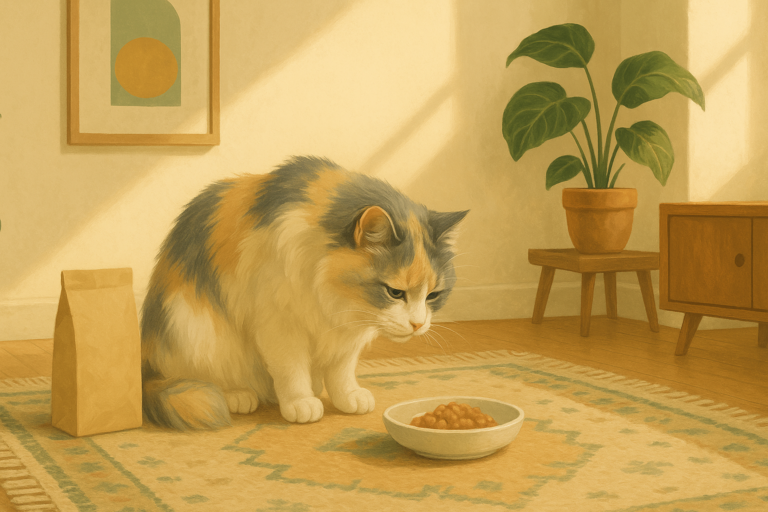
What are signs of cat anxiety?
The reliable signs: hiding more than usual, over-grooming (especially one specific area), litter box avoidance, decreased appetite, repetitive behaviors (excessive pacing, repetitive meowing), and changes in social interaction with humans or other pets. Cornell’s behavior issues hub flags that anxious behaviors often look like other problems on the surface (a cat hiding because of pain looks similar to a cat hiding because of anxiety).[1] The diagnosis usually requires ruling out medical causes first, then identifying the environmental trigger.
When to call a vet: any sudden behavior change, especially with appetite or litter box changes, deserves a vet visit before assuming it’s anxiety. Many medical conditions present first as behavior changes.