Hairball control food vs supplements: what works
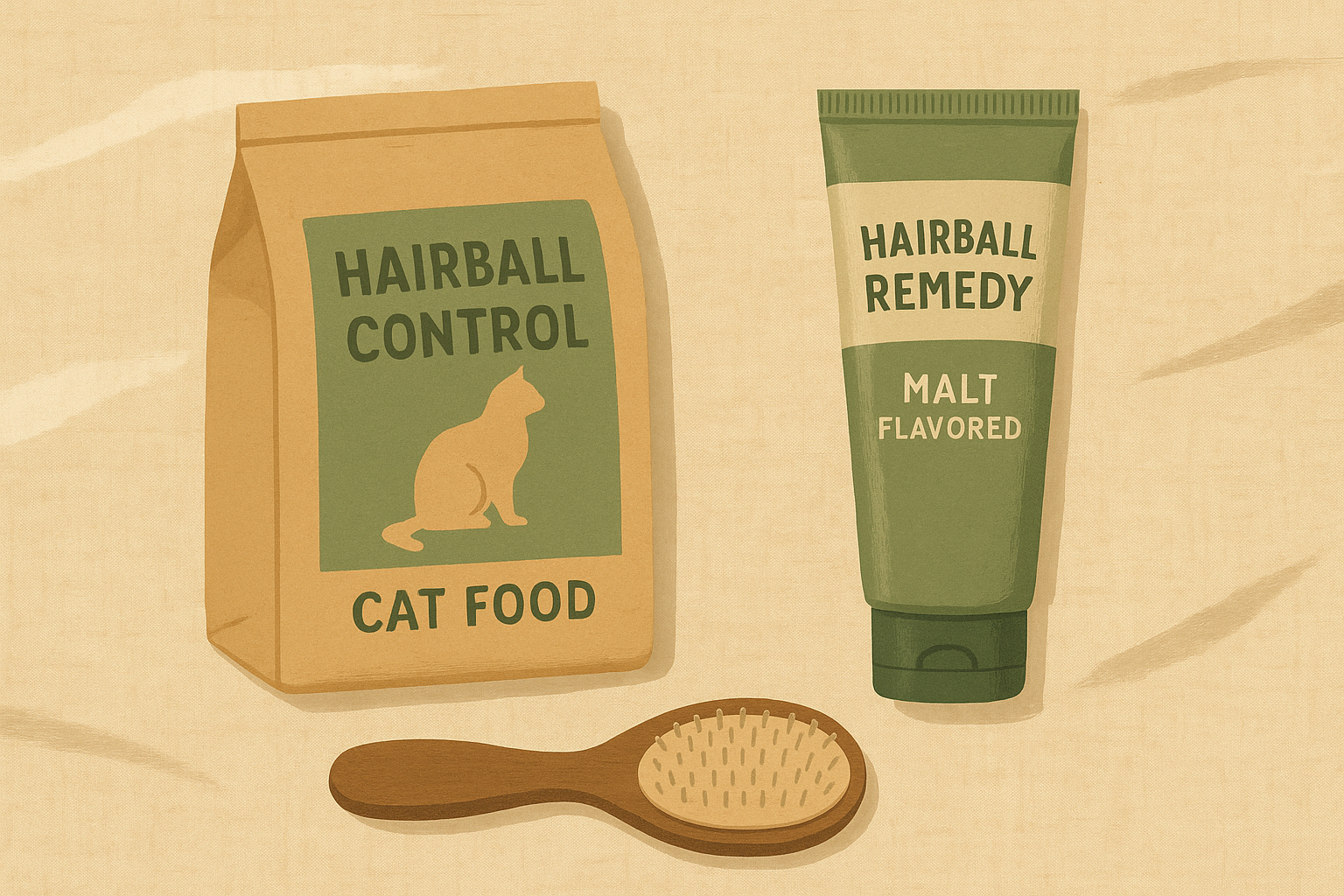
For cats with frequent hairballs, two product categories get pitched at owners: hairball control foods and hairball supplements (pastes, treats, lubricants). Both have a real mechanism behind them, both work modestly and both are less effective than the upstream fix, which is brushing.
Quick take:
- Hairball control foods are higher-fiber commercial diets that help hair pass through the gut.
- Hairball supplements are mostly petroleum-based lubricants (mineral oil, petroleum jelly) plus mild laxatives.
- Both work modestly. Daily brushing does more than either, because it removes hair before it’s swallowed.
- For occasional hairballs, neither is necessary. For weekly-or-more hairballs, the brushing + diet combo is the first move; a supplement is a backup.
- Don’t combine multiple lubricant-based products without a vet’s input. Daily petroleum-based pastes can interfere with fat-soluble vitamin absorption over time.
What hairball control food actually does
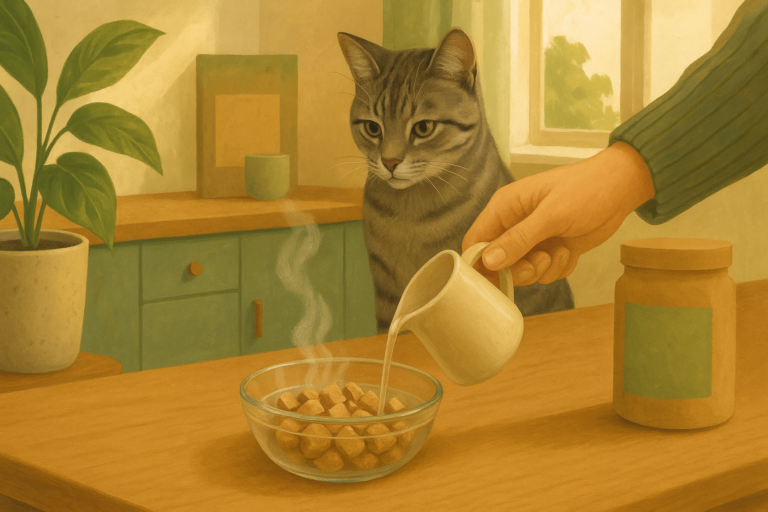
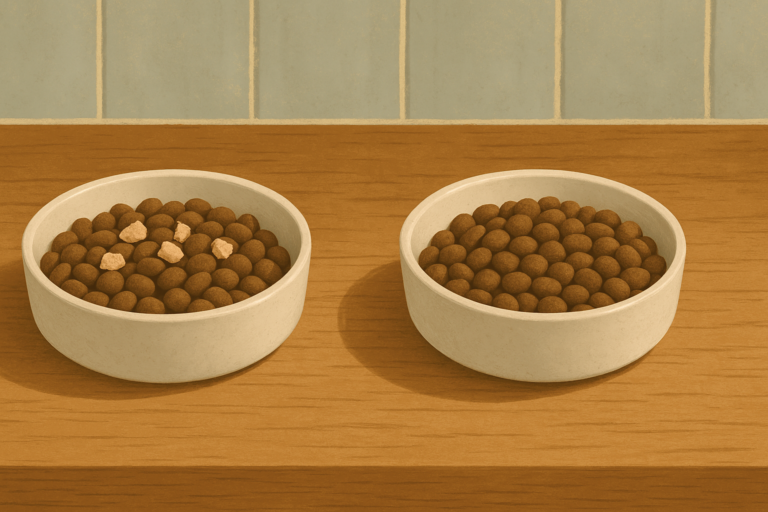
Hairball control foods are higher in dietary fiber than standard formulas. The fiber adds bulk and lubrication to the GI tract, helping swallowed hair pass through and exit in the stool rather than accumulating in the stomach. Some formulations also adjust fat content and add specific fiber blends (psyllium, beet pulp) that are particularly effective at moving non-digestible material through. Cornell’s hairball guidance flags these dietary approaches as part of the standard management toolkit.1
The effect is real but modest. Don’t expect a hairball food to eliminate hairballs entirely. Expect it to reduce frequency in cats prone to them.
What hairball supplements actually do
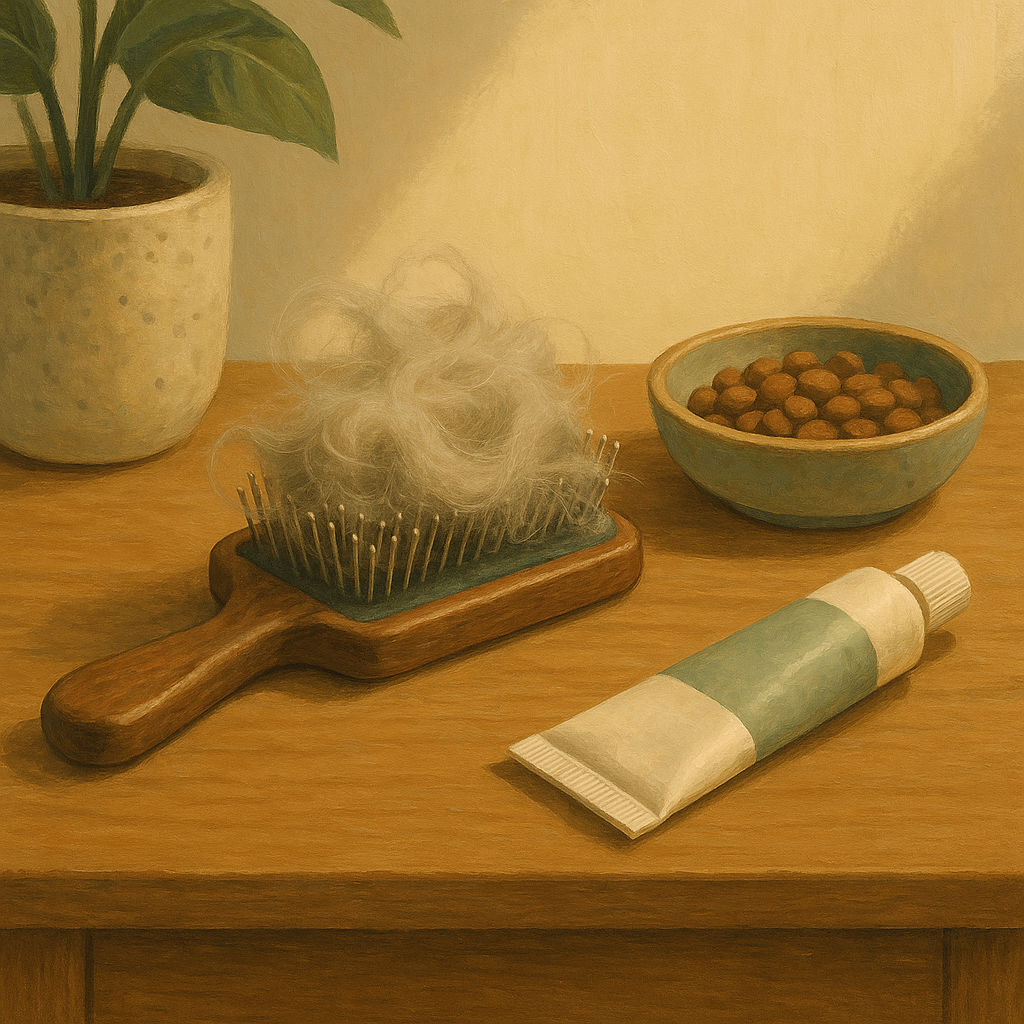
Most hairball supplements, pastes and treats are petroleum-based lubricants. Mineral oil, petroleum jelly and similar are mild laxatives that coat swallowed hair and help it move through the gut more easily. The mechanism is straightforward; the evidence base for it is real, if modest. Some products add fiber on top of the lubricant.
Two practical cautions. First, daily long-term use of petroleum-based products has been associated with reduced absorption of fat-soluble vitamins (A, D, E, K). For cats needing a regular hairball intervention, talk to your vet about cycling on and off or using a fiber-based alternative. Second, hairball treats are calorie-dense and can add up quickly in a cat already prone to weight gain.
What does more than either
Daily brushing. Hair removed by the brush doesn’t end up in the cat’s stomach. For long-haired cats and seniors, daily brushing is the highest-leverage move; for short-haired cats, twice a week is usually enough. Cornell explicitly cites grooming as the most direct way to reduce hairball formation.1
For the broader coat-and-skin picture, see our complete guide to indoor cat coat and skin health. For distinguishing hairballs from vomit, see the hairball-or-vomit blog.
When to call the vet
- More than one hairball a week, especially in a short-haired cat
- Repeated unproductive retching (the cat tries to bring something up but can’t)
- Hairball alongside appetite loss, weight loss or lethargy
- Any vomit with blood
- Considering daily long-term hairball supplements, talk to your vet first