Declawing cats: what it actually is, and why most vets say no
Declawing isn’t trimming a cat’s nails, and it isn’t removing the claws. It’s surgical amputation of the last bone of each toe, equivalent to removing a human fingertip at the first knuckle. The AVMA strongly discourages the procedure. Many countries and several US states have banned it. There are alternatives that solve the problem declawing was meant to solve, without the trade-offs declawing brings.
Quick take:
- Declawing (onychectomy) is amputation, not nail removal. The AVMA’s official policy uses the word “amputation.”1
- The AAFP takes a strong position against declawing for non-medical reasons.2
- Banned in many countries (the UK, much of the EU, Australia, New Zealand, Israel, Brazil) and several US states (New York, Maryland, Virginia, Washington), plus a growing list of cities.
- Common after-effects: chronic pain, litter-box avoidance (the litter hurts after surgery), increased biting (the primary defense is gone), behavior changes.
- Alternatives that actually work: the right scratching post in the right place, regular nail trimming, soft nail caps, deterrent tape on furniture.
Dr. Sarah Wooten, DVM on what declawing actually involves and why it isn’t the answer (PetMD).
What the procedure actually is
The clinical name is onychectomy. The AVMA’s policy describes it as amputation of the distal digits, meaning the surgeon cuts off the last bone of each of the cat’s ten front toes (and sometimes the back ones too, in a “four-paw declaw”), removing the claw and the bone the claw grows from.1 It is not a nail-removal procedure. It is bone amputation, performed at ten separate joints, often in a single surgery. The pain is acute in the days afterward, and the AVMA notes the procedure may result in chronic pain, maladaptive behavior and significant mutilation.1
Why most vets now refuse
The shift in veterinary position over the past decade has been clear. The AVMA’s current policy strongly discourages declawing that isn’t medically necessary.1 The AAFP takes a stronger line, opposing the procedure for non-medical reasons and calling for veterinary education to focus on alternatives.2 Many individual veterinary practices have stopped offering it entirely.
Two reasons drive this. First, the welfare picture. Post-declaw cats show elevated rates of litter box avoidance (the litter is uncomfortable on freshly amputated toes), biting (since the primary defense is now gone), and what’s clinically described as chronic pain. Second, the alternatives work. There’s no good reason left to remove the claws when redirecting scratching to a proper post is so effective.
What works instead
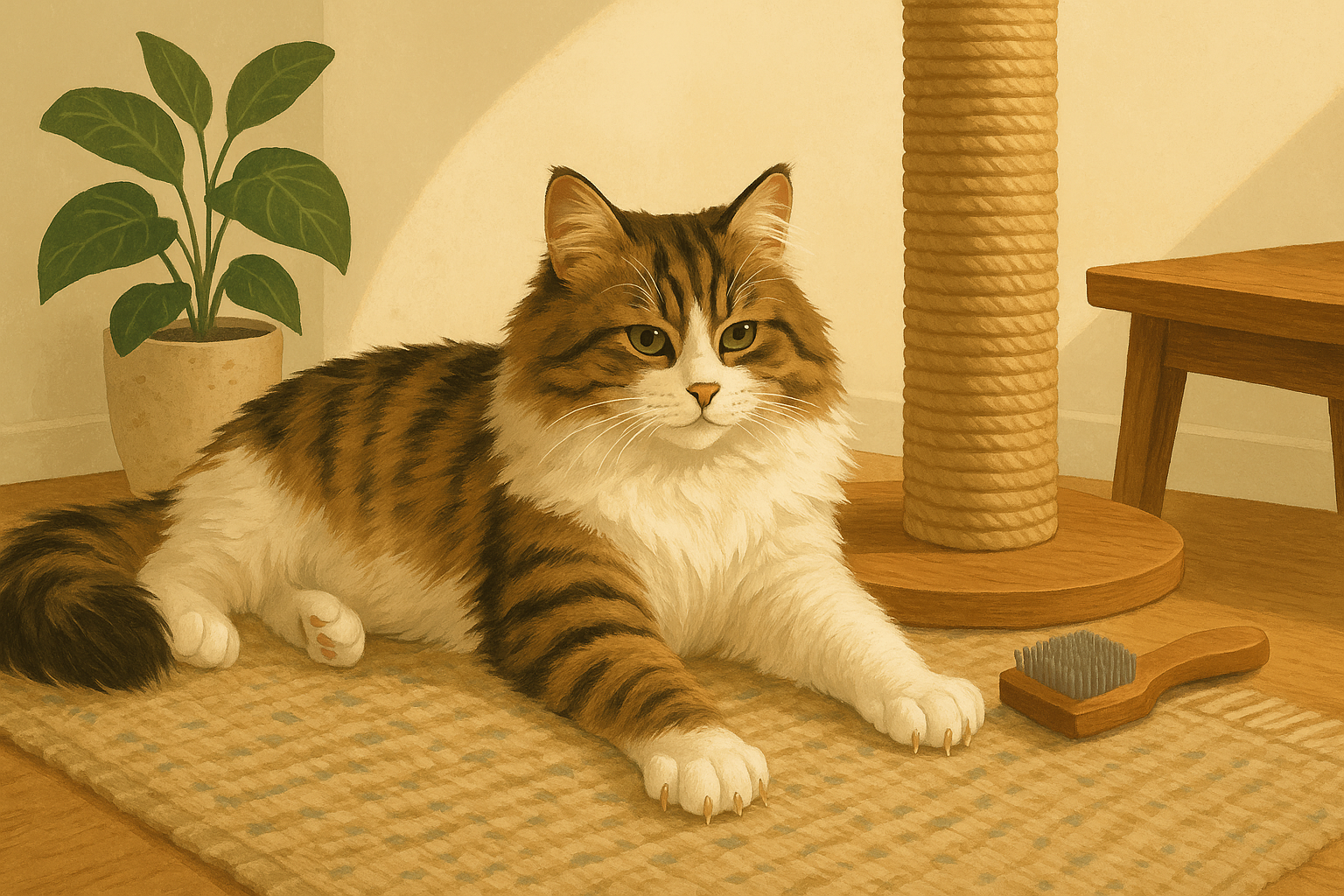
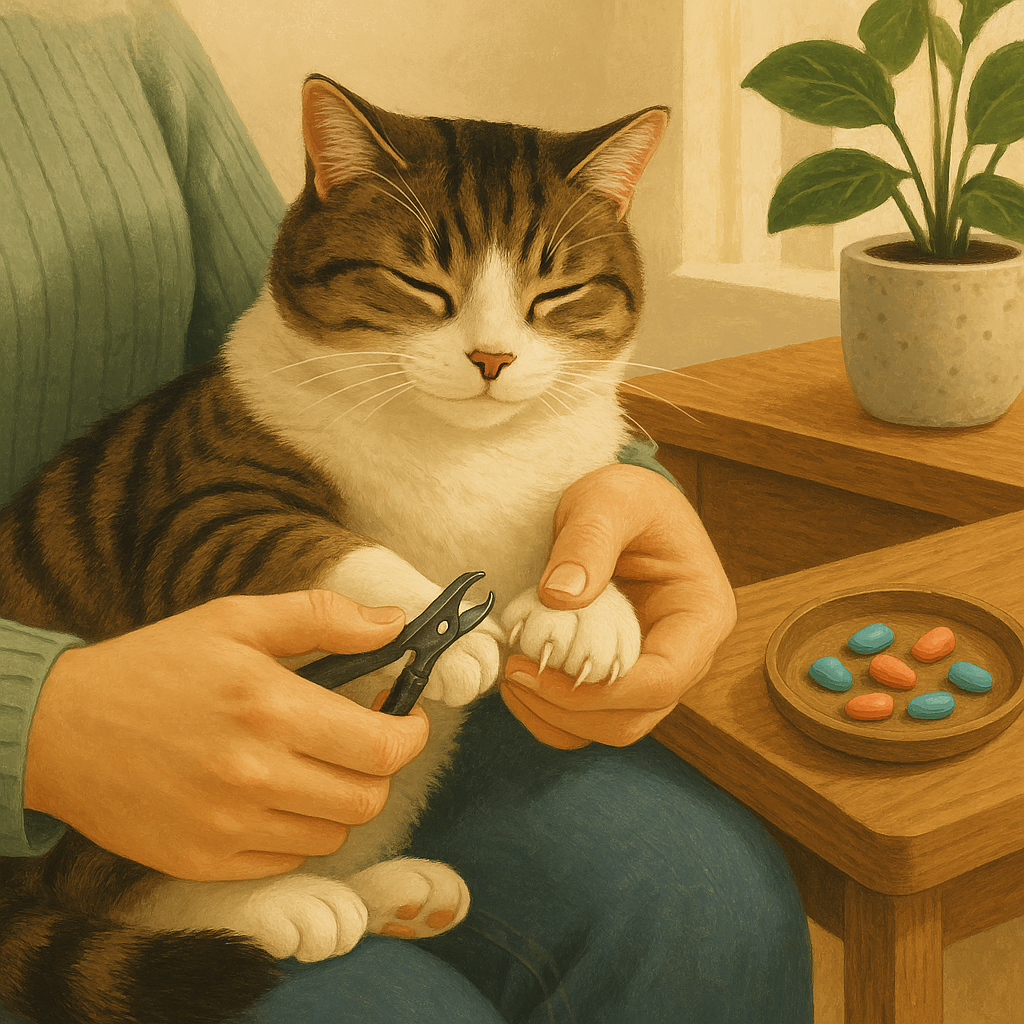
This is the same advice our scratching guide gives, summarized. Match the post to the cat (vertical or horizontal, sisal or cardboard), place it where she’s currently scratching, reward her for using it, and make the furniture less appealing for a while with throws or double-sided tape. Cornell’s destructive-behavior guidance is specific about how to do this.3 For cats who keep scratching despite a correct setup, soft nail caps (sold under brand names like Soft Paws) glue onto the existing claws and prevent furniture damage for 4 to 6 weeks per application. Regular nail trimming every 2 to 3 weeks blunts the tips, reducing damage without removing the claws.
For the broader behavior picture, see our complete guide to indoor cat behavior and enrichment. For the practical scratching-redirection playbook, see our guide to stopping furniture scratching.
When to talk to your vet
- If you’re considering declawing, talk to your vet about alternatives first. Most will refuse the procedure for non-medical reasons.
- If your cat is scratching destructively despite a correct post setup, a behavior consultation often surfaces a stress or pain cause.
- If you’ve adopted a declawed cat showing signs of pain (licking the paws excessively, walking gingerly, sudden litter box avoidance), declawed cats can develop chronic pain years after the surgery, and it’s treatable.
- For the rare medical case where declawing is genuinely indicated (severe nail bed cancer, certain immunocompromised-owner situations), your vet will discuss it as a medical decision, not a convenience one.