Why is my cat such a picky eater? What actually works
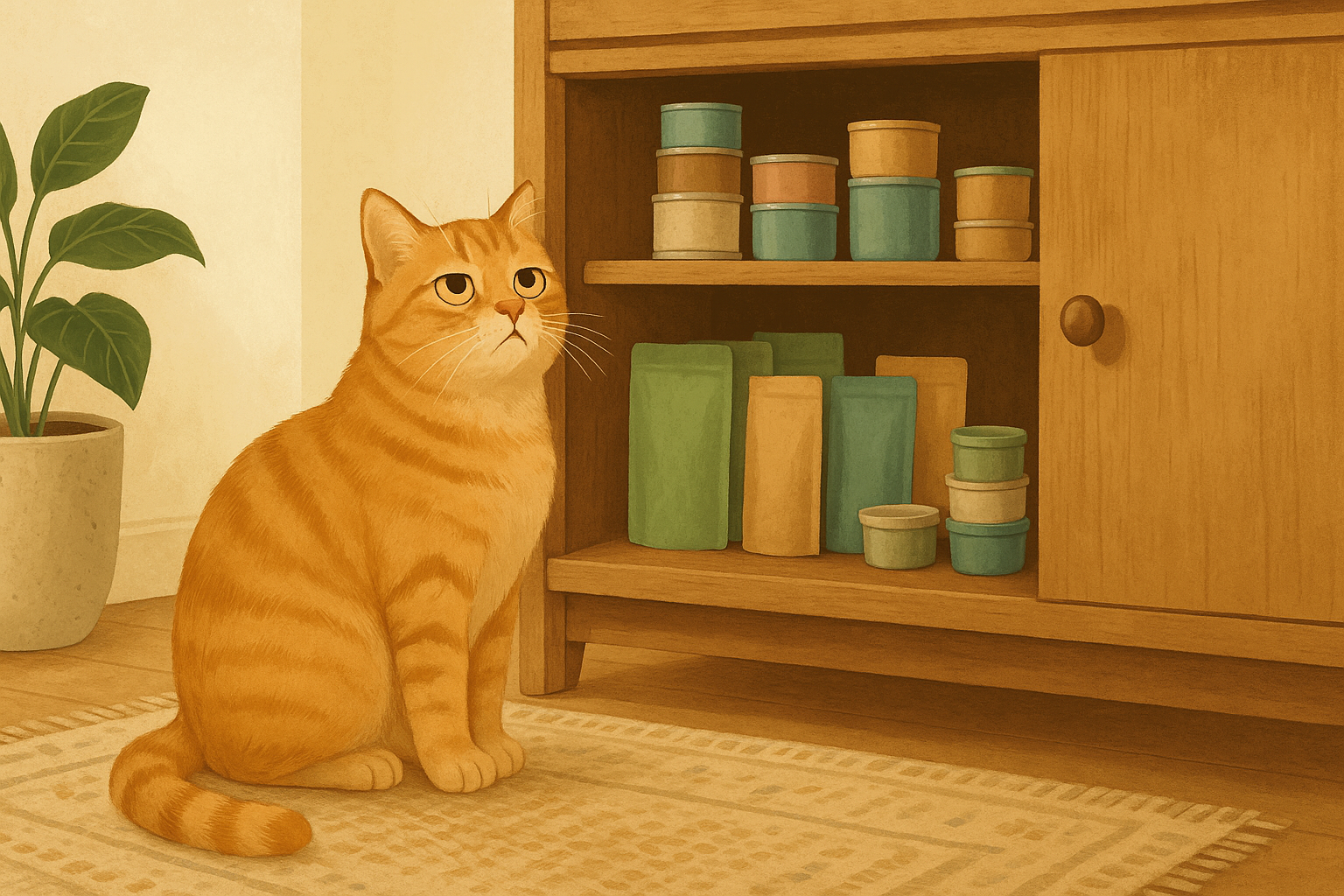
A cat sits in front of a full bowl, sniffs it and walks away. An hour later she is winding around your ankles asking for food, so you put down something else and she eats three bites and quits. By the end of the week the cupboard holds half a dozen part-finished bags and cans, and you are starting to wonder whether something is wrong. Picky eating is one of the most common and most frustrating things indoor-cat owners deal with, and it sits on a spectrum. At one end is a healthy cat with strong opinions. At the other is a cat whose appetite has genuinely dropped, which is a different and more serious problem. This guide covers how to tell those apart, what to change first and the signs that mean you stop experimenting and call your vet.
The short version:
- Picky eating and a true loss of appetite are different problems. A picky cat eats, but selectively. A cat going off food entirely needs a vet, not a new flavor.
- Rule out a medical cause before you assume preference. Dental pain, nausea and other illnesses all look like fussiness at the bowl.
- A cat that eats almost nothing for 24 to 48 hours is an emergency. Cats develop a dangerous liver condition quickly when they stop eating.
- Never try to starve a cat into accepting a food. Withholding meals to “win” can do real harm.
- Most chronic pickiness is a setup problem: all-day grazing, stale or cold food, the wrong bowl, a stressful spot. Fix the setup before you fix the menu.
- Switch foods slowly, over 7 to 14 days. Sudden changes cause refusal and stomach upset.
What I saw at the clinic
In five years on the intake desk at a vet clinic, picky-eating calls were a daily event and they sorted into three shapes. The first was the cat who had simply stopped eating, often over a day or two, with an owner who had assumed it was a phase. Those calls I moved to the front of the line. The second was the cat who ate, but only the gravy off the top or only one specific food, with an owner steadily cycling through products. The third was the long-term fussy cat whose owner had a cabinet full of rejected bags and a real worry that something was wrong.
The pattern underneath them was consistent. The cat who quit eating outright almost always had something medical going on. The selective eaters and the long-term fussy cats were usually healthy cats responding to a setup that had drifted: free-fed all day, the same food for a year, a bowl in a busy hallway. The first group needs a vet. The second and third groups need changes you can make at home. Telling which group your cat is in is the whole game, and it is where this guide starts.
What “picky” actually means
It helps to separate two things that look identical at the bowl. The first is a preference problem: your cat is hungry and willing to eat, but is selective about what, when or where. She finishes one food and snubs another, eats the gravy and leaves the pate or eats fine until you change brands. The second is an appetite problem: the drive to eat itself has dropped. This cat approaches food with less interest, eats smaller amounts of everything or ignores foods she used to love.
Preference problems are common, rarely urgent and usually fixable with the setup and food-handling changes below. Appetite problems are a medical signal until proven otherwise. The reason the distinction matters so much is timing. A preference problem can be worked on patiently over weeks. A genuine loss of appetite in a cat can become dangerous in a couple of days, so the first job is always to decide which one you are looking at.
Rule out a medical cause first
Before you assume your cat is just opinionated, rule out the things that make eating uncomfortable or unappealing. Dental and mouth pain sits near the top of the list, and it is easy to miss: a cat with a sore tooth may approach the bowl eagerly, then back off, chew on one side or drop food. Our guide to dental problems and picky eating covers what to look for. Nausea is another cause. Anything that upsets the stomach, from a hairball to inflammatory bowel disease, lowers appetite and Cornell notes that reduced appetite and persistent vomiting often travel together.2 Our blog on clear-liquid vomit goes deeper on that. A diminished sense of smell, common in older cats and during respiratory infections, makes food less interesting, because cats decide a great deal about food by scent. Early kidney disease, thyroid problems and other conditions can also show up first as a quiet change in eating.
The hard line is this: a cat that eats almost nothing for 24 to 48 hours needs a vet, not patience. Cats handle going off food worse than most animals. When a cat stops eating, fat moves from storage around the body toward the liver faster than the liver can process it and the result is hepatic lipidosis, a fatty-liver condition that obstructs liver function and can be fatal if it is not reversed.3 Overweight cats are at higher risk. This is also why you should never withhold food to force a cat onto a new diet. Our guide to a cat that has suddenly stopped eating walks through that emergency in detail.
Why indoor cats become picky
Indoor life quietly sets up several of the conditions that produce picky eaters. The first is grazing. Many indoor cats are free-fed, with a bowl of kibble always available and a cat that nibbles all day is never truly hungry at any given moment. Real hunger is the best sauce there is, and free-feeding removes it. The second is activity. Indoor cats move and hunt far less than outdoor cats, and a sedentary cat simply needs and wants less food, which an owner can easily read as fussiness. The third is monotony. A cat fed the exact same food from the same bowl in the same spot for a year can tire of it. The fourth is stress: in a small or multi-cat home, a bowl placed where the cat feels watched, crowded or startled becomes a place she would rather avoid. And finally there is us. Owners who hover, refill and offer a parade of alternatives can accidentally teach a cat that refusing food produces something better. None of these is the cat being difficult. They are all setup, and setup is fixable.
The food itself
Cats have real and sometimes strong food preferences, and they run in two opposite directions. Some cats are neophobic: they distrust anything new and will refuse an unfamiliar food on principle. Others show the opposite, a kind of food fatigue, where a long-time favorite slowly loses its appeal. The same cat can do both at different times, which is part of what makes this maddening.
A few concrete factors move the needle. Temperature matters: cats generally prefer food at roughly body temperature, close to the warmth of fresh prey, so food straight from the refrigerator is less appealing. Freshness matters: wet food left out dries and oxidizes within an hour or two, kibble goes stale and cats notice. Texture and format matter: pate, chunks, shreds and kibble are genuinely different experiences and a cat who refuses one may take another. Protein matters too, and a cat raised on poultry may simply reject fish. None of this means buying a dozen products. It means changing one variable at a time and watching what happens. Our blog on getting a picky cat to accept new food covers the method, and the wet-versus-dry comparison helps with the format question.
The bowl and the setting
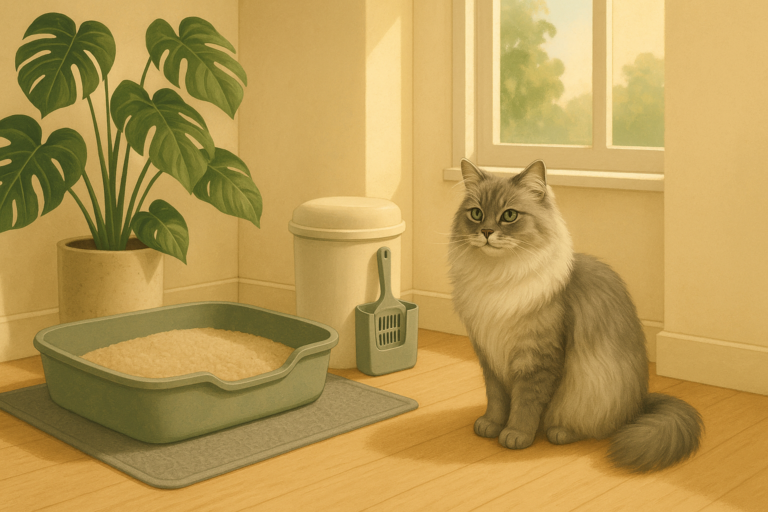
Where and how you serve food matters as much as what is in the bowl. Bowl shape is a real factor: a deep, narrow bowl presses on a cat’s whiskers while she eats and some cats find that unpleasant enough to leave food behind or paw it onto the floor. A shallow, wide dish or a flat plate solves it. Placement matters too. Food bowls do best in a quiet, low-traffic spot where the cat can eat without feeling watched or cornered, away from the litter box and a little apart from the water bowl. In a multi-cat home, cats often do not want to eat shoulder to shoulder and one cat may be quietly guarding the feeding area; separate stations in separate locations can resolve what looks like pickiness in the cat being edged out. A cat who begs and then refuses is often reacting to something in the setting rather than the food.
The routine that fixes most picky eaters
For a healthy cat, the single most effective change is moving from all-day grazing to scheduled meals. Two or three set meals a day, each picked up after 20 to 30 minutes, rebuilds genuine hunger and gives you a clear read on appetite, which makes a real problem visible sooner. Cornell’s guidance favors structured, portioned feeding over unlimited access for most cats.4
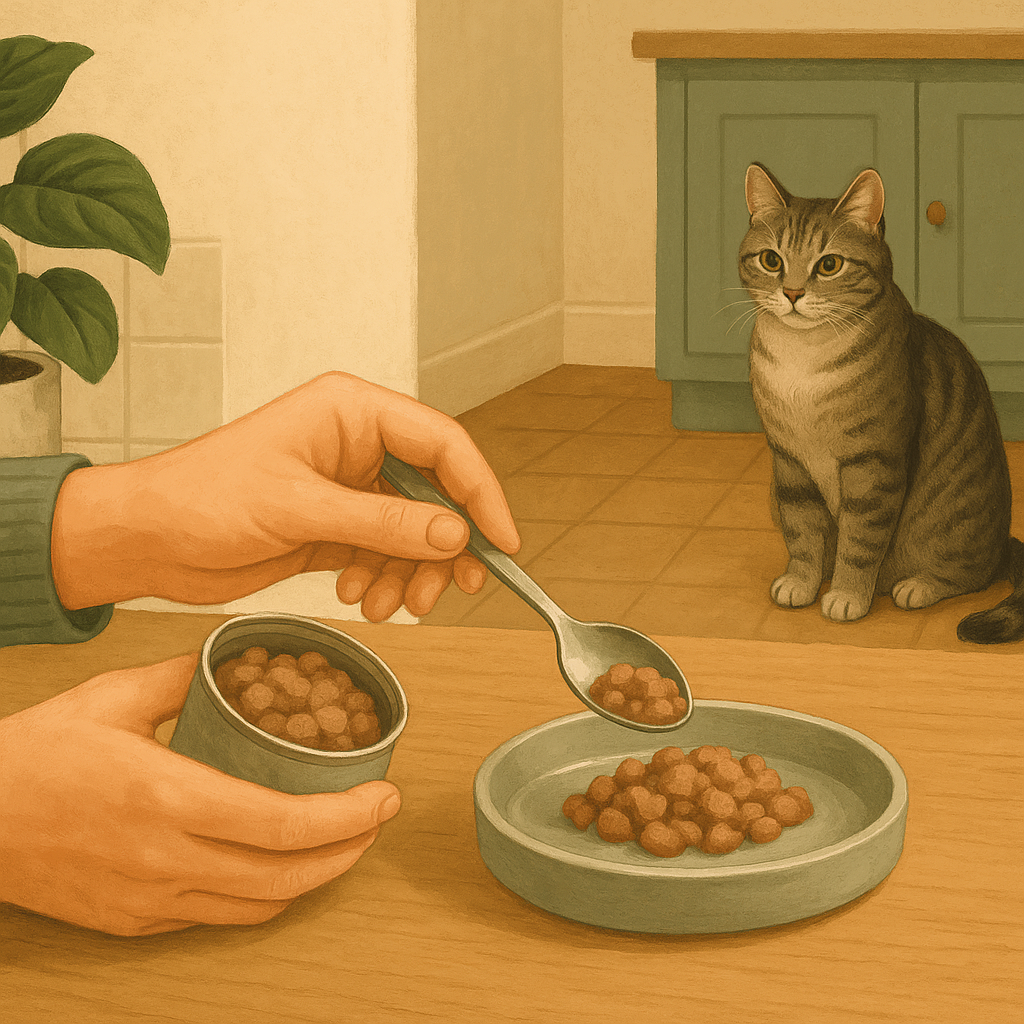
From there, the rest is small and consistent. Serve fresh, modest portions rather than a large bowl that sits and goes stale. Warm wet food to about body temperature, or at least serve it at room temperature. When you change foods, go slowly: start with mostly the current food and a little of the new, shift the ratio every few days and aim to have the new food fully in place by day 7 to 14, longer for a stubborn cat.1 Keep the feeding spot calm and consistent. And resist the parade: if a healthy cat turns down a meal, pick it up and offer the same food at the next scheduled meal rather than immediately producing an alternative. What you do not do is withhold food for long stretches to force the issue. The Digestion pillar covers the broader feeding setup, but the goal here is simple: a hungry, relaxed cat at a predictable mealtime, not a standoff.
When picky eating is a vet visit
Some signs mean you stop adjusting the menu and make a call:
- Your cat eats little or nothing for 24 to 48 hours, or refuses food entirely3
- Eating drops alongside weight loss, lethargy, hiding or vomiting2
- Signs of mouth pain: dropping food, chewing on one side, pawing at the mouth, bad breath
- A sudden change in appetite in an older cat, even a subtle one
- Pickiness that keeps narrowing over weeks until very little is accepted
Cornell notes that hepatic lipidosis is, in more than 90 percent of cases, secondary to another underlying problem.3 That is another way of saying a cat going off food is usually the visible edge of something else and earlier is always easier to treat.
The bottom line
Most picky eating in indoor cats is not a cat being difficult. It is a healthy cat responding to a setup that drifted: grazing all day, food served cold or stale, the wrong bowl in the wrong place, the same menu for a year. Fix the setup first. Scheduled meals, fresh modest portions, food near body temperature, a calm spot and a slow hand with any change will resolve the large majority of cases. The exception is the cat whose appetite itself has dropped. That cat is not picky, and the clock matters: a day or two of a cat eating almost nothing is a reason to call your vet, not a phase to wait out.