Can a dental problem make my cat picky? How a sore mouth hides as fussy eating
One of the most useful things I learned working the intake desk at a small-animal clinic is that “my cat has gotten so picky” is often the opening line of a dental story. The owner means it as a food complaint. They’ve switched brands twice, bought the expensive pâté, tried warming it. The cat still comes to the bowl, sniffs, takes a bite or two and backs off. What they’re describing isn’t a fussy palate. It’s a cat eating around a sore spot in her mouth.
So yes, a dental problem can absolutely make a cat look picky. It’s one of the most common reasons a previously easy eater turns choosy, and it’s easy to miss because cats are quietly stoic about mouth pain. Before you decide your cat is simply being difficult, it’s worth ruling out her teeth.
The short answer
- Dental disease is common. Studies report that between 50 and 90 percent of cats over four years old have some form of it.1
- A cat with mouth pain usually still wants to eat. It just hurts, so the eating looks selective rather than absent.
- Tell-tale signs: dropping food, chewing on one side, a new preference for soft food, pawing at the mouth, drool and bad breath.12
- This is not a home fix. A sore mouth needs a veterinary exam, usually with dental x-rays under anesthesia.2
- Left alone, dental pain can build until a cat stops eating altogether, and a cat who stops eating is an emergency.3
If you stop reading here, the takeaway is simple: sudden pickiness in a cat who used to eat well earns a look in the mouth, and that look belongs to a vet. The rest is how to tell pain apart from preference, and what’s going on under the gumline.
Why a sore mouth looks like pickiness
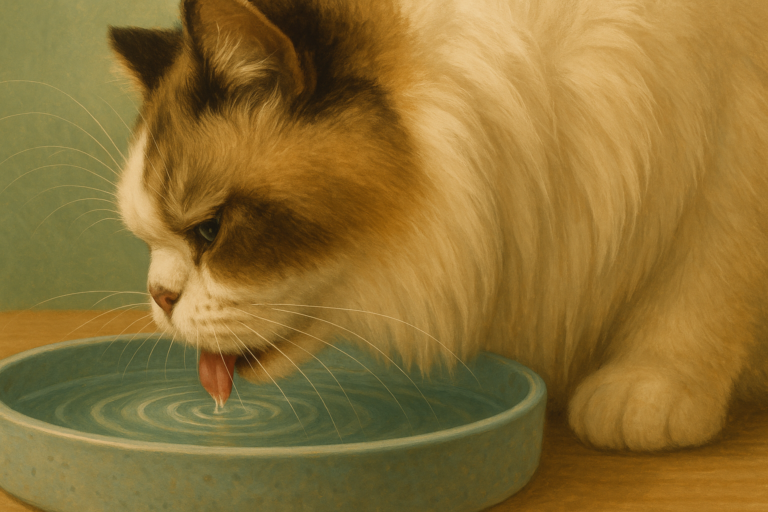
Here’s the pattern I saw over and over. A cat with dental pain is hungry. Her body still wants food, so she shows up at the bowl and starts to eat. Then a bite hits the wrong tooth, and she stops. Cornell’s Feline Health Center describes the same cluster of signs: cats with gum or tooth disease may be hesitant to eat, may turn their heads to one side while chewing, may drool or develop bad breath, and some show a clear new preference for soft food over dry.1 From the kitchen floor, that reads as a cat rejecting the food. From inside her mouth, it’s a cat avoiding pain.
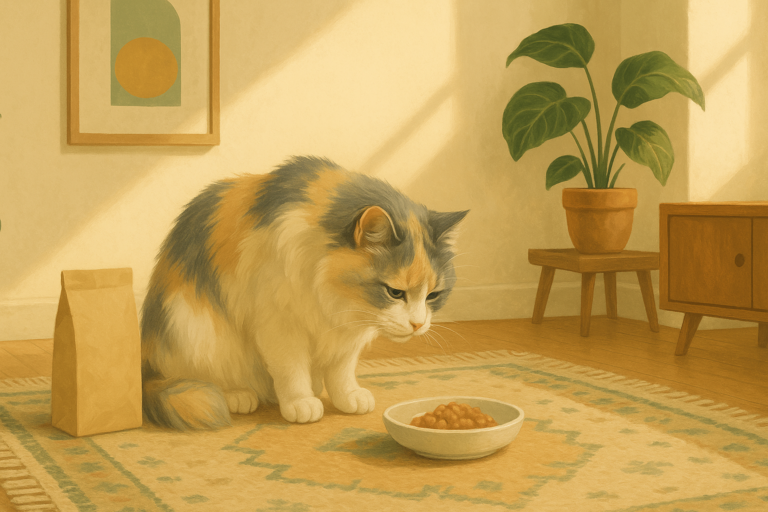
Dry food is where it usually shows first. Kibble takes real crunching, and a cat with a painful tooth will often go off her crunchy food while still lapping up wet food or licking gravy.2 Owners sometimes read that as the cat “deciding” she only likes wet food now. The truth is closer to a person with a cracked molar choosing soup. The preference is real, but pain is writing the menu.
What’s actually going on in there
Three problems account for most feline mouth pain, and all three are common. Gingivitis is inflamed gums, red and swollen and tender, driven by plaque building up along the gumline.1 Left unchecked it can progress to periodontitis, where the structures anchoring the tooth break down, which is painful and, past a certain point, irreversible.1 The third is tooth resorption, where the tooth essentially erodes from the inside out. It’s the single most common cause of tooth loss in cats, affecting somewhere between 30 and 70 percent of them, and it can be intensely painful.1
You can’t tell which of these your cat has by looking, and often you can’t see anything at all. A resorptive lesion can sit below the gumline where no amount of squinting will find it. That’s why the clinic answer is always the same: a real diagnosis takes a sedated oral exam and dental x-rays, because the part of the tooth that hurts is usually the part you can’t see.1
Why indoor cats slip through the cracks
Cats are built to hide pain. In the wild a visibly hurting animal is a target, and that instinct doesn’t switch off in a sunny apartment. The VCA’s clinicians put it plainly: in many cases a cat in dental pain shows no outward sign at all, and the problem only turns up when a vet presses a probe around the tooth root.2 So the “picky” phase is often the only warning you get, which makes it worth taking seriously rather than waving off.
Indoor life adds a quiet twist. An indoor cat does most of her eating where you can watch, which is the good news, but she also tends to graze on dry food left out all day, and a slow drift away from the bowl is easy to chalk up to boredom or fussiness. You’re her early-warning system. If you notice she’s started eating like she’s negotiating with the kibble, that observation is worth more than you’d think.
How to tell pain apart from preference
True pickiness, the flavor-and-texture kind, tends to be consistent and calm. The cat turns her nose up before she eats, walks off without drama and is perfectly happy the moment you serve something she likes. Dental pain looks different. The cat wants the food, approaches it, then reacts: she drops pieces mid-chew, tilts her head to keep food on one side, chews more slowly than she used to, paws at her mouth or flinches when you touch her face.2 Add drool or genuinely bad breath, and you’ve moved well out of picky-eater territory.1
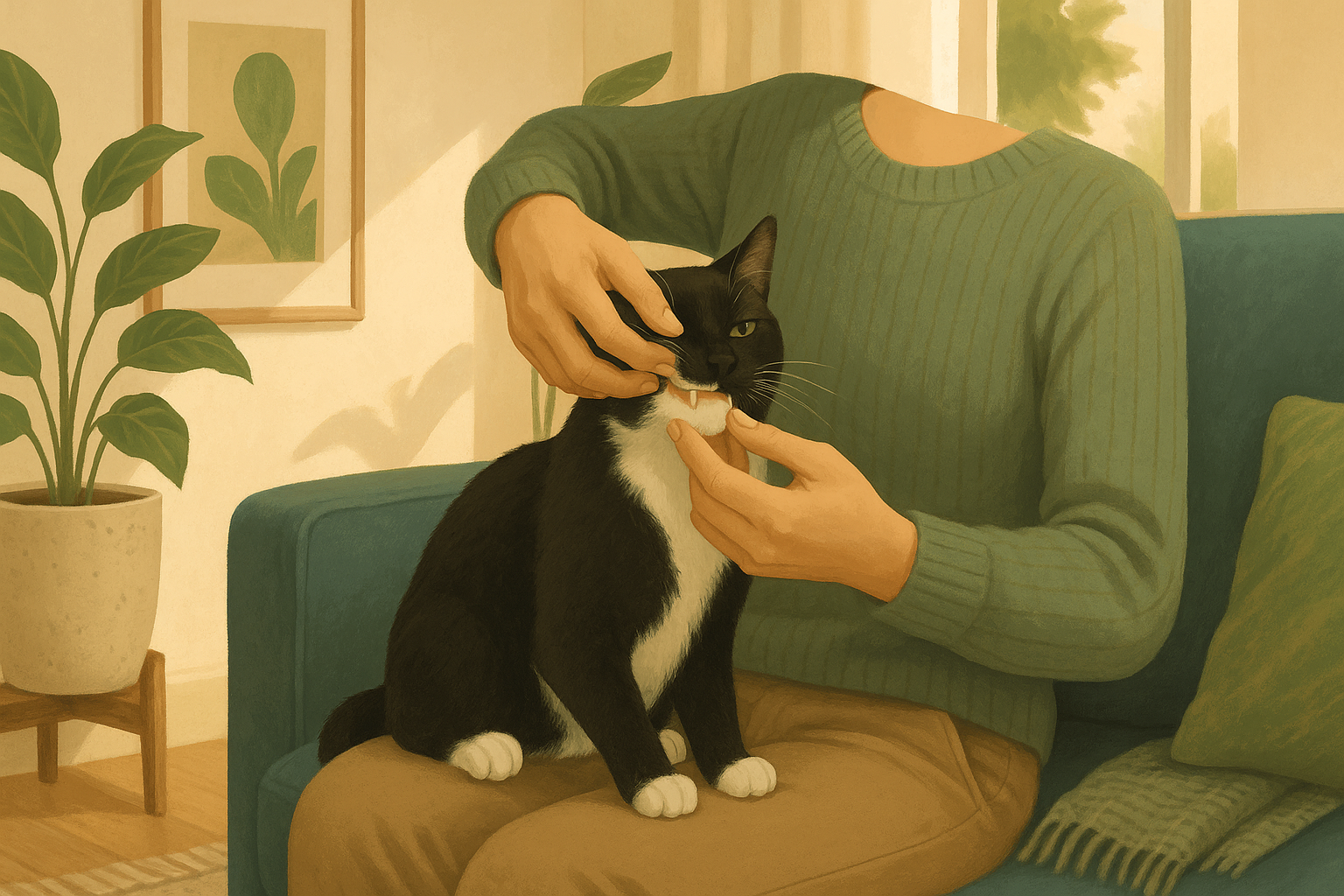
A gentle home check helps you describe what you’re seeing, though it won’t give you a diagnosis. With a calm cat on your lap, lift the lip and look along the gumline for redness, swelling or a tooth that looks pink at its base where it meets the gum. Watch her reaction more than the teeth. If she pulls away sharply or you catch a whiff of something foul, that’s information to bring to your vet. If she won’t tolerate it at all, don’t force it, just note that too.
What actually helps
The honest answer is that the fix lives at the clinic, not the kitchen. The only thing that resolves dental pain is treating the underlying disease, and pain medication alone only delays the same conversation.2 For most cats that means a comprehensive oral exam and cleaning under anesthesia, with x-rays to see below the gums and removal of any teeth that are too far gone. Cats who have painful teeth taken out often eat better afterward, not worse, because the thing that was hurting is finally gone.
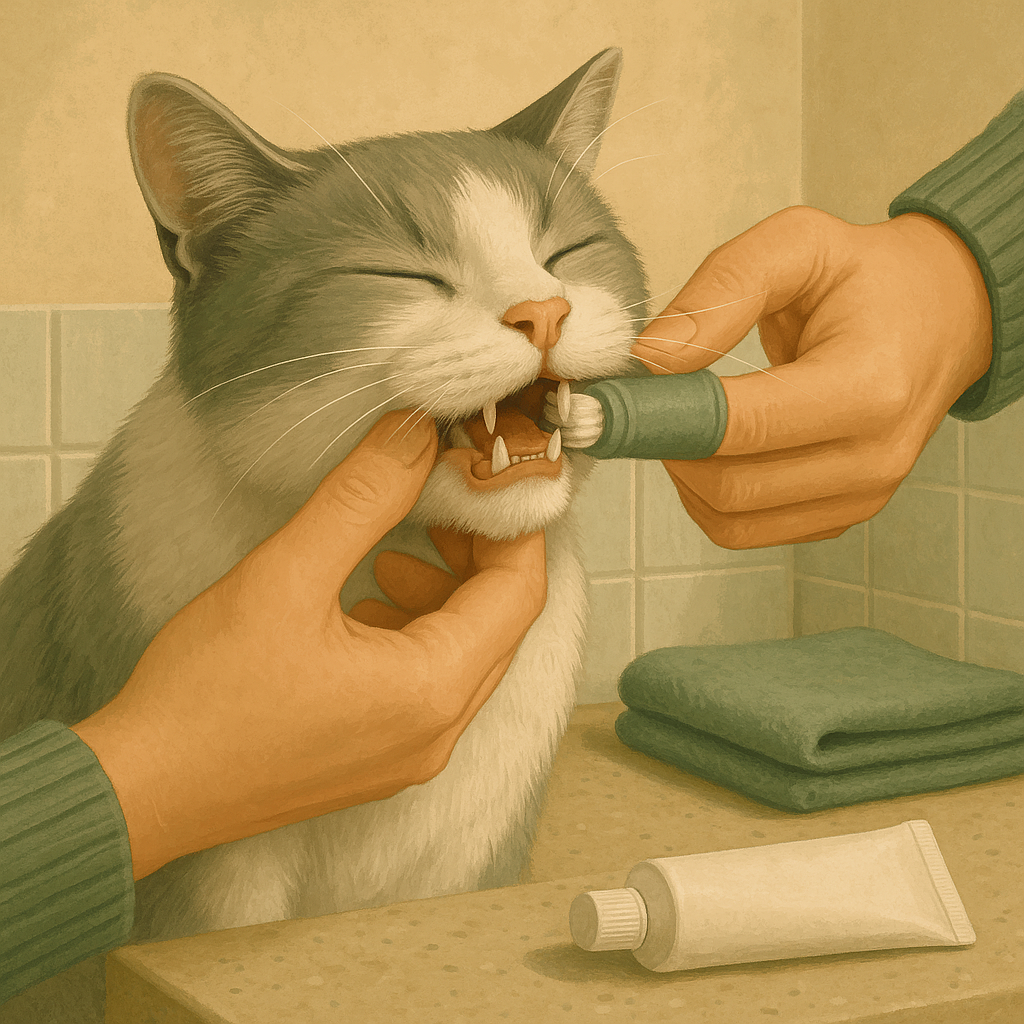
Switching to wet food can make a hurting cat more comfortable in the short term, and there’s nothing wrong with offering it while you wait for an appointment. Just don’t let it become the whole plan. Soft food makes the pain easier to live with, which means it can mask a problem that’s quietly getting worse. Prevention is the part you genuinely own: the most effective thing you can do is brush your cat’s teeth, ideally daily, using toothpaste made for cats, since human toothpaste isn’t safe for them.1 Pair that with regular veterinary dental checks and you catch trouble while it’s still small.2 If your cat won’t tolerate a brush, ask your vet about rinses, dental diets or other options rather than giving up on the idea entirely.
If the mouth checks out clean and your cat is still fussy, then you’re likely dealing with genuine picky eating, and that’s a different playbook. Our guide to the picky eater walks through the food and feeding side, and if the change was sudden and severe rather than gradual, read what to do when a cat suddenly won’t eat.
When to talk to your vet
Book an exam if a cat who used to eat normally has turned choosy and you’re seeing any of the mouth signs: dropping food, chewing on one side, pawing at the face, drool or a new sour smell on her breath. None of that is something to manage with a different food. It’s a body problem that needs a look in the mouth. Treat it as more urgent if your cat has cut her eating way back or stopped, especially if she’s overweight, because a cat who goes a couple of days with little or no food can develop hepatic lipidosis, a serious and sometimes fatal liver condition.3 When in doubt, the phone call is cheap and the peace of mind is worth it.