How to get a picky cat to eat new food (without a week-long standoff)
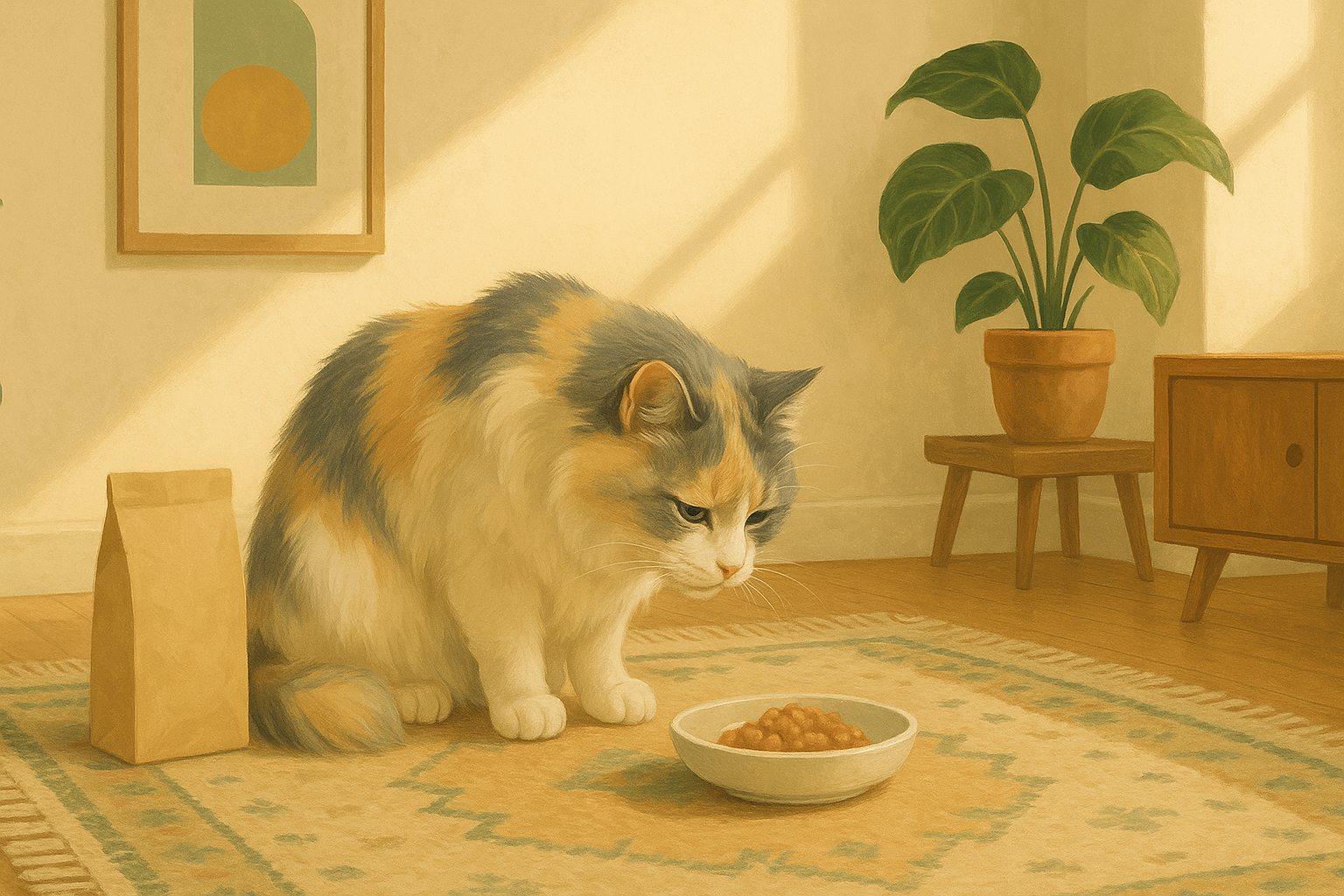
At the clinic intake desk, the food question I heard most often started the same way: “She loved her food for years, I bought the new bag the vet suggested and now she acts like I’m trying to poison her.” The cat isn’t being dramatic, and she isn’t broken. A cat who turns her nose up at an unfamiliar food is running an old safety program: be suspicious of anything new you’re about to swallow. Work with that instinct instead of against it and most cats come around.
The short version:
- Switch slowly. Plan on 7 to 10 days, and longer for a truly stubborn cat.1
- Start with mostly the current food and a small amount of the new one mixed in, then raise the new-food share every couple of days.
- Don’t put the old food out in a second bowl as a free option. A cat who can hold out for the familiar food will.
- Warm wet food to about body temperature and serve small fresh portions so it smells like something worth eating.
- Never try to starve a cat into a new food. If she refuses everything for 24 to 48 hours, that’s a vet call, not a contest of wills.3
Why a new food reads as “not food”
Cats settle their food preferences early and hold them tightly. Kittens learn what counts as a meal from their mother and from the flavors and textures they meet in their first year, and the cats that grew up on a single diet tend to stay the most suspicious of anything unfamiliar later on.2 A new kibble shape, a different texture, an unfamiliar smell: any one of those can be enough for a cat to decide the bowl in front of her doesn’t contain food at all. None of this is spite. It’s caution wired in over thousands of years, and the cats who are pickiest about the new bag are often the ones who were offered the least variety as kittens.
There’s a flip side worth knowing. The same research describes a monotony effect: a flavor a cat has eaten a lot of lately loses some of its appeal, which nudges her toward something with a different smell or texture.2 So a cat can be neophobic about a brand-new food and bored of her current one at the same time. That sounds like a contradiction, but it’s really the lever you’ll use. The goal isn’t to win an argument with her instincts. It’s to make the new food familiar enough to clear the suspicion bar.
The slow-bridge method
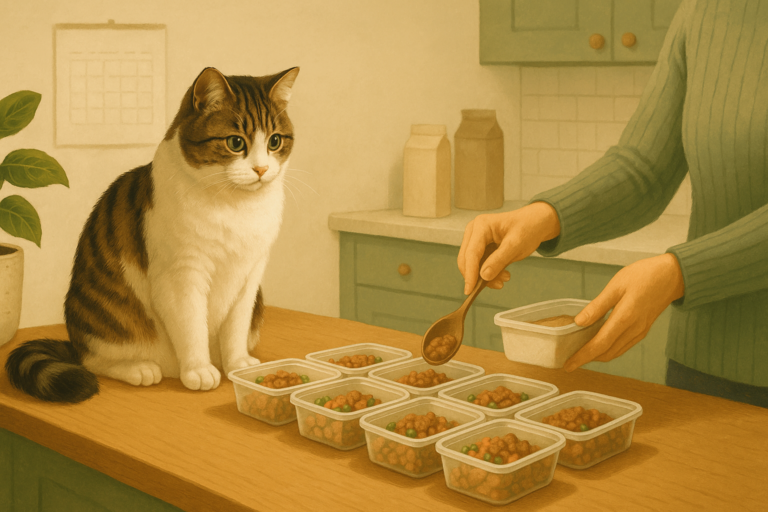
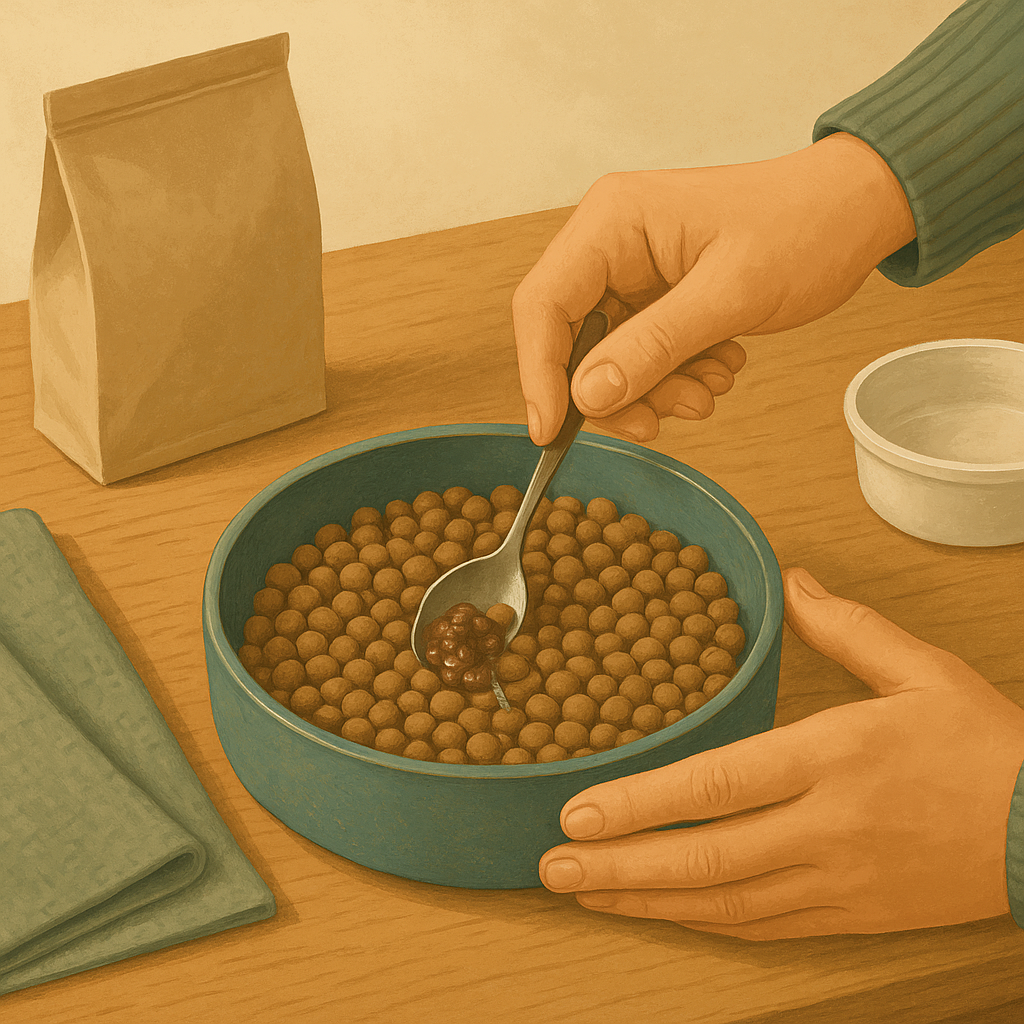
The reliable way to change a cat’s food is gradual mixing, not a clean swap. Start with a bowl that’s roughly 90 percent her current food and 10 percent the new one stirred through. Every couple of days, shift the ratio a little further: 75/25, then half and half, then 25/75, then all new food. Spreading it across a week to ten days does two things at once. It lets the new smell and taste become ordinary, and it protects the gut from the upset that a sudden change can cause.1
If your cat stalls at one ratio, hold there for a few extra days rather than pushing past her. A stall isn’t failure, it’s information. With the cats I saw who were genuinely set in their ways, the owners who succeeded were almost always the ones who slowed down at the sticking point instead of forcing the next step. For a stubborn case, stretching the transition over two or three weeks is completely reasonable.
Small levers that tip the balance
A few details make the new food easier to accept, because cats decide whether to eat largely on smell and texture before a single bite.2 Warm wet food to about body temperature so it releases more aroma. Serve small, fresh portions rather than a bowl that sits out and dries into a skin. Keep the feeding spot calm and consistent, away from the litter box and foot traffic. And change one thing at a time. Switching brand and format together, dry to wet plus a new protein all at once, is one change too many, so if you’re also rethinking the format itself, our wet-versus-dry comparison is the place to start that part.
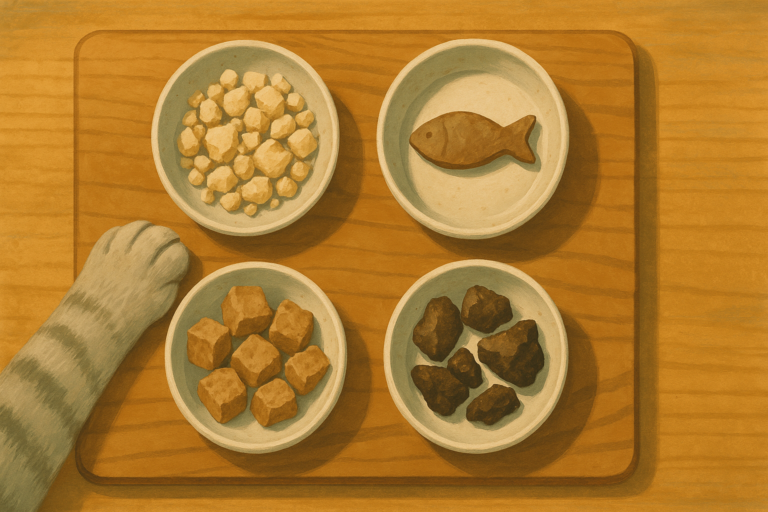
A topper can do real work here too. A light scatter of something aromatic over the transitional bowl, a freeze-dried meat crumble for instance, can carry a hesitant cat across the gap by making the new food smell like a treat. Our guide to freeze-dried toppers covers how to use one without it becoming the only thing she’ll eat. The one rule that doesn’t bend: don’t leave the old food out as a separate, always-available bowl. Given a familiar option next to an unfamiliar one, a cat will simply wait you out.
What not to do
The biggest mistake is treating the standoff as a battle of discipline. Withholding food to force a cat onto a new diet is dangerous, not firm. A cat who eats almost nothing for a day or two can tip into a serious liver condition, which is the whole reason the slow approach exists.3 Skip the cold turkey switch, skip the two-bowl free choice and don’t read every refusal as a demand for something fancier. Upgrading to a richer food on each rejection just teaches her that holding out gets results, and you end up with a cat who has trained you instead. Our picky-eater guide digs into that loop and how to step out of it.
When to call the vet
Resistance to a new food is usually a behavior problem, not a medical one. But a few signs mean the bowl isn’t the real issue, and they’re worth acting on:
- Your cat refuses all food, new and old, for 24 to 48 hours
- A food change is followed by vomiting or diarrhea that lasts more than a day
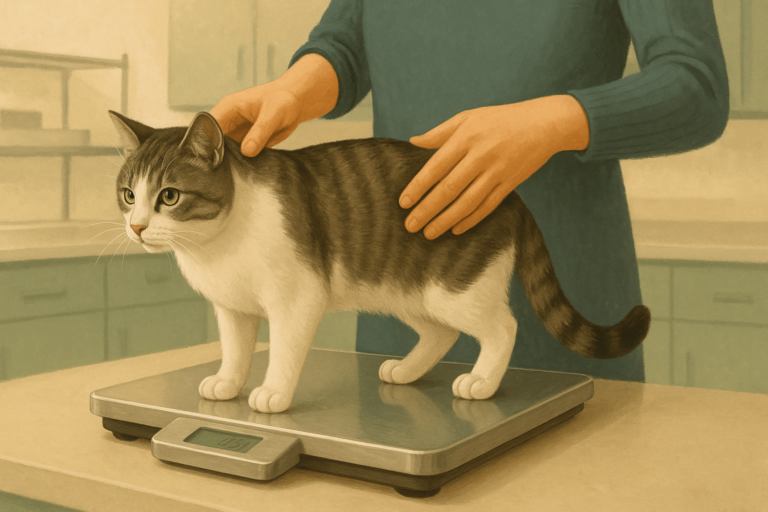
- You see weight loss alongside the ongoing refusal
- She seems unwell rather than just unconvinced: hiding, drooling, low energy
A cat who has gone off everything, not only the new food, may be telling you something a slower transition can’t fix. When the refusal looks sudden and total, our piece on a cat who suddenly won’t eat walks through what to check and how fast to move.
For a feeding plan matched to your cat’s particular eating style, take our free picky-eater quiz.