Furminator vs DakPets vs Hertzko deshedding: which tool fits your cat?
The deshedding questions came in two flavors at the clinic intake desk. One owner would be holding a fistful of loose fur they’d just combed off the couch, sure their cat was shedding more than any animal alive. The next would have a long-haired cat with a tight mat behind the ear that no brush would touch. They’d usually arrive having already bought a tool, or about to, and the three names that came up most were the FURminator, the DakPets deshedder and Hertzko. Here’s the thing most buyers miss: those three aren’t all the same kind of tool. The FURminator wins when you want the most refined deshedder money buys. DakPets wins when you want the same result for less. Hertzko isn’t competing with either one: it solves a different problem, mats, not shedding.
As Amazon Associates we earn from qualifying purchases. Some links in this post are affiliate links; if you buy through them, we earn a small commission at no extra cost to you. We only recommend products we’ve used or researched thoroughly. See our full disclosure.
How the three compare at a glance
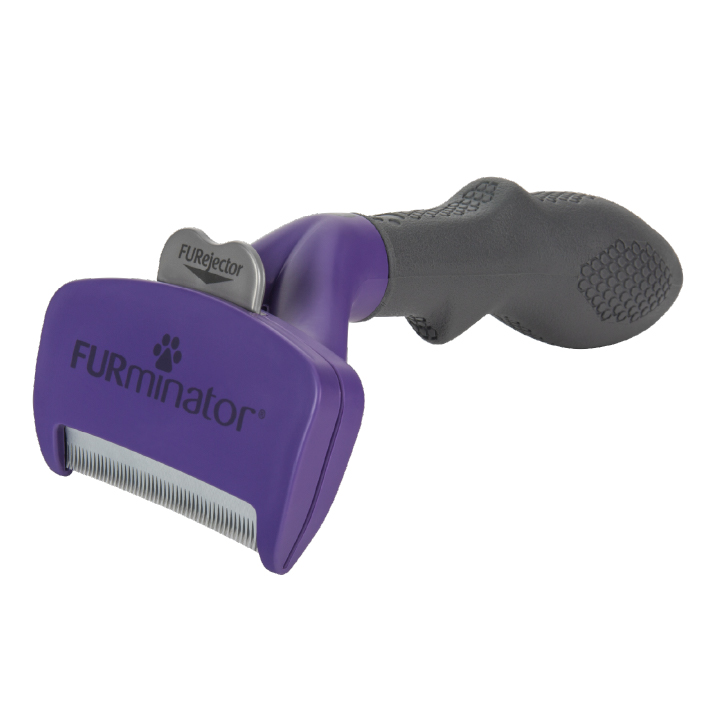
Stainless deshedding edge · loose undercoat · the original
- ✓ Stainless edge reaches loose undercoat without cutting the topcoat
- ✓ Skin-guard rounds off the ends to limit digging in
- ✓ FURejector button pops the trapped fur off the teeth
- ✓ Premium tier, sized for medium and large cats
on Amazon
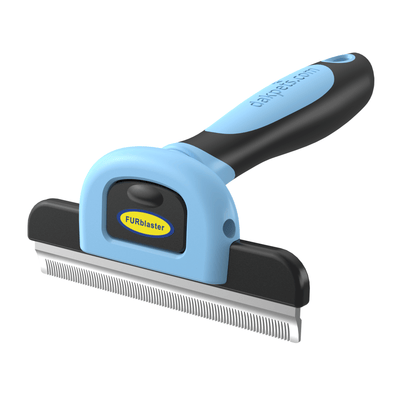
Same blade idea · lower price · detachable head
- ✓ 4-inch stainless edge, works the same loose-undercoat job
- ✓ Quick-release button detaches the comb for tight spots
- ✓ Ships with a protective blade cover
- ✓ Budget-friendly, handles short and long coats
on Amazon
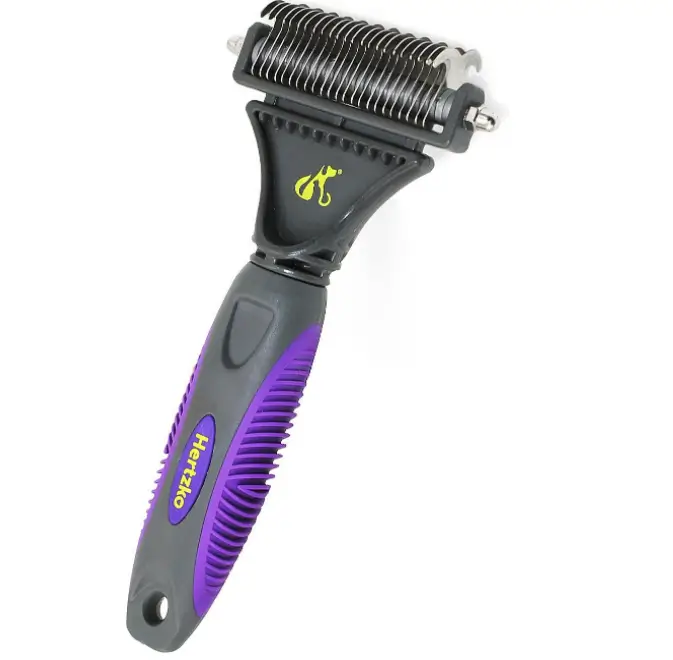
Double-sided rake · mats and knots · a different job
- ✓ Curved stainless blades cut through mats and tangles
- ✓ Two sides: fewer teeth for mats, denser for thinning
- ✓ Rounded tips meant to spare the skin underneath
- ✓ Best for long coats that knot, not routine shedding
on Amazon
| FURminator | DakPets | Hertzko | |
|---|---|---|---|
| Tool type | Deshedding blade (loose undercoat) | Deshedding blade (loose undercoat) | Dematting rake (mats and tangles) |
| How it works | Stainless edge slips past the topcoat and pulls loose undercoat free | Same stainless-edge approach, on a detachable head | Curved blades cut into a knot and split it apart |
| Extra features | Skin guard, FURejector eject button | Quick-release head, blade cover included | Two sides: wider teeth for mats, denser for thinning |
| Typical price | High-$20s to mid-$30s at Chewy and Petco | Under $15 at Chewy and Walmart | Roughly $20 to $29 at Walmart and Chewy, depending on the model |
| Best fit | A weekly groomer who wants the most refined deshedder | The same deshedding result on a tighter budget | A long-haired cat that mats behind the ears or on the belly |
The short version
- Two tools, two jobs. The FURminator and the DakPets are deshedding blades. They lift loose dead undercoat. The Hertzko is a dematting rake. It breaks apart mats and knots. Buy for the problem you have.
- FURminator is the original and the most refined. A stainless edge that reaches the undercoat, a skin guard and a button that ejects the caught fur.
- DakPets does the same deshedding job for less. Near-identical blade, a detachable head and a blade cover, at well under half the price.
- Hertzko is the answer to a mat, not to shedding. If your long-haired cat forms knots behind the ears or on the belly, its dematting blades cut where a deshedder skips. For everyday loose hair, it’s the wrong tool.
- The health payoff is real either way. Removing loose hair before your cat swallows it means fewer hairballs, a point Cornell makes plainly. [1]
- Go gentle. These are sharp tools. Short sessions, light pressure and never on bare or broken skin.
In this guide
Deshedding and dematting aren’t the same thing · FURminator: the one to beat · DakPets: the same job, a smaller bill · Hertzko: right for mats, wrong for shedding · How to use any of them without a fight · Which one fits your cat · How I compared them · Common questions · When to talk to your vet
First, deshedding and dematting are not the same thing
This is the distinction that decides your purchase, so it’s worth thirty seconds. A cat’s coat has two layers: a coarse topcoat you see and a soft undercoat underneath. Shedding is mostly the undercoat letting go of dead hair. A deshedding tool like the FURminator or the DakPets has a fine-toothed stainless edge that slips past the topcoat, catches that loose undercoat and pulls it free without cutting the hairs that are still healthy. A mat is different. It’s a dense tangle of hair that has already knotted and felted close to the skin, and no deshedding blade will glide through it. That’s what a dematting tool is for. The Hertzko has curved blades with gaps between them that slice into the knot and split it apart strand by strand. Use a deshedder on a mat and you’ll drag at the knot and hurt your cat. Use a dematting rake for daily loose hair and it’s clumsy overkill. Same aisle, two different problems.
Why does any of this matter beyond a tidier couch? Because the hair your cat sheds doesn’t all land on the furniture. A lot of it ends up swallowed. As a cat grooms, the backward-facing barbs on her tongue sweep loose hair down her throat, and that hair collects in the stomach as a hairball. [1] Long-haired cats are at the most risk, and the standard advice from Cornell is unfussy: brush and comb daily to pull that hair out before she eats it. [2] A deshedding tool is the most efficient way to do that for a cat who sheds heavily, so this isn’t only cosmetic. The right tool, used regularly, is a small piece of preventive care.
FURminator: the one to beat
The FURminator is the tool that made this category, and the engineering still shows. The stainless deshedding edge is designed to reach through the topcoat and grab the loose undercoat without nicking the healthy hair or the skin when you use it as directed. Two details set it apart from the copies. The skin guard is a small molded piece that keeps the teeth from digging in at the edges, which matters on a wriggly cat in an apartment where you’ve got one shot before she’s done. And the FURejector button slides the caught fur straight off the teeth, so you’re not picking a felted clump out of the blade every thirty seconds. The brand’s own claim is that regular use removes loose hair up to about ninety percent. [3] Treat round numbers from any manufacturer with a pinch of salt, but the practical experience matches the spirit: a heavy shedder produces a startling pile of undercoat the first few sessions, then noticeably less around the house. The medium-and-large size suits most adult cats. If you’ve got a petite cat, the smaller version is the better fit.
DakPets: the same job, a smaller bill
The DakPets is the budget-friendly answer to a simple question: do you need to pay the premium for the deshedding effect? Mostly, no. It uses the same kind of 4-inch stainless edge, works the same way (light strokes in the direction the coat grows, lifting dead undercoat and leaving the topcoat alone) and produces a similar pile of loose hair. It adds a couple of nice touches. The head detaches at the press of a button, so you can pop the comb off and work a tricky spot like the base of the tail by hand, and it ships with a protective cover so the blade isn’t loose in a drawer with the sharp side up. Where the FURminator pulls ahead is in the refinements: the skin guard and the fur-ejector are genuinely better, and over years of use the build quality tells. But for an owner who shed-grooms once or twice a week and wants the result without the price, the DakPets gets you most of the way for a fraction of the outlay. It’s the value pick, not a compromise on the core function.
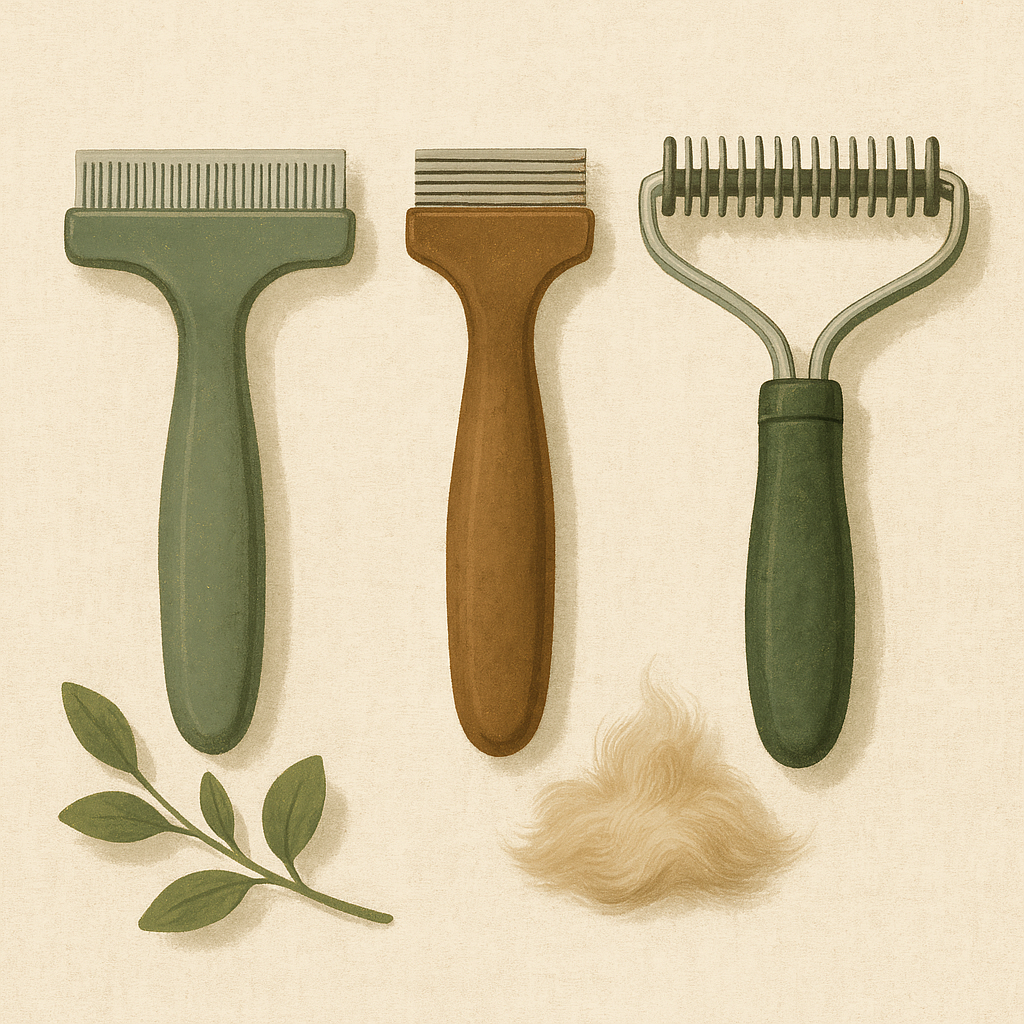
Hertzko: the right tool for a mat, the wrong one for shedding
The Hertzko in this lineup is a dematting comb, and that’s a feature, not a mismatch, as long as you know what you’re buying. It’s a double-sided rake with curved stainless blades. One side has fewer, wider-set teeth for the stubborn mats, the other has denser teeth for thinning and a lighter pass. The tips are rounded to spare the skin while the blades themselves do the cutting through the knot. For the long-haired indoor cat who develops felted clumps behind the ears, in the armpits or along the belly, this is the tool that earns its place. A word of honesty from watching owners use these: a dematting rake can tug if you rush it. The blades work by cutting into the mat, so if you yank rather than tease, you pull on skin that’s already tight under the knot, and that’s painful. Hold the base of the mat with your fingers between the skin and the comb, work the edge of the tangle in small strokes, and stop if your cat tenses. For routine shedding, skip it and reach for a deshedder. For mats, nothing in this trio comes close.
How to use any of them without making your cat hate you
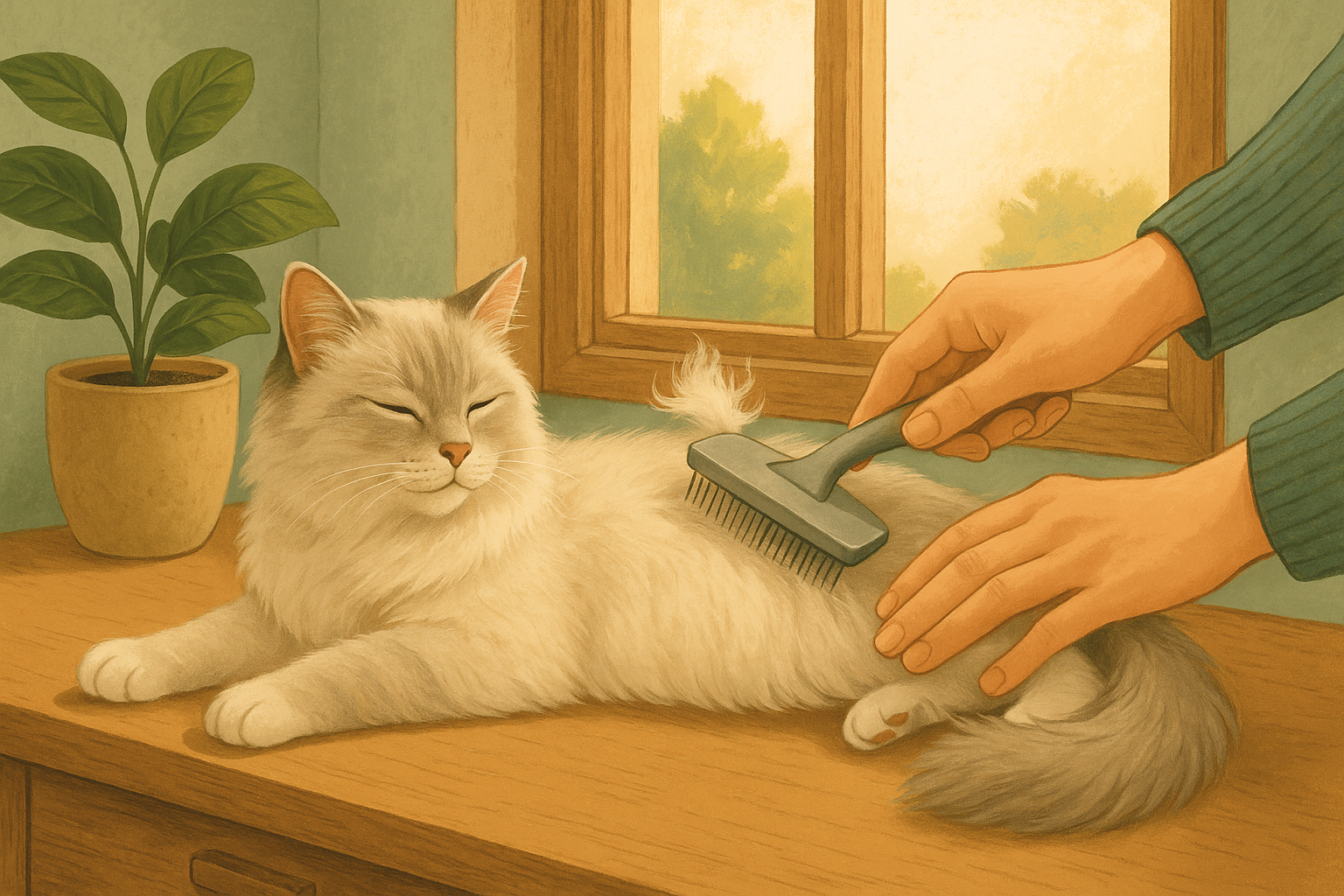
The tool matters less than the technique, and this is where most grooming goes wrong in a small space with a reluctant cat. Keep sessions short, a few minutes, and stop while she’s still tolerating it rather than pushing to the point of a swat. Work in the direction the coat grows, never against it, and use a light hand. These edges are sharp by design, so let the tool do the work instead of bearing down. Stay off the belly and the spine ridge where the coat is thin and the skin is close, and never run any of them over a scab, a sore or bare skin. Older cats need a gentler touch, since their skin is thinner and they often groom themselves less, which is exactly why they mat. [4] A cat who learns that the brush comes with a calm lap and a treat at the end will sit for it. A cat who got dug into once will hide the moment the drawer opens.
Which one fits your cat
Start with the problem, not the brand. If your cat sheds and you want less hair on the sofa and fewer hairballs, you want a deshedding blade, and the choice is FURminator versus DakPets. Buy the FURminator if you want the most refined tool, the skin guard and the eject button, and you don’t mind paying for the original. Buy the DakPets if you want the same deshedding result for less and you’re fine without the extra polish. If your real issue is mats in a long coat, the deshedders won’t fix it and the Hertzko dematting tool is the answer, used slowly and gently. Plenty of long-haired-cat owners end up owning two: a deshedder for the weekly loose-hair pass and a dematting comb for the occasional knot. They’re not rivals so much as different jobs that happen to share a shelf.
How I compared them
This is a researched comparison, not a grooming session I ran side by side myself, so I won’t claim I brushed three cats with three different tools in one afternoon. What I did do is read the manufacturer spec pages for all three, line up how each blade is built and check current pricing across more than one non-Amazon retailer rather than trusting a single listing. Chewy and Petco both price the FURminator‘s medium and large long-hair tool in the high-$20s to mid-$30s range. The DakPets version of the same idea runs well under $15 at both Chewy and Walmart, and that’s the concession worth naming plainly: it uses the same stainless deshedding edge and gets most cats to nearly the same result, so the FURminator‘s extra spend buys refinements, the skin guard and the eject button, that matter over years of use but don’t change what the tool fundamentally does. On the deshedding job itself, the two are functionally tied. Going the other way, the Hertzko carries a real downside neither deshedder does: because its blades cut into a mat rather than sliding past loose hair, using it too fast or on a mat pulled tight to the skin can genuinely hurt a cat, so it demands more patience from the person holding it. I weighed that against years of intake-desk conversations where the mix-up was almost always the same: someone had bought a deshedder for a cat that needed a dematting comb, or the reverse.
Common questions
Can I use a deshedding tool on a cat with mats?
No. A deshedding blade is built to slip past the topcoat and lift loose hair; run it over a mat and you’ll drag on skin that’s already pulled tight underneath. Work mats out with a dematting comb like the Hertzko first, or have a groomer or vet remove tight ones, then keep up with a deshedder for routine hair.
How often should I use these tools?
Weekly is a reasonable baseline for a cat that sheds heavily, more often during a seasonal shed. Cornell’s grooming guidance is to brush and comb long-haired cats regularly enough to stay ahead of hairballs rather than on a strict schedule. [2]
Are these tools safe for kittens or senior cats?
Go gently with both. A kitten’s coat rarely needs a deshedding blade yet, a soft brush is plenty until the adult coat comes in. A senior cat’s skin thins with age, so use lighter pressure, shorter sessions and watch for any spot that looks tender before you brush over it. [4]
When to talk to your vet
A grooming tool is for a healthy coat on a healthy cat. It is not the fix for a skin problem. If your cat is suddenly shedding far more than usual, or you notice bald patches, scabs, redness, flaky skin or a spot she’s grooming raw, that’s a reason to call your vet rather than buy a brush, because those can point to allergies, parasites, a thyroid issue or stress. [4] The same goes for a cat who has stopped grooming herself and is matting all over, which in an older cat can be an early sign that something hurts or that she isn’t feeling well. [4] And if mats are tight to the skin or cover a large area, let a vet or a professional groomer take them off rather than risking a cut at home. A deshedding tool keeps a well cat comfortable. It doesn’t treat one who’s unwell.
The bottom line
- Choose the FURminator if you groom weekly, want the most refined deshedder on the market and don’t mind paying more for the skin guard and eject button.
- Choose DakPets if you want the same deshedding result on a tighter budget and don’t need the extra polish.
- Choose the Hertzko if your cat’s real problem is mats and tangles rather than everyday shedding.
Match the tool to the coat, use it gently and often, and keep an eye on the skin underneath. That’s the whole job.
Sources
More coat & skin guides
- Indoor cat coat and skin: what works, what doesn’t
- The Best Deshedding Brushes for Long-Haired Cats
- Best slicker brushes for long-haired cats: the two real options
- How to groom a Ragdoll cat: coat, mats and the weekly routine
- Why is my cat shedding so much?
- Best waterless cat shampoo: the two real no-rinse options