Instinct Raw Boost vs Blue Buffalo Wilderness: which grain-free kibble for your indoor cat?
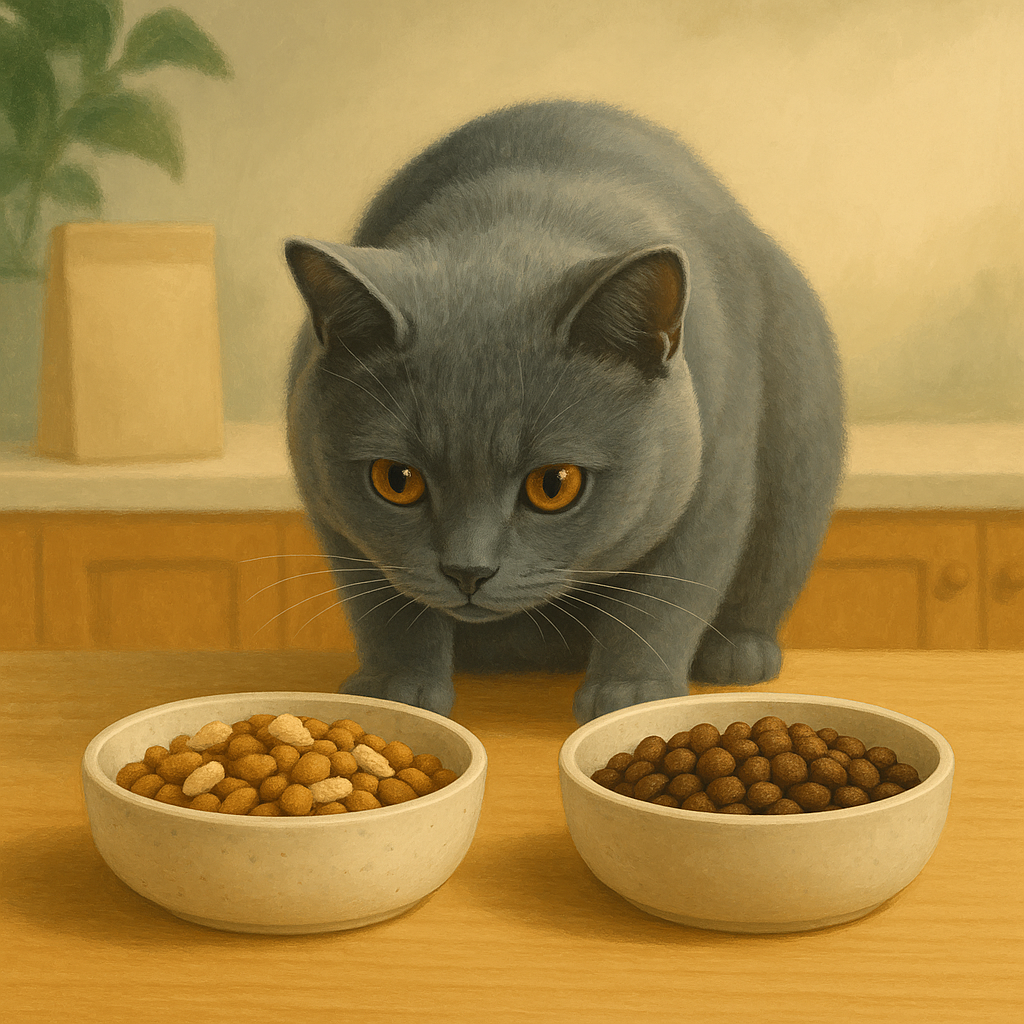
The two grain-free bags people set on the counter and ask me to settle are almost always these: a green Instinct Raw Boost and a brown Blue Buffalo Wilderness. From a few years working intake at a small-animal clinic, I can tell you the question underneath is usually the same one: which of these is worth the premium for an indoor cat? Here’s the short answer. Instinct Raw Boost wins when you want real raw meat in the bowl and don’t mind that it only comes in one bag size. Blue Buffalo Wilderness wins when you’re feeding more than one cat and want a bag big enough that you’re not restocking every week.
As Amazon Associates we earn from qualifying purchases. Some links in this post are affiliate links; if you buy through them, we earn a small commission at no extra cost to you. We only recommend products we’ve used or researched thoroughly. See our full disclosure for details.
How they compare at a glance
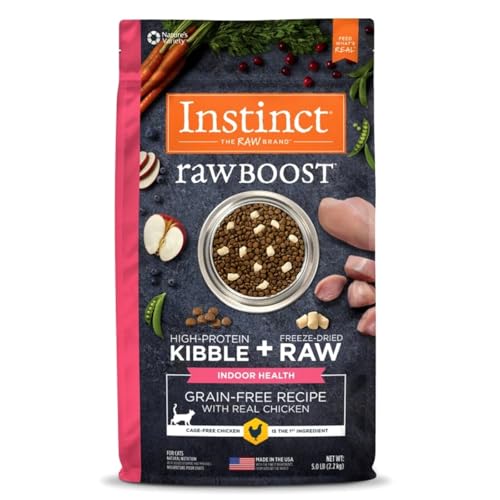
Instinct Raw Boost Indoor Health, Real Chicken
5 lb bag · freeze-dried raw pieces mixed in · all life stages
- ✓ Real freeze-dried raw chicken coated onto the kibble
- ✓ Chicken first, grain-free, no by-product meal
- ✓ Formulated for all life stages, useful in a mixed-age home
- ✓ Only sold in one bag size, so per-pound cost doesn’t drop with volume
on Amazon
Price as of Oct 26, 2026, 9:21 AM EDT. Product prices and availability are accurate as of the date/time indicated and are subject to change.

Blue Buffalo Wilderness Indoor, Chicken
Runs 2 lb up to 15 lb · LifeSource Bits · adult formula
- ✓ Real deboned chicken first, grain-free, no by-product meal
- ✓ High-protein recipe, 38% minimum crude protein
- ✓ Sold in bag sizes up to 15 lb, so cost per pound drops as you buy bigger
- ✓ Widely stocked at major pet retailers
on Amazon
Price as of Oct 26, 2026, 9:21 AM EDT. Product prices and availability are accurate as of the date/time indicated and are subject to change.
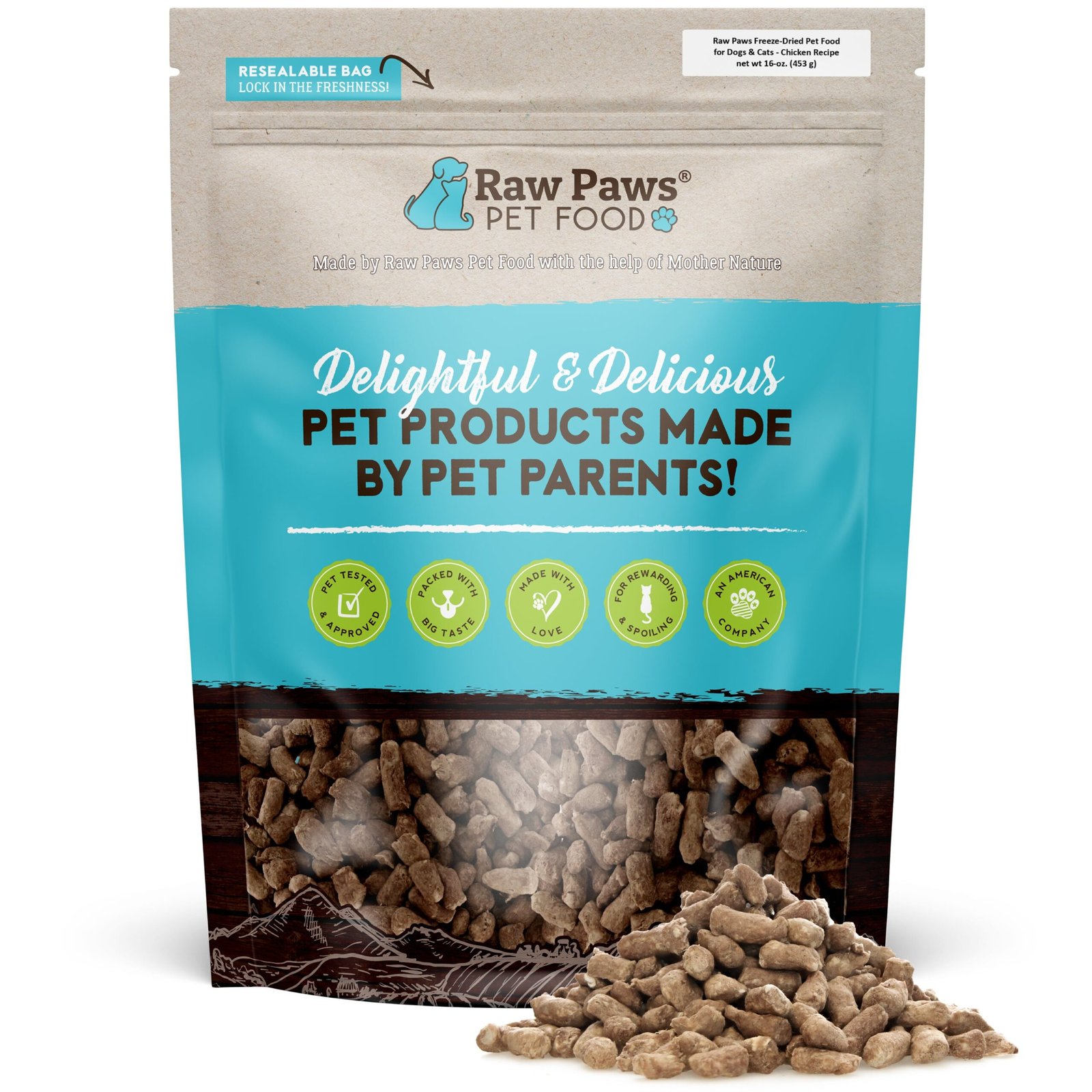
Raw Paws Freeze-Dried Chicken Recipe
16 oz bag · freeze-dried raw · marketed as a stand-alone meal, not just a topper
- ✓ 45% muscle, 45% organ and 10% bone: a whole-prey ratio built as a meal, not a mix-in
- ✓ Grain-free, single named protein, no corn, wheat or soy
- ✓ Rehydrates with warm water for a softer texture, or serves freeze-dried as-is
- ✓ No AAFCO statement of nutritional adequacy on the label, unlike the two bags above
on Raw Paws Pet Food
Price as of Oct 26, 2026, 9:21 AM EDT. Product prices and availability are accurate as of the date/time indicated and are subject to change.
| Instinct Raw Boost Indoor Health | Blue Buffalo Wilderness Indoor | Staff Pick: Freeze-Dried Chicken Recipe | |
|---|---|---|---|
| Formula approach | Kibble coated with real freeze-dried raw chicken, liver and heart | Kibble plus cold-formed LifeSource Bits, a vitamin and antioxidant supplement | 45% muscle, 45% organ, 10% bone freeze-dried raw, marketed as a stand-alone meal |
| Guaranteed protein | 37.5% min crude protein | 38.0% min crude protein | No guaranteed protein % listed; sold on its 45/45/10 muscle-organ-bone ratio instead |
| Price at matched bag size | 5 lb bag runs about $5.38 per pound at current Chewy pricing | 5 lb bag runs about $5.60 per pound at current Chewy pricing | 16 oz bag runs about $2.62 per ounce |
| Bag size range | One size only, 5 lb | 2 lb up to 15 lb, with cost per pound dropping to roughly $3.74 at the largest size | One size, 16 oz |
| Life stage | All life stages | Adult maintenance | All life stages, though it carries no AAFCO statement |
| Best fit | A single cat or mixed-age home, where the raw pieces are the draw | A multi-cat household or anyone who wants to buy in bulk | An owner who wants a genuine third food to rotate in, not just a topper |
The short version
- Both are grain-free, high-protein, chicken-first kibbles. Real chicken leads each label, neither uses corn, wheat, soy or chicken by-product meal, and both come in an indoor formula built for a less active cat. [1]
- The real difference is what each one adds. Instinct coats its kibble with actual freeze-dried raw chicken pieces. Blue Buffalo mixes in its cold-formed LifeSource Bits, a vitamin, mineral and antioxidant supplement, not raw meat. [2][3]
- Price is closer than the old story on this page suggested. At the same 5 lb bag size, Instinct Raw Boost actually runs a little cheaper per pound on Chewy than Blue Buffalo Wilderness.
- Blue Wilderness wins on bulk buying. It’s sold in bags up to 15 lb, so a big household spends less per pound simply by buying a bigger bag, something Instinct‘s single 5 lb size doesn’t allow.
- Both are complete and balanced, so either can be your cat’s only food, as long as you match the recipe to the right life stage. [4]
- For most indoor cats the deciding factors are household size, whether the raw pieces appeal to you and which one your cat actually finishes.
In this guide
Same shelf, two different ideas ·
Ingredients, side by side ·
Protein and life stage ·
Price ·
Which one fits an indoor cat ·
A note on the raw pieces ·
How I compared them ·
Common questions ·
When to talk to your vet
Same shelf, two different ideas
Strip the marketing off both bags and you’re looking at two takes on the same goal: make kibble look more like what a cat would eat in the wild. They just answer it differently. Instinct‘s whole pitch is in the name. The kibble is coated with freeze-dried raw chicken, so every piece carries a little real raw meat on the outside. [2] Blue Buffalo Wilderness goes a different way. Its signature is the LifeSource Bits, the darker pieces scattered through the bag, which Blue describes as a cold-formed blend of antioxidants, vitamins and minerals chosen to support immune health. [3] One brand is adding raw food. The other is adding a fortified supplement. That single distinction drives most of what follows.
Ingredients, side by side
Both labels open the way you want a cat food to open. Instinct Raw Boost Indoor Health leads with chicken, chicken meal and salmon meal, then peas and menhaden fish meal, with freeze-dried chicken, chicken liver and chicken heart worked in for the raw component. It skips grain, potato, corn, wheat and soy, and uses no by-product meal or artificial colors and preservatives. [2] Blue Wilderness Indoor leads with deboned chicken and chicken meal, then pea protein, peas and tapioca starch, with dried egg and fish meal adding protein and omega-3s. It carries the same set of exclusions: no by-product meals, corn, wheat, soy or artificial flavors and preservatives. [3]
The honest read is that these are close cousins on the ingredient panel. Both rely on peas or pea protein as the plant-based backbone that replaces grain, which is normal for grain-free kibble. The meaningful gap is at the front: Instinct‘s freeze-dried raw chicken pieces are real raw muscle and organ, while Blue‘s standout pieces are a supplement bit. If more real animal food in the bowl is your priority, Instinct edges it. If you mostly want a clean grain-free label without the raw angle, Blue holds its own.
Protein and life stage
Both are genuinely high-protein foods, which suits cats well. Cats are obligate carnivores, meaning they depend on nutrients like taurine, preformed vitamin A and certain fatty acids that come from animal tissue, so an animal-protein-first recipe is a sensible starting point. [1] Blue Wilderness Indoor lists a guaranteed minimum of 38% crude protein. Instinct Raw Boost lists 37.5% minimum, effectively a tie once you account for normal variation between guaranteed-analysis panels. Neither is going to leave a healthy cat short on protein.
Check the life stage on the bag before you buy. Instinct’s Raw Boost Indoor Health chicken recipe is formulated for all life stages, so it works in a mixed-age home or for a growing cat. Blue Wilderness Indoor is an adult maintenance formula. The AAFCO statement on the back of each bag tells you exactly which life stage it’s for, and matching that to your cat matters more than any front-of-bag claim. [4] If you’ve got a kitten or a multi-cat household sharing one bowl, that line decides it.
Price
This page used to say Blue Wilderness was the friendlier price. Checking current listings at Chewy showed that isn’t quite right at matched bag sizes. A 5 lb bag of Instinct Raw Boost Indoor Health runs about $5.38 a pound, while the 5 lb bag of Blue Wilderness Indoor runs about $5.60 a pound, a small edge to Instinct on the exact same amount of food. Where Blue Buffalo pulls ahead is bag size. It scales up to a 15 lb bag that drops the per-pound cost to roughly $3.74, and even the 11 lb bag lands near $4.09 a pound. Instinct’s Raw Boost Indoor Health chicken recipe is only sold in the one 5 lb size at major retailers, so there’s no equivalent bulk discount to chase. If you’re feeding one cat, the two are close enough that price shouldn’t be the deciding factor. If you’re feeding several, Blue Wilderness‘s bigger bags will save real money over a year.
Which one fits an indoor cat
Indoor cats give you two practical things to weigh. They burn fewer calories than the marketing photos suggest and put on weight more easily, so both brands sell an indoor formula with slightly fewer calories and added fiber to manage weight and stool. Instinct works in prebiotic fiber from chicory root and fructooligosaccharides for digestion and stool odor, which apartment owners notice. [2] Blue Wilderness Indoor leans on its fiber blend and the LifeSource Bits for the same general goal. [3] Either is a reasonable indoor choice on paper. Portion control still does the heavy lifting, so weigh the food and follow the bag rather than free-pouring.
The second thing indoor cats hand you is a hydration gap, since dry food is dry and many indoor cats undershoot the water bowl. Neither kibble fixes that on its own. If your cat lives on dry food, the better long-term move is to get some moisture into the diet, which is a separate project worth reading up on in our guide to moving a kibble cat onto wet food. A high-protein grain-free kibble is a fine base. It just isn’t a substitute for water.
A note on the raw pieces
Because Instinct‘s coating is real raw chicken, it’s worth a quick, honest word on handling. Freeze-drying raw animal protein reduces bacteria but does not reliably sterilize it, and the FDA flags raw and freeze-dried diets as carrying more contamination risk than fully cooked foods. [5] In practice the raw fraction here is small, a coating on kibble rather than a full raw meal, and Instinct tests its raw ingredients, so this is a much lighter caution than feeding a 100% raw diet. Still, basic kitchen hygiene applies: wash your hands and the scoop after contact, store the bag sealed, and take a little more care if anyone in the home is pregnant, very young, elderly or immune-compromised. [5] Blue Wilderness has no raw component, so it doesn’t ask anything of you here beyond storing it like any kibble.
If your cat is the picky one
Sometimes the brand on the bag isn’t really the question. If your cat turns up her nose at both, or eats well for a week and then stalls, the issue is usually less about which premium kibble you chose and more about texture, aroma and routine. That’s a different problem with different fixes, from warming food to rotating proteins to adding a strong-smelling topper. A light scatter of freeze-dried raw is one of the more reliable aroma resets, which is the same logic behind the raw coating on Instinct in the first place. Our roundup of the best freeze-dried toppers walks through that, and our guide to freeze-dried cat food covers the full-raw options if you want to go further than a coated kibble. If you’re not sure what kind of picky eater you’re dealing with, our two-minute picky-eater quiz sorts it into a profile and points you at the fix.
How I compared them
This is a researched comparison, not a feeding trial: I haven’t run these two foods side by side in my own home, so I won’t claim I did. What I did do is read each brand’s AAFCO statement of nutritional adequacy, line up the guaranteed analysis panels and check current pricing at Chewy across the exact same 5 lb bag size for both foods, rather than trusting the “Blue is cheaper” line this page carried before. That check turned up something the old draft got wrong: at matched size, Instinct is a little cheaper per pound, not more expensive. Where Blue Wilderness genuinely wins is bag size. It’s sold up to 15 lb, so a household buying in bulk pays less overall, something Instinct‘s single 5 lb size can’t match. Both brands are AAFCO complete and balanced and land close together on protein, so where they tie, I’ve said so instead of manufacturing a difference. Where one has a real edge, Instinct on the raw pieces and matched-size price, Blue Wilderness on bulk pricing and shelf availability, I’ve named it plainly rather than picking one winner across the board.
Common questions
Can I switch between the two, or mix them?
Yes, but do it gradually. Mix a little of the new food into the old over five to seven days, since a sudden switch is a common trigger for stomach upset in cats regardless of which two brands are involved. [2]
Is the freeze-dried raw coating on Instinct safe for every household?
For most households, yes, with normal kitchen hygiene. Take extra care storing and handling it if anyone in the home is pregnant, very young, elderly or immune-compromised, since raw and freeze-dried products carry more contamination risk than fully cooked food. [5]
Which one is better for a cat that needs to lose weight?
Neither has an inherent edge. Both are calorie-controlled indoor formulas. Portion size and how you’re measuring it will move the needle more than the brand choice.
When to talk to your vet
Switch foods gradually, over about a week, mixing more of the new bag into the old to let the gut adjust. Loop in your vet before a switch if your cat is very young, pregnant, senior or has a diagnosed digestive or immune condition, and call sooner if a food change brings on vomiting or diarrhea that lasts more than a day or two. A cat that refuses food for more than about 24 hours is a medical concern on its own, separate from which bag is in the bowl, because cats that stop eating can develop serious liver problems quickly. [1] When in doubt, your vet knows your cat better than any comparison page can.
The bottom line
- Choose Instinct Raw Boost if you want the most real animal food in the bowl, like the idea of easing toward raw without the freezer and the daily thaw, or you’re feeding one cat and matched-size price isn’t a concern.
- Choose Blue Buffalo Wilderness if you’re feeding a multi-cat household, want to buy in bulk to save money over the year, or want a formula that’s easy to find at most pet retailers.
These are two good grain-free kibbles aimed at slightly different households. Both clear the same nutritional bar and both skip the fillers most owners want gone. Pick on the difference that matters to you, the raw pieces or the bag size, then let your cat cast the deciding vote.
Sources
- Cornell Feline Health Center, “Feeding Your Cat”
- Instinct, “Raw Boost Indoor Health Chicken Dry Cat Food” product page
- Blue Buffalo, “BLUE Wilderness Adult Dry Cat Food, Indoor Chicken” product page
- AAFCO, “Understanding Pet Food”
- U.S. Food and Drug Administration, “Get the Facts! Raw Pet Food Diets can be Dangerous to You and Your Pet”
More cat food guides
- The Best Kitten Foods: 3 Picks That Meet the Growth Standard
- Best dry foods for senior cats: the two real options
- The Best High-Protein Dry Cat Foods for Indoor Cats
- Best indoor cat food: 5 formulas that account for a life spent mostly on the couch
- Royal Canin vs Hill’s Science Diet: which one fits your indoor cat?
- Stella & Chewy’s vs Primal freeze-dried: which raw food fits your indoor cat?
- Stella & Chewy’s Magical Dinner Dust Review: Does a Freeze-Dried Topper Fix a Picky Eater?
- The Quest cat food recall: what happened, and what I’d feed instead